She Used an AI Pain Diary to Challenge Her Husband's Memory
Mara wanted a clearer record for her husband's appointments. The AI journal turned uneven daily entries into confident trends, and she began treating them as more reliable than he was.
September 9, 2026 · 8 min read

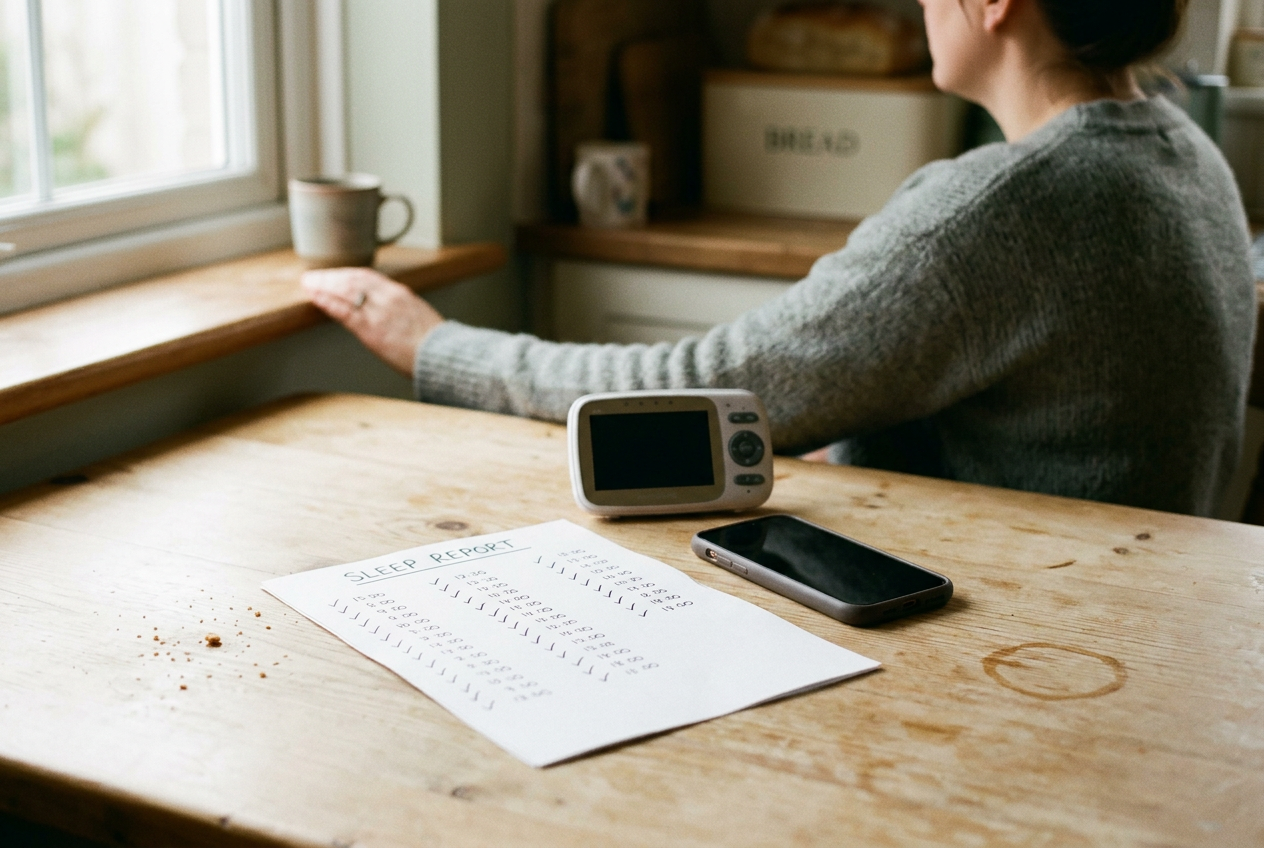
The one-page appointment summary lay between Mara and Jon on their kitchen table. It covered four weeks and showed an 18 percent drop in his average pain rating. His sleep appeared steadier. A short paragraph generated by the journal described his mood as stable.
Jon had just told her that it had been his worst month since the pain began.
Mara pointed to the page. She did not raise her voice. She reminded him that he had entered the information himself, usually while resting in the bedroom, and that the summary came from twenty-two days of notes rather than how he happened to feel that morning.
He pushed the printout back toward her.
The journal was supposed to help him remember, he said. It was not supposed to decide whether his memory counted.
Nine months earlier, Mara had started looking for a better way to prepare for appointments. Jon often reached the end of a visit and remembered something important in the parking lot. At home, bad nights ran into tolerable afternoons, and neither of them could place a medication change or a burst of pain within the right week.
A paper notebook had not lasted. Jon found writing tiring, while Mara disliked being the person who stood beside him asking for a number each evening. The questions made her sound supervisory even when she was trying to help.
The AI journal felt different because Jon could talk to it. It responded with brief follow-up prompts, turned his speech into entries, and pulled possible symptoms or events from ordinary sentences. When he said he had slept on the couch and managed a shower later, the system could record disrupted sleep, note the activity and ask whether his pain had changed.
That conversational ability mattered. Without it, there would have been no usable record for the journal to summarize and no polished account for Mara to trust. The machine did more than store rows of information: it converted Jon's uneven language into categories, inferred emotional tone and wrote a coherent trend from entries that did not always agree.
The page that made appointments easier
Before the next appointment, Mara printed the first one-page summary. It gathered Jon's numeric ratings into averages and compared the beginning of the period with the end. It also condensed his dictated notes into a few statements about sleep and daily activity.
The page helped. Jon did not have to reconstruct a month while sitting under fluorescent lights, and Mara could stop searching through messages for the afternoon he had canceled a family visit. The clinician still spoke directly with Jon, but the summary gave the conversation a starting point.
For the following four months, Mara handled the account. The journal was on her phone as well as Jon's because she had set it up, corrected transcription errors and printed the summaries. At first she opened it only before appointments. Later she checked the dashboard after difficult days, especially when Jon had not mentioned whether he had made an entry.
The shift was quiet. Mara had taken on more household work and was afraid of leaving out a detail that might matter. The one-page summary reduced that fear, and its clean percentages seemed less vulnerable to exhaustion than either person's recollection.
Then the record began entering disagreements that had nothing to do with appointments.
When Jon declined a weekend gathering, Mara noted that the dashboard showed more activity than the previous week. After he said he had barely slept, she remembered the summary's description of his sleep as steady. The journal had become a scorecard, although neither of them had agreed on what counted as winning.
What the AI had inferred
The 18 percent improvement on the printout was mathematically accurate within a narrow frame. The journal had averaged Jon's pain ratings from the first seven recorded days and compared them with the final seven recorded days. It did not display, on that page, that he often made entries after medication had taken effect.
It also could not measure the days he skipped. Some of those were his hardest days, when even opening the journal felt like another demand. The system left them out of the calculation rather than treating them as missing observations that might change the picture.
Jon's use of the rating scale had shifted too. Early on, he reserved higher numbers for pain that stopped him from speaking. By the fourth month, he had become accustomed to describing the same number while still doing a small task. The AI treated each rating as stable data because it could not know that his private definition had changed.
The mood statement came from language as well as the optional mood check-in. The journal classified phrases associated with accomplishment as positive signals. On a day Jon dictated that he had managed a shower but spent the rest of the afternoon in bed, the summary gave more weight to the completed activity than he would have given it himself.
None of those operations established how Jon felt. They showed what a language model and a set of calculations could infer from the material that reached them. Yet the one-page summary removed many of the caveats, repetitions and contradictions found in the original entries, which was the reason it had been useful in the first place.
Mara had read that compression as certainty.
Jon had another concern. Some entries included thoughts he had spoken because the journal sounded patient and did not interrupt. He had assumed Mara would see appointment summaries, but he had not understood that her access to the shared account also let her open individual entries. She had not read all of them.
Knowing she could was enough to change what he was willing to say.
They stopped using the journal for two weeks.
The pause made appointments harder to prepare for, and Jon missed the prompt that helped him place one day beside another. He did not miss wondering whether an unfinished thought would later appear as evidence in a disagreement. Mara missed the summaries, though she also noticed how often she had reached for the dashboard when what she wanted was reassurance.
Access by agreement
They decided not to abandon the tool. Jon changed the account access so that only he could see daily entries. The platform did not offer the precise caregiver role they wanted, so he reviewed each appointment summary first and exported it only when he wanted Mara's help preparing.
They also set a boundary around timing. Mara would see the selected summary during appointment preparation, not throughout the month, and neither of them would introduce it during an argument about whether Jon could attend an event or finish a household task.
The next one-page summary still described improvement. Before sharing it, Jon marked the pain percentage and added a note that most ratings had been entered after medication. He removed the mood paragraph because it did not match what he believed he had recorded. Mara found that difficult.
She also accepted the edited page.
At the appointment, the summary helped them identify a change in sleep without settling the larger disagreement about the month. On the way home, Mara placed the printout in a folder rather than keeping it in her hand.
Questions people ask
Can an
AI symptom journal determine whose memory is accurate?
No. In this story, the journal calculated trends from recorded ratings and inferred themes from Jon's words. It had no access to skipped days, changing definitions or experiences he chose not to record. Its summary was a generated interpretation of available entries, not an independent account of his condition.
Why did the
AI summary show improvement when he felt worse?
The percentage compared selected groups of recorded days, and Jon often entered ratings after medication had taken effect. Hard days were also more likely to be missing. The calculation could be correct for the data present while giving Mara a misleading impression of the month as a whole.
Who could see the shared symptom diary?
Mara initially had full account access because she had set up the journal and managed appointment preparation. Jon later restricted the daily entries and shared only summaries he had reviewed. Their conflict centered on consent over time: permission to help with documentation had gradually become ongoing access that he no longer wanted.
Did they keep using the AI journal?
They did, because the conversational prompts helped Jon record experiences he otherwise forgot, and the summaries still reduced the burden of preparing for appointments. He reviewed each generated page before sharing it. Mara received the next printout with his handwritten note beside the pain percentage.
One story a day
The story of the day, in your inbox
One real story about AI each morning — no hype, no alarm, just company for the road.