An AI Baby Monitor Counted 43 Wake-Ups. Many Weren't Real.
The nightly summaries looked precise enough to reorganize a family’s sleep. A pediatric visit revealed how ordinary newborn movement became an automated warning.
August 9, 2026 · 7 min read
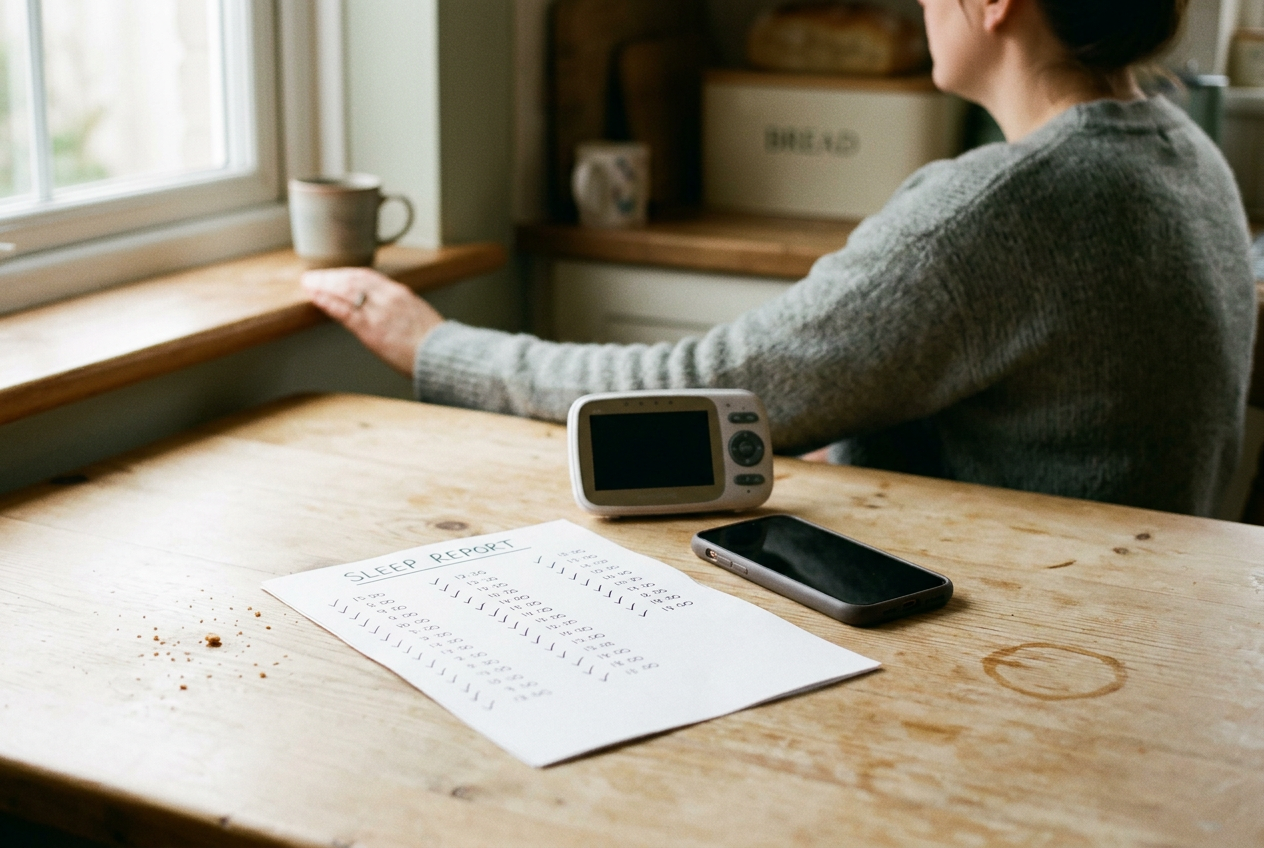
The seven-night report said the baby had woken 43 times.
Lena printed it because the number felt too important to leave on a phone. Her daughter was ten weeks old, and the report placed a red label beside the week’s sleep, followed by a percentage that appeared to measure disruption. On the page, the nights were divided into bars of sleep, waking and unsettled movement.
Some bars were only narrow marks. Others cut across stretches Lena had believed were quiet.
The monitor had seemed useful at first. A camera watched the crib while a microphone listened for sound, and its app produced a summary each morning. Lena and her husband, Eli, could see when movement had started without searching through hours of video. They could compare one night with another while their own memories blurred.
Then the summaries began assigning concern labels.
The app did not know whether their daughter was asleep in the clinical sense. It had no reading of brain activity, airflow or heart rhythm. Its software divided the camera and microphone stream into small periods, looked for changes in the image and sound, then classified each period as likely sleep, waking or disturbance.
A head turn could count. So could a startle that moved the sleep sack, a burst of grunting or Lena’s hand entering the frame. If stillness returned and movement began again, the system could treat one restless passage as several separate events.
Yet the seven-night report presented 43 wake-ups without that uncertainty attached to every mark. The percentage beside it had a decimal point. Lena read precision as knowledge.
She had already been sleeping in pieces for more than two months. When the monitor marked a night as more disrupted than usual, she tried to prevent the next one from going the same way. She adjusted feeding earlier. Eli delayed putting their daughter down after she had closed her eyes.
They checked the app from bed and went into the nursery when its live status changed, even when no sustained crying reached them.
Sometimes the baby’s eyes were closed when Lena arrived.
She would place a hand near her daughter, wait for movement, then wonder whether leaving had become unsafe now that she had seen the warning. A small grunt could bring both parents upright. If Eli said the baby sounded normal, Lena heard him dismissing something the monitor had counted. If Lena opened the app again, he saw the screen taking priority over the room.
Their disagreements stayed quiet. That did not make them small.
Eli began handling more of the first response because he could look at the video without studying the score. Lena disliked how relieved she felt when he took the phone. She also disliked that he sometimes returned to bed without entering the nursery, trusting what he saw while she remained awake beside him.
The system had changed their standard for a good night. Their daughter no longer needed to seem settled. The data needed to look settled too.
After one report placed a warning over a night when the baby had fed normally and appeared comfortable the next morning, Lena opened the recorded clips attached to the events. Several showed a turning head or moving hands. One captured Eli leaning over the crib. Another began after the camera adjusted to a change in light, making the whole image shift for a moment.
The app still classified those segments as disruptions.
That failure came from the way camera-based sleep tools make an inference. They do not observe sleep directly. They recognize visible and audible patterns that often accompany it, using thresholds learned from prior examples and rules set by the system’s designers. A newborn who moves and vocalizes while remaining asleep can resemble the examples labeled awake, particularly when the model is trying to catch more possible events rather than miss them.
A confidence value can add to the confusion. In systems like this, confidence generally describes how strongly the observed pattern fits one of the model’s categories. It does not establish that the event was dangerous, medically significant or even correctly classified. A model can be consistent and wrong when the available signals do not distinguish two different states.
Lena folded the seven-night report into the diaper bag for a pediatric visit. She felt embarrassed by the paper once she was in the exam room. The baby had gained weight and was feeding, and Lena worried that 43 would sound like a complaint about a child doing what babies do.
The pediatrician did not dismiss it. She asked what the monitor could measure, then separated the app’s observations from its conclusions. The camera had recorded motion. The microphone had detected sound.
The software had inferred waking, but the report could not show on its own whether each event reflected actual wakefulness or a health problem.
They looked at the clips Lena had saved. The pediatrician described how young babies can move, make sounds and briefly open their eyes during sleep. She also asked about the baby’s behavior away from the dashboard, including feeding and responsiveness, and discussed the family’s specific concerns in the context of the visit.
This account describes one family’s experience, not professional medical advice. The useful part of the appointment was not a universal rule about alerts. It was the distinction between a consumer system’s classification and a clinician’s assessment of an individual baby.
On the printed report, the pediatrician circled the 43 and drew a line toward Lena’s note about the clips. The number stayed the same. Its meaning did not.
Lena and Eli kept the monitor.
That surprised her. The camera still helped when they wanted to see whether their daughter had shifted against the side of the crib, and the broad nightly pattern sometimes showed a longer stretch of quiet that neither parent had remembered accurately. They stopped treating every labeled event as a summons. The risk summaries no longer decided who got out of bed.
They also changed what the device kept. Before the pediatric visit, Lena had assumed the analysis happened inside the camera because the results appeared so quickly. Reading the privacy settings showed that clips associated with detected events could be stored through the service and viewed from each connected account.
The discovery did not prove that anyone else had watched them. It made the tradeoff visible. Their daughter’s sleep sounds, the inside of her room and occasional recordings of a parent leaning over the crib were data the system needed to analyze or preserve for app features. Lena shortened clip retention where the settings allowed and removed an old shared login from a relative’s phone.
Privacy had felt abstract beside safety. Exhaustion brought them together. A saved video of Eli whispering over the crib was still a recording from inside their home, even if its original purpose was to classify the baby’s movement.
For the next three weeks, Lena kept the seven-night report in a kitchen drawer. She sometimes opened the app in the morning, though she no longer printed its summary. One night received another red label after the baby grunted and moved through a long stretch of closed-eyed sleep.
Lena watched one clip. Then she put the phone face down.
Questions people ask
Can an
AI baby monitor tell whether a newborn is asleep?
The monitor in this story inferred sleep from camera movement and sound. It did not measure sleep directly, so ordinary newborn motions could be classified as waking. Its summaries were useful for broad patterns, but the family learned that a precise event count could still rest on ambiguous signals.
Why did the monitor count so many wake-ups?
The system divided the night into short segments and classified changes in movement or sound. A startle, grunt, parent entering the frame or camera adjustment could begin a new event, while brief stillness could separate one restless period into several apparent wake-ups.
Does a high-confidence alert mean a baby is in danger?
In this family’s app, confidence reflected how well the detected pattern matched a software category. It did not provide a medical assessment or explain whether the event mattered. The pediatric visit helped Lena separate the system’s confidence in a classification from concern about her daughter.
What privacy did the family give up for sleep summaries?
Their monitor could retain clips linked to detected events and make them available through connected accounts. That included nursery audio and recordings of caregivers near the crib. Lena reviewed the app’s storage and account settings, then left the printed report in the kitchen drawer beside the phone.
One story a day
The story of the day, in your inbox
One real story about AI each morning — no hype, no alarm, just company for the road.