An AI Handoff Missed Her Drug Allergy. A Nurse Caught It.
The generated summary cut minutes from a crowded shift, but it left out the medication fact that mattered most. Checking the machine became another part of the nurse’s job.
August 9, 2026 · 7 min read
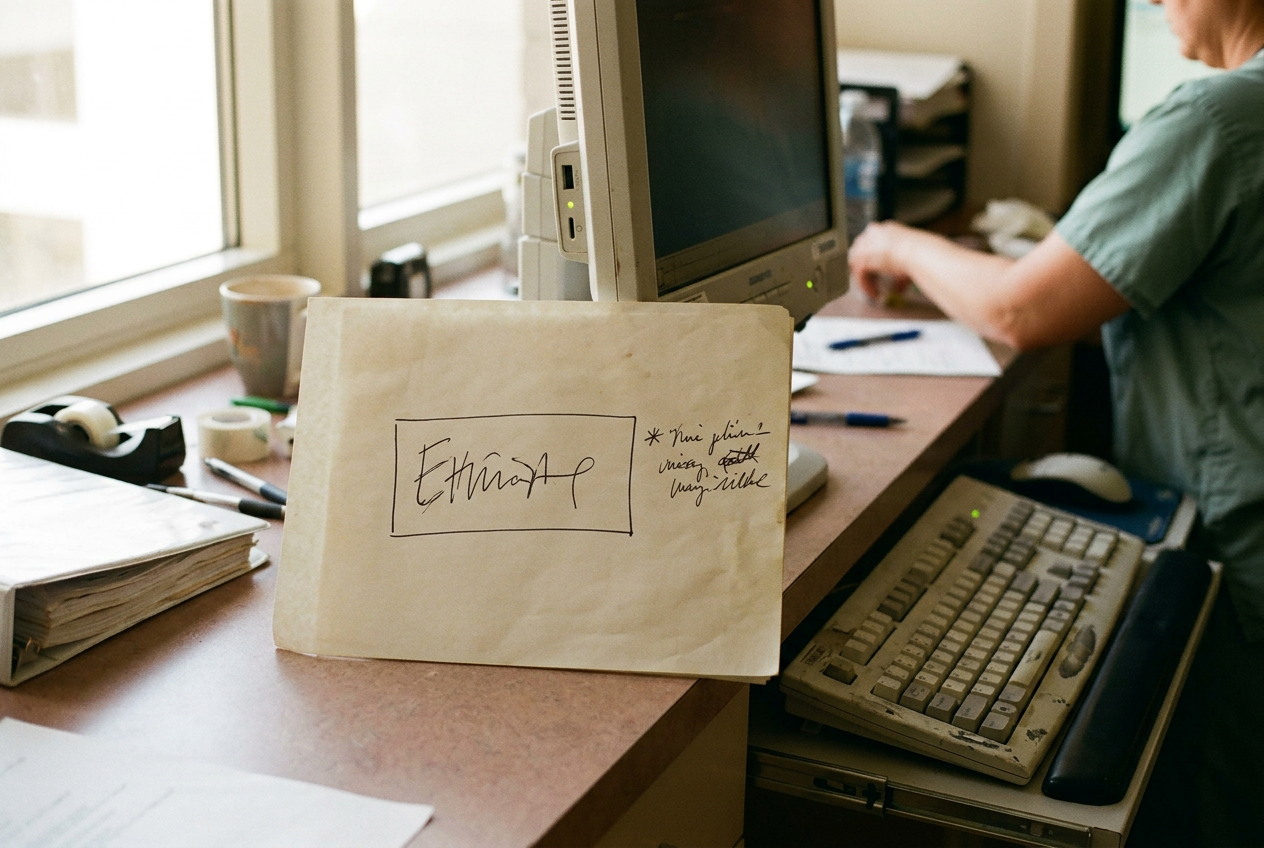
The one-page handoff sheet was already on the counter when the nurse took over care for five patients. It held short paragraphs about each person: why they had been admitted, what had changed, which medications were pending and what the next shift should watch.
A generative AI system had produced the page from information in the electronic health record. The hospital had introduced it to reduce the time nurses spent writing handoff notes and repeating the same facts aloud. On a crowded shift, the nurse could read the sheet, confirm urgent points with the outgoing nurse and start sooner.
This time, one paragraph described a patient being treated for an infection. It mentioned a new order for an antibiotic. Nothing on the page said the patient had a documented allergy to that same medication.
The nurse did not spot the omission at first. The paragraph was compact and specific. It included recent lab results, the reason for the antibiotic and a note about monitoring the patient’s temperature. The ordered drug fit the account the system had assembled.
At the bedside, the patient named the medication while describing a previous reaction. The nurse opened the full chart. The allergy appeared in the structured allergy field, with hives and throat tightness listed as the reaction. An older admission note also mentioned it.
She returned to the one-page handoff sheet and drew a box around the antibiotic name. In the margin, she wrote the allergy in capital letters.
The medication had not been given. The nurse contacted the clinical team, and the order was reviewed. Other safeguards in the medication system might also have raised an alert later, but she did not treat those as a reason to let the first omission pass.
The page on the counter
Handoffs have always lost information. People get interrupted, copied notes become stale and details move between parts of a chart. The difference here was that the AI system did not merely carry a human-written handoff from one screen to another. It selected the facts and wrote the account.
That selection was the product.
The system represented in this composite could draw from recent notes, active orders, lab results and parts of the patient record, then generate a short narrative intended to surface what mattered for the next shift. It did not paste every available field into a fixed template. A language model predicted a useful continuation from the material it received, under instructions to keep the summary brief and focused on current care.
The allergy existed in the source record. It was not prominent in the recent narrative notes, while the new antibiotic order appeared in current activity. Because the allergy was not set as a required field that had to appear in the final handoff, the model could produce a coherent paragraph without it.
This is one reason generated summaries can fail differently from ordinary database screens. A fixed allergy box either displays retrieved data or does not. A generated paragraph makes choices about relevance, compression and wording each time it runs, which means a fact can be available to the system without appearing in its answer.
The page did carry a general notice that staff should verify the summary against the chart. The nurse had seen notices like that across clinical software for years. What changed was the amount of judgment now packed beneath one notice: she was expected to find any missing fact in a polished paragraph while also using that paragraph to save time.
“I was checking the patient, and then I was checking what the machine had decided was worth saying.”
She kept the sheet through the shift. The box around the antibiotic name became a record of work the software did not count. No task appeared on the staffing plan for comparing generated prose with structured fields. There was no separate block of time for deciding whether an omission was harmless, stale or dangerous.
What the summary changed
Before the tool arrived, the outgoing nurse usually assembled a handoff from the chart and her own observations. That method could contain errors, but the next nurse knew who had chosen the details and could ask why one fact had been included while another had not.
The generated sheet blurred that ownership. The outgoing nurse had reviewed parts of it, though interruptions made a complete comparison difficult. The incoming nurse had been told to treat it as a draft. The software had created the wording.
Each participant touched the handoff, yet nobody plainly owned every sentence or every absence.
The nurse still found the tool useful. On routine days, it pulled recent changes into one place and spared her from opening several notes before she understood the shape of a patient’s stay. She estimated that it could save about 10 minutes at the start of a shift, sometimes more when the record was long.
After the allergy omission, those minutes became conditional. She began opening the full chart for details that could change an immediate action, even when the generated summary sounded settled. Allergies were one example. Medication changes were another.
She did not rebuild every handoff from the beginning, since that would erase the benefit, but she no longer let the page decide what deserved a second look.
That compromise changed her job from reading a handoff to auditing one. The distinction mattered because generated prose gave no visible sign that the allergy had competed with other facts and lost. There was no blank allergy line, no broken link and no sentence marked uncertain. The paragraph just ended.
The hospital’s internal review treated the event as both a clinical workflow issue and a system design issue. Staff discussed whether certain structured facts should be inserted into every summary rather than left to generation, and whether the person approving a handoff needed a clearer review step. Those questions remained open in the version of events represented here.
This account is not medical guidance. Allergy documentation, prescribing checks and handoff practices differ among hospitals, and the clinical details in this composite require accuracy review before publication.
The record outside the record
The system also changed where patient information traveled. To create the summary, approved software had to process portions of the health record, including notes written for care rather than for an AI prompt. The hospital controlled access through its clinical environment, but many bedside workers did not know which data fields were sent to the model, how long intermediate copies remained or what technical staff could inspect after a failure.
The printed page created a more ordinary privacy problem. It condensed sensitive information into a portable object that could be left near a workstation or carried between patient areas. Existing privacy rules covered the paper, yet the tool made producing such pages easier and gave them a density that handwritten notes rarely had.
At the end of the shift, the nurse placed the handoff sheet in the secure disposal bin. Before she did, she looked again at the boxed drug name and the allergy written beside it. The page had saved time. It had also required her to reconstruct the fact it had removed.
Questions people ask
Can an
AI handoff summary leave out a documented allergy?
Yes. A generative system may have access to a fact without placing it in a short narrative, especially when the design asks the model to select what seems current or relevant. In this case, the allergy remained in the structured record while the generated handoff omitted it.
Who owns an error in an AI-generated clinical handoff?
The story showed no single clear owner. The software wrote the summary, while nurses were expected to verify it and the hospital set the workflow around it. Local policies may assign responsibility differently, but a broad instruction to review can leave workers carrying the final safety check without added time.
What patient privacy issues can generated handoffs create?
The model must process clinical information to create the summary, raising questions about which records it receives, where processing occurs and how outputs are logged. A printed summary also concentrates private details on one page. In this case, the nurse kept the sheet with her and placed it in secure disposal.
Did the nurse stop using the AI handoff tool?
No. She still used it to understand long records faster, but she checked source fields before acting on details with immediate clinical consequences. The tool saved part of the handoff time and created a new review task. By the end of the shift, the word “allergy” remained in capital letters beside the boxed antibiotic.
One story a day
The story of the day, in your inbox
One real story about AI each morning — no hype, no alarm, just company for the road.