She Drove 84 Miles to Use AI for One Science Assignment
A cloud-based study tool helped Lena challenge her own science explanation. Reaching it took three round trips, a parent’s car, and $39.40 recorded in her lab notebook.
August 9, 2026 · 7 min read
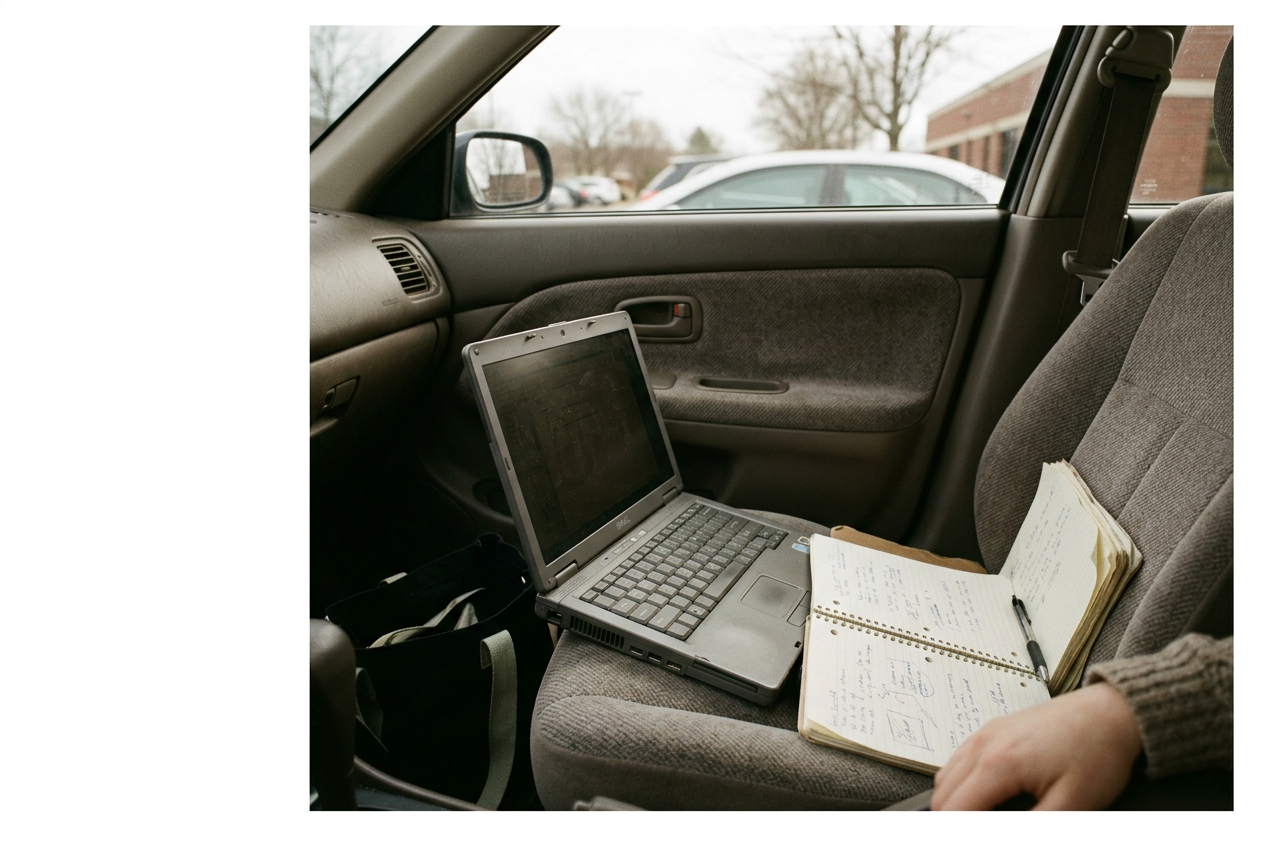
Lena opened her lab notebook on the passenger seat while her mother parked outside the public library. The building was closed, but its internet connection reached part of the lot, provided the car sat near the entrance and the weather did not interfere.
On one page, Lena had recorded dissolved oxygen readings from jars of pond water kept under different light conditions. On the last page, beneath a few calculations, she had begun another record: “library parking lot, 28 miles.”
The trip took 14 miles each way from the family’s house. They would make it three times for one assignment.
Lena, the student at the center of this composite account, lived beyond the reach of reliable wired broadband. Her family had a cellular hotspot, but its signal faded inside the house and strengthened unpredictably near a window. It could sometimes load a school document. A sustained conversation with the AI study tool was another matter.
Her science teacher had assigned more than a report. Students were supposed to upload their results to a conversational AI system, ask it to identify patterns, challenge one of its explanations, and submit a short transcript showing how their thinking changed. The point was to learn where the tool helped and where it sounded surer than the evidence allowed.
Without the AI, it would have been a different assignment. The required work depended on the machine producing an explanation that Lena could question, revise, and compare with her own data. A textbook could explain dissolved oxygen, but it could not react to her table or defend a claim about her jars.
That distinction was sensible in the classroom. It became expensive at home.
The assignment needed a conversation
The study tool ran on remote servers rather than on Lena’s laptop. Each prompt, uploaded table, and relevant portion of the conversation had to travel over the internet; the system then generated its response piece by piece, choosing likely next words from patterns learned during training.
This meant the connection had to do more than deliver a finished web page. When Lena asked a follow-up question, the tool needed enough of the previous exchange to understand what “the second jar” or “that explanation” referred to. If the hotspot dropped during an upload, she sometimes had to send the table again. If the page refreshed, the conversation could return without its attachment.
At the library, the table uploaded.
Lena asked the system to explain why the jar under brighter light had a higher dissolved oxygen reading. It offered a useful starting point: algae exposed to more light could photosynthesize more, releasing oxygen into the water. It also suggested checking whether temperature, plant matter, or measurement technique differed between jars.
She copied none of that into her report. Instead, she drew a line beside her own note about algae and added “temperature?” in the margin. The tool had given her a way to press on a weak part of her explanation, which was what the teacher wanted.
Then it made a confident mistake.
The system said the warmer jar might hold more dissolved oxygen because higher temperature increased molecular activity. The sentence was smooth and chemically flavored. It was also backwards as a general physical claim: warmer water usually holds less dissolved oxygen than cooler water, even though biological activity and other conditions can complicate what a student measures in a living sample.
Generative systems can produce that kind of error because they build plausible language, not a physical simulation of the jars on Lena’s classroom counter. The model had nearby concepts available to it, including heat, molecular motion, photosynthesis, and oxygen production, but it joined them into an explanation that sounded coherent without checking the relationship against a measured law.
Lena noticed because the claim did not match a paragraph in her textbook. She typed a challenge and asked the tool to reconsider the effect of temperature on oxygen solubility. It corrected itself, separated oxygen production from oxygen-holding capacity, and suggested that her report treat them as competing influences rather than a single cause.
That exchange improved her work. It also had to remain online long enough to happen.
The bill in the margin
During the first parking-lot visit, Lena’s mother waited in the driver’s seat with a grocery list folded near the cupholder. The family had one dependable car, and every study trip required another person’s time because Lena did not yet drive alone.
Her mother could not start dinner at home or take an extra block of paid work while they sat there. Lena knew this without turning it into a speech. She kept an eye on the laptop battery and worked through the teacher’s prompts, while a few other cars arrived, caught the signal, and left.
The first visit produced the useful mistake about temperature. It did not produce a finished assignment. Lena still needed to verify the tool’s revised explanation, write her analysis, and return to the conversation after drafting so the system could critique whether her conclusion was supported by the table.
At school, she could use the internet during class, though much of that period belonged to lab cleanup and instruction. Staying after school would have meant missing the bus and needing the same family car to cover the 16 miles home. The library parking lot was not the only place with access. It was the place that fit badly enough to be possible.
The second trip came after the AI tool stalled on the home hotspot while trying to read Lena’s draft. In the notebook, she added another 28 miles. She also wrote down $8.80, her mother’s estimate of the fuel used for each round trip based on the car’s mileage and the price at the pump that week.
This was not a fee charged by the tool. The school provided access to it. The expense appeared elsewhere, in gasoline and in a meal bought on the road because the trip crossed the part of the evening when they would normally have eaten at home.
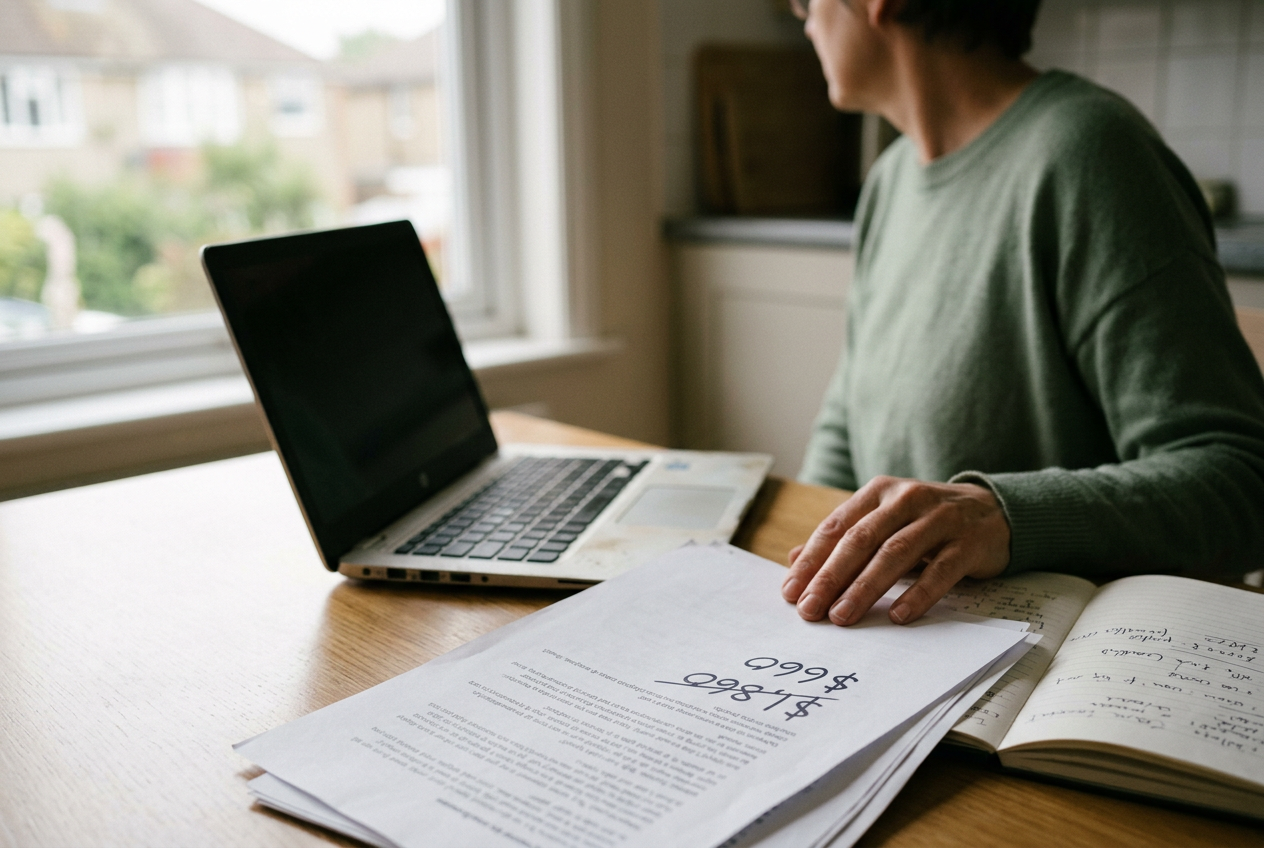
By the third visit, the last notebook page showed 84 miles, $26.40 in estimated fuel, and $13 for food. Total: $39.40.
The amount was modest beside a monthly household bill and large beside the advertised price of the assignment, which was zero. It also left out her mother’s waiting time, the use of the car, and the homework Lena did later because the AI session had claimed the better part of another evening.
She did not resent the tool in any clean way. Its first explanation had helped her find a real mechanism, and its error had given her something worth arguing with. When she asked it to critique her final paragraph, it pointed out that two jars were too few to prove a broad rule about pond ecosystems. Lena revised “shows” to “suggests” and added a sentence about repeated trials.
That was good science writing.
The trouble sat beside it in the notebook. Her classmates could have the same exchange from a bedroom or kitchen table, where a failed upload cost a few minutes rather than 28 more miles entered in pencil.
What access changed
The teacher had allowed students to use school computers, but access during the day did not erase the difference between being able to open a tool and being able to linger with it. Conversational study systems reward follow-up. A student can ask for another explanation, provide a correction, narrow the question, or request a critique of a new draft, and each turn can make the session more useful.
Lena rationed those turns.
She drafted prompts in the notebook before connecting so she would not spend parking-lot time deciding what to ask. She combined questions that another student might have tested separately. When the tool offered to generate a practice quiz, she declined, though that feature might have helped with the next assessment. The assignment asked for inquiry, but the conditions encouraged efficiency.
There was ingenuity in her method. There was also less room to wander, and wandering was part of the educational promise: the system could answer a follow-up without embarrassment, restate a concept in plainer language, and keep going after a class period ended.
Lena submitted the report with a transcript showing the model’s original temperature claim and its correction. Her teacher marked the challenge as the strongest part of the work. The grade did not include the last page of the notebook.
That page stayed in Lena’s backpack. Under the $39.40 total, she had started notes for the next unit, leaving the mileage where the lab observations ended.
Questions people ask
Why did the
AI study tool need a steady internet connection?
The model ran on remote servers, so Lena’s prompts, uploaded data, and conversation context traveled over the internet. A weak connection could interrupt an attachment or leave the tool without the material it needed to interpret follow-up questions, making this more demanding than reading a downloaded worksheet.
Did the
AI give the student a wrong science answer?
Yes. It suggested that warmer water might hold more dissolved oxygen, a plausible-sounding claim that reversed the usual relationship. Lena caught the error by comparing it with her textbook, then asked the system to reconsider and used the corrected exchange as evidence of critical evaluation.
Was the tool still useful for the assignment?
It helped Lena distinguish oxygen produced by photosynthesis from the amount water can hold, and it challenged language that overstated what two jars could prove. She kept those improvements rather than rejecting the tool after its mistake. The useful session and the unreliable answer were part of the same conversation.
What did free AI access cost her family?
The school charged nothing for the tool, but three Wi-Fi trips covered 84 miles. Lena’s notebook recorded $26.40 in estimated fuel and $13 for food, a total of $39.40 that did not count her mother’s waiting time or use of the family car.
One story a day
The story of the day, in your inbox
One real story about AI each morning — no hype, no alarm, just company for the road.