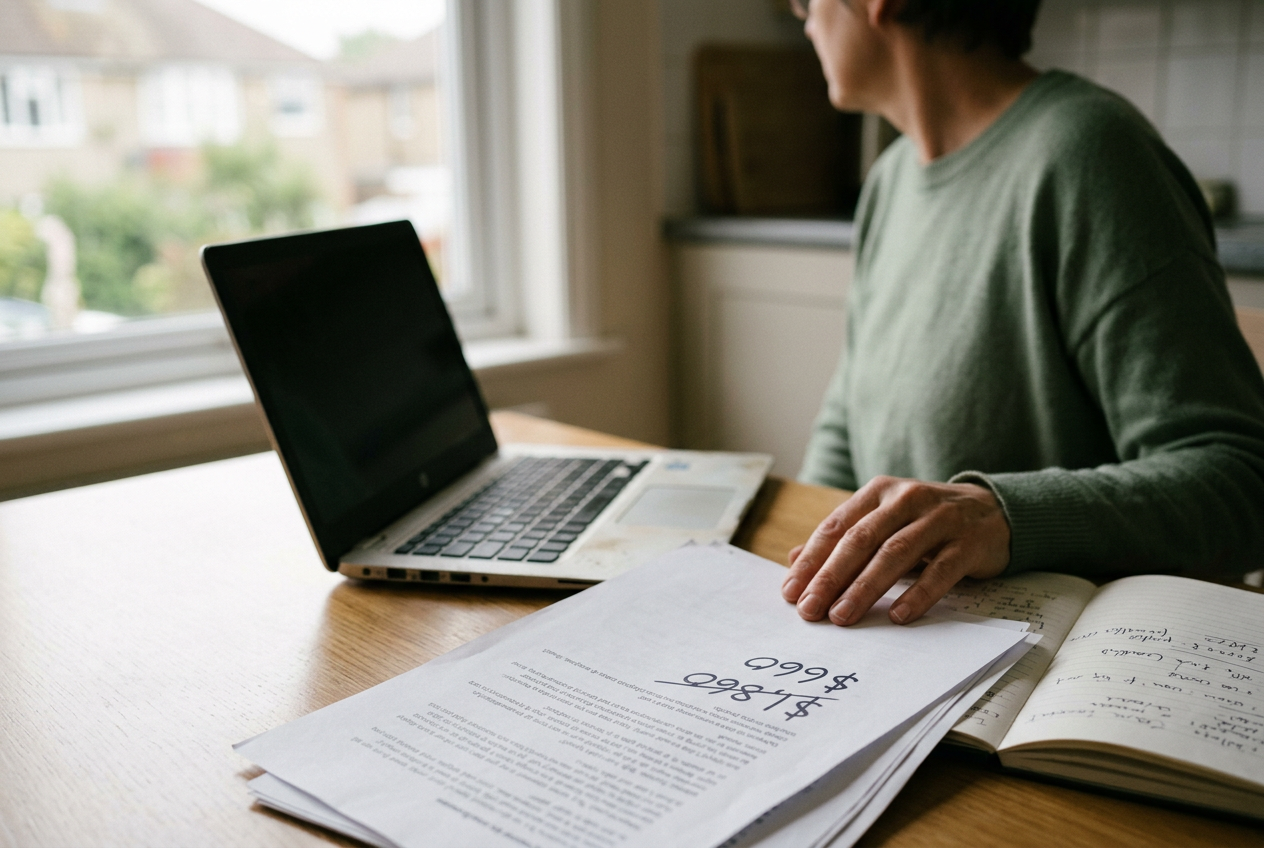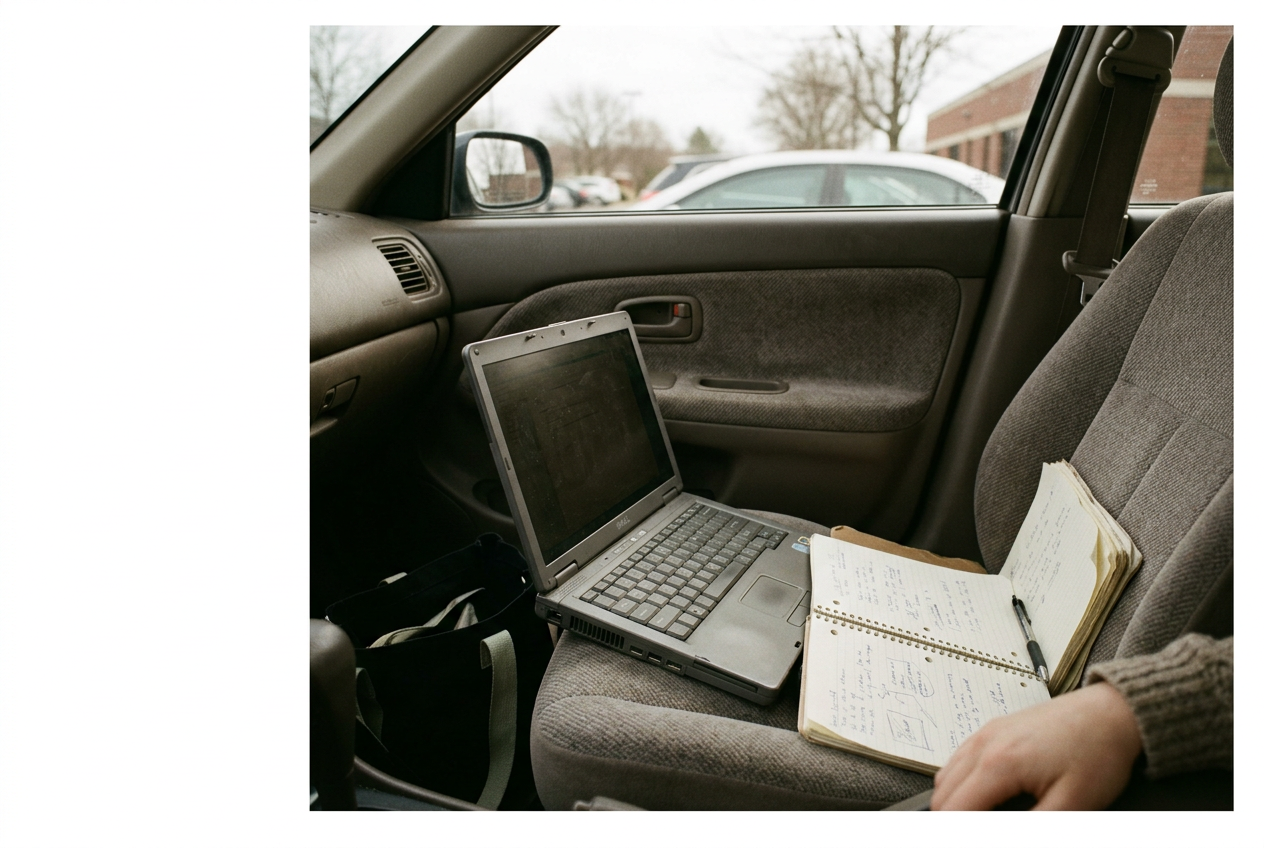
After 18 AI Disputes, a Teacher Stopped Assigning Essays
A high school teacher logged every disputed essay and every accusation about his own feedback. By winter, the notebook had changed how his students showed what they knew.
August 9, 2026 · 7 min read
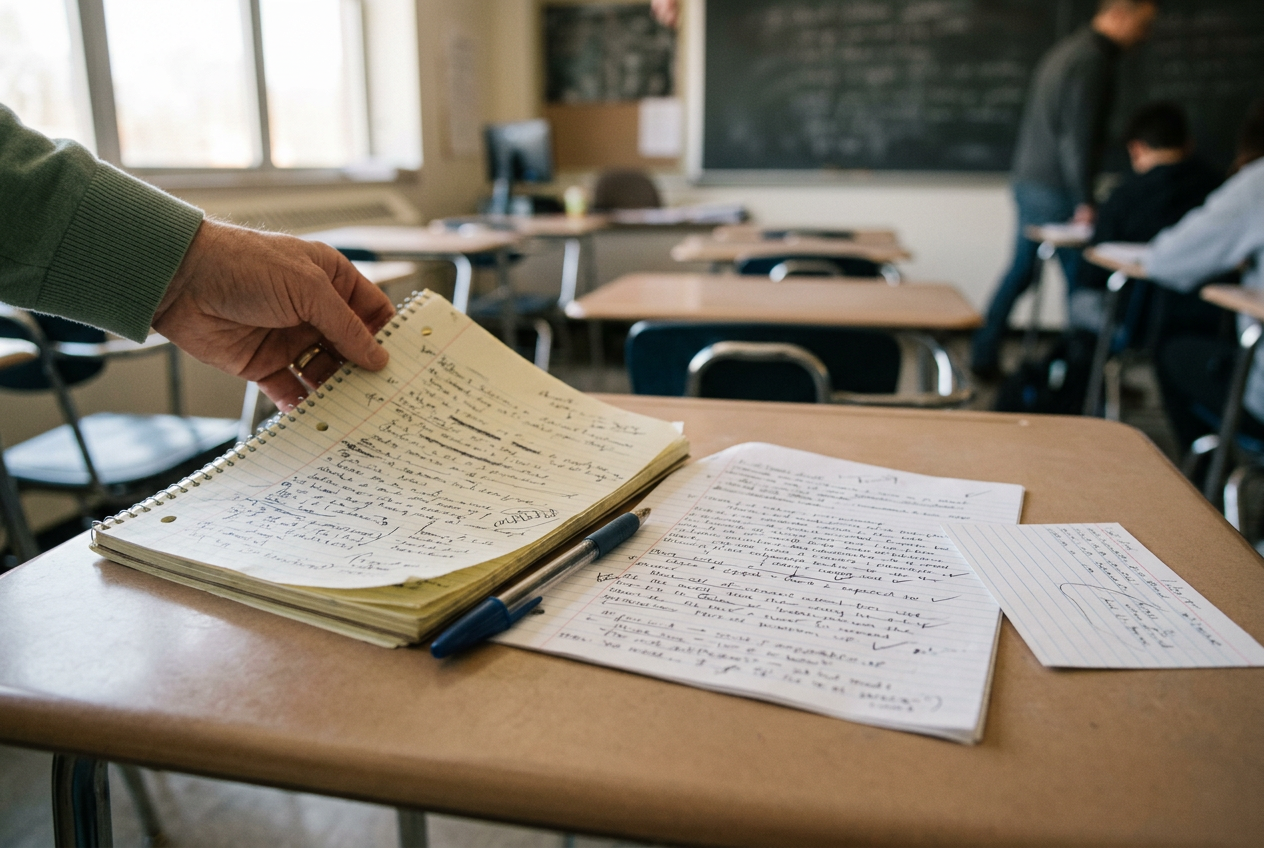
The notebook began as a record of suspicion.
The teacher kept it beside his keyboard at the back of a public high school classroom, where charging cords gathered near the wall and scraps of student writing stayed on the whiteboard after the last class left. Each time an essay raised a concern, he wrote down the month, the assignment, what the detector had reported, and what happened next.
By December, the notebook held 18 disputes. Eleven began with his suspicion that a student had submitted generated writing. Seven began with students wondering whether he had used the same technology to produce their feedback.
That second number bothered him more.
He had taught English for fourteen years. A take-home essay had always felt sturdy to him: a prompt, a deadline, several pages in which a student could develop an argument without the interruptions of class. He knew those essays were imperfect measures, shaped by family help, paid tutoring, search results, and whatever else reached the kitchen table. Still, he believed he could recognize his students in their sentences.
Then recognition stopped feeling reliable.
The first accusations
Early that fall, he read an essay whose phrasing seemed detached from the student’s classwork. The vocabulary was formal. The transitions arrived in tidy intervals. A detector returned a high probability that the text had been generated, though another detector gave a less certain result when he checked the same passage.
The student denied using a tool and opened a version history that showed paragraphs appearing across several evenings. That record should have settled the matter. It did not, partly because the teacher had already entered the conversation expecting an explanation, and partly because everyone in the room understood that text could be moved between documents.
He wrote the dispute in the notebook. No penalty followed, but the student became quieter during workshop days and stopped asking him to look at early drafts.
Other cases arrived. One student acknowledged using a generator to produce an outline, then said the final sentences were her own. Another had written a passage in a shared document while a parent suggested changes nearby. The detector marked a paper by a student who could explain every source and every odd phrase, while missing a submission that another student later admitted had been generated and lightly edited.
The tool did not provide the clean answer he had wanted. It produced a percentage, and the percentage entered conversations that already contained unequal power, incomplete memories, and a grade waiting at the end.
His own accusation came in November. A student noticed that feedback on two papers used similar phrasing and that one comment referred to an argument the student had not made. The class knew he had experimented with a writing assistant to draft comment starters. He had revised the output, but he had also missed the wrong reference.
Students began comparing comments. Some asked why they had to prove authorship when his feedback could pass through a generator without disclosure. Others assumed every repeated phrase came from a tool, including lines he had used for years.
He added those disputes to the notebook too. The entries looked different from the earlier ones. There were fewer detector percentages and more notes about what he could no longer verify. Had the student developed the reasoning or only edited it?
Had he responded to the paper or approved a plausible comment? The notebook could record the conflict. It could not restore confidence.
Rebuilding the assignment
During winter break, he carried the notebook home and opened it at a desk crowded with student folders and a mug he kept forgetting to wash. He read all 18 entries in order.
The repeated problem was not that technology had entered the class. Students had always used tools, and he had used them too. The problem was that his largest assignments asked students to produce polished work somewhere he could not observe, then asked him to make a high-stakes judgment about the invisible process behind it.
He stopped assigning conventional take-home essays the next semester.
Students still wrote. They read source packets, marked passages, and drafted claims during class. The larger change came after the draft, when each student had to explain the argument out loud, respond to a challenge, and show where a piece of evidence changed the direction of the work.
The first attempt was awkward. Students sat across from him with an index card and their draft between them. One read entire sentences from the card until he covered part of it with his hand and asked her to explain the idea in everyday language. Another student, whose paper contained polished paragraphs, could not describe why one source belonged in the argument.
A third had written a rough draft full of sentence-level errors and then gave a precise account of the conflict between two sources.
That conversation changed the grade.
The teacher had expected oral work to expose students who had relied on generators. Sometimes it did. More often, it exposed the limits of the essay itself, which could make shaky thinking look finished and strong thinking look weak when a student struggled with grammar, organization, or the pressure of producing academic prose at home.
He revised the format over six weeks. The oral portion became less of an interrogation and more of a continuation of the draft, with students allowed to point to notes, draw a relationship between sources, or revise a claim while talking. He listened for whether they could account for a choice and whether the explanation held up when he introduced a complication.
The notebook remained on his desk. Now he used it to record mismatches between written work and spoken explanations, including cases where the speaking showed more understanding than the page. The early entries had treated inconsistency as evidence of misconduct. The newer ones treated it as information about learning.
What speaking changed
The new system did not make authorship certain. A student could rehearse an explanation generated elsewhere, just as a student could memorize an essay or receive help preparing for a presentation. Some learned to produce convincing spoken summaries without understanding the details underneath. The teacher still had to judge, and judgment remained uneven.
Speaking also introduced its own pressure. One student who participated freely in small groups froze when seated alone with the teacher. Her hands stayed under the table, and her first answers narrowed to a few words even though her written annotations were dense with connections.
He let her begin by drawing the relationship between two sources on paper. She talked through the diagram without looking up, then returned later to record the remaining explanation in a quiet space. The result still happened out loud, though it no longer depended on a single face-to-face performance.
Other students needed similar adjustments. A multilingual student asked to see the central prompt before speaking so he could arrange the terms he wanted. A student with a speech disability used typed responses for part of the exchange and audio for the rest. These changes made the format harder to describe as one clean replacement for essays, which was probably useful.
The old assignment had never been as neutral as it appeared either.
The workload shifted. He spent less time writing long comments on finished essays and more time listening during class, which meant fewer late evenings with stacks of papers and more crowded days at school. He could respond while a student’s reasoning was still in motion. He also had to remember what he heard, distinguish confidence from knowledge, and avoid rewarding students who were quickest to fill silence.
Grades changed less than he expected. The surprising part was who moved. A few students who had submitted elegant take-home essays struggled when asked to account for their choices. Several whose writing had seemed disorganized could explain a strong line of reasoning once the page was no longer the only evidence.
Near the end of the semester, he reopened the first pages of the notebook. The detector percentages remained there, written with a confidence he no longer felt. He did not cross them out.
On the newest page, he recorded a student’s draft, the diagram she drew, and the explanation that followed. There was no percentage beside the entry.
Questions people ask
Can an
AI detector prove that a student used generated text?
The detectors in this story did not establish authorship. Their results changed across tools and sometimes conflicted with version histories or a student’s demonstrated knowledge. The percentages became one element in a dispute, while the teacher still had to interpret incomplete evidence and decide how much trust to place in it.
What replaced the take-home essay?
Students wrote drafts during class and then explained their reasoning aloud. They could refer to notes, revise a claim, or map a relationship between sources while speaking. The teacher graded the written work alongside that explanation, rather than treating a polished document produced at home as the full record of learning.
Did oral assessment make cheating impossible?
No. Students could rehearse generated explanations or repeat ideas they did not understand. Spoken work gave the teacher another form of evidence, especially when he introduced a complication, but it did not remove judgment or uncertainty. The classroom moved away from detector scores without producing a perfect test of authorship.
What happened when a student struggled to speak?
The teacher adjusted the format after seeing that a single conversation could reward confidence more than understanding. Students sometimes used diagrams, typed responses, or recorded audio to support an explanation. In the final notebook entry, beside a student who began with a diagram, he recorded that her reasoning became clear once she started pointing to the page.
One story a day
The story of the day, in your inbox
One real story about AI each morning — no hype, no alarm, just company for the road.