A Tribal Language Class Wrote a Do-Not-Upload List First
Students wanted chatbot practice between weekly lessons. Their class spent eleven weeks deciding which words, stories, and voices no tool should receive.
August 9, 2026 · 8 min read

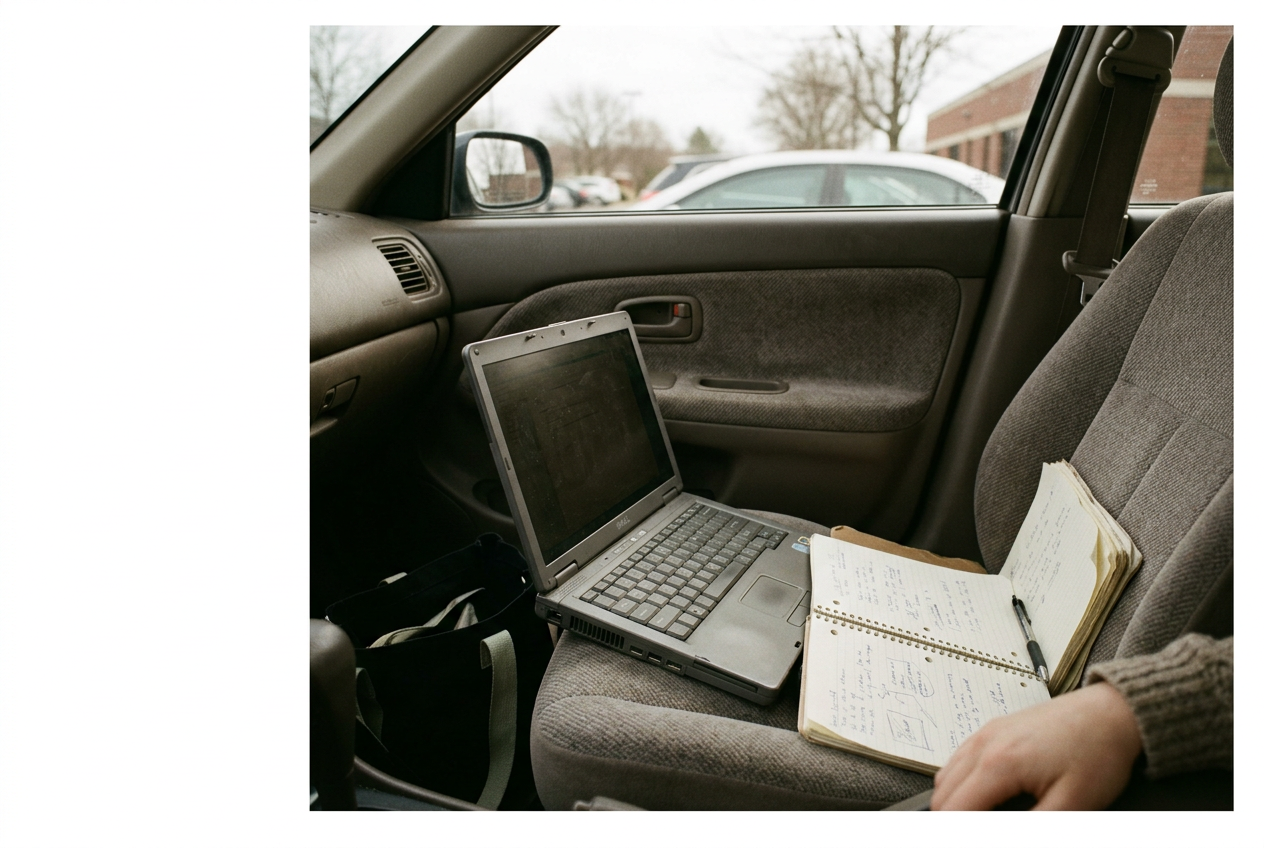
The notebook appeared during an evening class at a tribal education center, set beside the instructor’s printed lesson and a cup of pencils. Its first page had two handwritten headings: open for practice and keep here.
Nobody had chosen a chatbot yet.
That order mattered. Students had started asking for something they could use during the six days between lessons, especially when they could remember a phrase but not its pronunciation, or when they wanted to try changing the subject of a sentence without waiting another week for feedback. The class included teenagers and adults. Some studied at the same kitchen table as their children.
Others opened their notes after a late shift, when no fluent speaker was likely to answer a message.
A chatbot sounded useful in the plainest way. Type a sentence. Get a response. Try again.
The elders who helped guide the class did not reject that idea, but they slowed it down. A tool that accepts words may store them, and a system trained or improved with user material may reuse patterns somewhere the class cannot see. Deleting a conversation from a screen did not necessarily answer what happened behind it. The students understood privacy settings from school portals and social platforms; this was a different kind of exposure, because some knowledge did not belong to an individual user who could consent alone.
So the notebook came first.
The boundary changes the lesson
During the first weeks, the class did not copy sacred material into the notebook. They wrote categories instead. Certain ceremonial language stayed out. So did narratives limited by season or by a person’s community role, along with recordings whose speakers had agreed to classroom use rather than outside processing.
The distinction was not between important language and unimportant language. A greeting could matter deeply and still be open for beginners to practice. A common verb might appear in a public lesson, while a related expression carried obligations that a software upload box could not recognize. The notebook forced the class to discuss who could share material, not merely whether somebody already had a digital copy.
That became uncomfortable in useful ways. One student had saved an elder’s pronunciation recording on a phone for almost two years. The file had arrived through a family message thread, and everyone in that thread knew why it was there, but no one had discussed whether it could be submitted to a speech tool that promised corrections. The recording was personal, yet the language inside it was also communal.
Ownership was the wrong-sized word.
The student did not upload it.
Instead, the instructor wrote a short description in the keep-here side of the notebook: family recording, permission limited to listening. The actual phrase stayed off the page. For the rest of the term, that line became the example people pointed to when a technology setting seemed broad enough to swallow context.
Students also noticed that restriction did not always mean sacred. A place name could reveal where families gathered or where culturally sensitive activity occurred. A person’s voice could identify them even if their name had been removed. Some speakers were comfortable appearing in the class archive but had never agreed to become training material, pronunciation output, or a sample played for strangers.
The notebook grew through eleven weeks, though it never became a complete rulebook. New examples exposed gaps. A worksheet prepared by the class seemed safer than an elder’s recording, until someone noticed that it contained a story contributed for local students. A sentence assembled from public vocabulary seemed open, until its subject referred to a private gathering site.
This slowed the class. It also changed what students saw.
The chatbot was no longer a blank conversation partner. It was a service with an intake box, retention choices, and business needs that might not match the promises surrounding the lesson. The class examined generic privacy language from several tools, and the phrases about improving services or retaining content raised more discussion than the advertised tutoring features did.
No one in the room pretended that reading those policies settled the matter. A settings page could describe deletion without making clear whether copies remained elsewhere, while a vendor’s assurance about customer control did not tell the class whether future versions of the service would behave the same way. The notebook offered a firmer boundary because it began with the community’s decision rather than the platform’s menu.
Practice without handing everything over
The students still wanted help. That part did not fade because the policy discussion became serious.
One teenager had been building short exchanges for a school project and kept getting stuck on word order. An adult learner wanted repetition without feeling that every mistake consumed a fluent speaker’s limited energy. In class, both could ask. At home, their paper notes could not respond, and online material in the language was too limited to cover the sentences they were trying to make.
The instructor began separating the desired function from the proposed tool. For text practice, the class could prepare a small set of sentences drawn from material already approved for public teaching. A system would not need access to the whole class archive. For pronunciation, however, most available tools wanted audio, and the notebook had already made clear that recorded voices carried more than sounds.
The line under keep here changed the search. Tools that required broad rights to uploaded recordings were set aside without a classroom trial. A text-based option remained under consideration because it allowed a limited test using class-written examples, though uncertainty about retention meant the students did not move their regular homework into it.
There was a little frustration. Boundary work is still work, and it arrived on top of verb practice, family obligations, and jobs that left people opening notebooks at the end of the day. One student observed that English learners could find endless practice without holding a meeting about every sentence. Nobody offered a neat answer.
The unequal supply of learning tools was part of why the chatbot had seemed attractive in the first place.
By the end of the eleven weeks, the class had tested generated responses with a narrow packet of approved text. The results were mixed. The tool could vary basic prompts, but it also produced forms that looked plausible to beginners and sounded wrong to advanced speakers. That created another boundary in the notebook: generated language would not enter lesson materials until a qualified speaker reviewed it.
This was not primarily a privacy concern, yet privacy and accuracy kept meeting in the same place. Review required a fluent person’s time, while improving the tool might require more community material, including the very examples the class had decided not to release. The easier practice system could become hungry for the scarce knowledge it was supposed to help preserve.
The notebook stayed on the classroom table during each trial. Students opened it before opening the tool, which made the decision feel less like accepting a platform’s default and more like checking a promise they had made to one another. Sometimes the answer was yes. More often, the material was replaced with a plain practice sentence created inside the class.
The voice recordings remained out.
A boundary that belongs to the class
The notebook did not establish a policy for every tribal language program. Communities differ, and material that one group publishes may be limited elsewhere. Even within this class, authority depended on the material and its source; an instructor could approve a worksheet the instructor had written, but not expand the permission attached to a family recording.
What the class built was smaller. Students had a shared reference that could survive enthusiasm for a new feature, a free trial, or a tool that suddenly began accepting speech. The list did not depend on remembering which warning an elder had given during which conversation. It sat beside the lesson.
Months later, the class still had not adopted a chatbot for unrestricted practice. It used the limited text trial for selected exercises, while pronunciation work remained between learners and speakers through methods the community already controlled. That arrangement was less convenient than the first idea. It also meant the family recording stayed on the student’s phone, where the original permission still made sense.
Questions people ask
Can a chatbot store language entered for practice?
Some tools retain prompts, recordings, or related account data, while others offer controls that limit certain uses. In this story, the class found that deleting a visible chat did not answer every question about storage, so it kept restricted material out rather than relying on settings it could not verify.
Is all tribal language material considered private or sacred?
No. The class used public teaching material for limited tests and treated other content according to community protocols, speaker permission, and context. A familiar word could be open for practice, while a recording or story containing that word could remain restricted for reasons the software could not detect.
Why did elders help decide what students could upload?
Some material was held by families or the wider community rather than owned by the student with the file. Elders helped identify obligations attached to recordings and culturally sensitive language, including permissions that allowed classroom listening but did not extend to outside processing or reuse.
What did students use while they waited for a suitable tool?
They tested a narrow set of class-written sentences for text practice and kept pronunciation work within existing relationships with speakers. At the end of the term, the family recording was still on the student’s phone, and the notebook remained beside the printed lesson.
One story a day
The story of the day, in your inbox
One real story about AI each morning — no hype, no alarm, just company for the road.