School Admins Saw a Student's Period Chat Before the Nurse
A middle school symptom chatbot flagged a menstruation question and shared it beyond the health office. A printed access log showed the nurse who had read it first.
August 9, 2026 · 7 min read
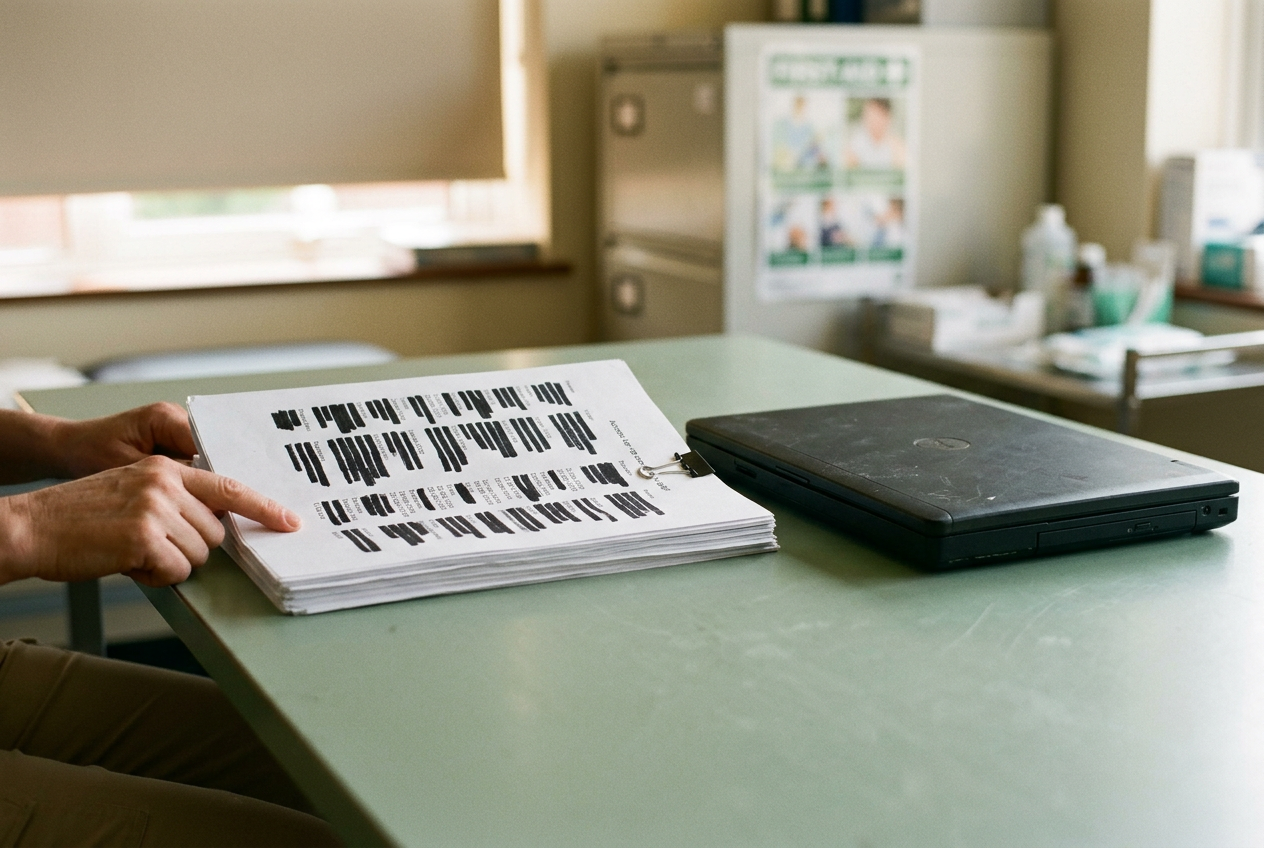
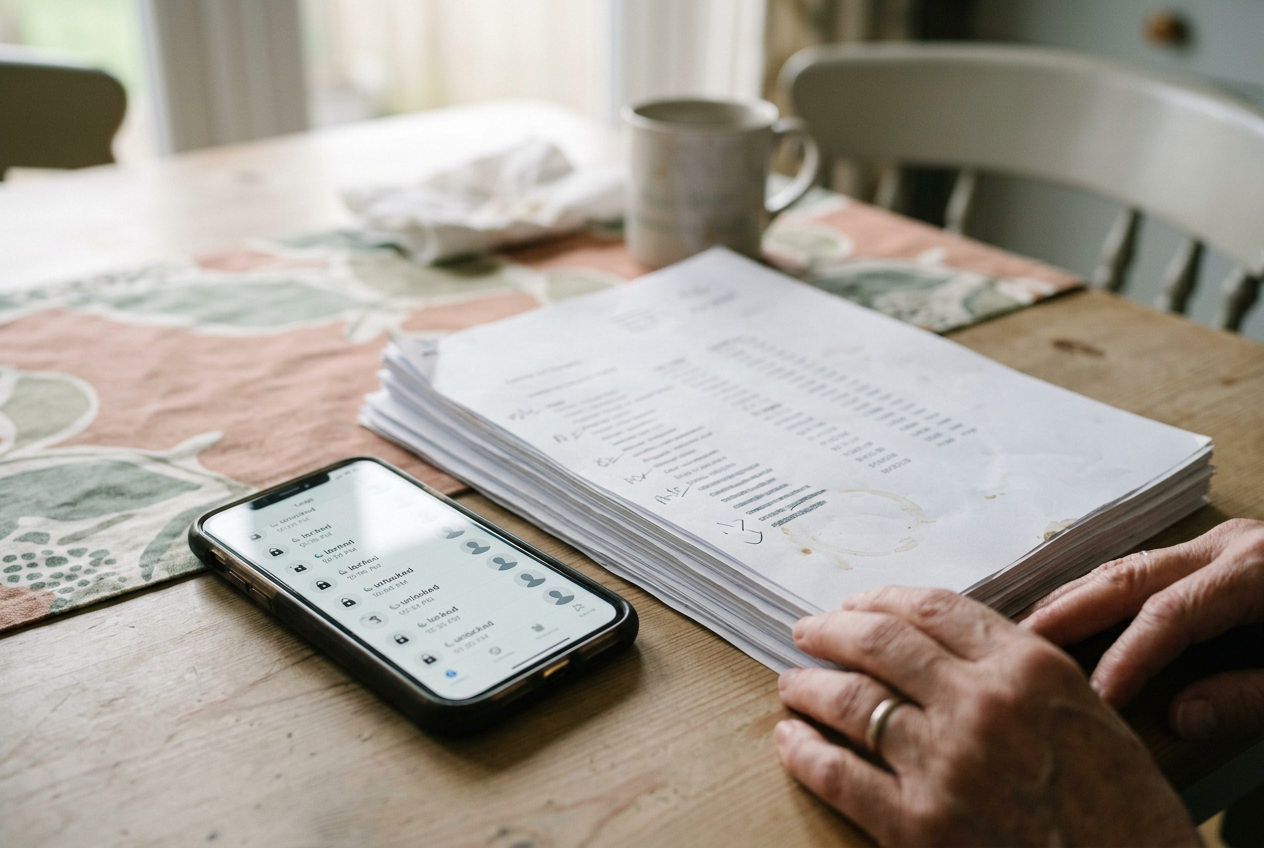
The nurse first understood the problem from a printed access log. It showed that an administrator had opened a seventh grader's chatbot transcript before anyone in the health office saw it. A counselor had viewed it too. By the time the nurse's account appeared in the sequence, the student had already been called out of class and asked whether she was safe.
The conversation was about menstruation.
In March 2024, the student had opened a symptom chatbot through the health section of her middle school's online portal. She used her school account, then described having two periods close together and cramps that made it difficult to concentrate. She wanted to know whether the change could be normal and whether she should visit the nurse.
The tool provided general health information. It also classified the conversation as a possible safety concern, attached the student's identity and sent the full transcript to a group of school employees with access to the platform's alert dashboard. The nurse was among the permitted readers, but she was not the first recipient under the school's configuration.
An administrator responded according to the alert process. The student was removed from class and taken to an office, where the discussion centered on whether the reference to bleeding indicated an immediate danger. She said she was not injured. She had not described abuse or self-harm.
Still, adults outside the health office now knew the timing of her menstrual cycle and had read the words she chose when she thought she was consulting a health tool.
When the nurse met with her, the student's concern had changed. She still wanted information about her period, but she also wanted to know who had seen the chat. The nurse could not answer from the health screen, which displayed the conversation without a clear access history, so she requested an export from the dashboard.
That export became the printed access log. It contained the alert category and the order in which authorized accounts had opened the transcript. The nurse circled the sequence and carried the page into her next meeting with school leaders.
How a health question reached administrators
The chatbot did not operate as a private conversation with the nurse. It sat inside a school system that connected each message to a student account, scanned the text for categories associated with safety and routed flagged conversations according to permissions chosen by the school.
Part of that mechanism was automated. A classification system assessed the student's words and assigned a risk category. The next part reflected human decisions made before she typed anything: school officials had approved a broad group of alert recipients, and the platform allowed those recipients to open the underlying transcript rather than seeing only a notice that a health review was needed.
The printed access log established the result of those decisions. It did not reveal why the classifier had crossed its threshold. School employees could see the category, yet they could not inspect the weighting of particular terms or determine whether the reference to bleeding had caused the alert by itself. The nurse never received a term-level explanation.
Other limits mattered. There was no evidence that classroom teachers had accessed the transcript, that a platform employee had read it or that the chat had been sent to law enforcement. The record showed access by school accounts that already had dashboard permission. That narrower finding was serious enough for the nurse because the student had no reason to expect administrators to read a routine period question before a health professional assessed it.
Safety alerts can serve a real purpose. A student may describe an injury, abuse or an immediate threat while using a tool that appears to offer ordinary information, and a school could lose time if a warning remained inside an unattended health inbox. The nurse did not argue that every flagged message should wait.
She focused on what the system revealed and to whom. Under the existing setup, a broad label unlocked the full conversation for multiple roles, even though the label did not establish that the student faced urgent harm. The administrative response then took the student out of class before a clinician had distinguished a menstrual symptom from an emergency.
That sequence affected learning as well as privacy. For about six weeks, the student avoided the online health section and did not return to the nurse, even when cramps interfered with class. She later explained that she expected another private question to become an administrative event. She also worried that the counselor who had read the chat would bring it up during an unrelated meeting.
The counselor did not mention it. The worry remained.
The consent the student did not see
The school had disclosed that online activity could be monitored. Families received broad technology terms, and a general notice appeared when students entered the portal. Neither disclosure told this student, at the moment she began describing her period, that a flagged conversation could be shared with administrators outside the health office.
The nurse saw that gap as more than a wording problem. A general monitoring statement might cover searches, messages and activity across a school account, while a symptom chatbot invites a different kind of disclosure, including details about bleeding, medication or sexual health that a student may associate with a clinical setting.
In many public schools, health records are handled under education privacy rules rather than the rules people commonly associate with a doctor's office. That does not make them open to every employee. Schools define which officials have an educational reason to access particular records, and software permissions can expand the practical audience before a student understands where the boundary sits.
The student had not been offered a separate choice about alert sharing. She could use the tool under the existing terms or avoid it. Her guardian's acceptance of the school's annual technology conditions did not tell her which roles would receive a flagged health transcript, and it did not appear beside the box where she entered the symptoms.
The nurse proposed a notice at that point. It would name the kinds of school roles that could receive a flagged conversation and make clear that the chat was linked to the student's account. She also wanted the audience narrowed, with routine health flags going to designated health staff first and other officials receiving access only when the content or a clinical review supported escalation.
School leaders raised the possibility that the nurse could be unavailable during an urgent disclosure. The discussion lasted four months, but the central disagreement stayed visible on one page: the printed access log showed that broader access had produced a quick response, while the content of the transcript showed that speed alone had not made the response appropriate.
What the school changed
The school eventually added a disclosure beside the chatbot entry field. It told students that conversations were connected to their school identity and that flagged content could be reviewed by designated staff outside the health office. The notice did not ask students to interpret a long privacy policy before typing.
Access also became narrower. Routine symptom flags went first to the health team, while a smaller safety group retained access to the platform's highest-risk category. Administrators outside that group were removed from the default audience. The school did not eliminate automated classification, and the nurse still could not see which words drove a particular result.
The earlier transcript remained in the platform for the school's selected retention period. Changing permissions reduced future access, but it did not undo the seventh grader's experience or return the class time lost when she was called away. Her trust recovered more slowly than the settings changed.
Three months after their first meeting, the student came back to the health office with another menstruation question. She did not open the chatbot. She wrote the dates of her recent periods on a piece of paper and handed it to the nurse.
Questions people ask
Can school staff see a student's symptom chatbot conversation?
They can if the tool connects chats to school accounts and the district gives their roles dashboard access. In this story, the transcript was available to an administrator and a counselor as well as the nurse. The access log showed who opened it, although the student could not see that history herself.
Why would a period question trigger a safety alert?
Automated classifiers sort text into broad risk categories, and words describing bleeding or pain can overlap with language used in urgent situations. Here, the school could see the assigned category but not the specific reason the threshold was crossed. A health professional later found no immediate danger in what the student had described.
Did the student consent to administrators reading the chat?
Her family had accepted general school technology terms, and the portal carried a monitoring notice. The student did not receive a specific explanation beside the chatbot that flagged health conversations could be shared beyond the nurse. The school later added that disclosure, but use of the tool still depended on accepting the school's setup.
What changed after the nurse raised the issue?
The school narrowed routine health alerts to the health team and reserved broader safety access for the highest-risk category. It also placed a clearer disclosure beside the chat field. The nurse kept the original printed access log in a folder with a copy of the revised notice.
One story a day
The story of the day, in your inbox
One real story about AI each morning — no hype, no alarm, just company for the road.