A Coach Put 6 Years of Injury Videos Into an AI Tool
Players valued the AI-generated movement feedback. Then a data export showed how years of ordinary practice footage had become searchable health profiles.
October 27, 2026 · 7 min read

The spreadsheet had 1,842 rows.
The athletic director printed only the first pages for the meeting, but Lena’s mother kept the full export open on her laptop. Each row described a clip uploaded by the school’s soccer coach: a player label, capture month, body area, movement tag, camera location and a link to the original video.
One row marked Lena’s left knee as showing “high asymmetry.” Another connected her to a clip labeled “return to play,” recorded seven months after she had recovered from a sprain. A third contained a confidence score beside a face match.
Lena had known about the movement analysis. Players liked it. The coach could record a drill, upload the clip and show an athlete where her knee moved inward during a landing or where her weight shifted during a cut. The feedback arrived faster than the old routine of scrubbing through video by hand, and it gave some players a clearer way to understand instructions they had heard for years.
She had not known that the platform kept the original footage, grouped clips believed to show the same person and made old injuries searchable alongside new movement patterns. Her mother had not known either.
The spreadsheet made that difference visible. It was no longer a folder of game film.
The tool saw more than the drill
The coach began using the analysis platform six years earlier. At first, he uploaded short clips from practices and rehabilitation sessions. The school already recorded games, so video itself did not feel new, and the coach understood the tool as a better replay system rather than a system building records about individual bodies.
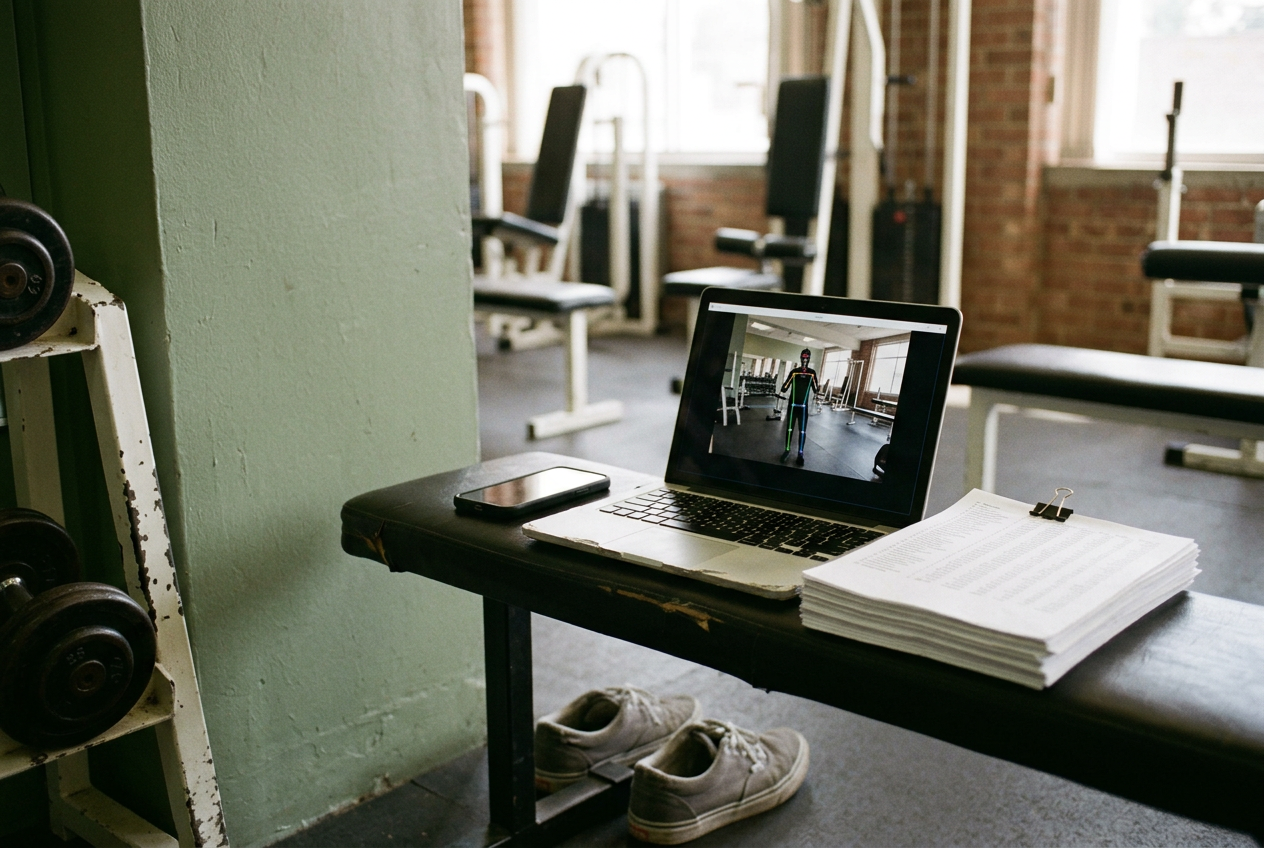
Its main feature used pose estimation. For every frame, the software tried to locate points on a person’s body, including knees, hips, ankles and shoulders. It connected those points into a simplified skeleton, then calculated how joint angles and distances changed during a movement.
A landing could be converted into numbers: the angle of the knee as the foot touched the ground, the difference between the left and right sides, and how far the torso shifted. The platform compared those measurements with patterns in its training data and produced labels such as stable, asymmetric or elevated load.
That capability was the reason the system helped. A spreadsheet could store the coach’s observations, but it could not extract joint positions from thousands of video frames or find similar movement across years of footage. The AI made old clips measurable and searchable without someone watching every second again.
It also changed the scale of collection. The coach started uploading more because the analysis no longer required an evening of manual review. A few clips after an injury became routine recordings during practice. The archive grew quietly, season after season, while players graduated and new families signed standard school forms that referred broadly to athletic video.
The platform added other features. It could group clips using a mix of face similarity, jersey appearance and body shape. It transcribed some sideline audio. Notes entered by the coach, including soreness reports and restrictions, appeared beside the machine’s movement labels.
Location entered the record in several ways. Some original phone files retained geographic metadata. The background could reveal a school name or field sign, and the coach sometimes selected a venue while organizing an upload. Even where no map coordinate appeared, the export distinguished home practices from away events.
None of those details alone surprised Lena’s family. The surprise was that the system had connected them.
A useful warning, then a confident mistake
Lena had benefited from the tool during her recovery. After her sprain, the coach used side-by-side clips to show that she was protecting her left leg during a jump. She could see the imbalance, and the physical therapist later observed the same pattern in person.
That moment mattered to her. She adjusted her landing and felt more confident returning to practice. When her mother first heard that the team was reviewing its use of AI, Lena defended the analysis itself.
Then they reached the row marked high asymmetry.
The clip was not from her rehabilitation. It showed another player wearing a similar uniform, partly blocked by a teammate, during an away game. The face match carried a high confidence score, and the platform had attached the movement finding to Lena’s profile. Her old knee note sat beside it.
The error followed from how the system worked. A face partly turned away provides less information than a face looking toward the camera. Uniforms reduce other visual differences between players. Occlusion hides body points, forcing a pose model to estimate where a knee or hip probably is, and a camera set at an angle can make one side of the body appear shorter or more sharply bent.
The software still had to return an answer. Its confidence score described how strongly its calculation favored a match within the options it considered. It did not mean that the identity had been verified by a person, nor did it measure whether the video was suitable for judging an injury.
That distinction had been easy to miss on the dashboard, where a percentage looked more settled than the underlying image. In the 1,842-row spreadsheet, the mistake looked like part of Lena’s history.
The coach had corrected labels while reviewing recent clips, but he had rarely revisited older ones. He believed the system was an instructional aid, and he did not realize that a mistaken identity could carry a movement flag into a player profile that remained available years later.
The company described the labels as coaching information rather than medical conclusions. Families found that boundary thin. A tag did not need to diagnose a torn ligament to reveal that a teenager had pain, was restricted from play or was being watched for reinjury.
Consent arrived after the archive
The school’s first response was to pause new uploads. That did not answer what to do with six years of footage.
At the family meeting, the coach did not argue that everyone had understood the system. He explained why he used it and showed two clips where automated tracking had helped him give more specific feedback. Several players wanted that benefit to continue. One said the visual overlay made more sense than being told to “stay square,” an instruction she had struggled to translate into movement.
Parents focused on the export. Some had agreed to game recording and assumed the videos would be watched by coaches. They had not pictured face grouping, automated transcripts or a searchable history of body-part labels. A permission slip written before the tool was adopted had not described those functions.
The 1,842 rows also exposed a practical problem with asking for consent late. If one graduate wanted her clips deleted, the school first had to determine which files included her in the background and which derived records came from those files. A practice video might contain most of the team even if the analysis centered on one player.
Deletion was not a single act. The original upload could be removed while an exported report remained with the school. A derived measurement might persist in a comparison chart. The company said some backups would age out under its retention process, but the dashboard did not show families where every copy or derivative had gone.
The school eventually separated participation in AI analysis from general athletic recording. Current players could allow individual movement analysis without agreeing to face grouping across seasons. The coach stopped uploading rehabilitation clips that included conversations about symptoms, and access to older material was narrowed while the review continued.
Those changes did not settle the argument. Lena chose to keep using the movement overlay for selected drills, provided she saw the clip before it was added to her profile. Her mother wanted the mistaken away-game clip removed and the old injury note detached from automated comparisons.
The coach kept a printed copy of the spreadsheet during the review. He marked rows that needed a human identity check and left a blank beside clips no one could confidently place. The document that had first looked like a complete history became a record of uncertainty.
Months later, the archive was smaller. It was not empty.
Questions people ask
Can an
AI sports tool identify an injury from video?
The tool in this story estimated body points and compared movement patterns, which could highlight asymmetry or unusual joint loading. Those signals helped guide coaching, but they did not establish a medical diagnosis. Camera angle, blocked limbs and a mistaken player match could all change the result.
Why is ordinary practice footage sensitive?
AI can convert video into records that were not obvious when the clip was made. A system may group a player by face, estimate joint movement and connect the result with a coach’s injury note. Original files may also retain location information or capture conversations near the camera.
Did a general video permission cover this analysis?
Families in the story disagreed about what the earlier permission meant because it described athletic recording but not automated identity matching or long-term movement profiles. The school later treated AI analysis as a separate choice, reflecting how different the resulting record was from ordinary game film.
Could the school remove every old record?
The school could delete uploads and narrow access, but it found that reports and derived measurements might exist outside the original clip. Shared practice footage also included players who were not the focus of the analysis. On the coach’s printed spreadsheet, some identity-check boxes remained blank.
One story a day
The story of the day, in your inbox
One real story about AI each morning — no hype, no alarm, just company for the road.