Her Licensed Synthetic Voice Took the Audiobook Job She Wanted
A narrator recorded a voice model for accessibility samples. Eleven months later, a client chose that same synthetic voice to read a full book for a fraction of her fee.
August 9, 2026 · 8 min read
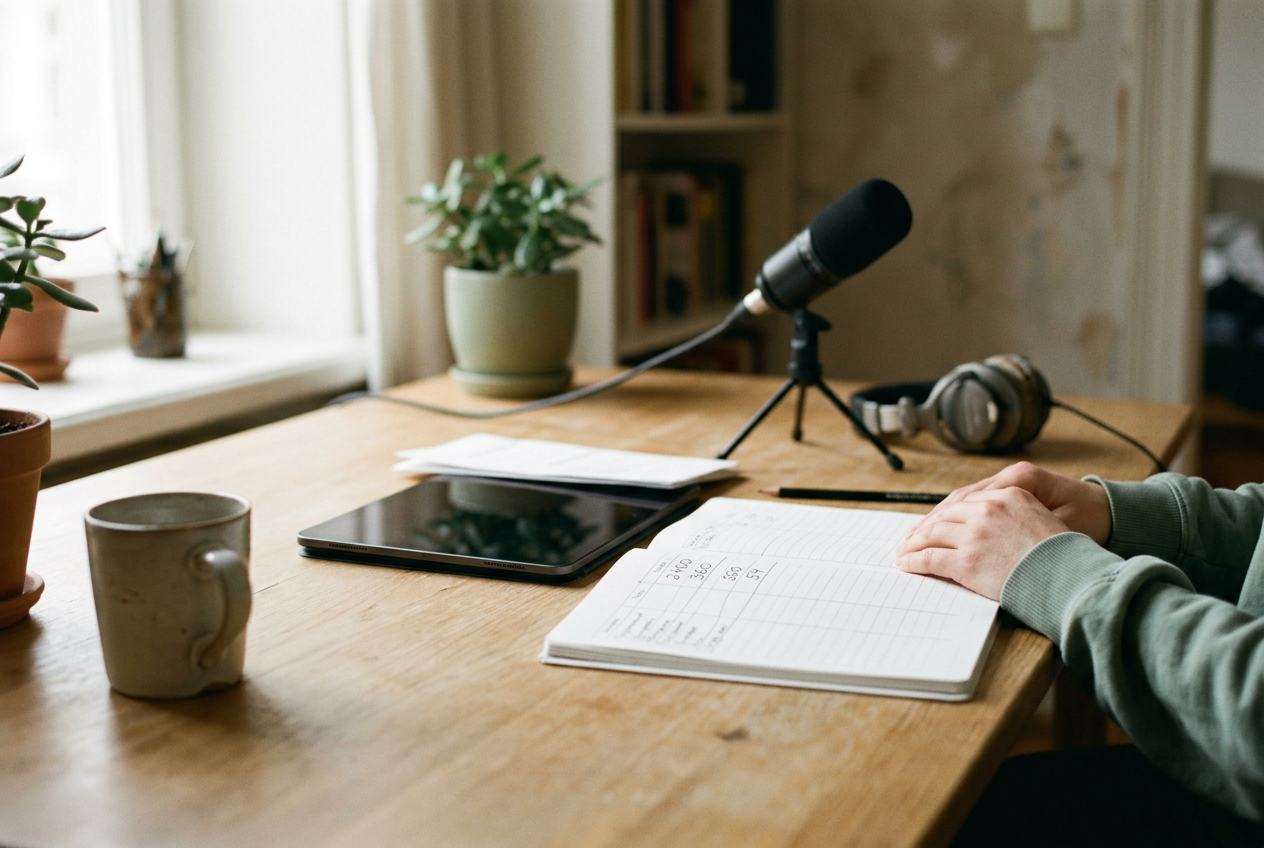
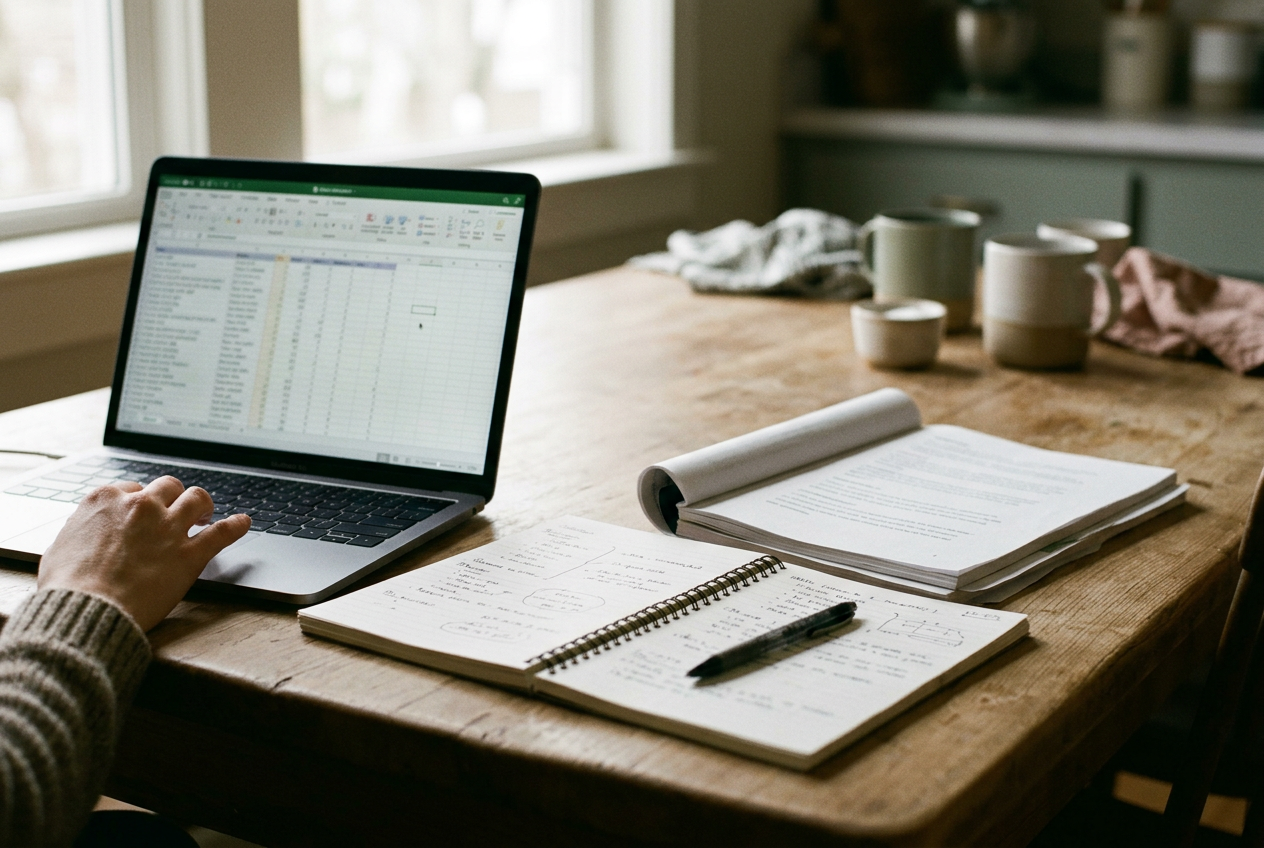
Mara keeps a spreadsheet beside the keyboard in her home studio. It began as a plain record of auditions and invoices, the sort of document a freelancer builds because memory gets generous around unpaid labor. Each row has a project, an estimated length, a quoted fee, an outcome and, when she knows it, the amount she earned.
One row now reads: human narration, $2,400; synthetic narration, $360; voice royalty, $54.
All three figures refer to Mara’s voice.
She has narrated audiobooks for nine years, mostly fiction and practical nonfiction. Her studio occupies the end of a spare room, with acoustic panels on the walls and a music stand holding a tablet. A glass of water stays beyond the microphone cable. On long recording days, she leaves a pencil on the desk and marks places where a sentence needs another pass: a breath landed poorly, a character sounded too certain, a joke arrived with its elbows out.
The work is quiet but physical. She shifts her shoulders to open a line, backs away for a shout and learns which lunch will announce itself halfway through a chapter. A finished ten-hour audiobook may require more than twenty hours of preparation, recording and corrections, depending on the text and the publisher’s expectations. Her invoices pay for finished audio, not every hour at the desk.
In March 2023, a production platform invited her to record material for a limited synthetic voice model. The stated use centered on accessibility samples and short previews, which sounded to Mara like a way for readers to hear a passage before choosing a format. She would receive $750 for four hours of recording, followed by a small payment when the model was used.
She read isolated phrases, paragraphs with emotional shifts and strings of words designed to catch changes in stress. The script was not a story. It asked for calm, irritation, warmth and restraint, then moved to dates, measurements and names. Between takes, an engineer asked for cleaner consonants or less melody at the end of a sentence.
Mara understood that the resulting model would sound like her. That was the assignment.
What she did not picture was the spreadsheet row.
The moment the license changed shape
Eleven months later, a producer asked Mara to audition for a nonfiction audiobook estimated at 9.6 finished hours. She read the sample, checked the manuscript’s citations and entered a projected fee of $2,400 in her spreadsheet. The rate was ordinary for her work.
It covered narration and corrections, while the research and preparation around them remained folded into the price.
The producer passed. The budget had tightened.
A week later, Mara saw the project on the platform dashboard among titles available with synthetic narration. Her own model appeared as an option. The estimated production price was $360, and the page treated the voice as a selectable resource, beside controls for pace and tone. The client did not need to book Mara’s studio or wait for her recording schedule.
She stared longest at the model label, which used the professional description attached to her profile. There was no claim that Mara had personally narrated the book. Still, the sample carried her vowels, her pauses and the slight drop she uses when a paragraph has settled its point. The resemblance was the product.
Mara added the synthetic price to her spreadsheet. When the royalty later appeared, she entered $54 in the final column. The payment was real. So was the lost $2,400 job, though she could not prove the client would have hired her if the model had never existed.
Freelance losses rarely arrive with that courtesy.
This is where consent becomes harder to describe than a checkbox. Mara had agreed to create a model, understood that it would imitate her and accepted payment for the recording session. She had not understood that a client considering her for a full audiobook could purchase the model instead, through the same platform, at 15 percent of her quoted fee.
The distinction matters because consent can cover the making of a tool without clearly settling every market in which that tool will be sold. Duration matters. So does the length of the generated work, whether the narrator can decline a title, how prominently the synthetic origin is disclosed and whether the model can be offered beside the person whose voice supplied it. These are separate choices, even when an agreement gathers them into broad language.
This account is an explainer built around a composite experience, not legal advice. Contract meaning and available remedies depend on the agreement and the relevant jurisdiction. Mara’s problem was more immediate: the permission she remembered granting did not match the product she could now see.
A royalty is not the same as a rate
The platform’s support team confirmed that full-length uses could generate payments under the licensing arrangement. After messages through the support inbox, Mara was offered a dashboard setting that limited some future availability, though it did not erase completed work or restore the audiobook she had lost.
Her manager helped compare the numbers. For a human narration job, Mara usually earned a negotiated rate tied to the finished length. For synthetic use, her payment was a fraction of the client’s lower production price. Both systems paid for audio in her voice, but only one accounted for her time interpreting that particular manuscript.
On the spreadsheet, the difference looked clean: $2,400 against $54. In the studio, it was messier. Human narration also meant unpaid preparation, equipment costs and the possibility of extra corrections. The synthetic royalty demanded none of those hours.
Mara could receive it while working elsewhere.
She did not regard that as free money. The asset earning it was built from earlier labor and from vocal habits developed across years of paid books, auditions, classes and rejected takes, while every full-length synthetic project also showed clients that they could buy a recognizable version of her performance without buying her attention. The model reduced her labor because removing her labor was part of its value.
Compensation can therefore answer several different losses. A recording fee pays for the session that creates the model. A usage payment recognizes a generated project. Neither automatically covers exclusivity, competition with future work, reuse in new formats or the value of keeping a distinctive voice unavailable to others.
Mara’s $750 fee had felt fair for four hours in the booth. It looked smaller after the model entered the full-book market.
She began adding a new column to the spreadsheet for projects where a synthetic version of her voice appeared among the alternatives. During the next eight months, she found six. Two produced royalties totaling $83. Three had once circulated as human narration opportunities.
One remained unclear because the title and description had changed.
The column did not prove causation. It gave the confusion edges.
The creative work the model cannot invoice
Audiobook narration is not a continuous display of vocal personality. It is a chain of decisions, many of them too small to advertise themselves: whether a sentence remembers the previous chapter, whether a character is lying badly, whether an instruction needs space around it so a listener can follow.
Mara makes those decisions with the whole manuscript open. She changes an early passage after learning what happens later. She emails a producer when a pronunciation guide conflicts with the author’s recorded introduction. If a character’s confidence collapses halfway through a novel, the first chapters may need restraint so there is somewhere for the performance to go.
A synthetic model can produce variation, and a client can direct it through settings or revisions. What troubled Mara was that its output still arrived under the commercial identity of her voice, even though she had not read the manuscript, chosen the emphasis or approved the finished performance. A weak interpretation could sound enough like her to affect how a listener judged her craft. A strong one could compete for the next job.
There is another discomfort. The model preserves choices she made during a controlled recording session, when an engineer requested particular emotions and cleaner endings, then makes those choices available for texts she may never see. Her voice remains active while her judgment is absent.
Mara did not ask for the model to be destroyed. She still saw value in short samples that help readers assess whether audio is usable for them, and the royalties were not meaningless during slow months. She asked instead for a narrower boundary around full books and clearer notice before new kinds of use.
The response reduced some availability. It did not settle whether the original agreement had already allowed more than she understood, or whether a future update could widen the market again. She saved the messages as PDFs and put the contract in the same folder as the spreadsheet.
That late-desk ritual became part of the job: open the dashboard, compare unfamiliar titles and type another amount into a cell. The microphone stayed off.
Questions people ask
Can a narrator consent to a voice model without consenting to full audiobooks?
That depends on the scope and interpretation of the agreement, which this composite story cannot determine. Mara understood the license through its stated emphasis on accessibility samples and previews, while the platform treated broader production use as available. Her experience shows that agreeing to create a model may not produce a shared understanding of where it will compete.
Does a royalty make synthetic narration fair compensation?
A royalty pays something, but it may measure a different thing from a narrator’s usual rate. Mara received $54 for a book she had quoted at $2,400. The synthetic payment required no new studio hours, yet it also did not compensate her for interpretation, approval of the finished work or the possible loss of a human job.
Can a narrator stop a licensed synthetic voice from being used?
Mara contacted the support inbox and obtained a setting that restricted some future availability. Completed uses remained, and the change did not recover lost work. Whether another narrator can withdraw, narrow or end a license depends on the agreement and circumstances; the practical process may also take place through platform controls rather than a direct conversation.
How can someone tell whether a synthetic voice is costing them work?
Mara could not prove that every synthetic project replaced a booking. She recorded what she could observe: quoted fees, dashboard prices, royalties and titles that had circulated as human opportunities. After eight months, the spreadsheet held six possible overlaps, $83 in royalties and the original row ending in $54.
One story a day
The story of the day, in your inbox
One real story about AI each morning — no hype, no alarm, just company for the road.