A Studio Drummer Lost 53 Demo Gigs. The Credits Said Nothing
His demo bookings fell from 74 to 21 in a year. Artists still released songs with drums, but the album notes rarely showed how those parts were made.
August 9, 2026 · 7 min read
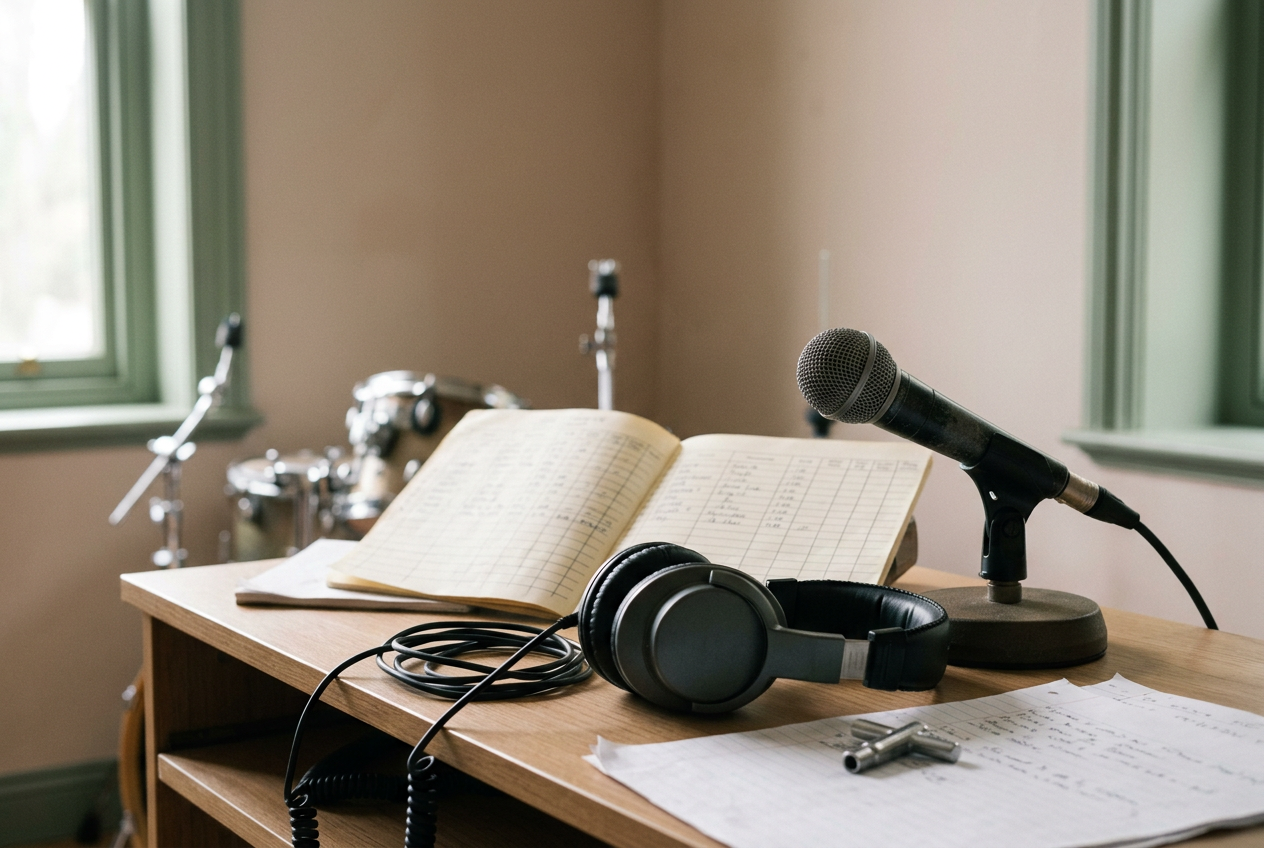
The studio is a converted garage with enough treatment on the walls to keep the drums from spilling into the house. A towel rests on the snare. Headphones hang from a music stand, and a laptop sits within reach of the stool, open to the spreadsheet the drummer started for taxes and kept because session work has a way of becoming hard to remember once files begin moving between people.
The spreadsheet records the month, the project, the fee and whether the job was a demo or a final master. During the 12 months ending in June 2023, it shows 74 demo sessions worth $22,180. During the next 12 months, there are 21, worth $6,480.
Fifty-three jobs disappeared. The spreadsheet does not contain a column for why.
Demo work had never been glamorous, which was part of its usefulness. A songwriter might send a voice memo and a guitar part, then ask for drums that made the chorus lift without sounding finished. A producer might want two approaches before an artist came in. The drummer recorded at home, sent back separate audio files and usually revised a few transitions after receiving notes.
Those jobs were modest and repeatable. A session might pay $250 or $400, depending on the scope, and several of them in a month covered the costs of keeping the room ready: drumheads, repairs, insurance and the quiet electrical expenses of equipment that waits for someone to need it. Final album sessions paid more, but demos kept relationships active between them.
The missing middle
The first change was not a cancellation. Files arrived with rhythm parts already in them.
Some were familiar forms of drum programming, built by a producer placing individual sounds in recording software. Musicians have worked around programmed drums for decades, and the drummer had often replaced or supplemented those parts. What felt different was how quickly a detailed performance could now appear in a rough song, complete with fills, shifts in intensity and small timing changes that once prompted a call to a player.
Clients described using newer composition tools that could generate or reshape rhythm tracks from a short instruction. Others said only that the demo was handled. The distinction remained muddy because sample libraries, automatic accompaniment and generative systems can end up in the same software session, then pass through enough editing that nobody hearing the final mix can identify where one method stopped and another began.
The drummer did not assume every missing booking belonged to a machine. Budgets tightened. Some artists recorded less, while producers brought more work inside their own setups. A few clients stopped releasing music.
Yet the demo rows in his spreadsheet thinned during the same months that more clients began sending nearly complete drum arrangements and asking him for a final performance, if they asked at all.
That changed the work he did receive. Instead of exploring the song while it was still loose, he was often asked to reproduce an existing rhythm part with close attention to its accents and fills. The performance required control, but there was less room to discover what the drums could contribute, and sometimes his recording was blended under the programmed track until he could no longer tell how much of his playing remained.
One project stayed with him. He had recorded early demos for an artist over several years, usually receiving unfinished songs with open space around them. On the next album, the producer sent nearly completed arrangements and hired him for two tracks. The released record contained drums throughout, yet its credits identified the human players only where contracts required it and described some broader production roles without saying how the other rhythm parts had been made.
The credits were not false. They were also no help.
Album notes have never functioned as production diaries. They may list performers, producers and engineers while leaving out temporary parts, editing decisions and uncredited programming. A generated drum track can be treated as part of production rather than as a performer, and a heavily edited human session may receive the same brief label as a live take. The listener sees a finished list.
The drummer sees the jobs that never reached his inbox.
He returned to the spreadsheet after that release and added up the gap between the two annual periods: $15,700 in demo income. The number was narrow by design. It did not include possible final sessions that might have grown from those demos, nor did it assign a cause to each missing job. It measured the work he could document.
Keeping the room useful
The loss did not empty the studio. It changed what had to happen there.
The drummer added more private students, eventually averaging $1,550 a month from lessons after cancellations. He accepted local live work that involved driving farther and carrying more equipment than a remote session required. He also began editing tracks for other musicians, work he had once treated as a small favor after recording.
None of those changes replaced the old rhythm of demo calls. Teaching brought steadier money, though it occupied the afternoons when revisions used to arrive. Live dates put him beside other players, which he wanted, but the pay varied and the work could vanish when a venue changed its calendar. Editing kept him near records without always putting him on them.
The creative loss was harder to enter in a cell. Demo sessions had let him make choices at the point when a song could still change shape. He might leave the first verse almost bare, then discover that the final chorus needed a busier pattern. Those decisions came from playing through the whole piece and noticing where his body leaned forward or held back.
Reproducing a settled part asked for another skill.
He still uses software throughout his work. He cleans recordings, adjusts timing when a client requests it and sends files through the same online systems that have made remote sessions possible. He has tested tools that propose drum patterns, partly from curiosity and partly because refusing to look would not bring the bookings back. Some results are stiff.
Others are useful. A few are close to choices he might have made.
That closeness bothers him less than the quiet around it. If a producer says a generated part was used, he can understand the decision even when it costs him work. More often there is no conversation. A familiar client sends fewer songs, an album appears months later, and the credits offer no account of the path between the demo and the master.
By February 2025, the spreadsheet showed demo work rising slightly from its lowest point, though it remained far below the earlier year. Several bookings came from artists who wanted a human performance after struggling to make a programmed part breathe across an entire song. Others wanted video of a drummer playing, evidence that could travel with the release even if the audio was later edited.
He now asks about credit earlier in a project, without assuming the answer will explain the production. Sometimes he receives a clear performer listing. Sometimes the release page contains only broad credits supplied by the artist or distributor. The conversation may settle how his name appears, but it cannot reveal who might have been hired for the 53 absent demos.
At the desk, he keeps one hand on the computer trackpad and taps the other against his leg while listening. The drums are tuned. The spreadsheet remains open.
Questions people ask
Are
AI-generated drums usually disclosed in album credits?
There is no consistent practice in the projects reflected here. Credits often identify performers and broad production roles without describing whether a rhythm part was generated, programmed by hand, assembled from samples or heavily edited from a human take. The released list may be accurate while revealing little about how the drums were created.
Can a session drummer tell whether a drum part was generated?
Not reliably. Generated patterns can be edited, layered with samples or mixed beneath a human performance, while human playing can be corrected until its timing sounds programmed. In this story, the drummer learned more from changes in client requests than from listening to finished albums.
Why did demo work disappear before final album work?
Demos were easier for clients to replace because they were exploratory and usually carried smaller budgets. Once software could produce a usable rhythm arrangement early in the process, some projects reached the final stage without hiring a drummer. The spreadsheet showed that middle step shrinking first, from 74 bookings to 21.
What did the drummer do after his bookings fell?
He expanded his teaching, accepted more live dates and took on editing work, which together reduced some of the income shock without restoring the same creative role. He continued recording sessions when they arrived and logging each payment in the spreadsheet beside his drum key.
One story a day
The story of the day, in your inbox
One real story about AI each morning — no hype, no alarm, just company for the road.