An ICU Translation Tool Gave an Immigrant Family False Certainty
A family relied on live translation during an intensive-care meeting. One changed word almost shaped their decision until a bilingual staff member intervened.
August 9, 2026 · 7 min read
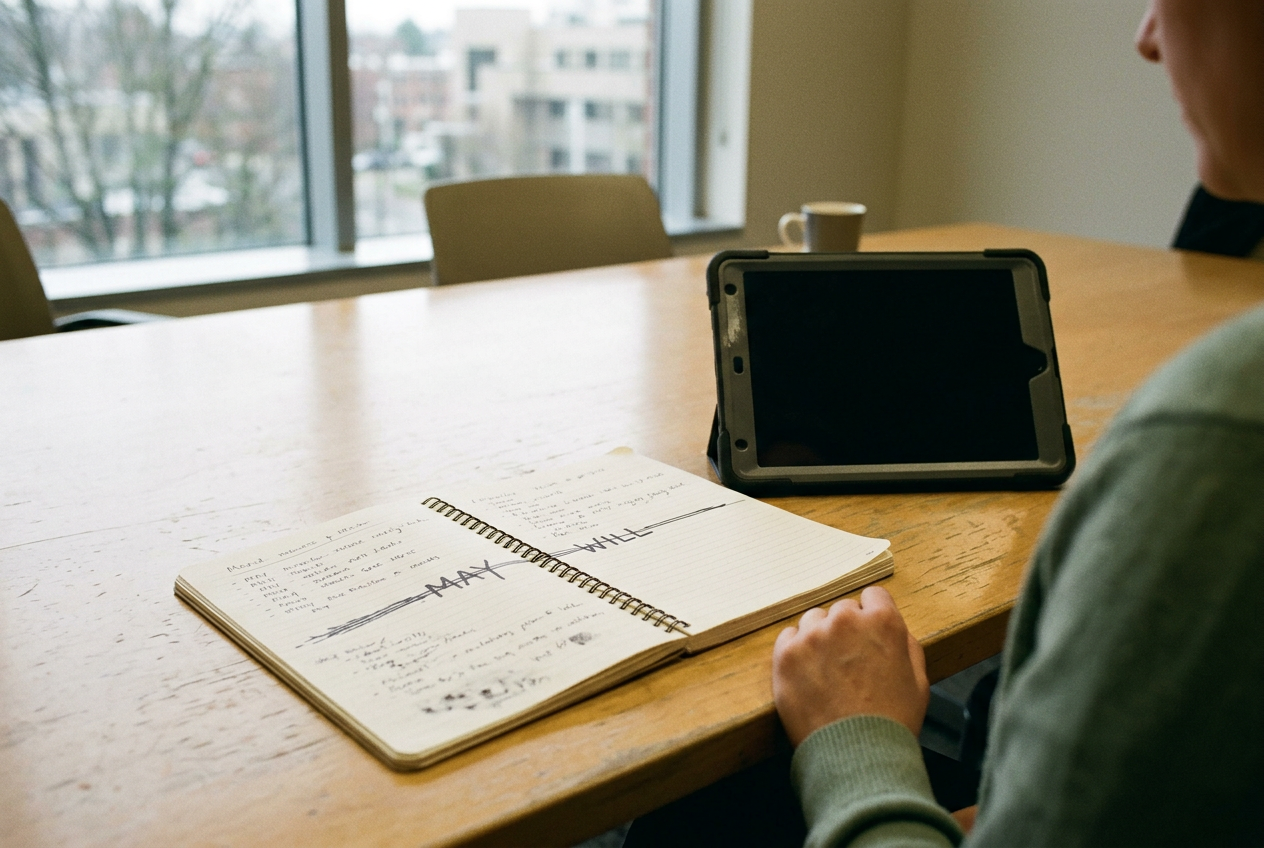
Ana brought a notebook to every hospital meeting. On one page, she recorded the medications her father had received. On another, she wrote the questions her mother wanted answered in Spanish.
The notebook was not a medical record. It was how Ana kept the days from running together after her father became critically ill following an infection and was admitted to intensive care. By the sixth day, she had filled 18 pages.
Her mother sat beside her during the family meeting, holding the notebook on her lap. Ana had agreed to take notes while a live translation tool displayed Spanish text on a tablet provided for the conversation.
The family had lived in the United States for fourteen years. Ana spoke English at work and with friends, but her parents used Spanish at home, where medical words rarely came up until her father got sick. She could translate meals, errands, and household problems without thinking. In the hospital, she worried that one wrong word from her would become part of a decision none of them could take back.
Her father had always asked Ana to explain letters and account notices. That habit had followed them into intensive care, although the stakes were different now, and Ana felt the difference whenever her mother looked at her instead of at the clinician speaking across the table.
A remote medical interpreter had helped during earlier conversations. For this meeting, staff also enabled live translated text so the family could follow the discussion as it moved between the doctor, a nurse, and Ana's mother.
The tablet listened through its microphone. English sentences appeared in Spanish a moment later.
Ana liked being able to see the words. If she missed something while writing, she could look up and catch the next line. Her mother read along, touching the screen once when the text moved faster than she expected.
The tool also changed the shape of the room. Instead of waiting for Ana to restate every sentence, her mother watched the clinician and reacted without first checking her daughter's face, which gave Ana a brief sense that she had stepped out of the interpreter role and returned to being her father's child.
She still kept the notebook open.
The word that changed
The clinician described what the medical team knew and what remained uncertain. Her father's body had shown some signs of responding to treatment, but his condition was still serious, and no one could say how much strength or independence he might regain.
The discussion turned to whether the family wanted to continue intensive treatment for a limited period while the team watched for clearer signs of recovery. Ana understood the clinician to be describing a possibility. The Spanish text made the outcome sound expected.
Her mother leaned toward the tablet. Her expression changed before Ana had worked out why.
A bilingual staff member standing near the end of the table had been listening while reading the translated text. She interrupted and asked the clinician to pause. The translation had removed the uncertainty, she explained. A statement that recovery might be possible had appeared as a statement that recovery would happen.
On a blank page, Ana wrote MAY on the left and WILL on the right. She drew a line between them, then crossed it out.
The difference was one word in her notebook. In the conversation, it changed the future her mother believed the medical team had offered.
The clinician went back over the prognosis with a medical interpreter, using shorter sections and leaving space for the family to respond. Ana's mother had not understood that the proposed treatment could continue without producing the recovery she hoped for. She had thought the doctors were telling them that more treatment would bring her husband home.
No one accused the tool of inventing the entire conversation. Most of its translation had been understandable, and that made the changed meaning harder to notice, because the sentences around it had sounded natural enough to earn the family's trust.
Ana watched her mother move her hand away from the tablet. The two of them began looking at each other again.
A decision made after the pause
The family did not decide during that first meeting. The staff arranged another interpreted conversation, and Ana took the notebook home with the page still open to MAY and WILL.
Her mother was angry, though not in a single direction. She was angry that the translation had sounded so sure. She was also frustrated that Ana had not caught the change herself, and then ashamed of that frustration because she knew her daughter had been trying to listen as a family member, not serve as the final check on a medical conversation.
Ana understood the reaction. For years, her parents had trusted her English, while she had trusted their judgment about everything that came before paperwork or an unfamiliar system. The tablet had seemed to offer a cleaner arrangement, one in which her mother could receive information directly and Ana could stop carrying every sentence between them. After the error, that independence felt less available.
During the next conversation, a medical interpreter handled the spoken translation. The live text remained off. The clinician explained that continued treatment could create more time to observe her father's response, but it could not promise the outcome the family wanted.
Ana wrote for three pages. Her mother asked for parts to be repeated, then chose with Ana to continue treatment for a defined period while the team assessed what changed. The choice resembled the one they had been close to making earlier, but the reason was different. They were no longer agreeing because they believed recovery had been forecast.
Her father later left intensive care and began a long period of rehabilitation. Five months afterward, Ana was helping him at home, where some days brought progress and others did not. The translation error had neither predicted nor caused that uneven recovery. It had changed what the family thought they knew when they were asked to decide.
The recording they had not considered
Privacy entered the story later. At the meeting, Ana had noticed the microphone symbol on the tablet but had not asked where the audio went or whether the translated text would remain available. Her attention was on her father and the decision in front of them.
Afterward, she asked the hospital how the tool handled spoken information. Staff explained the general privacy terms and confirmed that the hospital managed the device, although Ana remained unclear about how long temporary processing data existed outside the visible transcript. The answer did not give her a specific harm to point to. It gave her another uncertainty.
That uncertainty felt different from the clinical one. The clinician had named the limits of what medicine could predict. The tool had hidden a limit by making tentative language sound firm, while its own handling of the family's words remained mostly out of sight.
Ana did not reject translation technology after the meeting. During rehabilitation appointments, translated text helped her father follow routine explanations, especially when an interpreter was not yet connected. She watched it differently, though. A fluent sentence no longer felt to her like proof of a faithful one.
The notebook stayed in her bag. Near the back, she added a page for words that altered the force of a sentence: possible, likely, expected. She did not turn it into a complete glossary. There were too many circumstances around every word, and she had already learned that a tidy translation could carry the wrong degree of hope.
Questions people ask
Can a live translation tool change the meaning of an ICU prognosis?
It can produce language that sounds clear while changing how certain a statement is. In this family’s meeting, most of the translated conversation was understandable, but one shift from possibility to expectation altered what the mother believed doctors were promising about recovery.
Why did the family trust the translated text?
The tool allowed Ana’s mother to follow the conversation without waiting for her daughter to interpret each sentence. Its earlier translations had sounded natural, and the family was tired and focused on a critically ill relative, so the inaccurate degree of certainty did not stand out immediately.
What difference did the bilingual staff member make?
She compared the spoken English with the Spanish appearing on the screen and recognized that uncertainty had disappeared. Her interruption stopped the meeting before the family decided, and a medical interpreter then helped the clinician explain the prognosis again without presenting recovery as assured.
What happened to the family’s privacy concerns?
Ana later received a general explanation of how the hospital-managed device processed speech, but she remained unsure how long temporary data persisted. She continued using translated text in some settings while paying more attention to the microphone symbol, with the notebook open beside the tablet.
One story a day
The story of the day, in your inbox
One real story about AI each morning — no hype, no alarm, just company for the road.