An Adoptee’s AI Invented a Link Between Two Families
A chatbot turned scattered adoption records into a convincing family theory. Before contacting a possible relative, the adoptee asked a human researcher to test the link.
November 5, 2026 · 7 min read

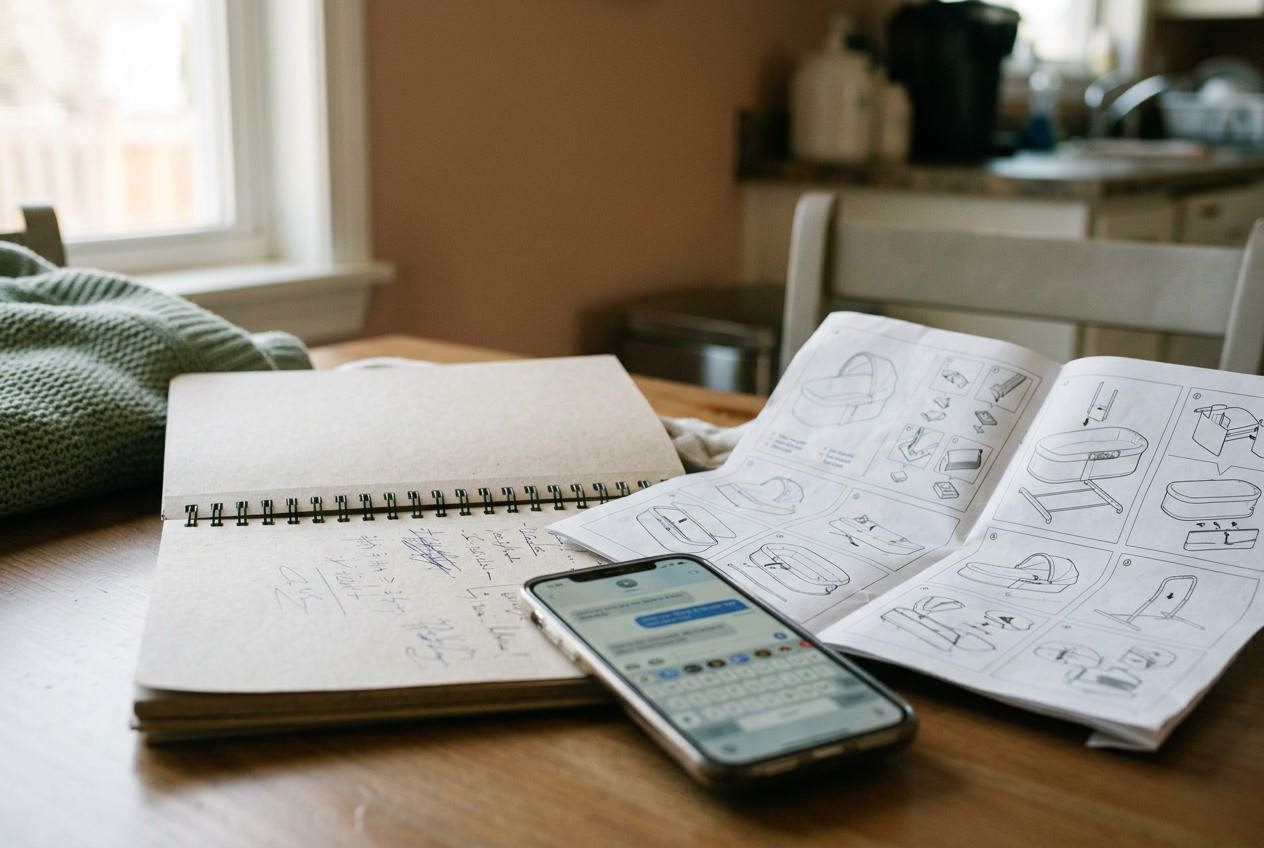
Mara had spent fourteen months building a spreadsheet from the records of her adoption. It had 47 rows. Each row held a statement from a document, followed by the source that supported it.
There was the amended birth certificate she had known since childhood. A nonidentifying agency summary described her birth mother’s age, education and family structure without giving a name. Later records included marriage notices, obituaries and public indexes from an Ohio county where Mara believed part of her maternal family had lived.
The spreadsheet made the gaps visible. A birth year appeared without a full name. One obituary named surviving sisters, though none could be connected to the unnamed woman in the agency summary. Initials repeated across documents, sometimes decades apart.
Mara was in her early 40s. She had already learned that searching as an adult adoptee could make ordinary records feel unusually charged. A cafeteria job in an old directory might be useful evidence, or it might belong to somebody who had nothing to do with her. She wanted a way to organize the fragments without turning every resemblance into kinship.
A conversational AI tool seemed well suited to the first part. It could read text, compare spellings and return information in a consistent format. Mara removed some addresses, replaced living people’s names with initials and uploaded excerpts from the spreadsheet over several evenings.
She told the chatbot to distinguish documented facts from possibilities. At first, it did.
It normalized dates that had been written in different formats. It noticed that a surname appeared once with an extra letter. When Mara pasted a difficult paragraph from the agency summary, the tool separated what the document stated from what it left unknown. Those small tasks gave her relief.
The 47-row spreadsheet began to feel manageable.
A bridge in the spreadsheet
The trouble began with two families who had lived in the same county.
One row contained the agency’s statement that Mara’s birth mother had an aunt who worked in a school cafeteria. Another cited an obituary from Family H, which named a surviving sister with the same first initial as a woman in a public directory. That woman had worked for a local school district.
The chatbot connected them.
In a summary it described the directory entry as supporting a probable maternal connection between Family H and the unnamed family in the adoption record. It then arranged the people into a proposed family group, placing the cafeteria worker in the aunt’s position.
The result was plausible. The county matched. The work description was close. The ages could fit, and one first name seen elsewhere in the records appeared in both families.
Read from top to bottom, the explanation had the shape of a careful finding.
Mara copied the proposed connection into her spreadsheet. She added a new row beneath the documented material and marked it as an AI inference, though the wording from the chatbot stayed with her: probable maternal connection.
Over the next week, that phrase changed the weight of the other rows. An obituary that had been only one possibility now looked like a family notice. A person listed as a surviving child began to look like Mara’s possible cousin. She found a current mailing address through public records and drafted a short introduction.
She did not send it.
The delay came from a detail the chatbot had treated as minor. Its summary referred to the cafeteria worker and the aunt as if they were the same person, but the agency record had never supplied the aunt’s name. The school directory did not identify the worker’s siblings. No document crossed that distance.
Mara asked the tool to show the evidence for the relationship. It pointed back to the rows she had provided and explained that the shared place, approximate ages, occupation and recurring names made the connection likely. The response sounded narrower than the first summary, yet it still treated compatibility as support.
That distinction bothered her. She printed the spreadsheet, circled the new row and contacted a volunteer researcher who had experience reading adoption-era records.
The sentence beneath the sentence
The researcher began with the 47 rows rather than the chatbot conversation. Together, they traced each statement to an image or record excerpt. If a source said only that an aunt worked in a cafeteria, the spreadsheet could not carry a name into that row. If an obituary named sisters, it established those relationships within Family H, not a relationship to Mara.
The proposed bridge rested on ordinary signals that often help people search: location, age range, occupation and repeated names. None was meaningless. The problem was that the chatbot had combined them as though their overlap had been independently verified.
A large language model produces an answer by predicting language that fits the material and the conversation around it. It can organize evidence and describe patterns, but unless it is connected to a reliable genealogy system and made to check each claim, it does not test family relationships the way a researcher does. In Mara’s case, the instruction to build a coherent family account encouraged the tool to complete the missing relationship.
The model also had Mara’s own framing. She had grouped the records because she suspected a connection, then asked the chatbot to compare them. The tool received a small, selected set rather than every family in the county that shared one of those features, so it had no useful way to show how common the apparent match might be.
Its confidence was carried through grammar. The family link appeared as the subject of a clear sentence, followed by supporting details. Qualifications arrived later, after Mara challenged the answer. By then, the proposed relationship had already become easy to picture.
The human review found one more weakness. The directory’s school employee had used a married surname. Nothing in the available records established her birth surname, and the obituary did not mention her occupation. The two descriptions could still refer to the same woman.
They could also describe unrelated people whose lives overlapped in unsurprising ways.
Mara felt embarrassed by how close she had come to writing. The researcher did not treat the draft message as evidence of carelessness. Contact between biological relatives could carry consequences for people who had not expected it, and Mara had paused while the decision was still hers.
They changed the spreadsheet. The AI-created row remained, but its status became unsupported hypothesis. The phrase probable maternal connection was moved into a notes cell so that it could not be mistaken for language from a source.
The correction did not settle Mara’s family history. It removed one answer.
Keeping the useful part
Privacy became harder to separate from accuracy. Mara had redacted many living people’s details, but one court summary included her original surname and birth information. She had uploaded it while trying to resolve a date conflict, without stopping to examine how long the platform might retain the conversation or whether submitted material could be used beyond that session.
She later deleted the thread and reviewed the platform’s data controls. The action gave her a boundary she could understand, though it could not tell her everything that had happened to the text after upload. The uncertainty felt different now that the files concerned relatives who had never agreed to be part of her search.
Still, she did not abandon the chatbot. It had been useful when the task was bounded. She continued using it to standardize dates from transcribed records and to identify spelling variations, replacing personal names with neutral labels before pasting text. Each output went back into the 47-row spreadsheet only after she compared it with the source.
Six months after the human review, Family H was still in the file. Mara had found no document that joined it to her maternal line, and she had not contacted the possible cousin. She kept the drafted introduction in a separate document.
The spreadsheet looked less complete than the chatbot’s account had sounded. Several cells were blank again. Mara preferred seeing them that way.
Questions people ask
Can a chatbot verify a biological family relationship?
A general conversational chatbot can compare names, dates and places, then describe a relationship that would fit them. In Mara’s search, it could not verify that relationship because no uploaded source supplied the missing link. Its proposed family group was a plausible reading of selected records, not proof of kinship.
Why did the
AI sound certain when the evidence was weak?
The tool generated fluent language from patterns in Mara’s records and from her request for a coherent account. Shared geography, similar ages and a matching occupation gave it material for a convincing explanation. The sentence became more confident than the underlying evidence because the model completed the narrative instead of preserving the gap.
What privacy issue did the uploaded records create?
Mara’s excerpts included information about her adoption and, in one document, identifying details she had meant to limit. She later used the platform’s deletion and data controls, but the experience changed how she handled relatives’ information. Future chatbot tasks used neutral labels rather than names of living people.
Did she stop using AI for ancestry research?
No. Mara kept using the chatbot for narrow clerical work, including date formatting and spelling comparisons, while checking each result against the original record. She no longer asked it to complete a family tree from gaps. In her spreadsheet, the relationship cell beside Family H remained blank.
One story a day
The story of the day, in your inbox
One real story about AI each morning — no hype, no alarm, just company for the road.