A Tribal Language Class Made a Do-Not-Type List Before Using AI
A teacher wanted AI to generate practice dialogues. The class first spent six meetings deciding which everyday phrases could enter the tool and which community-held words would stay out.
August 9, 2026 · 7 min read

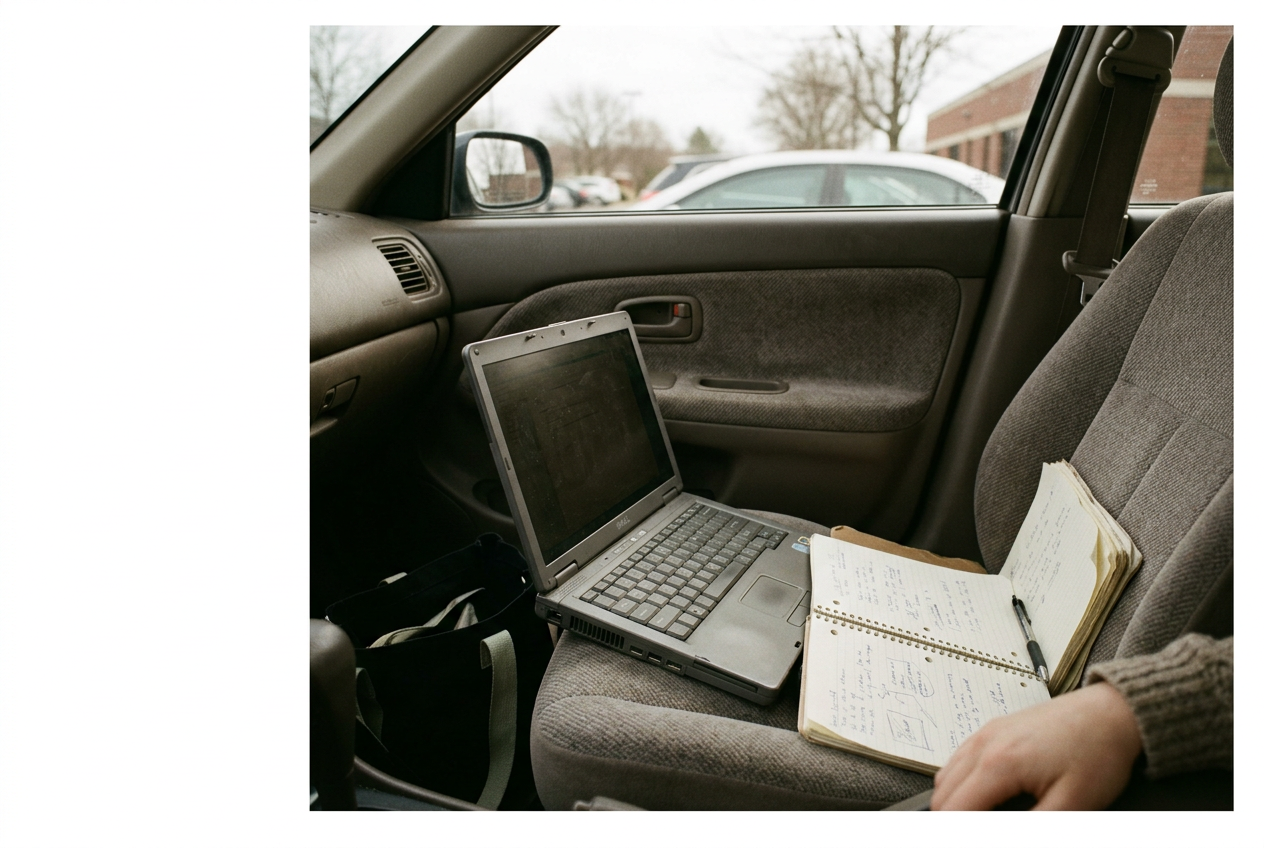
The notebook lay open near the teacher’s laptop, with one heading on each facing page. The left said “Okay for the tool.” The right said “Keep in community.”
No language words appeared on the right page. Instead, the teacher had written categories in English: words connected to certain ceremonies, personal names used in traditional contexts, and teachings that belonged with particular speakers. By the end of six class meetings, that page held 27 entries.
The class had not started with a refusal. The teacher taught a tribal language at a community school in the United States, where students could greet relatives and name familiar objects but often stalled once a conversation moved past its opening lines. She wanted more practice dialogues than she had time to write at her desk after class.
A text-generating tool seemed useful for the repetitive part. It could take a short exchange about buying food or asking for a ride and produce several variations, giving students more chances to change a verb or answer in a complete sentence. The teacher would still check the grammar. Nobody expected the platform to know the community better than the people in the room.
Then a student began copying a worksheet into the prompt box.
The worksheet mixed ordinary vocabulary with a phrase taught only during part of the year. The teacher stopped the student before anything was submitted, closed the laptop, and reached for the notebook. The phrase was not secret in the sense that no outsider had ever heard it. Its use was bounded by season, setting, and the relationships among the people speaking.
That distinction did not fit neatly inside a privacy toggle.
The first boundary was not about grammar
The class already knew the model would make mistakes. During an early demonstration using English prompts and publicly shared vocabulary, it produced a dialogue that looked smooth on the screen but attached the wrong ending to a verb. A fluent speaker caught it. Several students did not.
That error mattered, though it was familiar. Language teachers have always dealt with weak dictionaries, clumsy worksheets, and recordings made by speakers from another dialect area. A mistaken suffix could be circled and discussed.
Retention felt different. The platform’s account page described controls for saved conversations, but the teacher could not tell from the brief notice whether every submitted word would disappear, whether some material might be reviewed, or whether settings could change later. The school had approved the tool for classroom experimentation. That approval did not answer the community’s question about who had authority to place a word there.
The teacher wrote “Keep in community” across the right page of the notebook. Students began naming kinds of language that made them hesitate, while a community language keeper joined later conversations and pushed the class beyond a simple division between sacred and ordinary.
Some words were common but carried knowledge through the way they were spoken. A kinship term could tell listeners how people understood a relationship. A place description might preserve information that was not meant to become a generic example sentence. Even a harmless-looking dialogue could reveal a speech pattern associated with a particular family or ceremonial role.
The notebook changed the pace of the class. Instead of testing the tool and sorting out trouble afterward, they paused adoption for six meetings, which frustrated students who had already seen how quickly it could generate drills. The teacher felt the delay too. Her stack of unfinished practice sheets remained beside the laptop.
Still, the right page kept growing.
This was not a statement about every tribal language. Communities hold different rules, and people within one community can disagree about what is public, what is shared by permission, and what should remain in a specific setting. The class was drawing a boundary for its own use of one tool, at one school, during that semester.
A blank space became part of the prompt
The class eventually returned to the grocery-store dialogue that had prompted the experiment. This time, the teacher entered instructions in English and used only language already printed in public teaching materials approved by the school. Where a culturally held term might have appeared, she inserted a blank label.
The model generated a dozen short exchanges. Some were dull. Two used English sentence order where the tribal language required another structure, and one gave a speaker a response that no fluent person in the room would choose. Students marked the problems on paper, then rewrote the exchanges with the teacher.
The result was useful enough to continue, though less magical than the first demonstration had suggested. Generating raw material took little time. Reviewing it took most of a class period, especially when a sentence was grammatically possible but wrong for the relationship between its speakers.
The notebook stayed open during each test. Before text went into the prompt box, the teacher glanced at the right page, and students learned to stop when a worksheet included language from a restricted category. They did not type the protected term and then ask the platform to forget it. They left it out.
That choice narrowed what the tool could do. It could create drills from approved everyday language, but it could not build a broad community dictionary, imitate a ceremonial speaker, or generate stories from material that belonged in oral teaching. The class also kept recordings out of the pilot because a voice could carry identity and context that written vocabulary did not.
The boundaries were not hidden from students as an administrative rule. They became part of the lesson, which meant discussing why a word could be suitable for a classroom conversation yet unsuitable for a company’s servers, even when nobody knew whether that exact word would ever reappear in another user’s output.
A model does not need to reproduce a phrase verbatim for the concern to matter. Submission itself can move language from a relationship governed by community expectations into a technical system governed by policies the class did not write. For the teacher, uncertainty about retention was enough to make some material ineligible.
The distinction was easy to state and harder to practice. One student pointed out that the publicly available materials had been posted years earlier, under circumstances the class could not reconstruct. Public access did not prove broad consent. The teacher added a note to the left page: publication alone would not settle the decision.
That note stayed there, underlined once.
The tool entered the class on limited terms
After eleven weeks, the class adopted the platform for a narrow set of practice dialogues. The teacher used vocabulary that the school and community language program had already designated for open instruction, then reviewed every generated sentence before students treated it as study material.
The pilot did save some preparation time. A basic dialogue could be varied without the teacher retyping each version, and students who needed another round of practice had fresh material. The tool remained poor at social context. It often made both speakers sound alike, even when an older relative and a teenager would choose different forms.
The class never resolved every category in the notebook. Dialect patterns remained disputed. So did old recordings that had circulated online without a clear account of who authorized them. Those materials stayed on the right page while the discussion continued.
There was a safety lesson here, but it did not arrive as a poster about responsible technology. It arrived through the student’s hand above the submit button and the teacher’s realization that deleting a draft from the screen would not restore the old context once the words had been entered.
The notebook gave that hesitation somewhere to live. It also made disagreement visible. Students could add a category, community language keepers could challenge it, and the teacher could leave a line unsettled rather than letting the platform’s available settings make the choice for them.
Near the end of the semester, the left page held examples of open classroom language and brief descriptions of acceptable exercises. The right page still held no protected words. Anyone picking up the notebook would know where the boundaries were without receiving the language those boundaries protected.
Questions people ask
Can a language model retain words entered in a classroom prompt?
Retention depends on the platform, account settings, and policies in effect at the time. The class could not establish from a short account notice what happened in every case, so it treated uncertain retention as meaningful and excluded community-held language rather than relying on later deletion.
Can
AI-generated dialogue help students learn a tribal language?
In this class, the tool helped produce extra variations of basic dialogues, which gave students more material to correct and practice. It also generated grammatical and social mistakes. Fluent review remained necessary, and the class limited the tool to language already approved for open instruction.
Does publicly available language count as community-approved AI material?
The class decided that online publication did not settle consent. Some older teaching materials and recordings were public without a clear record of who had authorized broader reuse, so the teacher did not assume that availability granted permission to submit them to a model.
How did the class decide what stayed out of the tool?
Students, the teacher, and community language keepers discussed categories before the pilot and kept uncertain material out while disagreements remained. They recorded boundaries in English rather than copying protected terms. At semester’s end, the 27 entries were still visible on the notebook’s right-hand page.
One story a day
The story of the day, in your inbox
One real story about AI each morning — no hype, no alarm, just company for the road.