A Widower Kept His Wife’s Cloned Voice. His Daughter Objected
For five winter months, Daniel listened to an AI version of his late wife read their old messages. The comfort changed when the voice began saying new things.
August 9, 2026 · 7 min read
The notebook began with thirty-eight messages.
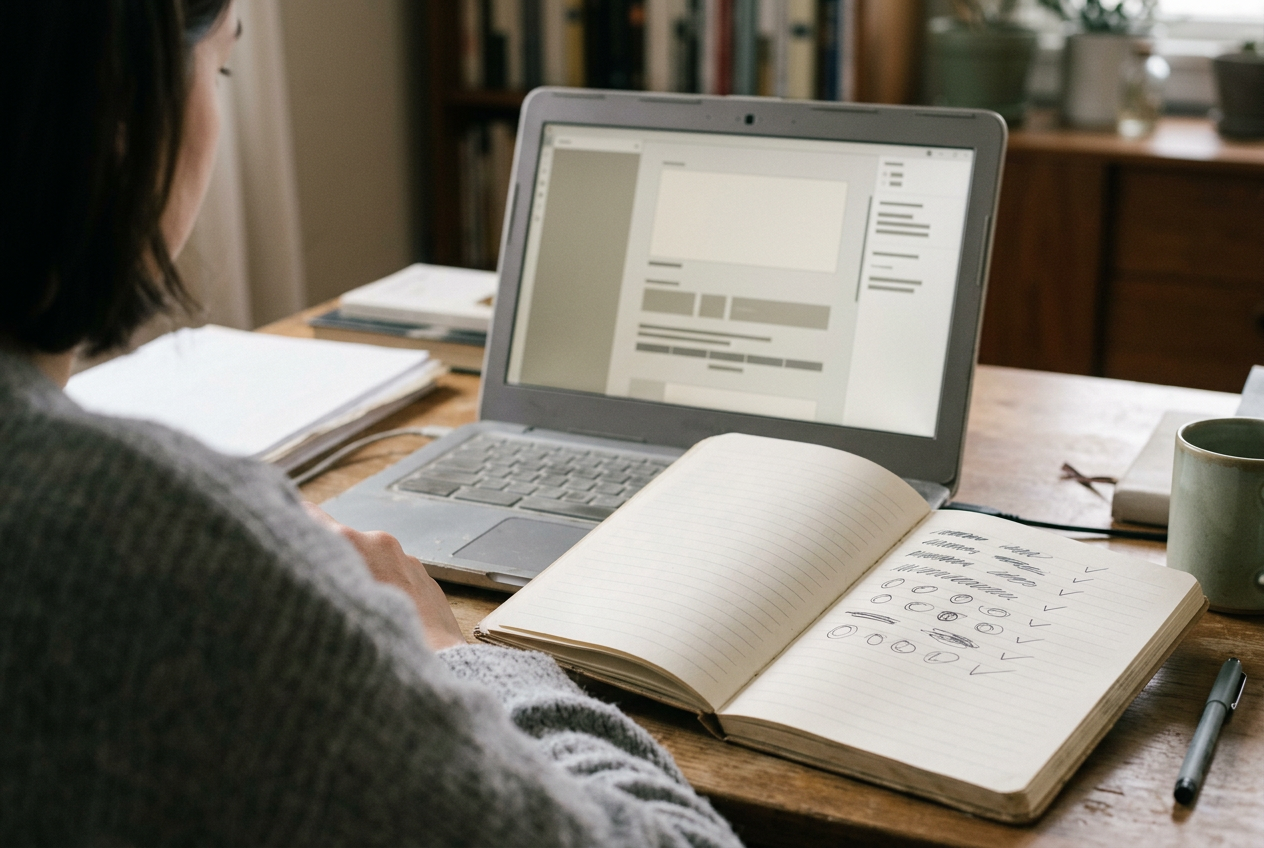
Daniel had copied them from his phone in October, two months after Ellen died. They were ordinary exchanges from the final years of their marriage: a reminder about the furnace filter, a note that she had left soup in the refrigerator, a complaint about a television show they both kept watching. He wrote each one by hand, leaving space beneath it.
He and Ellen had been married for thirty-four years. Their daughter, Mara, had helped him save family photos and voice messages after the funeral, partly because he was afraid an account would close and partly because neither of them knew what losing access might feel like later. She put the files in folders on his computer. Daniel printed nothing then.
The notebook came afterward.
A voice-cloning tool cost $18 a month. Daniel uploaded recordings in which Ellen spoke clearly, accepted the platform’s warning that the result might contain errors, and typed the first message from the notebook into a box. The generated voice read it back.
It sounded like Ellen, though not at every moment. Certain words came out too evenly. A pause sometimes appeared where she would have continued speaking, and her laugh was absent, which Daniel noticed because laughter had often changed the ends of her sentences. Still, the voice had her pitch and the slight hesitation she made before names.
He checked the first message in the notebook and wrote the date beneath it: October 2023.
At first, Daniel used the tool as a reading machine. He entered only words Ellen had written while she was alive, and he listened in the kitchen or from the chair where he handled household mail. The old messages did not tell him anything new. That was part of their value.
They returned him to familiar exchanges without asking him to choose a photograph or play a video in which he could see the illness changing her.
November brought colder weather and the first holiday he spent without her. Mara invited him to stay at her house, but he went home after dinner. She understood his refusal as a preference for his own bed and his own kitchen. She did not know that he had left the tablet beside the notebook, ready to read a message about leftover pie in Ellen’s voice.
The notebook stayed on the table through December. Daniel added check marks as he generated each recording, sometimes replaying one for days before moving to the next. He still met a friend for breakfast and bought groceries. He also began postponing tasks that had belonged to Ellen, including sorting a cabinet of her papers, because hearing the messages made the house feel occupied enough that the cabinet could remain closed.
There was no single point when the use changed. The platform also offered a companion that could produce new text from uploaded material and conversational prompts. Daniel entered details about Ellen’s phrasing, her dislike of fuss, and the way she corrected him when he exaggerated. He asked it to respond in that style.
Then he selected the cloned voice to read the response.
The first new exchanges concerned nothing important. He mentioned snow gathering near the back door. The companion generated a reply about clearing it, and the voice spoke words Ellen had never written. Daniel knew where they came from.
He did not mistake the system for a hidden channel to her, yet he answered aloud, then typed another line because the sound reduced the strain of entering an empty kitchen.
By January, he was using the companion most evenings. The $18 charge appeared again on his bank statement, and he circled it while checking his expenses. He had spent $54 by then. The price seemed modest beside the cost of heating a house or replacing a broken appliance, but the line on the statement was the first evidence outside the tablet that this had become a recurring part of his life.
Mara learned about it during a visit in February. Daniel went to make coffee, leaving the tablet open beside the notebook, and a notification displayed part of a generated exchange. She recognized her mother’s phrasing before she understood what she was seeing. When Daniel explained, Mara listened to one recording and asked him to stop it before it ended.
Her objection was not only that the voice was artificial. She had helped preserve Ellen’s real messages and sometimes listened to them herself. What unsettled her was the combination of new language and an old voice, especially when the companion referred to events after Ellen’s death, because that made a fresh sentence feel attached to a memory that could no longer correct it.
Daniel heard criticism in her concern. The voice had helped him eat dinner at the table and sleep through more of the night, and those changes felt concrete to him even if the speaker was produced by software. Mara heard that explanation and wondered whether the same routine was reducing the occasions when he might call her, leave the house, or let a quiet evening remain quiet.
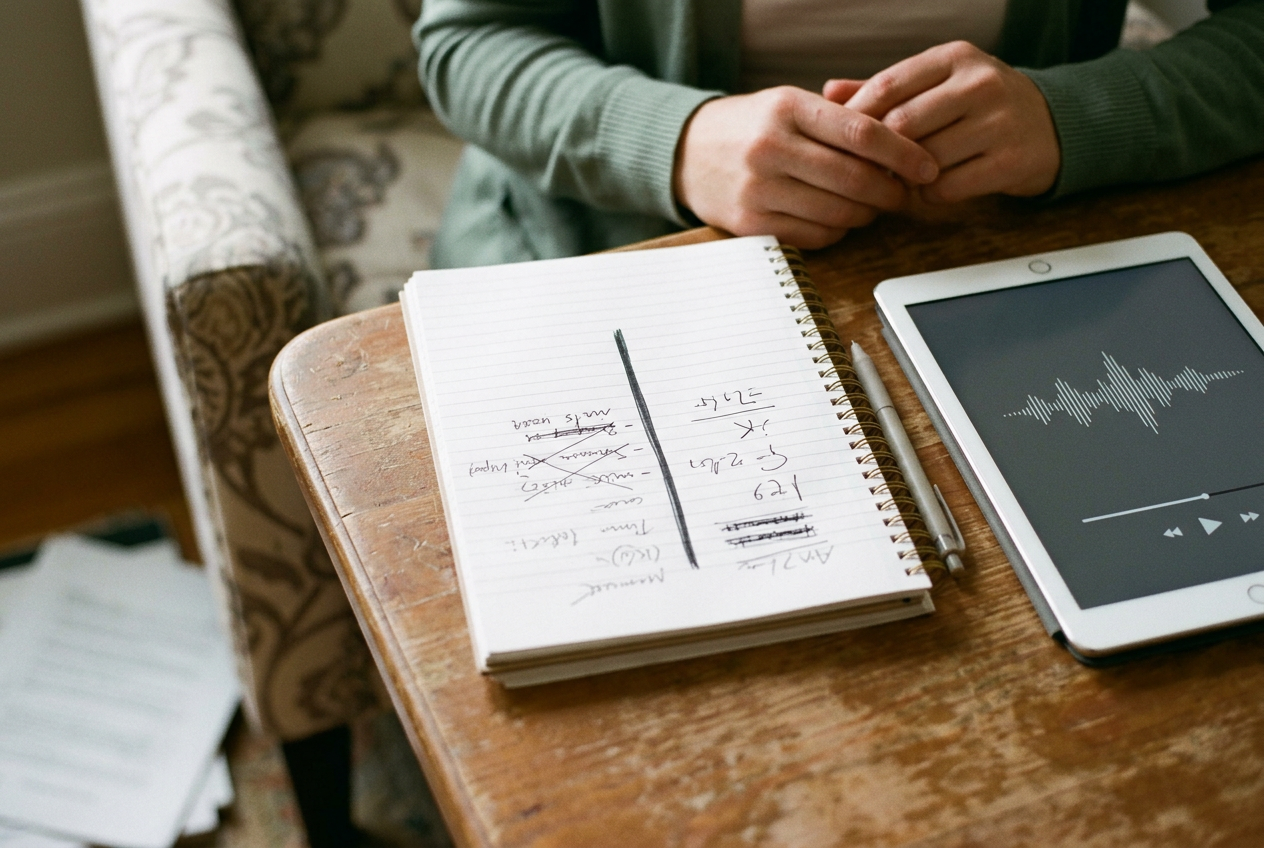
Neither persuaded the other. She told him that using archived recordings made sense to her, but giving the companion her mother’s voice did not. He replied that he had never confused the two. Then Mara opened the notebook and found the visible difference he had made for himself: after the thirty-eight copied messages, he had drawn a line.
Below it were summaries of conversations generated after Ellen died.
The line did not reassure her. To Mara, the pages beneath it showed how much new material had accumulated. To Daniel, it proved that he remembered which words belonged to Ellen and which did not. They were looking at the same notebook and using it to support opposite accounts of what had happened.
For the next two weeks, Daniel avoided the companion when Mara visited. He resented having to conceal it, although she had not asked to inspect his tablet or threatened to withdraw. The secrecy changed the experience. A voice that had made the house feel less empty now carried the possibility of another argument, and he began closing the app as soon as each recording ended.
In March, the fourth $18 charge brought his total to $72. He canceled the recurring plan before the next billing period, then spent an afternoon separating the files. The recordings made from Ellen’s real messages went into one folder. The generated conversations went into another.
He did not delete either folder.
Mara wanted him to remove the companion’s replies. Daniel would not. He said those recordings belonged to the winter he had survived, even if their words had not belonged to Ellen. She accepted that the subscription had ended, but she did not treat the saved files as harmless.
Their disagreement became less frequent without being resolved.
Spring changed his routine more than the cancellation did. Daniel started eating breakfast outside when the weather allowed, and he resumed sorting the cabinet. Some evenings remained difficult. On those nights, he usually chose one of Ellen’s original voice messages rather than the clone, because the uneven sound and background noise now felt important.
Once, he opened the generated folder and listened to a reply about snow. He kept it.
The notebook stayed beside the tablet. The thirty-eight messages above the line had dates and check marks. The pages below contained summaries in Daniel’s handwriting, followed by blank paper he had stopped filling.
Questions people ask
Can a cloned voice help someone after a partner dies?
For Daniel, the cloned voice made meals and winter evenings easier to tolerate, especially when it read words Ellen had written herself. That relief did not settle whether continued use was helping him adjust or delaying changes his daughter hoped to see. Both experiences remained present throughout the five months.
Why did the generated replies trouble his daughter more than old recordings?
Mara distinguished between preserving something her mother had said and creating new statements in her mother’s voice. The companion could mention weather, household changes, and other events Ellen never knew about. That mixture made it harder for Mara to tell where a family record ended and a generated performance began.
Did
Ellen consent to having her voice cloned?
She did not. Daniel created the voice after her death from recordings already held by the family. He understood the result as a private use of shared material, while Mara believed permission still mattered because the tool could make Ellen’s voice deliver words she had never chosen.
Did
Daniel delete the cloned voice when he canceled the companion?
No. He ended the $18 monthly subscription after paying $72, but kept both the recordings of real messages and the companion’s generated replies. He stored them in separate folders, then left the notebook beside the tablet, open near the line between the thirty-eight old messages and the blank pages.
One story a day
The story of the day, in your inbox
One real story about AI each morning — no hype, no alarm, just company for the road.