A School Safety System Flagged Her Private Poem as a Threat
A teen’s creative writing draft triggered a school safety investigation before her teacher saw it. The family came to accept the safety check, but not the system’s missing context.
August 9, 2026 · 7 min read

In October 2024, Rowan was working on a two-page poem in a document tied to her school account. The assignment was a dramatic monologue. Her speaker was fictional, angry and trying to make sense of an emergency drill that had left students whispering about attacks on schools.
The draft contained words about blood, silence and making people remember. One passage imagined the school empty. Another referred to names that adults had failed to hear. Read inside the assignment, the language built a character whose fear had hardened into rage.
Read as fragments, it could sound like a warning.
Rowan saved the draft and went to bed.
By the next school day, an automated monitoring system had generated an alert. A school administrator received excerpts that had been marked as possible safety concerns, and Rowan was taken out of class for questioning before the teacher who assigned the poem had read it.
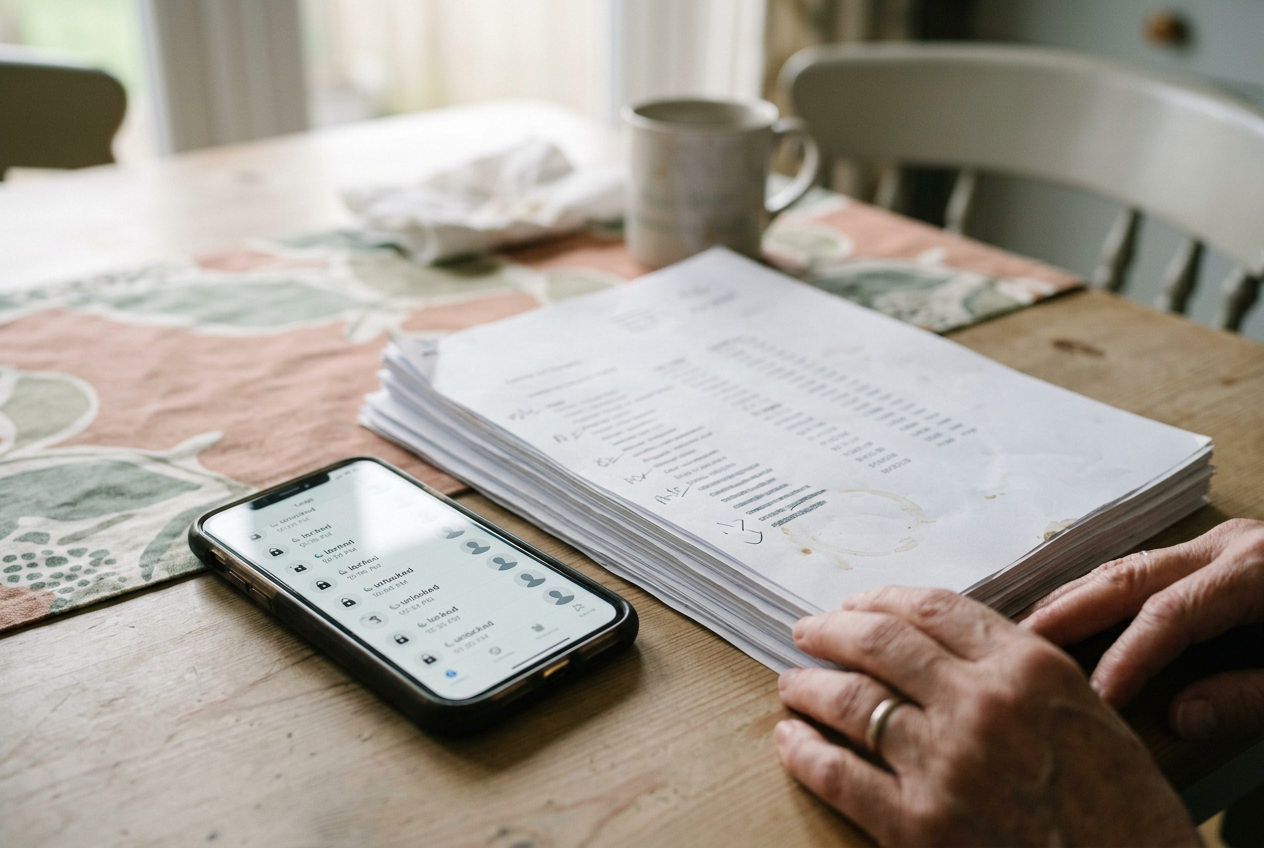
The artifact that stayed with the family was the poem itself: two printed pages, with six passages shaded by the system and the rest of the draft left plain. The flagged language occupied less than a quarter of the text. The assignment prompt was not attached.
The alert arrived without the assignment
Rowan was asked whether the poem described something she planned to do. School staff also asked about weapons at home and whether she felt at risk of hurting herself or another person. Her parent was contacted and came to the school. Rowan missed the rest of the school day.
There was a reason for the questions. Schools have a duty to respond when language may point to violence, self-harm or an immediate threat, and a draft created inside a school account can look different after an alert extracts a few sentences from it. Staff did not know, at the start, whether they were looking at fiction, disclosure or preparation.
Rowan knew it was fiction. That certainty did not travel with the alert.
Her teacher learned about the investigation after the initial questioning had begun. The teacher then supplied the assignment prompt and explained that students had been asked to write in a voice unlike their own. Rowan had also discussed the fictional speaker during class, including the choice to make the character sound threatening before revealing that fear was driving the monologue.
That information changed the school’s reading of the poem, but it did not erase the alert. The safety review continued for six school days while staff considered Rowan’s explanation, the teacher’s account and information from her family. She was allowed to return to class, though her parent was told the review remained open.
At home, the family placed the two-page poem beside a printout of the assignment. The difference was plain. One document showed isolated language selected as a possible threat. The other explained why that language existed.
What the family could establish
The school had provided students with laptops and accounts for classwork. Its device agreement said activity could be monitored for safety and acceptable use, but Rowan’s family had understood that to mean browsing history, messages sent through school systems and conduct on the device. They had not realized that an unfinished creative draft could be scanned while it sat in the school account.
The school confirmed that the alert began with automated analysis. It also confirmed that a person at the school saw the alert before Rowan was questioned. The family was not told whether anyone outside the school had reviewed the draft, how the passages were scored or what threshold caused the system to escalate them.
Those unknowns mattered because automated monitoring is not one mechanism. Some systems look for words or phrases. Others assess combinations of language and surrounding text, then assign categories or risk levels. Certain services add an external human review before sending urgent material to a school, while others deliver alerts directly to designated staff.
The family received a general description, not a reconstruction of what happened to Rowan’s document.
The two printed pages offered the clearest record. Six passages had been selected. None included the opening lines that established the fictional voice, and none included the closing section in which the speaker rejected violence. The printout did not show whether the system had processed the full poem and chosen excerpts, or whether the person handling the alert had only seen a limited window around each marked phrase.
The school would not disclose technical details about its detection rules. That left the family unable to distinguish between a weak analysis of the full draft and an alert format that withheld useful context from staff, even though those failures would call for different fixes.
Safety was real, and so was the surveillance
Rowan’s parent did not want staff to ignore potential threats. During the first meeting, the family answered the questions and provided the information the school requested. They understood that delay can matter when a student appears to describe violence.
Their objection formed later, around the order in which people had been consulted. The school had the name of the class, the document owner and the teacher connected to the assignment, yet Rowan was treated as the subject of a threat inquiry before that teacher supplied context. A brief check with the teacher would not necessarily have ended the safety response, but it would have changed the first conversation with the student.
School officials said alerts sometimes require action before all context is available. They also said the system was intended to identify material adults might otherwise miss, including writing that students never submit. That capacity is central to the safety argument. It is also the source of the privacy concern, because a tool that can find an unsubmitted cry for help can inspect an unsubmitted experiment in voice, anger or grief.
The family did not learn how long the alert, its excerpts or any risk label would remain in school or vendor records. They were told the review produced no disciplinary finding. They were not told that every copy had been deleted.
For Rowan, the distinction between discipline and surveillance felt thin. She had not been suspended, and no punishment appeared on her report card, but adults had read a draft she had not turned in and questioned whether its narrator represented her intentions. For the next four months, she stopped drafting fiction in the school account.
She wrote first versions in a notebook, then transferred finished work after removing language she thought a monitoring system might misread. Her grades did not fall. Her writing changed. She avoided violent conflict even when it fit an assignment, and she replaced references to self-harm in a later story with less direct language.
The teacher noticed the restraint and allowed Rowan to submit one piece on paper. That reduced the immediate pressure, though it did not answer whether other students knew drafts were being scanned or whether they were changing their work without telling anyone.
Six school days after the alert, the investigation closed without discipline. The family asked for a written account of what had triggered the response and what records remained. They received a general explanation of the monitoring program and confirmation that staff had followed the school’s safety process, but no detailed event history.
The two-page poem stayed in a folder at home. Rowan added the assignment prompt behind it and kept the pages the system had marked on top.
Questions people ask
Can school monitoring software read an unfinished draft?
It can if the draft is created or stored in an account covered by the school’s monitoring setup. In Rowan’s case, the document had not been submitted to her teacher, but the system still analyzed it because it was associated with the school account.
Why did the poem trigger a threat alert?
The family was never given the scoring rules. The alert highlighted language about blood, silence and being remembered, while leaving out parts that established a fictional speaker and rejected violence. The record did not show whether the system misunderstood the whole poem or passed along excerpts with too little context.
Did a person review the alert before the investigation?
A school staff member saw the alert before Rowan was questioned, but her teacher had not yet been consulted. The family could not establish whether an outside reviewer also handled the material or what that person would have seen on the alert screen.
What happened to the poem after Rowan was cleared?
The school said the review ended without discipline, but it did not provide a full account of retention or deletion. Rowan’s family knew that the original draft, printed excerpts and investigation notes had existed. Their own copy remained in a folder, with six shaded passages visible on the top page.
One story a day
The story of the day, in your inbox
One real story about AI each morning — no hype, no alarm, just company for the road.