A Refugee Family’s AI Interpreter Mistranslated School Consent
Routine updates became easier without a relative in the room. Then the tool turned permission for an evaluation into agreement to disability services.
August 9, 2026 · 7 min read

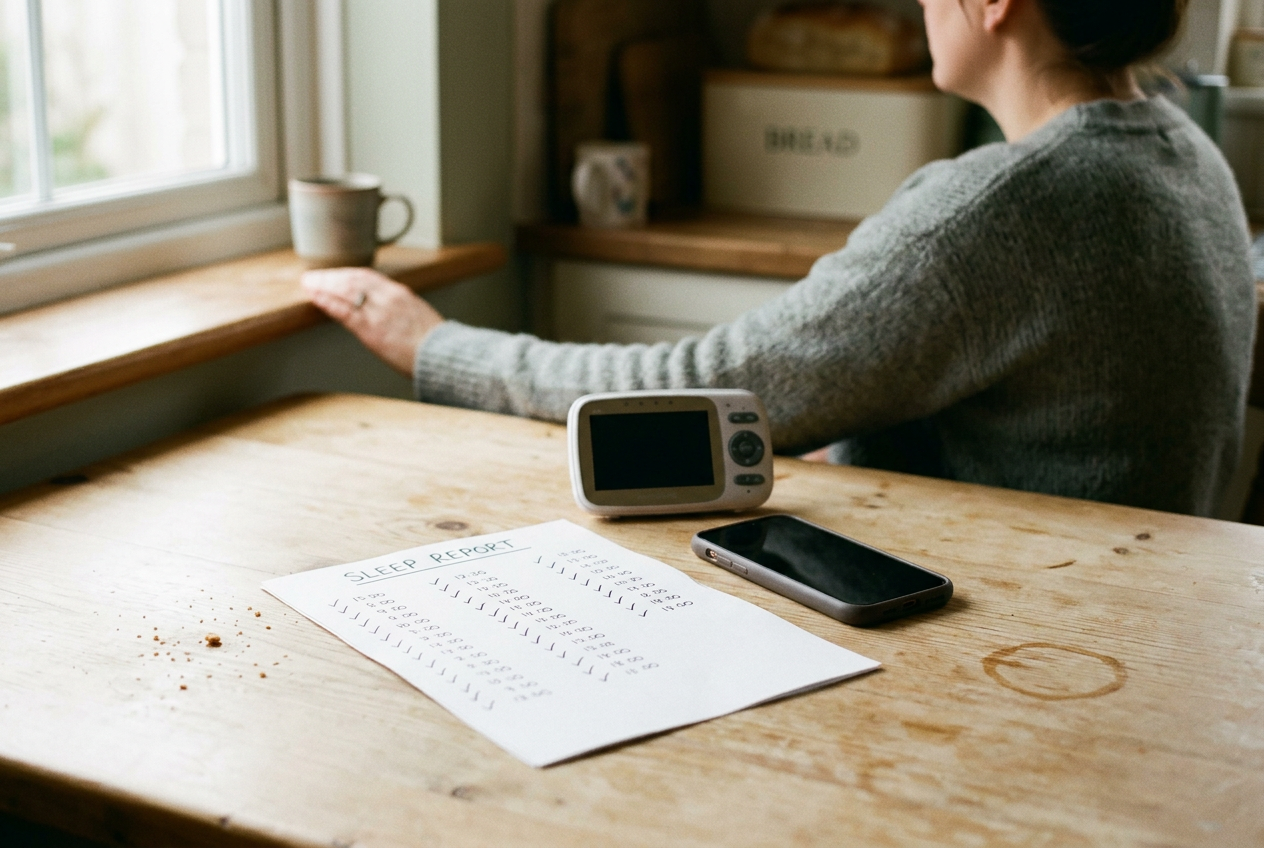
Mariam brought a notebook to every meeting at her son’s school. Fourteen months after the family arrived in the United States, it held the English words she needed often enough to recognize but not always to trust: reading level, attendance, evaluation, permission.
Some pages held questions she had not asked.
Her cousin Leila usually interpreted. Leila knew the school vocabulary, understood the family’s Arabic, and could tell when Mariam’s silence meant confusion rather than agreement. She also knew things about the household that Mariam had never chosen to share with her, because interpretation had made Leila present for conversations about money, health, conflict, and the children.
Leila wanted to help. She did not want to carry all of it.
The school’s AI interpreter appeared to offer another arrangement. Staff could speak into a tablet, wait for translated text and synthetic speech, then listen as Mariam answered in Arabic. The system performed several tasks in sequence: it converted speech to a written transcript, translated that transcript, and generated a voice that read the result aloud.
For ordinary updates, it worked.
At the first conference where they used it, Mariam heard that her nine-year-old son, Samir, enjoyed science activities and had begun volunteering answers. She explained that he read at home with his older sister. The teacher described missed assignments. Mariam asked whether the work could be sent home on paper.
The pauses felt different from waiting for Leila. No relative rearranged work or child care to attend. Nobody learned more than Mariam wanted them to know. She could answer without first looking toward another family member to check whether her words were acceptable.
Afterward, she opened the notebook in the car and marked the meeting as good.
What the voice made easy
The tool was especially useful when the language stayed concrete. A teacher could mention a worksheet, a library book, or the number of days Samir had been absent, and the interpreter usually returned an understandable version. When the tablet misheard a word, the English transcript on the screen sometimes made the error visible to staff, who could repeat the sentence more slowly.
Mariam began using the tool for brief school conversations that once required Leila. A missed bus notice no longer became a family event. Neither did a question about lunch or a reminder about a class project.
Leila felt the change too. For nearly two years, relatives and neighbors had contacted her whenever a letter arrived or an English-speaking adult needed an answer. She had interpreted during tense conversations in which she was still expected to remain a cousin, which meant absorbing the information without commenting on it later and somehow forgetting what she had heard.
She could now say that the tablet might be enough for a routine update. Mariam did not hear this as rejection. Most of the time, it sounded like relief shared between them.
The AI voice encouraged confidence because it spoke smoothly, even when the translation underneath was uncertain. It did not hesitate around school terminology or lower its volume when the subject became sensitive. Mariam had no way to hear whether the system had chosen between several possible meanings. Fluency arrived without visible doubt.
That mattered at the next conference.
The sentence that changed the meeting
Samir’s teacher had noticed that he sometimes needed spoken instructions repeated and found some writing tasks difficult. The school wanted Mariam’s consent for an evaluation, which could help staff decide whether he was eligible for disability services. Consent to evaluate was one decision. Any services considered afterward would involve another discussion.
The distinction did not survive the AI interpreter.
The teacher’s English included several connected ideas: permission to assess Samir, possible eligibility, and services that might be discussed later. The speech-recognition layer produced a shortened transcript. In translation, the conditional language narrowed further, and the Arabic output conveyed that Mariam was being asked to agree to place Samir in disability services.
She stopped taking notes.
Mariam had expected a conversation about his classroom work. Instead, she believed the school had already reached a conclusion and wanted her authorization to act on it. She asked whether the decision had been made. Her question traveled back through the same system, which rendered it as a broader concern about whether the school had decided to help him.
The teacher answered that no decision had been made. The tablet translated the reply, but the reassurance did not repair the first meaning. From Mariam’s side, the school seemed to be denying that it had made a decision while asking her to approve the result.
She declined to sign anything.
In the notebook, beneath the word evaluation, she drew a line and left the rest of the page empty.
This failure was particular to the machine’s design. A human interpreter familiar with school meetings could have preserved the difference between assessing a child and consenting to services, or paused to ask the teacher to separate the sentence. The AI system instead processed likely sequences of words. Once the speech transcript dropped some conditional language, the translation model had less context to recover it, and the natural synthetic voice gave the compressed meaning the sound of a settled statement.
The tool had not merely delivered an existing mistake. It created a new one between languages, then voiced it with enough ease that both adults initially believed they had understood each other.
Bringing Leila back differently
At home, Mariam showed Leila the blank space in the notebook. She described the meeting from memory, repeating the Arabic wording she had heard. Leila did not recognize it as the usual way schools discussed an initial evaluation.
She wanted to help, though the request brought back the old pressure. If she attended every school conversation again, Mariam would lose the privacy the tablet had given her. If she stayed away, the family might make a decision based on language the system had altered.
They settled on a narrower role. Leila would join a follow-up conversation long enough to help identify what had gone wrong, while the school arranged a human interpreter for the detailed discussion. She would not become the default voice again.
Three weeks after the first conference, Mariam returned with her notebook. Staff reviewed the English transcript retained from the earlier exchange and compared it with what the teacher had intended to say. The shortened sentence was still visible. It joined consent to evaluate with the possibility of later services, leaving too much work for the translation layer and too little protection for the difference between them.
With a human interpreter, the teacher separated the ideas. The school wanted permission to evaluate Samir. The evaluation could produce information, not an automatic placement. If staff later proposed support, that would be discussed with the family.
Mariam agreed to the evaluation.
She did not abandon the AI interpreter. It still handled attendance notes, homework questions, and short updates that did not ask her to make a consequential choice. She preferred speaking for herself, even through a machine, when the alternative was asking Leila to enter another private exchange.
The boundary remained imperfect. Technical language could appear in an ordinary meeting without warning, and neither Mariam nor Leila wanted every conference divided in advance into safe and unsafe subjects. The school began shifting to a human interpreter when consent, eligibility, or a major change in support was expected, while the tablet remained available for routine conversation.
Months later, the notebook showed both uses. Several pages held brief updates translated by the tool. On the page with the empty space, Mariam added an Arabic explanation beside evaluation: permission to learn more, not permission for services.
Leila had helped write it. Then she closed the notebook and gave it back.
Questions people ask
Can
AI interpretation handle parent-teacher conferences?
In Mariam’s experience, the tool handled concrete updates about assignments, attendance, and classroom activities well enough to reduce her dependence on a relative. Its limits became harder to detect when a sentence combined technical school language with a decision the family was being asked to make.
Why can an
AI interpreter mistranslate disability consent?
Live AI interpretation often passes speech through several stages. A speech-recognition error can remove conditional words, then the translation model may choose a fluent meaning from an incomplete transcript. In this meeting, the output blurred permission for an evaluation with agreement to services that had not yet been proposed.
What did the family use instead for sensitive meetings?
The school arranged a human interpreter for the follow-up discussion and separated the evaluation from any later conversation about services. The AI tool remained part of routine communication, where its convenience gave Mariam more privacy and reduced the number of family conversations Leila had to enter.
Did Leila stop interpreting for the family?
No. She took a smaller role, helping when context or trust mattered without attending every exchange. At the follow-up meeting, she helped establish the source of the confusion, then left the detailed interpretation to someone else while Mariam kept the notebook open beside the tablet.
One story a day
The story of the day, in your inbox
One real story about AI each morning — no hype, no alarm, just company for the road.