A Reading App Lowered a Sixth Grader Who Paused to Translate
The app treated long pauses as evidence that a multilingual sixth grader was struggling. At home, those pauses meant he was translating the story for his family.
September 22, 2026 · 7 min read
The line appeared near the top of his mother’s phone: Recommended reading level: 4.2.
Her son was in sixth grade. At the start of the spring, the same dashboard had placed him at 5.8, close to the material his class was reading. After eight home sessions, the app began giving him passages about pet care, playground rules, and children organizing a bake sale.
He noticed before she did.
At the kitchen table, he had been reading an article about how cities manage stormwater. The next assignment was shorter, with larger type and questions whose answers sat plainly in the paragraph above them. He finished it and put the tablet down beside a bowl with a spoon still in it.
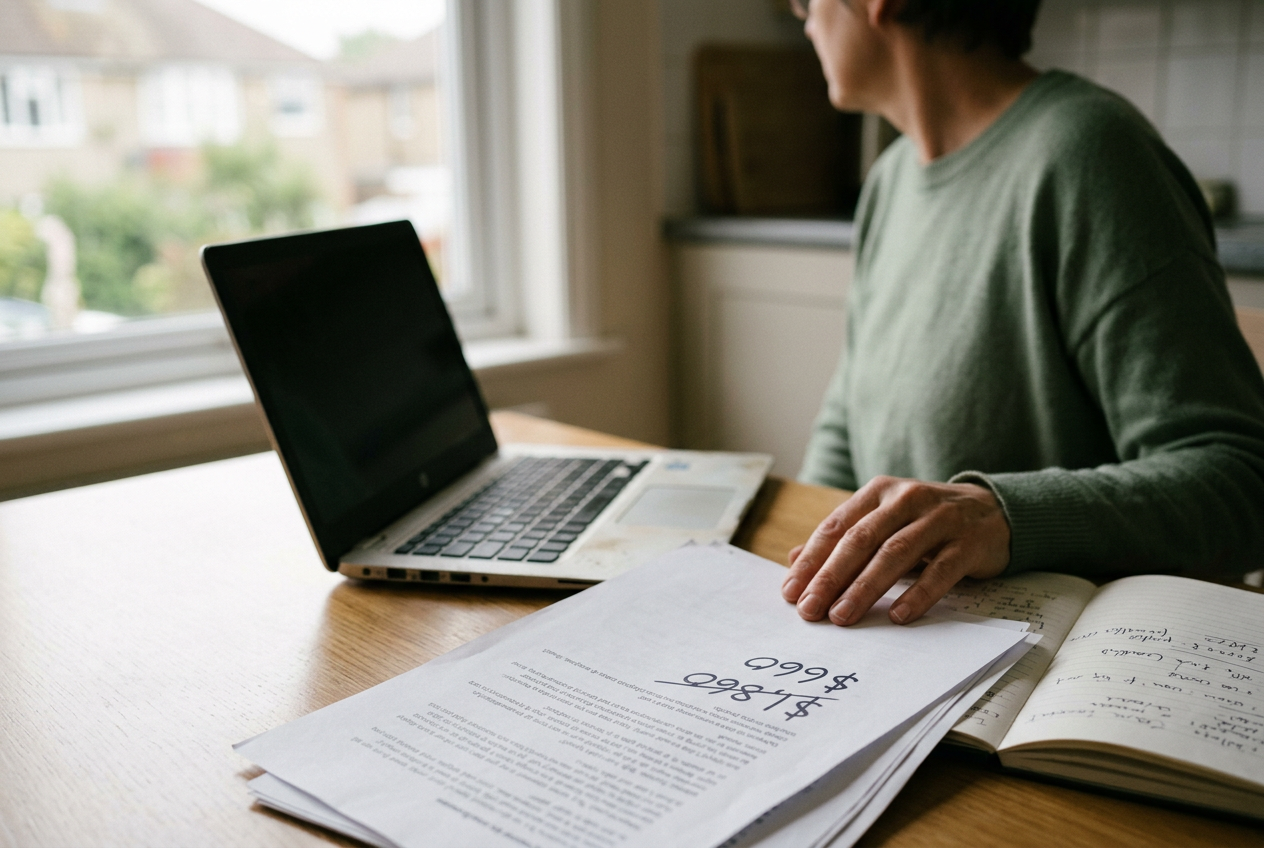
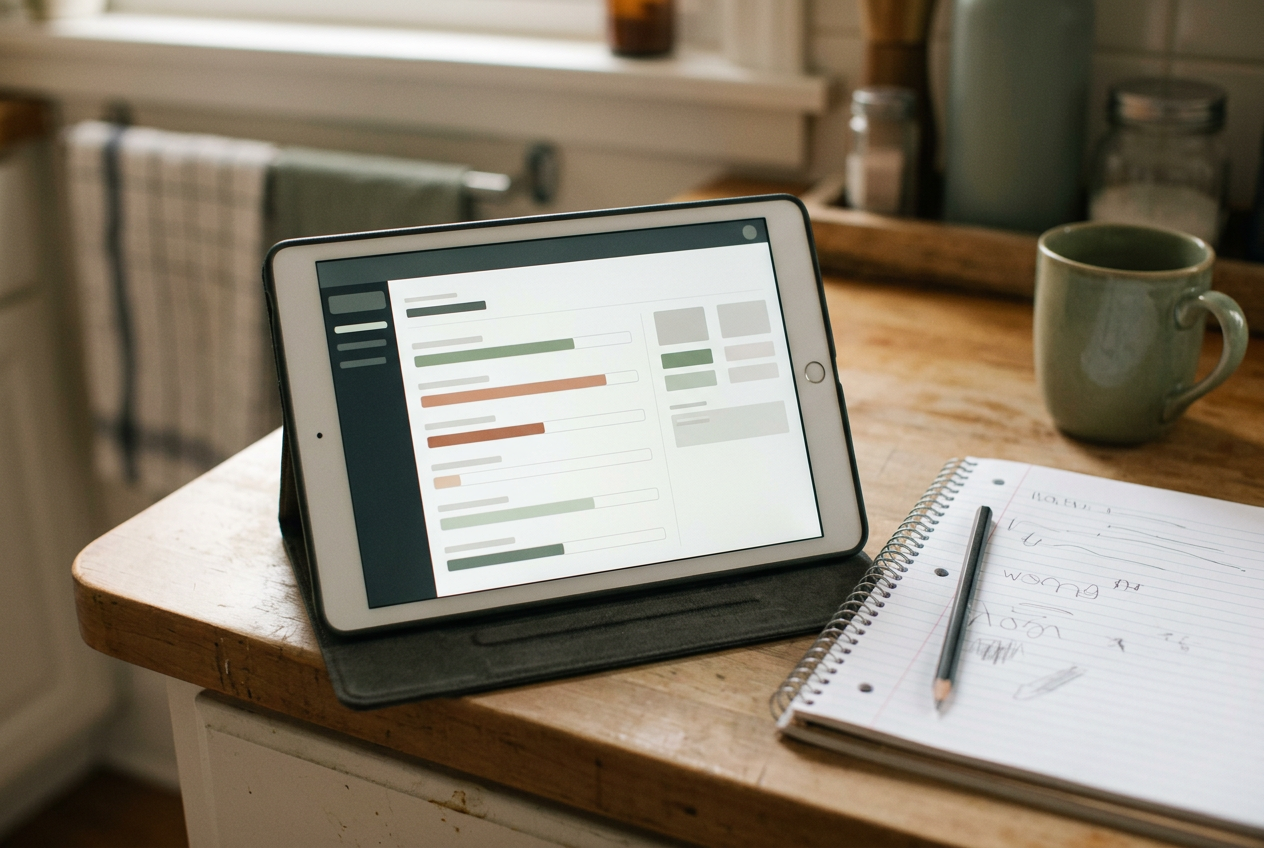
His mother first assumed he had clicked the wrong thing. Then she opened the caregiver dashboard and found the 4.2 recommendation, accompanied by a progress graph that bent downward across eleven days.
The graph looked precise. It had points, dates by month, and a shaded band showing the range the app considered suitable. What it did not show was his grandmother sitting across from him during several of those sessions, asking in Spanish what each passage meant.
He had paused to translate for her.
What the app counted
The reading platform was adaptive, meaning it did more than store quiz grades or display a teacher’s assignments. Its scoring system estimated what a student should read next, then changed the next selection based on signals gathered during the previous one.
Correct answers mattered. So did elapsed time.
The family could not see the model’s full formula, and the company did not publish a complete account of how each signal was weighted. The teacher’s dashboard did show that the boy spent much longer than expected on some paragraphs and delayed before answering several questions. His accuracy remained fairly strong, but the system interpreted the combination as evidence that the material was becoming difficult.
That inference was not absurd. A student who rereads a paragraph repeatedly may need easier text, and a student who hesitates over every answer may be guessing. The app had been built to notice patterns a teacher could miss while helping an entire class, then select material without waiting for someone to review each session.
Here, the same timing data described another activity.
At home, the boy read a paragraph in English, stopped, and explained it in Spanish. Sometimes his grandmother asked about a word. Sometimes he went back to check whether he had translated a detail correctly. The app registered an open passage and a long interval before the next action.
It could not register the explanation taking place a few feet from the tablet because that conversation was not part of the data it used.
The next assignment was easier. He completed it faster, which could have confirmed the model’s decision: the lower level appeared to produce smoother reading. Once that feedback loop began, the app had fewer chances to observe him handling sixth-grade material because it was no longer serving much of it.
A spreadsheet could have recorded the same pauses. It would not have predicted a reading band, replaced the next text, and then treated faster completion of easier work as support for its own estimate. The machine’s judgment changed the material from which its later judgments were made.
His mother kept returning to the dashboard line: Recommended reading level: 4.2. She took a screenshot, mostly because she worried the number might change before she could show the teacher.
The notebook on the counter
The hard evidence against the score was less polished. It was a notebook that spent most afternoons on the kitchen counter under loose school papers.
Inside were responses to the class novel, written in English. In one entry, the boy traced how a character withheld information from his brother, then connected that choice to a later argument. Another page held notes from a science reading about groundwater, including a correction he had added after class discussion.
His mother did not read the notebook as an assessment specialist. She read it as the person who had watched him work for forty minutes, complain about the assignment, erase half a paragraph, and return to it after dinner because he wanted the ending to say what he meant.
The app’s easier passages had not made him happy to read. They had made him efficient. He clicked through them with the flat attention children reserve for work they suspect does not deserve them.
For the caregiver, this was the unsettling part of the 4.2 line. The number did not merely describe him. It decided what practice he received, while its place on a dashboard made the decision look detached from anyone’s judgment.
She sent the screenshot to his teacher and mentioned the Spanish explanations at home. She also photographed two notebook pages, not to prove that every sentence was strong, but to show the kind of reading the app had stopped asking him to do.
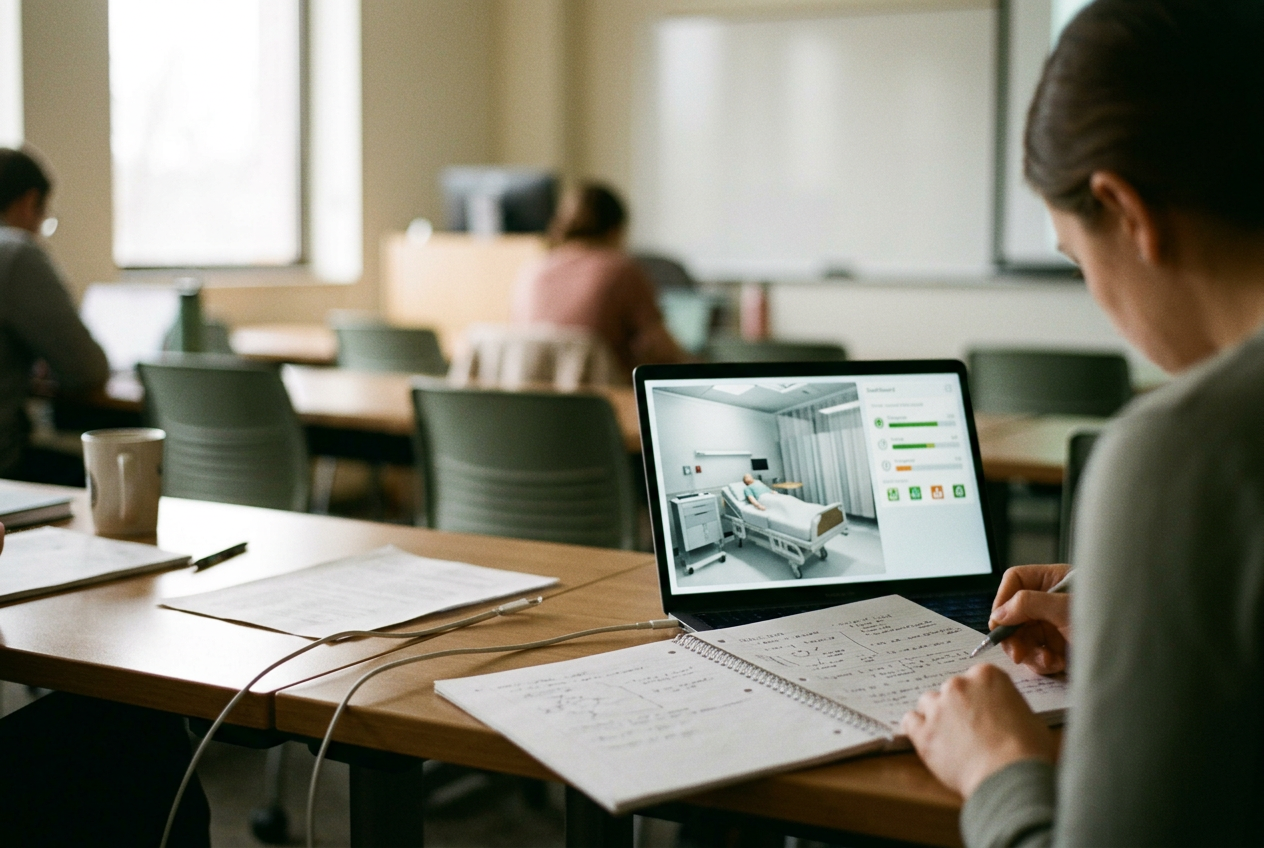
The teacher had her own artifact. In class, students had written about an unfamiliar article without the app’s help. His response identified the author’s main claim and used a detail from the middle of the text, work that did not fit neatly with a fourth-grade recommendation.
There were weaknesses. His spelling shifted when he wrote quickly, and he occasionally chose a broad word where a more exact one would have helped. The teacher had seen him lose track during dense directions. She did not dismiss the platform because it had produced an inconvenient result.
She also did not treat the dashboard as objective progress merely because it had converted behavior into a decimal.
Together, the notebook and classroom response changed the meaning of the pauses. They did not erase the app’s data. They supplied the missing circumstance under which that data had been produced.
Reading in more than one language
The boy’s family used English and Spanish differently across the week. School notices usually arrived in English. His grandmother preferred Spanish at home, while he moved between the languages according to who was in the room and what needed explaining.
Translation slowed him down. It also demanded comprehension.
To explain the stormwater article, he had to decide that runoff was the important concept, hold the sentence in mind, and restate it in words his grandmother used. The app saw inactivity between taps. The family saw him doing additional language work.
This is a particular problem for systems that use behavioral traces as stand-ins for knowledge. Time can be informative, but it is not a pure measure of comprehension. A pause may mean confusion. It may also contain translation, distraction, careful rereading, or a conversation the software cannot see.
The distinction matters more when the score controls the next lesson. Adaptive reading systems often promise a personal path through material, and that can be useful when the estimate is close. The boy liked that the app usually gave him immediate feedback, and his teacher valued having another view of which vocabulary caused trouble.
Neither wanted the system removed.
The teacher changed how she used its recommendation. She kept assigning him grade-level classroom texts and treated the app’s reading band as one data point rather than the boundary of his ability. For home use, she selected a narrower set of passages instead of allowing the platform to keep stepping downward on its own.
After several weeks, the dashboard rose to 5.1. His mother noticed the change while standing at the counter with the notebook open beside her phone. She was relieved, though the new decimal did not feel more truthful simply because it was higher.
The earlier line remained in her screenshot: Recommended reading level: 4.2. It had been generated from real behavior. The behavior had been read incorrectly.
Her son still translated for his grandmother, though they stopped leaving the passage open while they talked. That adjustment improved the timing data. It also taught the family to arrange their reading around what the machine could recognize, which was a stranger outcome than the lower score and harder to place on any graph.
Questions people ask
Can a reading app lower a student’s level because of long pauses?
Some adaptive platforms use elapsed reading time or delayed answers alongside accuracy to estimate difficulty. In this case, repeated pauses helped move the student toward easier material, even though he was pausing to translate. The app could measure the interval, but it could not identify what happened during it.
Why did easier assignments make the app’s judgment look correct?
Once the platform lowered the level, the student completed the new passages faster. That smoother performance was compatible with the model’s estimate, while the system gathered less evidence of how he handled harder text. The recommendation influenced the work that later fed the recommendation.
What evidence challenged the reading score?
His teacher compared the dashboard with a notebook and an independent classroom response. Those pages showed him identifying claims, using details, and interpreting a character’s choices in grade-level material. They did not make the app useless; they showed that its timing data described only part of his reading.
Did the family stop using the adaptive reading app?
No. The teacher limited how far the platform could move him and continued assigning grade-level texts, while his family became more conscious of leaving passages open during translation. Weeks later, the dashboard displayed 5.1.
His mother kept the 4.2 screenshot beside photographs of the notebook pages.
One story a day
The story of the day, in your inbox
One real story about AI each morning — no hype, no alarm, just company for the road.