A Library Search About Grief Triggered a Staff Wellness Alert
Monitoring software turned one patron’s grief research into a safety concern, leaving a librarian to protect him without creating a permanent record of his pain.
August 9, 2026 · 7 min read

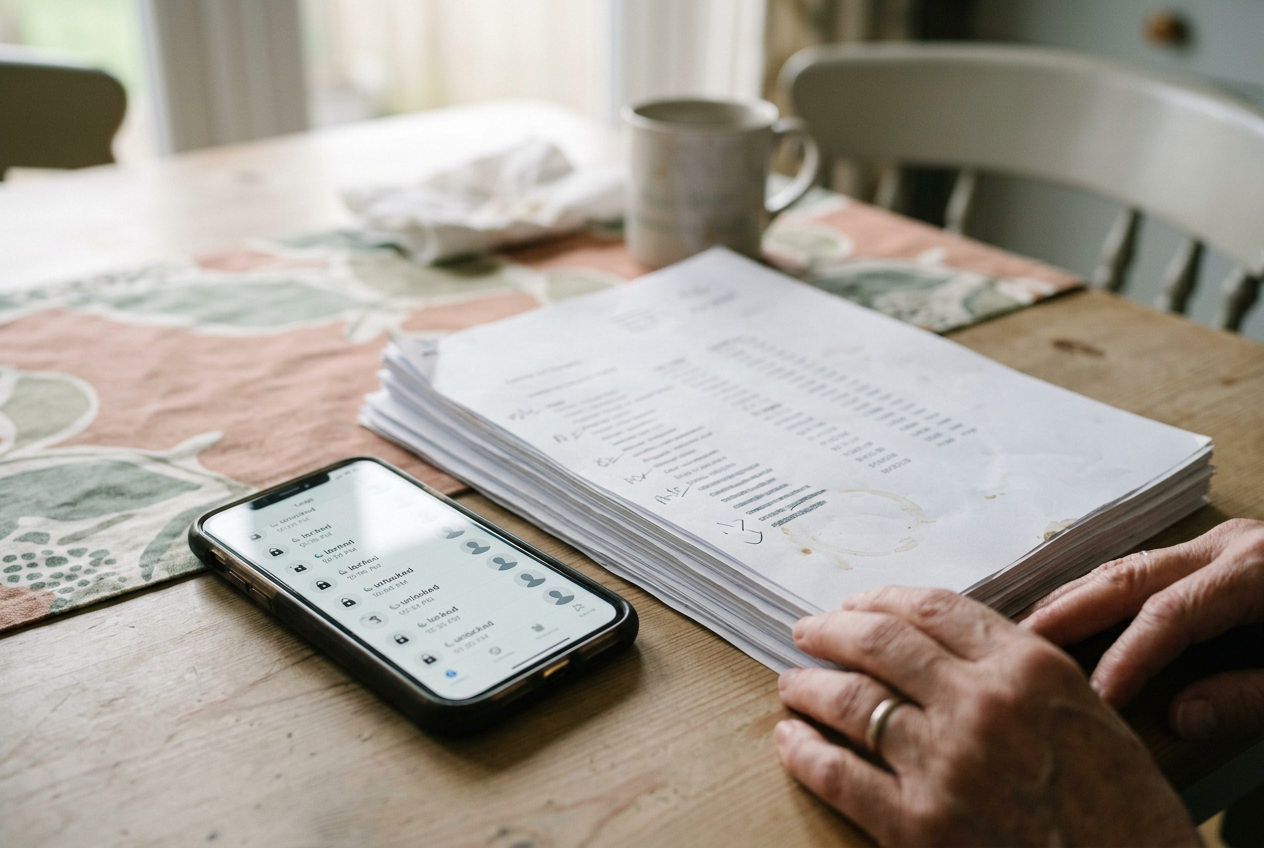
The alert arrived as a one-page activity log at the staff printer. Fourteen lines listed search phrases and page titles from a public computer, followed by a label placing the session in a wellness-risk category. The sheet also connected the activity to the library card used to start the session.
A librarian picked it up and recognized the patron’s name. He was a regular visitor who usually read newspapers, printed household documents, and left without asking for help. Nothing in his conduct that afternoon had drawn attention. The computer had noticed what the room had not.
Four months earlier, his sister had died. He had come to the library because his phone was difficult to read for long stretches, and because searching at home had begun to disturb his sleep. His queries concerned grief, numbness, and whether losing interest in ordinary routines was common after a death. One included language about not wanting to wake up, which the monitoring tool associated with possible self-harm.
The patron did not know the library tracked that language. He understood that public computers could retain browsing history or block prohibited sites, but the sign beside the screen described security and acceptable use in broad terms. It did not explain that searches associated with distress could produce a staff alert tied to his account.
The activity log made the monitoring concrete. A search that had felt private enough in a quiet corner now appeared as fourteen printed lines in another person’s hands.
What the system decided
The library used monitoring software to protect shared computers and enforce its internet policy. The tool could identify malicious pages and content placed into restricted categories. A wellness feature also examined search terms and page information, then sent staff an alert when a session crossed an internal threshold.
Some parts of that mechanism were visible to the library. Administrators could see which category had triggered, the pages associated with it, and the account used to sign in. They could adjust some retention settings. They could not see how the tool weighed each phrase, whether context reduced or increased a score, or how often similar searches passed without an alert.
The supplier’s documentation described the wellness feature as a way to identify potential risk. It did not reveal whether the classification depended on fixed keyword rules, a statistical model, or a combination of methods, and the alert offered no confidence measure that a librarian could use to distinguish an immediate threat from research, fiction, schoolwork, or the ordinary language of grief.
That uncertainty mattered. A page title can describe a person’s state of mind, but it can also describe the subject that person is trying to understand. The software treated the text as evidence of risk. It had no access to the death four months earlier, the patron’s reason for using a larger screen, or the notes he was preparing for a grief support meeting.
The librarian had training for visible distress and direct requests for help. She had much less guidance for a machine-generated warning about someone who appeared calm, which meant the activity log carried authority without giving her enough context to know what kind of intervention it justified.
The approach
She did not read all fourteen lines before walking over. She placed the sheet face down, approached without using the patron’s name, and explained that the computer had generated a concern based on material on the screen. She asked whether he was in immediate danger and whether he wanted to speak somewhere less public.
He said there was no immediate danger. The searches were connected to his sister’s death, and he had been trying to decide which experiences to mention at a support meeting. He was willing to say that much. He did not want to discuss the rest with library staff.
Then he asked what the system had recorded.
The librarian could answer part of that. Staff had received search phrases and page titles connected to his library account. The local dashboard showed that alerts remained available for twelve months under the library’s current settings. She did not know whether the software supplier retained technical logs elsewhere, or whether those logs contained the same text.
His attention shifted from the safety question to the paper. He asked who could read it and whether it would become part of his library record. The librarian knew that circulation records received specific confidentiality protections under local rules, but the status of a wellness alert was less clear inside the institution. It sat in an administrative dashboard rather than the ordinary borrowing system.
The conversation ended without an emergency response. He logged out and took his notebook, leaving the librarian with the activity log. He did not return for six weeks.
That absence could not be assigned a single cause. He was grieving before the alert, and his routines were already uneven. When he did return, however, he explained that he had stopped using library computers for personal searches because he no longer knew which words would summon a staff member.
A safety record with no emergency
The librarian’s next decision concerned documentation. Staff normally made a brief incident note after a significant safety contact, especially if another employee might need context later. A note could protect continuity if the patron returned in distress. It could also convert a mistaken or ambiguous alert into a durable account of suspected self-harm.
She recorded that staff had checked on a patron after an automated notice and found no immediate emergency. She left out his name and did not repeat the search terms. That reduced the detail in the human-written note, but it did not erase the original alert, which remained linked to his account in the software dashboard.
The distinction was easy to miss. The librarian had minimized what she wrote. The system had already written more.
Six weeks later, the patron asked the library to explain what it held. A supervisor reviewed the dashboard and gave him a copy of the activity log after confirming it was connected to his own account. The same fourteen lines were still there, along with the wellness category and a notation showing that staff had responded.
There was no finding that he posed a danger. There was no correction field that could change the classification to grief research or mark the alert as a false positive. The system preserved the trigger and the response, while the context he had supplied existed only in a shorter staff note that had been separated from his name.
This was the privacy harm even without a leak. Sensitive reading had been collected, interpreted, attached to an identity, and retained beyond the moment when a safety check might have been useful. More staff could access the dashboard than had participated in the conversation, though the library found no evidence that anyone else had opened his alert.
What the library changed
The librarian brought the printout to an internal review. The discussion did not settle whether the alert had been wrong. The phrase that triggered it could indicate danger in another setting, and staff did not want to ignore a warning that might help someone who could not ask for assistance directly.
Instead, the review focused on what the warning revealed and what happened afterward. The library shortened local retention for future wellness alerts from twelve months to thirty days. It stopped printing itemized activity automatically, so staff would first see a general notice and open search details only when they believed the situation required it. Signs near the computers were revised to state that some activity could generate safety alerts visible to staff.
Those changes reduced collection inside the library. They did not answer every question. The software supplier confirmed that it kept operational data for system maintenance, but the library could not establish from the available documentation whether that data included full search text after local deletion. The feature remained active while the library sought a clearer answer.
The patron kept using the building. He used the computers for printing, but not for grief research. His copy of the activity log stayed folded inside the notebook he had carried away that afternoon.
Questions people ask
Can library staff see what I search on a public computer?
It depends on the computer system and the library’s settings. In this story, staff did not routinely watch screens, but the monitoring tool captured search phrases and page titles when it detected a wellness risk, then connected the alert to the library account used for the session.
Does a wellness alert prove that someone is in danger?
No. The alert in this case identified language associated with self-harm, but it could not determine why the patron searched for it. The librarian needed context from the person and from what she could observe, while recognizing that a calm appearance alone could not settle a genuine safety concern.
Will a wellness alert become part of a library record?
Retention varies by system and local policy. Here, the staff member avoided naming the patron in her incident note, yet the software kept the original alert under his account for twelve months. The library later shortened local retention, while the supplier’s handling of operational data remained unclear.
Why did the librarian approach the patron instead of ignoring the software?
The alert described a possible immediate safety issue, so she made a limited check without assuming the classification was correct. No emergency response followed, and she omitted identifying details from her note, but the dashboard still held the patron’s name beside the fourteen-line activity log.
One story a day
The story of the day, in your inbox
One real story about AI each morning — no hype, no alarm, just company for the road.