A Library Computer Turned Her Job Search Into a Staff Summary
An AI feature recorded a patron’s unemployment and housing research. A printed screenshot revealed that staff across the library system could view the summary.
August 9, 2026 · 7 min read

The patron in this composite account had been unemployed for eleven weeks when she began using a public library computer for her job search. Her home internet service had been disconnected after she fell behind on the bill, and her phone was difficult to use for applications that required a résumé upload or several pages of employment history.
The library felt private enough. She signed in with her library card, opened a browser and searched for warehouse and office jobs. She also visited the state unemployment site and read about rental assistance because she was $1,475 behind on housing costs. On another visit, she researched temporary housing in a neighboring county, where she hoped an acquaintance from a past relationship would be less likely to find her.
She expected the computer to erase her activity when the session ended. A notice on the sign-in screen said that personal information would be cleared, though she later realized she could not remember whether it referred to browser data, downloaded files or everything connected to the session.
Four weeks into using the computers, a print job failed. A library worker opened the staff dashboard to find it and saw an AI-generated session summary attached to the patron’s account. The summary grouped her activity into employment, unemployment benefits and rent assistance, with a separate reference to her research on temporary housing.
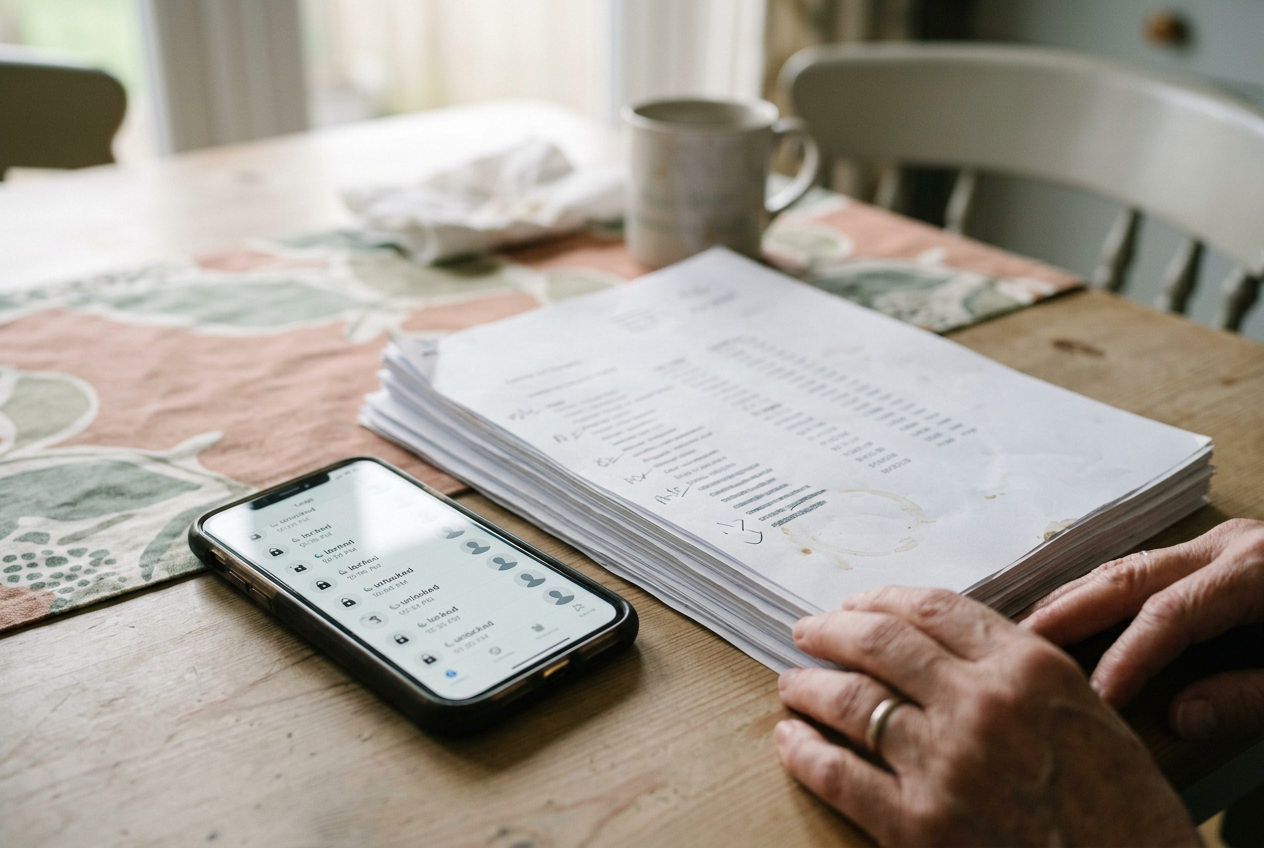
The worker told her what was visible. At the patron’s request, the worker printed a screenshot of the dashboard.
That page became the record she trusted. Her memory of the sign-in notice was incomplete, and the library’s later explanations changed as staff learned more about the system, but the printed screenshot showed that intimate parts of her search had survived the end of a public-computer session.
A summary she never asked for
The library had enabled a convenience feature in the software used to manage public computers. It created short summaries intended to help staff resolve printing problems, continue technical assistance and understand what a patron had been trying to do when a session failed.
The feature did not reproduce every page. According to the library’s internal review, it drew from activity signals available to the management system, including page titles and search terms, then used an automated model to produce a compact description. That distinction mattered technically, but it offered little comfort to the patron. A summary stating that someone researched unemployment and temporary housing could disclose more than a long browsing log because the tool had already organized the activity into a readable account.
The patron had interacted with staff during earlier visits, mostly to ask about file uploads and printing. She understood that a worker might briefly see her screen while helping. She did not understand that the system would turn parts of the session into a record that remained available after she left.
Nor had she knowingly asked the AI feature for help. It ran through the computer-management platform, outside the browser window where she worked, and nothing in the ordinary session made its role clear to her. The summary appeared to staff as a routine support note rather than as a new piece of sensitive data.
The printed screenshot made that mismatch visible. It showed a concise account of circumstances she had discussed with no librarian, including the combination of lost work and unstable housing. The words were generated by software, but the exposure came from the library’s choices about collection, retention and access.
There was another uncertainty. The library could explain which dashboard displayed the summary, yet it could not reconstruct every source the model had used for that particular session. The platform’s documentation described categories of activity rather than a page-by-page trail, and the generated text did not cite its inputs. Staff could see the result without being able to show the patron how each phrase had been produced.
More staff could see it than she expected
At first, the patron thought the worker beside her was the only other person who had access. The library’s review found that employees with public-computer support permissions across the branch network could open the same dashboard. Access was tied to a general job function, not to whether a worker had assisted that patron or worked at the branch she visited.
There was no evidence that another employee had searched for her record out of curiosity or shared it beyond the system. The privacy impact did not depend on proven misuse. The summary existed, remained linked to her account and was available to a larger group than she had understood when she typed the searches.
That broader access changed the safety calculation. She had used a neighboring county in her housing research partly because she did not want a former acquaintance to learn where she might stay. Library employees were not part of that threat, and the review found no connection between staff and the person she feared. Still, she had spent months limiting who knew about the possible move, while the dashboard had quietly made the subject visible to workers she had never met.
The branch initially treated the event as a notice problem. Staff pointed to the language shown before a computer session and to the library’s general privacy statement. After comparing those statements with the screenshot, managers concluded that neither explanation told patrons that automated summaries could be retained or viewed through a staff console.
The notice said data would be cleared. The dashboard showed retained data. Both claims could have referred to different parts of the system, but a patron sitting at a shared computer had no practical way to separate browser cleanup from a summary stored elsewhere.
The retention period was also unclear at first. The dashboard displayed summaries from earlier visits, including one nearly a month old, while different staff members gave the patron different estimates of how long records remained. The library later confirmed that its local settings kept the summaries for 30 days. It could not immediately establish whether the platform provider preserved related technical logs for a different period.
She folded the printed screenshot and kept it in the notebook that held her application dates. Over the next two weeks, she stopped using library computers for housing research and limited her job applications to tasks she could complete on her phone. One employer’s application would not load correctly, and she missed that opening before she found another computer she felt able to use.
A copy shop offered computer access, but paying by the minute and printing application materials cost her $24 over six visits. That was less than the overdue internet bill. It was still money taken from groceries during unemployment.
The branch reconsidered the feature
The library disabled automated summaries on public computers while it reviewed the configuration. Existing summaries in the local dashboard were deleted, and support permissions were narrowed so that fewer workers could open patron-linked session information. Staff were told to record only the minimum information needed to resolve a technical problem, without relying on generated descriptions of browsing activity.
Those changes addressed the branch’s own system. They did not answer every question about copies that might have existed in provider logs or backups, and the library could not give the patron a complete history of who had opened her summary before access was restricted. The audit information available to managers recorded some administrative activity but did not provide a readable list of every staff view.
Managers also rewrote the sign-in notice to distinguish data removed from the computer itself from information retained in management tools. During the review, they found that the summary feature had arrived as part of a broader software update and had been evaluated mainly for support efficiency. Privacy review had focused on whether browser sessions reset, not on whether a separate tool generated new records from those sessions.
That was the central mechanism. Clearing a browser did not erase a summary already sent to another part of the platform. The shared computer looked reset to the next patron while the staff dashboard still held a description of what the previous patron had been trying to accomplish.
Two months after receiving the screenshot, the patron found temporary administrative work. She returned to the library to print onboarding documents but did not sign in to a public computer. A worker printed the files from a library-owned device after she transferred them in person, an arrangement that solved that day’s problem without restoring her confidence in the system.
She still kept the screenshot. Along its edge, she had written the month she learned the summaries existed and the $24 she later spent at the copy shop.
Questions people ask
Can a public computer retain information after the browser is cleared?
Yes. In this account, the browser reset at the end of a session, but a separate management tool had already created and stored an AI summary. The cleared screen and the retained dashboard record belonged to different parts of the system, which the original notice did not explain.
Did library staff misuse the patron’s information?
The review found no evidence that an employee searched for the patron’s record without a work reason or disclosed it outside the library system. The concern was that many staff members had the ability to view a sensitive summary, even though the patron believed her session information would disappear.
Why was the
AI summary more revealing than browser history?
The system condensed scattered searches into a readable description of the patron’s circumstances. Individual page titles might have required interpretation, while the generated summary connected unemployment research with housing instability. The library could describe the data categories involved but could not reconstruct how every phrase had been generated.
What did the library do after the patron raised the issue?
The branch disabled automated summaries on shared computers, deleted locally retained summaries and narrowed staff access while it reviewed provider logging. It also revised the sign-in notice. The patron received no complete record of earlier views, so she kept the printed screenshot with her application notebook.
One story a day
The story of the day, in your inbox
One real story about AI each morning — no hype, no alarm, just company for the road.