Face Checks Clocked a Nail Technician Out of $281.25
Her workplace app repeatedly failed to recognize her, leaving her off the clock while she served clients. A notebook turned those failures into a wage dispute.
September 14, 2026 · 7 min read

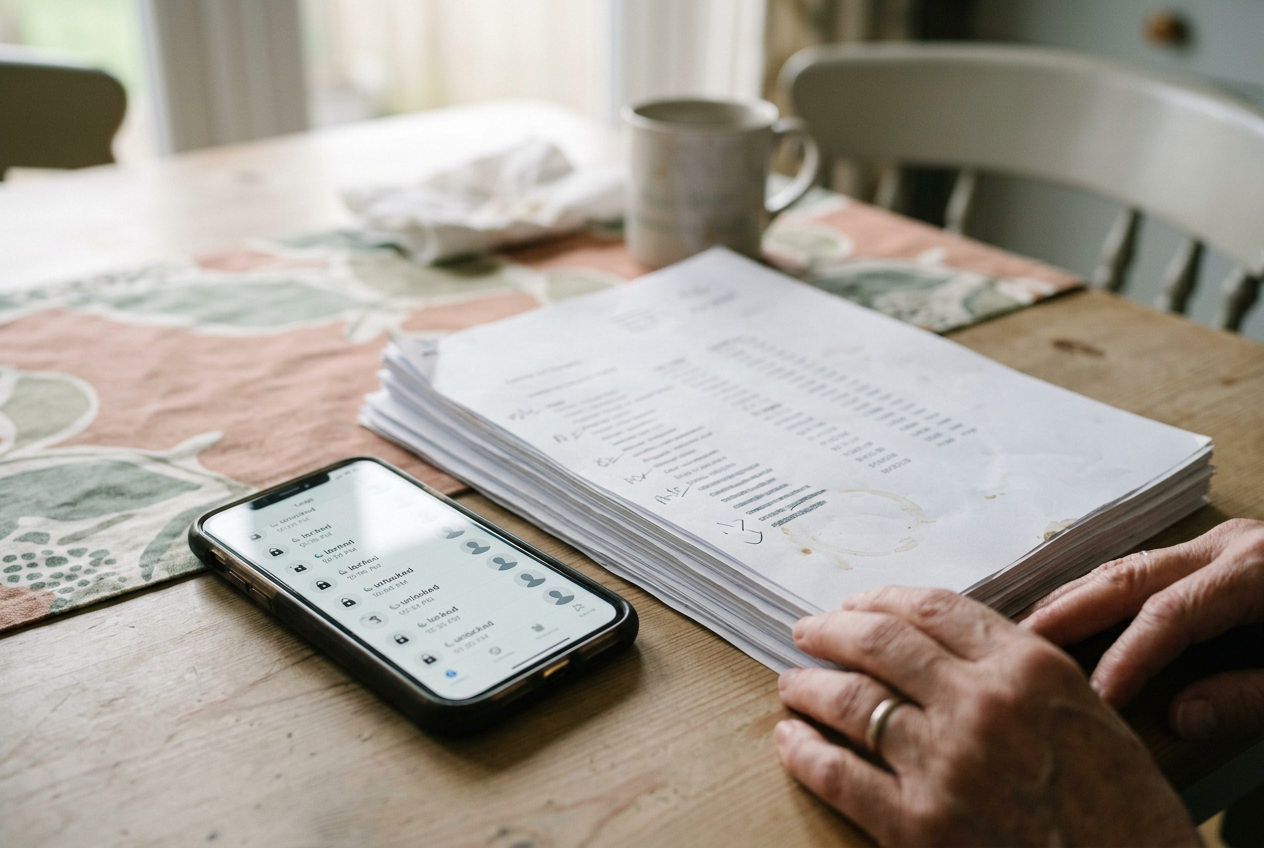
The first failed check happened between appointments. A nail technician opened the workplace app on her phone, held the front camera toward her face and waited for it to confirm that she was the worker assigned to the shift.
She was wearing a mask. The app did not verify her.
A client was already seated, so the technician put down the phone and started preparing the service. She tried again later near a window. The camera showed her face, but the app still kept her out of the active shift. By the time it accepted another image, she had cleaned her station and begun the appointment.
Her manager described the system as a safeguard against workers clocking in for one another. The technician understood that concern. She also knew the app had made a factual decision about her attendance while she was standing inside the salon, using company supplies and serving a booked client.
She wrote the missed time in a notebook.
At first, the entries were reminders: the month, the appointment and how long she believed she had worked outside the recorded shift. After another failure, she added the amount of pay attached to the missing time. She earned $15 an hour before tips. Over three months, the notebook reached 18.
75 hours, or $281.25.
The figure did not include tips she might have missed when the app disrupted an appointment. It covered only the hourly wages that disappeared when the system treated failed verification as time not worked.
What the camera was deciding
The workplace app was not merely taking a photograph for a manager to review. It was making a one-to-one face verification decision: does the person in front of the camera appear to be the same person who enrolled in this account?
Systems like this usually locate a face in an image and convert visible features into a numerical representation, often called an embedding or template. A model compares that representation with the stored enrollment template. If the similarity score clears a threshold, the check passes. If it falls below the threshold, the app can reject the attempt even when both images show the same person.
The technician was never shown her score or the threshold. She did not know whether the company stored full images, biometric templates or both, and the limited information available inside the app did not explain how long either might be retained. What she could see was the outcome: verified or not verified.
The app also appeared to test whether a live person was present rather than a printed photograph. Different tools estimate this in different ways, including small movements or image texture, but the company did not tell workers which method this system used. Without technical records, it is impossible to say whether her failures came from face matching, a liveness check, camera exposure or a combination.
Some failure modes were visible. A mask removes information from the lower half of the face. Strong light behind a person can cause a phone camera to darken the face while exposing the background. Low light reduces detail, which gives the model less reliable material to compare.
Skin tone can matter too. Research on commercial face analysis has found uneven error rates across demographic groups, particularly when training data, camera exposure and testing do not represent people equally. That evidence does not prove why this specific app rejected this specific worker. The technician only knew that colleagues with lighter skin seemed able to verify from places where she could not, and that moving toward better light sometimes changed the result.
A human supervisor might recognize uncertainty and check other evidence. The app converted uncertainty into a work status.
Making herself easier to read
The technician began changing her movements around the system. She removed her mask for checks even when she would have preferred to keep it on near clients. She looked for light that fell directly onto her face, held the phone at the angle that had worked before and delayed putting on gloves until the app accepted her.
Those adjustments sometimes helped. They also added an unpaid task to the start of work, one that existed solely because the employer had chosen a biometric gate for the timekeeping system. When the check still failed, the client’s appointment did not pause with it.
One entry in the notebook covered more than an hour accumulated across a week. The technician had completed the services listed in the scheduling app, and the salon had records showing that clients attended, but her time record began only after the face check passed. The scheduling system knew work had been booked. The identity system would not certify that she was the person doing it.
This distinction mattered during the pay dispute. Her manager initially treated the timekeeping app as the main account of attendance and asked for details supporting any correction. The technician brought the notebook, then compared its entries with completed appointments and messages sent while she was at work.
The notebook was not technologically sophisticated. It did something the face system did not: it preserved the periods when the model had declined to recognize her but the business had continued to use her labor.
The manager began adding corrections to later paychecks. Some entries were accepted quickly because a completed appointment lined up with the missing time. Others were harder to reconstruct, especially periods spent cleaning or helping a client choose a service, because those tasks did not leave the same record as a payment.
After two pay cycles, the company had added the full $281.25. The payment resolved the amount in the notebook. It did not resolve who would carry the cost of the next failed check.
The record behind the record
The technician did not want to abandon the app. It held her schedule and gave her a place to see recorded hours without waiting for a manager. When verification worked, it was faster than asking someone to correct a paper record later.
She remained uneasy about giving a workplace system repeated images of her face. The company had told workers that identity checks reduced time fraud, but it had not given them a plain explanation of what happened to the biometric data after a match. Nor did workers have access to the error history that might show whether failures clustered around certain people, phones or lighting conditions.
That missing information limited what the technician could prove. Her experience was consistent with known weaknesses in face verification, but only the vendor or employer could inspect confidence scores, rejection rates and system settings. A worker sees the camera frame and the result. The organization sees the data needed to judge whether the tool works evenly.
The salon later allowed managers to correct missed time without waiting for the next payroll review. That reduced the financial delay, although it preserved the same basic arrangement: the automated record was created first, and the worker had to identify where it was wrong.
She kept using the notebook. The $281.25 total was marked paid. Beneath it, she started a new line for the following month.
Questions people ask
Why can face verification reject the right person?
Face verification compares a new image with an enrolled template and applies a confidence threshold. Masks can hide useful features, while poor exposure can reduce image detail. Uneven training and testing may also produce different error rates across skin tones. A rejection means the score missed the threshold, not that the system proved someone else was present.
What biometric information might a workplace app keep?
Depending on the system, it may retain submitted images, numerical face templates or records of verification attempts. The technician was not told which data this app stored or for how long. That uncertainty mattered because she had to present her face repeatedly, not just during enrollment, to remain connected to her paid shift.
How was the missing pay reconstructed?
The technician compared her notebook with completed appointments, work messages and later payroll records. Her employer eventually added $281.25 across two pay cycles. Periods tied to booked services were easier to verify than cleaning and client assistance, which left less evidence even though the work still occurred.
One story a day
The story of the day, in your inbox
One real story about AI each morning — no hype, no alarm, just company for the road.