A Farmworker’s $186 Wage Complaint Stayed in App History
He used a crew phone to translate a complaint about 12 missing hours. Days later, the $186 dispute was still visible in the app’s history.
August 9, 2026 · 7 min read
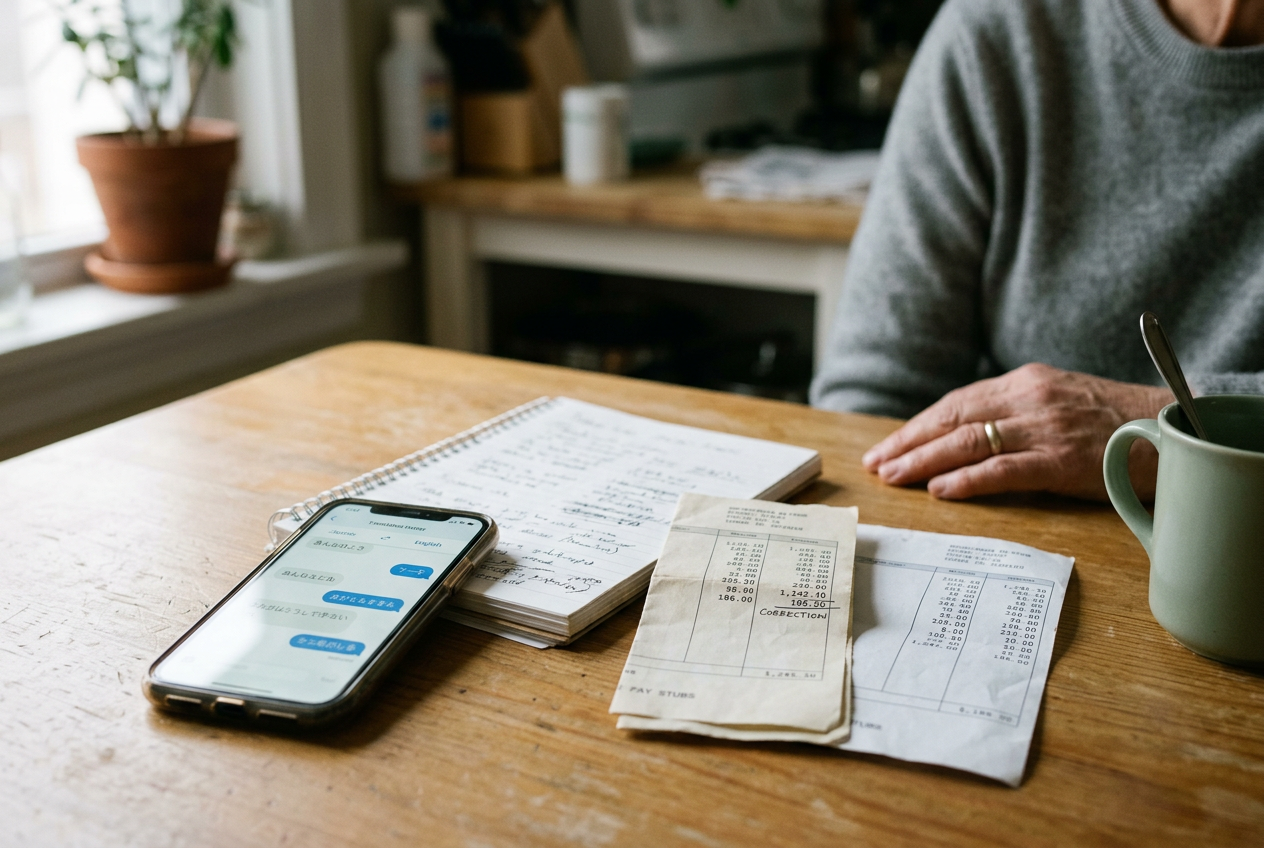
In May 2024, a seasonal farmworker compared his pay stub with the hours he had written in a notebook. Twelve hours were missing. At $15.50 an hour, the difference was $186 before deductions.
He could explain the problem in Spanish. He could not write the same complaint in English with enough confidence to send it to the person handling payroll, and he worried that the wrong word might make the dispute sound less clear than it was. A translation app on the crew’s shared phone offered a way across that gap.
The phone belonged to the crew lead, but workers passed it around for job messages and translation. Its unlock code was widely known. A supervisor also handled it at times while coordinating transportation and changes in field assignments.
The worker opened the app, tapped the microphone and described the missing hours. The app turned his speech into text, then produced an English version that included the 12 hours and the $186 difference. He copied the translated complaint into a message and sent it to the work contact he had been given.
When he closed the translation screen, the text disappeared from view. He believed the session was over.
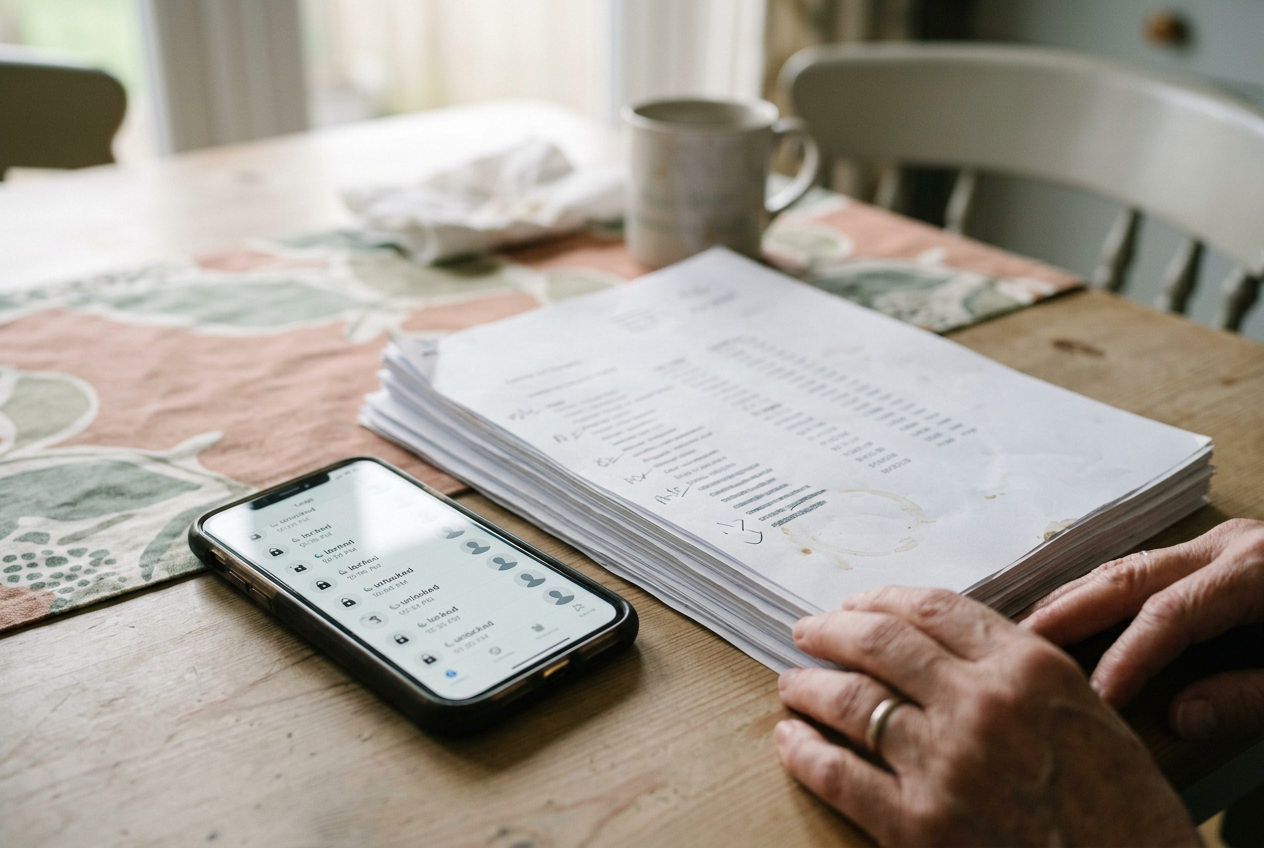
Four days later, another worker opened the app to translate a short phrase. A history panel appeared. Near the top was a card containing the wage complaint in both languages, with the amount still visible.
That history card became the hard fact of what had happened. The complaint was no longer confined to the message recipient. It was sitting on a phone that moved between workers and sometimes reached a supervisor’s hands.
No one could tell him who had opened it.
The complaint stayed behind
The worker had understood the microphone as a temporary interpreter. He spoke, the app converted the words, and he left the screen. He had not intentionally saved the translation or labeled it for later use.
The app treated the interaction differently. Like many translation tools, it kept recent activity so a person could return to an earlier phrase. Closing the screen ended the immediate task, but it did not remove the text from history.
That distinction matters because translation requires handling the original speech and the resulting text, while a history feature creates an additional period of access after the conversation is finished. On a personal phone, the record may remain private enough for ordinary use. On a shared work phone, the practical boundary is the unlock code and the habits of everyone who holds the device.
The worker and his coworker reopened the history card at the common kitchen table. The amount appeared in numerals, so it was easy to recognize even for someone who did not read the rest of the complaint. The source text identified the issue as missing pay. The English translation made it readable to supervisors.
He did not know whether the history was stored only on that phone or connected to an account. The settings did not give him an answer he could understand, and the app showed no record of who had viewed an entry. Those unknowns limited what could be claimed. The text was visible on the device.
There was no evidence that a supervisor had read it, copied it or used it against him.
Still, the possibility changed his sense of safety. Seasonal workers on the crew depended on the same people for assignments and transportation, while the length of the season limited how long they had to resolve a pay problem. A complaint could affect more than one paycheck if the person raising it became known as difficult, whether or not any formal retaliation occurred.
He had already sent the wage message through the intended channel. The history card created a second record for a different audience, one he had not chosen and could not identify.
For two days, he left the entry untouched. Part of him wanted it gone. Another part regarded it as proof that he had translated the complaint, although it did not prove that payroll received his message or that the missing hours were valid. Deleting the card also required navigating controls he could not read with confidence, which was the same language problem that had led him to the app.
A bilingual coworker eventually helped remove the visible entry. They found no clear indication of whether a copy remained elsewhere. The history card disappeared from the phone, but uncertainty about the account did not.
Language access created another audience
The worker’s privacy problem did not begin with a hidden recording or an always-active microphone. Nothing in this account established that the app listened outside the translation session. The exposure came from a feature that was visible once someone knew where to look: recent translations remained available after the user had finished.
That mechanism was ordinary. Its consequence was not.
A wage complaint can contain an amount, a description of hours worked and language about a supervisor’s response. Even without a worker’s name, those details may identify the speaker inside a small crew because coworkers know who worked which days and who recently questioned a paycheck.
The shared phone also blurred the usual idea of consent. The worker chose to speak into the app, but his choice was directed toward getting an English version of the complaint. He did not understand that future users of the phone might receive access through the app’s history, and no one had explained how long recent translations remained or whether an account synchronized them.
His alternatives all carried costs. Asking a coworker to interpret would disclose the dispute to that person. Raising it in limited English could change the meaning. Staying silent would leave $186 unpaid.
For the next three weeks, he checked his pay information while work continued. Nobody mentioned the saved translation. His assignments shifted with the harvest, as they normally did, which meant that any change could feel suspicious without providing evidence of a connection. He watched for a sign that the complaint had traveled beyond the phone, but no sign came.
The absence of proof did not restore the earlier assumption that translation was private. When another pay question arose on the crew, he did not use the microphone. He wrote the figures in his notebook and asked the bilingual coworker to help him prepare a sentence. That exchange also revealed private information, though at least he knew who had heard it.
The pay changed, but the record remained unresolved
Six weeks after the first message, the worker received a payroll correction for $186 before deductions. The new pay stub matched the 12 hours in his notebook. He was not told whether the delay came from an entry error, a disputed time record or a message that had waited for review.
The correction settled the amount. It did not answer who had seen the history card.
He kept the first pay stub and the corrected one together. The translation itself was gone from the shared phone, as far as he and his coworker could see, yet he had no way to confirm whether removing the visible card also removed any synchronized copy. The app offered language access at the moment he needed it, then left him dependent on language access again to understand the record it had created.
At the end of the season, the shared phone remained in use. Workers still opened the translation app for job instructions and short conversations. The worker checked the history panel before handing the device back, looking for his own words and sometimes seeing phrases left by other people.
Questions people ask
Why did the translation stay in the app?
Translation tools often keep recent inputs so users can reopen or reuse them. In this story, closing the screen did not remove the text. The worker could see the original complaint and its translation in a history card, though he could not determine whether it was stored only on the phone or synchronized elsewhere.
Could the worker’s supervisor see the wage complaint?
Anyone who could unlock the shared phone could open the visible history. A supervisor sometimes handled that phone, so access was possible. The app showed no viewer log, and the worker found no evidence that a supervisor opened the complaint. The exposure remained a possibility, not a confirmed act.
Did the saved complaint prove that anyone read it?
No. The history card proved that the complaint remained available after the translation session ended. It did not identify later viewers or show whether anyone copied the text. The worker’s concern came from the device’s shared access and the sensitivity of a wage dispute, not from evidence of a specific person reading it.
Was the missing pay corrected?
Yes. Six weeks after the complaint, payroll added $186 before deductions, matching the 12 hours in the worker’s notebook. He was never told what caused the original omission, and the correction did not establish whether anyone had viewed the translation history. The final pay stub carried the $186 adjustment.
One story a day
The story of the day, in your inbox
One real story about AI each morning — no hype, no alarm, just company for the road.