A Kiosk Took His Face for a $148 Shift. Storage Stayed Secret
A day laborer submitted a facial image because refusing could cost him a shift. Eight months later, he still did not know who stored it or when it would be deleted.
August 9, 2026 · 7 min read

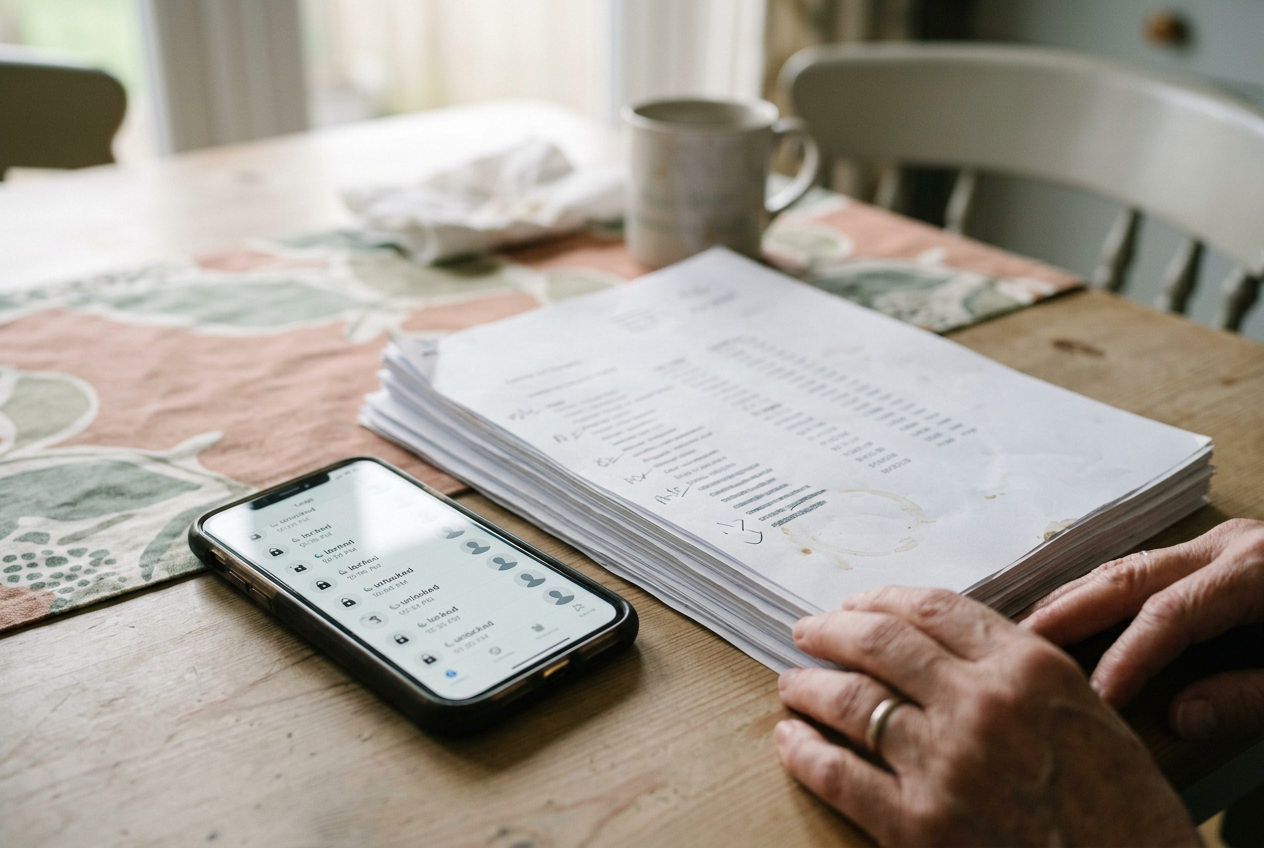
The notebook came out after the shift.
On one line, the worker recorded the gross pay he expected: $148. Beside it, he added three words about the hiring kiosk that had photographed his face: “photo required, storage unknown.”
He used the notebook to track jobs that might otherwise blur together. Loading work. Event cleanup. Warehouse shifts offered through a scheduling platform and claimed at a labor office.
The entries helped him compare promised pay with what arrived, but this one became a record of something he could not price.
The worker at the center of this composite had arrived expecting the usual check-in. His account listed Spanish as his preferred language. Parts of the kiosk followed that setting, while the explanation attached to facial verification appeared mostly in English and used terms he did not recognize.
The screen indicated that the camera step was needed to continue. A dispatcher had already made clear that incomplete check-in meant no release to the job site, and the scheduling app did not show another way to confirm his identity.
He had spent $6 getting there. The $148 shift would cover most of a $96 room payment, with the rest available for food and another week of transportation. Turning away would not have restored the morning or put a different job on his phone.
So he stood in front of the kiosk.
The image before the job
A frame appeared around his face. The camera captured an image, the screen processed it, and his account changed to show that check-in had succeeded. He was then cleared for the shift.
Those visible steps establish only a narrow set of facts. The kiosk collected facial data and used it within an identity check. They do not reveal whether the system compared the new image with an account photo, whether it converted the face into a mathematical template, or whether either version remained after the comparison.
The worker did not know that distinction at the kiosk. He understood that a photograph had been taken and that the job remained behind the next button. A notice was available through a link, but the text was long, difficult to read on the screen and not presented fully in the language his account requested.
Consent in that setting had a clear consequence. He could tap through and keep moving toward $148, or refuse and probably lose access to the day’s work. The kiosk did not offer a person who could perform the same identity check without collecting his face.
This does not show that the platform misused the image. There is no evidence in the accounts behind this composite that anyone leaked it, sold it or used it to track workers elsewhere. The problem began earlier: the worker could not identify the company holding the data, the form in which it was held or the event that would cause its deletion.
After work, he opened the notebook. The pay figure went on the left. “Storage unknown” went on the right.
What the screen did not settle
Facial verification generally tries to answer whether the person in front of a camera matches an image associated with an account. A system may retain the live photograph, derive a template from facial measurements, send data to an outside vendor or discard part of the record after returning a result.
All of those designs can produce the same message on a kiosk. Workers cannot tell which one is operating by looking at the camera.
Retention matters because a face is a persistent identifier. An account password can be replaced after exposure. A person cannot replace the physical features from which a facial template was created, although companies can delete a stored image or template if their systems and policies allow it.
The worker’s concern was tied to that persistence. He used temporary addresses, shared transportation and moved among employers that knew little about one another. He did not want an image collected for one warehouse shift connected to a wider record without his knowledge.
Nothing he saw proved that such a connection existed. Nothing ruled it out.
Privacy rules for biometric data differ across the United States. Some jurisdictions require forms of notice, consent or a stated destruction schedule, while others have no biometric law that gives workers the same protections. A general privacy policy may describe broad data practices without telling one worker which vendor received his image or when that particular record will be removed.
The platform’s account page offered a general notice. Read through browser translation, it described categories of information and outside service providers, but the worker could not find a retention period tied to the kiosk image. His dashboard showed that identity had been verified. It did not show the image, a deletion date or the party storing it.
He added another note beneath the $148 entry: “policy, no date.”
Eight months without an answer
The worker first asked the attendant at the labor office. The attendant could help people complete check-in but did not control the camera system or its records. That answer described the limits of the attendant’s job, not the path of the image.
He then contacted the platform through the support inbox and marked Spanish as his preferred language. The response directed him toward general account information. It did not identify a retention period.
Several weeks later, he tried again. The replies he received referred broadly to the roles of the hiring company, the platform and outside service providers, while leaving unclear which one possessed the original photograph and which one controlled deletion. No response gave him a date.
That uncertainty continued for eight months. During that period, he accepted more work through the same channel because it remained one of the few sources that could turn an open day into wages without a long hiring process. Some check-ins required another camera capture. Others accepted the account status already on file.
In the notebook, he began marking a small “C” beside shifts that involved the camera. It was not a technical log. He could not see whether each capture created a new stored image, replaced an earlier one or merely produced a temporary comparison. The marks recorded exposure as he experienced it: a camera appeared between him and the work.
His practical concern also widened. A false rejection could delay check-in or remove him from a shift, particularly if no staff member had authority to override the result. A retained image could create a separate privacy risk if accessed outside its stated purpose. Those were different harms, but the same kiosk placed both beyond his view.
No false rejection occurred in the period covered here. The system recognized him. That success made the data question easier for everyone else to leave alone.
The price of refusal
A worker may appear to have made a choice because a consent button was present. The economic setting changes what that choice means, especially when the worker has already traveled to a hiring site and the available shift will disappear if check-in remains incomplete.
The worker could have declined. He would also have been giving up $148, with no promise that the next opening would arrive before his room payment was due. Formal permission and practical freedom were not the same thing in his notebook, where the amount sat beside the unresolved storage note.
For the company, facial verification may reduce account sharing or speed identity checks. The worker was never shown evidence about those goals, error rates or alternatives. He saw a camera, a continue button and a job that had not yet become his.
Months later, the platform still worked for him in the most immediate sense. It delivered shifts. The kiosk also worked in the narrow technical sense. It accepted his face.
The unanswered part remained with the image. He had no visible control on the dashboard that would show whether the photograph still existed, whether a derived template remained after deletion, or whether asking to remove either record would affect future verification. He kept taking some shifts anyway.
Questions people ask
Could he refuse facial verification and still get the shift?
No alternative appeared in his check-in path. He could decline the camera step, but the shift required completed identity verification before release to the job site, so refusal would probably have cost him the $148 assignment. The worker was not offered a manual check that preserved access to the same work.
What did the kiosk likely do with his face?
The visible process suggests that the system captured a live facial image and used it to verify his identity. The worker could not determine whether it compared the image with an account photo, created a facial template or retained either record. A successful check-in result does not reveal those technical or storage choices.
Who stored the image and for how long?
He never received a specific answer. The labor provider, scheduling platform and outside technology provider all had possible roles, but the dashboard and support responses did not identify which party controlled the stored record. Eight months after the first capture, he still had no retention date.
Did tapping consent settle the privacy issue?
Tapping the button allowed the check-in to continue. It did not give the worker a clear Spanish explanation of retention, vendor access or deletion, and the economic cost of refusing was the day’s pay. His record of that choice remained the same notebook line: “$148, photo required, storage unknown.”
One story a day
The story of the day, in your inbox
One real story about AI each morning — no hype, no alarm, just company for the road.