The Benefits Chatbot Added 11 Hours to Her Casework
An Arizona caseworker was hired to help families apply for benefits. An English-first chatbot turned her into the person who repaired its Spanish intake summaries.
November 6, 2026 · 8 min read

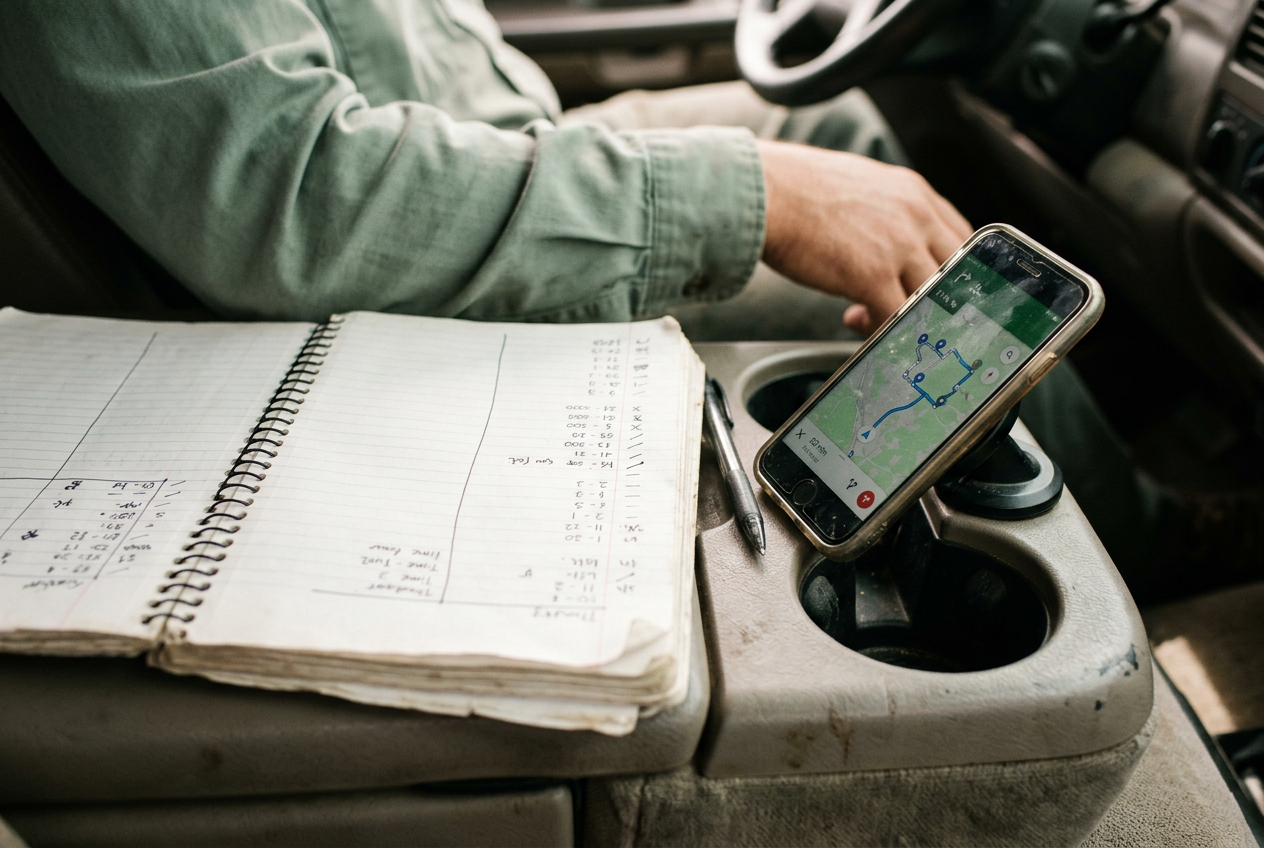
The caseworker keeps a notebook beside her keyboard at a community center in Arizona. She started it in August 2024, when the center moved much of its benefits intake to a chatbot that families could use from home or on a shared computer in the lobby.
Each page has a date, the number of applications she reviewed and a mark for every chatbot answer she had to reopen. A circle means the system misunderstood Spanish. A line means an early error sent the conversation down the wrong path, so later questions also had to be checked.
At first, there were more circles than lines.
By October, the caseworker had learned that the lines mattered more. The chatbot did not merely store a wrong answer in one box. It used each answer to decide what to ask next, which meant a misunderstanding about who lived in a home could change the questions about income, expenses and supporting documents.
The center had adopted the tool to shorten appointments. Families could complete intake after work, and caseworkers were supposed to receive a clean summary instead of reading through a paper packet with missing sections.
That happened sometimes. A parent with a steady paycheck, a simple lease and no recent household changes could finish without much help. The chatbot prompted people when they skipped a date or left an income field blank. Several families told the caseworker they preferred typing at home to discussing money across a desk.
The problem was what arrived the next morning.
What the chatbot inferred
The chatbot accepted Spanish responses, but its intake summary was built around English categories. It took a person’s free-text answer, reduced it to fields such as household member, employer, pay frequency or housing cost, then chose a follow-up question based on those fields.
The caseworker could not inspect the model or see a confidence score. She could compare the transcript with the summary. That was enough to reveal a pattern.
Spanish kinship terms caused repeated trouble, especially when a family described relatives who stayed in the home without belonging to the benefits household. A woman might mention her mother-in-law while explaining who watched the children. The summary could add that relative as a household member. A brother staying for two weeks could become a permanent resident of the home.
The bot also struggled when one answer contained a correction. A client would describe a partner’s old job, then explain that the work had ended. The summary sometimes retained the employer and dropped the ending. In another intake, a parent explained that she no longer received cash from a child’s father, but the extracted field treated the amount she mentioned as current support.
These were not translation errors in the narrow sense. The Spanish transcript was readable. The system was making decisions about what each sentence meant, which facts belonged in a structured field and which part of a mixed answer should control the next branch of the conversation.
That distinction changed the caseworker’s job. With paper, she translated what a person had written and called if something was unclear. With the chatbot, she first had to work backward from a polished English summary, locate the Spanish answer beneath it and decide whether the system had preserved the person’s meaning.
The clean prose made mistakes harder to spot. Misspelled handwriting signals uncertainty. A complete sentence on a dashboard does not.
One family’s intake became the example she used when explaining the problem to her manager. The family included a parent and two children. An uncle had stayed in the apartment for part of a month after losing construction work. During the chat, the parent described his temporary stay and said he had moved out.
The summary counted four people in the home. It also attached the uncle’s prior earnings to the household, although the parent had mentioned those wages only while explaining why he needed a place to stay.
Once the chatbot made those two inferences, it asked for information connected to the uncle’s employment and skipped questions that would have clarified his departure. The parent answered what appeared on the screen, assuming the system knew which person each question referred to.
The caseworker found the mismatch during review. Repairing it meant reading the full transcript, confirming the uncle’s dates with the parent and replacing the summary that the system had produced. The intake was returned for clarification once more after the old earnings remained in another field.
The family waited five additional weeks for a decision. The caseworker did not know whether the chatbot error caused the full delay, but she knew the application could not move while the household size and income disagreed.
She marked the notebook with a circle and a line.
Faster intake, longer repair
Before the chatbot, the caseworker spent about 35 minutes helping a Spanish-speaking family complete a paper packet, then entered the answers into the center’s system. Some appointments ran longer. Some packets came back with blanks.
After the launch, managers expected those appointments to shrink. The chatbot would gather the first account, and the caseworker would review exceptions instead of translating every question.
For four weeks that fall, she used the notebook to measure what happened. She handled 23 chatbot intakes in an average week. Fourteen needed at least one correction tied to language or conversational context, and six required her to contact the family again because the wrong branch had collected information about the wrong person or period.
The repair work added 11 hours to her week. That figure included transcript review, follow-up with families and rechecking fields after a correction. It did not include the ordinary work of submitting an application.
Her manager initially treated the errors as a training issue. The caseworker was encouraged to show clients how to give shorter answers. She tried. A sentence with one fact was less likely to be misread than a paragraph explaining a job change, a shared apartment or cash work that stopped and started.
Short answers did not fit every family. People explained context because the context determined whether income was current, whether a relative lived with them and whether a payment happened once or every month. Removing that detail made the bot’s extraction cleaner while leaving the caseworker with less information.
She began sitting beside some clients while they used the chatbot, intervening when an answer contained a negation or a temporary arrangement. The system still appeared to be self-service on the center’s reports. In practice, the caseworker was translating Spanish into the kind of Spanish the English-first intake could classify.
Her notebook changed too. In November, she added a mark for answers that were technically translated but assigned to the wrong person. Those marks appeared beside references to partners, former partners and relatives with similar names.
By January 2025, that new mark filled almost a third of one page.
Keeping the useful part
The caseworker did not want the center to remove the chatbot. Families without transportation used it. Parents could begin an intake after their children were asleep, save their work and return later. The tool also caught empty fields before submission, a basic function that prevented some delays.
She wanted a different review screen. Instead of showing only the bot’s English summary, it could place the client’s original Spanish answer beside each extracted field and ask the client to confirm household members and current income before the conversation moved on.
That change mattered to her more than adding a larger Spanish vocabulary. The recurring failures were about reference and time: who a sentence concerned, whether work had ended and whether someone’s stay was temporary. A fluent translation could still produce the wrong benefits field.
The center sent examples to the platform’s support team. Updates followed over the next three months, though the caseworker was not told what changed inside the system. She noticed fewer errors involving straightforward pay schedules. Household relationships remained uneven.
Her weekly repair time fell from 11 hours to about seven. That was an improvement. It was still longer than the center had budgeted for review, and it left less time for people who arrived with notices they did not understand.
The notebook remains beside her keyboard. She no longer marks every corrected accent or awkward sentence. She marks only the errors that alter a household, attach money to the wrong person or cause the chatbot to skip a needed question.
Questions people ask
Why did the chatbot misunderstand Spanish if it accepted Spanish answers?
The chatbot could display and process Spanish, but it also had to convert free-text answers into fixed English-first categories. The repeated failures came from deciding who a sentence referred to, whether income was current and whether a relative belonged to the household, rather than from translating individual words.
How did one wrong answer affect the rest of the intake?
The system selected later questions from fields it had already extracted. When it classified a temporary guest as a household member, later prompts requested that person’s income and documents. Those answers then reinforced the original mistake, leaving the caseworker to review the transcript rather than correcting one isolated field.
Did the chatbot save families any time?
For families with straightforward income and household arrangements, it could. They completed intake from home, returned to saved answers and received prompts for missing information. The savings disappeared when the bot misread context, since the family then had to explain the same facts again while the caseworker repaired the summary.
Did the community center stop using the chatbot?
No. The center sent error examples to the platform’s support team and kept the system available. The caseworker’s repair work dropped from 11 hours a week to about seven, while errors involving household relationships continued to appear as lines and circles in her notebook.
One story a day
The story of the day, in your inbox
One real story about AI each morning — no hype, no alarm, just company for the road.