AI Put Care a Home Health Aide Never Gave in Client Notes
Checkboxes from home visits became polished summaries that included meals, exercises and personal care that never happened. Correcting the record meant unpaid work.
September 25, 2026 · 7 min read
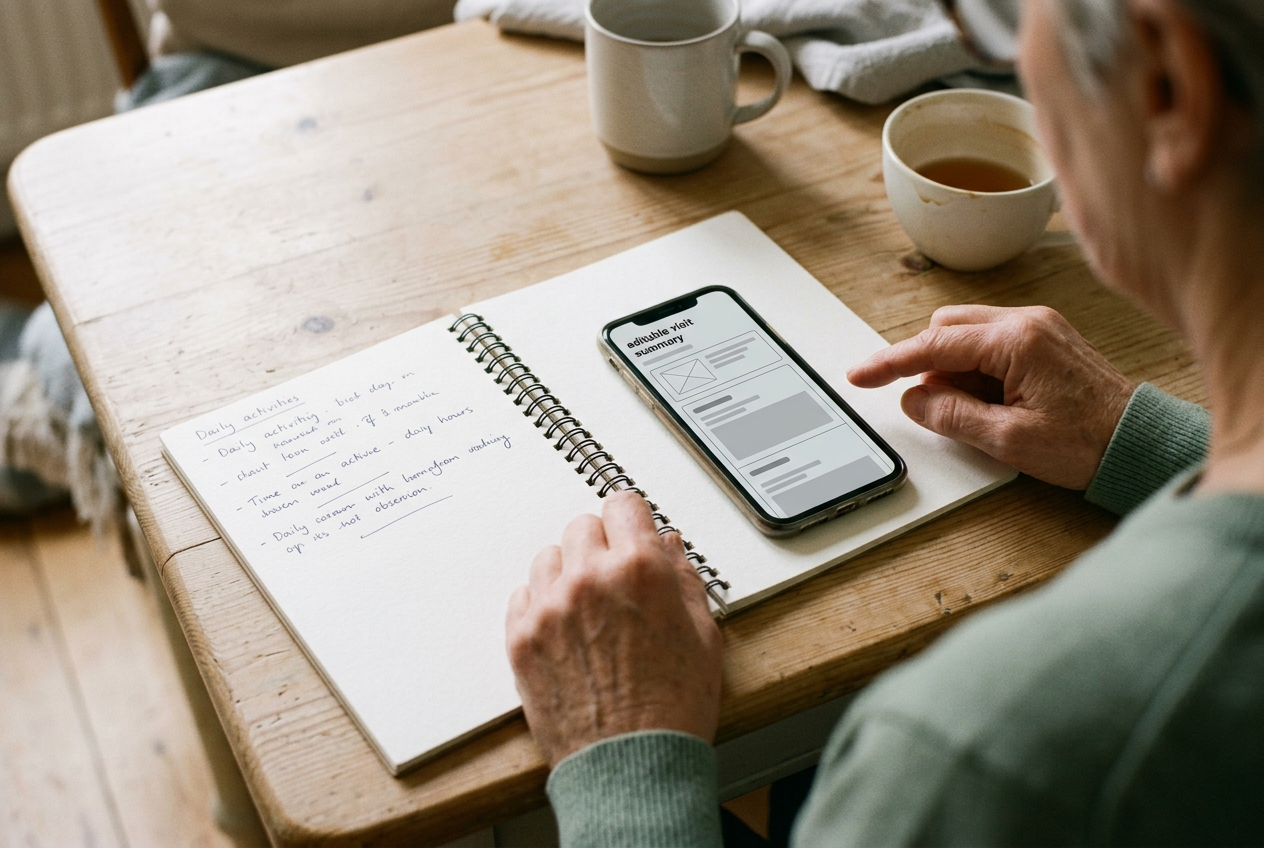
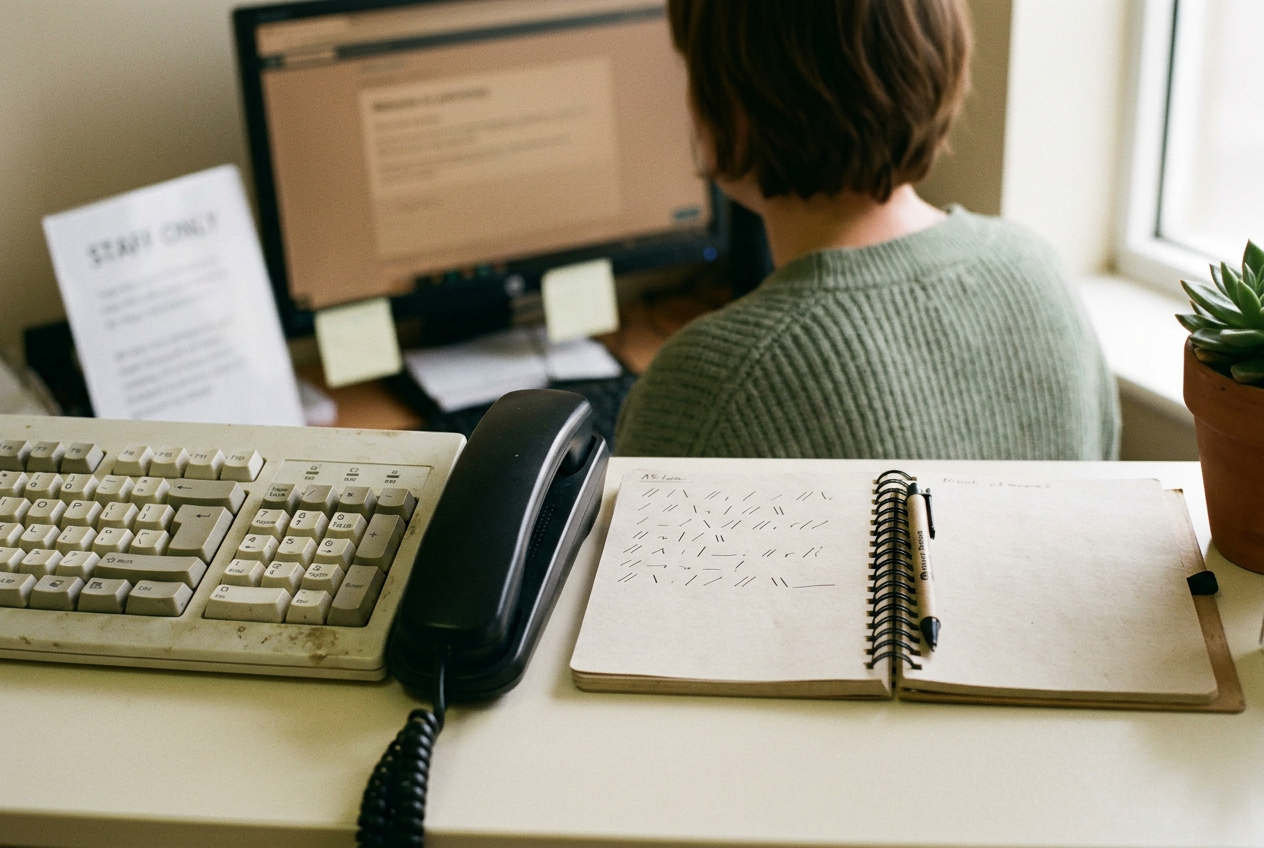
Tanya keeps a notebook in the side pocket of her work bag. The name is a pseudonym, and details from several reader submissions have been combined to protect workers and clients.
Each page covers one visit. She writes down what the client ate, whether medication was visible in the organizer, and anything that needed to be passed to the next worker. The notes are brief because Tanya earns $16.25 an hour for time inside a client’s home, with little room between visits for paperwork.
In February, she opened the care app after helping a client change clothes and settle into a chair. She checked boxes for dressing assistance, mobility support and companionship. A text box offered space for anything unusual. Nothing was unusual, so she left it empty.
The app then produced a paragraph in the style of a finished visit note. It said the client had completed seated exercises and eaten a prepared lunch. Tanya had done neither. The client had declined exercise and already had food beside the chair when Tanya arrived.
She looked at her notebook. It said: changed shirt, walked to chair, water on table.
The generated paragraph sounded more formal than her handwriting. It also sounded credible. A supervisor scanning a day of records might have no reason to pause over lunch or seated exercise, two ordinary parts of home care.
Tanya deleted both claims before submitting the note. The correction took only a few minutes, but the sentence stayed with her because the system had not garbled a word or attached the wrong client. It had turned a small set of true selections into a fuller account, then filled the empty parts with care that often happens but had not happened there.
The sentence she could not sign
Tanya had used the app for four months before she began keeping a second tally in the back of the notebook. A slash meant the generated note needed a factual correction. A circle meant the system had added an activity.
By the end of February, the page held 11 circles.
One summary said she had encouraged fluids after she checked a box for meal support. She had put a sealed drink on the table but had not watched the client drink it. Another said she had helped with bathing after she recorded grooming assistance. Tanya had handed over a comb and cleaned the sink.
Bathing had not been discussed.
The differences could look small to someone outside the home. To Tanya, they separated what she had seen from what another worker might assume. A sentence stating that a client ate lunch could hide a missed meal. A note saying exercises were completed could make a later refusal look new, even if the client had been declining for days.
The tool did save her time when it stayed close to the source. A few checkboxes could become readable prose without Tanya typing the same phrases at every visit, and she liked not having to compose a paragraph on a phone while standing near the front door.
The problem was that useful and false notes arrived in the same polished voice. The app did not mark which words came directly from a selected box, which came from text Tanya entered, and which had been supplied by the language model to make the paragraph sound complete.
“I have to read it like somebody else wrote it,” she said. “Because somebody else did.”
What the checkboxes became
The system did more than paste standard phrases beside selected tasks. According to the description workers received, it used their structured entries to draft a narrative summary. That distinction mattered.
A fixed template might turn “mobility support” into the same visible sentence every time. The generative tool could connect mobility support with nearby concepts that commonly appear in care notes, producing language about walking, exercises or safe transfers even when those details were not entered.
Language models generate text by predicting likely sequences of words from patterns in training data and the context supplied for a particular task. They do not treat an unchecked box as a complete account of everything that did not occur. Unless the product has firm controls that restrict each sentence to recorded facts, the model can add a plausible bridge between sparse inputs.
That failure mode made the summaries hard to skim. “Client received mobility support” might accurately reflect Tanya’s selection. “Client completed seated leg exercises with encouragement” contained new facts: the type of exercise, its completion and Tanya’s encouragement. All three could appear ordinary enough to escape notice.
Tanya’s manager told workers that they remained responsible for reviewing notes before submission. The summaries were drafts, and the text could be edited. There was no visible source map tying a sentence back to a checkbox, and the app did not highlight language introduced by the model.
Responsibility stayed with the aide. Authorship became less clear.
Corrections after the visit
Tanya usually finished the note in her car or at home. The company expected documentation to be completed promptly, but the paid visit ended when she left the client’s home. She did not receive a separate block of paid administrative time.
For three weeks, she used the notebook to track how long the corrections took without counting individual minutes. She marked each day as under 15 minutes, between 15 and 30, or over 30. Most landed in the middle group. At her hourly rate, 20 unpaid minutes across five workdays came to about $27 a month.
That amount did not include ordinary documentation. It covered rereading generated sentences against her notebook, removing unsupported details and checking that the revised paragraph still made sense after a deletion. Some days there was nothing to fix. On others, one added phrase changed the meaning of the whole note.
The money bothered her. The signature bothered her more.
If Tanya submitted the draft without reading it, her name sat under care she had not provided. If she corrected it after leaving, she gave the company more time than her recorded hours showed. She began writing fewer details into the app’s free-text field because she worried that one phrase could become a larger claim, although shorter input gave the system even less to work from.
Her notebook grew more detailed instead. She wrote “declined” when a client declined something, and she noted when food was already present rather than prepared during the visit. The paper record was not part of the company’s system, but it became the place where she could see the boundary between observation and generated prose.
There was a privacy tension too. More detailed prompts could help constrain a summary, yet those details concerned people receiving care in their homes. Tanya had been taught to record relevant information in approved systems and avoid carrying unnecessary client information elsewhere. The note generator created pressure in both directions: enter more context so the machine invents less, or enter less because every additional detail becomes data processed by a tool she did not choose.
She stopped writing client names in the notebook. Each page used initials and the order of her visits, enough for her to compare the paper with the app before she submitted a note. That reduced one risk without resolving the larger one.
A record that travels
A home care note is read after the aide leaves. Another worker may use it to understand whether a client ate, moved safely or refused part of the care plan. A supervisor may review it during a complaint. Family members or clinicians may receive information drawn from the record, depending on how the service is arranged.
Tanya could not see every place the generated paragraph went after submission. That was why the ordinary additions mattered. The tool was not producing wild claims that would be rejected at once. It was producing the kinds of details that belonged in many home visits, attached to the wrong one.
She reported examples through her manager and was told to keep editing inaccurate drafts. The tool remained in use. Later versions seemed less likely to add a full meal after a meal-related box, though Tanya still found smaller expansions, including a claim that a client had been reminded about safety when she had only recorded mobility assistance.
Her view of the system stayed mixed. On clean visits with clean output, it reduced typing. She did not want to return to composing every note from the beginning on her phone. She wanted the draft to show its work, or at least mark the words that were not direct restatements of her entries.
The February tally remained in the notebook: 11 circles beside activities generated as if they had happened.
Questions people ask
Why would an
AI visit summary add care that did not happen?
A generative system predicts likely wording from the boxes and text it receives. If its controls do not limit every sentence to those inputs, it can add activities commonly associated with a selected task, such as turning grooming support into bathing assistance or mobility support into completed exercises.
Who was responsible for checking the generated care note?
In Tanya’s workplace, the aide had to review and submit the note, even though the system drafted it. The app allowed edits but did not identify which details came from worker entries and which were generated, so Tanya compared the paragraph with what she had written during the visit.
Was the time spent correcting AI notes paid?
Tanya was paid for scheduled time in the client’s home and received no separate block for reviewing generated summaries afterward. Her notebook showed that corrections usually added between 15 and 30 minutes to a workday, often while she was in her car or at home.
Why did she keep a separate notebook?
The notebook let Tanya compare her observations with the generated paragraph before signing it. She stopped using client names and recorded initials, declined tasks and whether food was already present. In the back, 11 circles marked February summaries that added care she had not given.
One story a day
The story of the day, in your inbox
One real story about AI each morning — no hype, no alarm, just company for the road.