AI Gave 40-Pound Bags to a Stocker With a 15-Pound Limit
After an injury, an overnight grocery stocker kept getting heavy work from an AI routing system. Refusing each task made his medical restriction harder to keep private.
October 31, 2026 · 7 min read
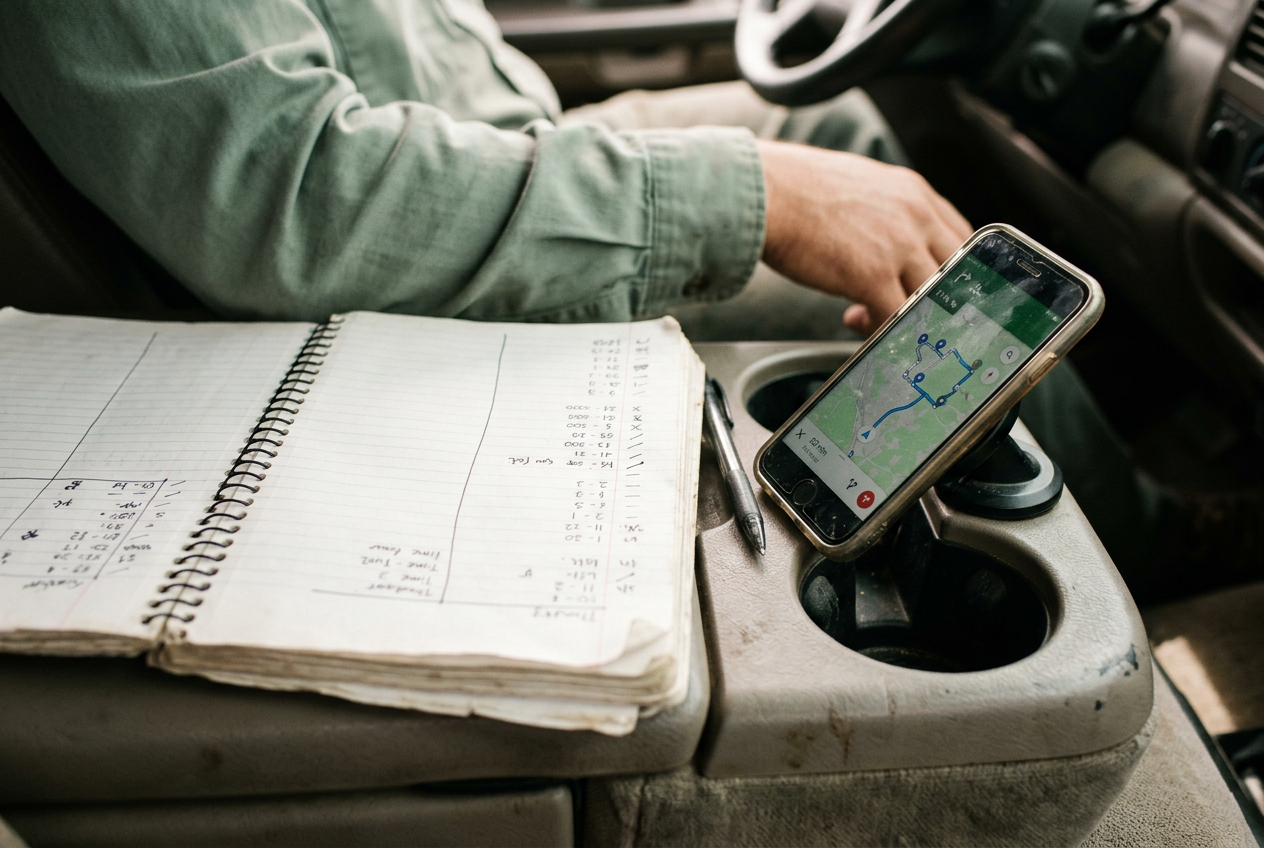
The notebook began as a way to remember which assignments hurt.
The stocker had returned to an overnight grocery job in January 2024 after 11 weeks away. His clinician limited him to lifting 15 pounds and barred overhead work for eight weeks. The company had the paperwork. His manager knew he could stock bread, paper goods and small packages while the restriction remained in place.
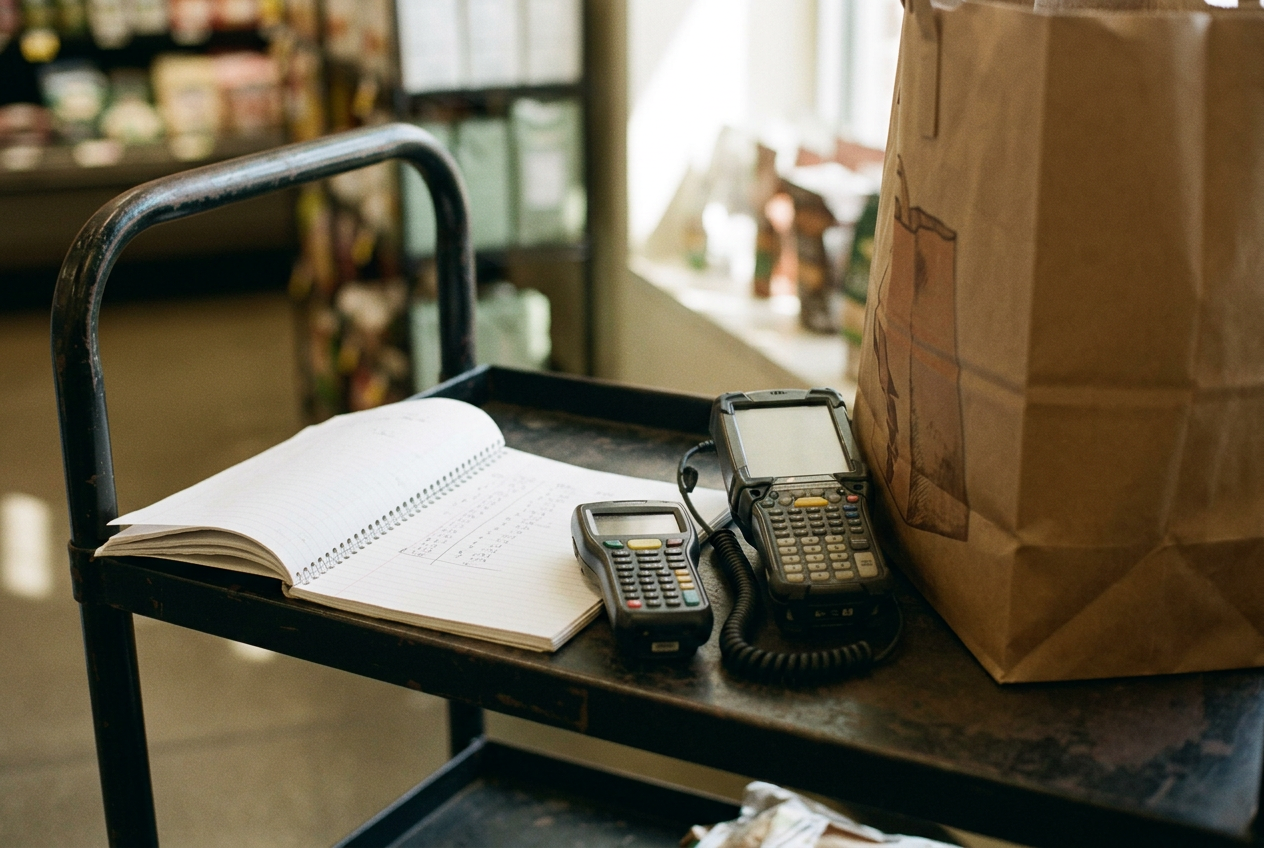
On his first shift back, a handheld device built his route. It sent him to a pallet that included 40-pound bags of pet supplies. He rejected that task and chose the closest reason available in the app, a general category indicating that he could not perform the work.
The task moved to a coworker. His supervisor received a notice that he had declined it.
The next night, the route included cases of bottled water. He rejected those too. By the end of the week, he had explained the restriction to two supervisors and several coworkers who inherited work from his route. The medical note was held by the company, but the practical details traveled through the aisle each time the system sent him something he could not lift.
He bought a notebook and started recording the item and its listed weight. He added whether he completed it, refused it or asked someone to split the load. The first page held nine assignments above 15 pounds.
The route was rebuilt every night
Before the task system arrived, the overnight crew worked from areas assigned by a manager. The assignments could be unfair or poorly planned, but a manager could remember that someone had come back injured and move a pallet before work started.
The newer system did something a spreadsheet could not. It generated a fresh sequence for each worker using the store's expected inventory, item locations and predicted task times. According to the training workers received, the software learned from prior scans and completion records, then updated its estimates as work moved through the store.
A worker who had stocked an area quickly in the past was more likely to be sent there again. A delayed delivery could change several routes. When someone rejected a task, the system reassigned it and recalculated the remaining work rather than leaving a blank line for a manager to fill.
That adaptation was useful on ordinary nights. The device could redirect workers when a truck was late, and it reduced the time supervisors spent dividing aisles at the start of a shift. The stocker had liked it before his injury. His route was ready when he arrived, and he did less waiting.
His old performance history became a problem after he returned. The model had months of records showing that he could move heavy products at his former pace. It had no usable field for a temporary 15-pound limit. The company kept medical information outside the task platform, which reduced the health data available to the software but also meant the route generator treated him as unchanged.
Item weight did not reliably stop an assignment either. Some products had weight data in the inventory system, while others were grouped by department, package type or expected handling time. The route could therefore predict that he was a good match for an area without checking whether every object there fell under his restriction.
The system was not reading his medical note and overruling it. It was optimizing from a partial version of him: his old speed, his scan history and his current presence on the shift. It kept producing a confident route from information that had expired.
Each refusal exposed a little more
Rejecting a task was visible in ways the medical paperwork was not. Supervisors saw exceptions that needed coverage. Coworkers saw new work appear after his refusal, sometimes while standing beside him and the item.
At first he said only that he was on restricted duty. That often led to another question about the weight he could handle, especially when a coworker needed to decide whether to take a whole case or divide it with him. He began saying “15 pounds” before anyone asked.
The disclosure spread through repetition rather than a formal announcement. One refusal might have revealed little. A route that failed several times a week made the restriction part of how the crew planned around him, and the notebook showed that the failures clustered in departments containing products he had stocked quickly before the injury.
After three weeks, the notebook held 27 assignments above his limit. Eleven involved pet supplies. Seven involved beverages. The rest were mixed cases whose total weight appeared on packaging or in the handheld item details.
He brought the notebook to a meeting with his manager. The pages changed the discussion. He was no longer trying to recall a few bad nights from memory; he could show that the routing system had repeatedly selected the same kinds of work after each rejection.
A supervisor had already been removing heavy tasks when possible, but those edits happened after routes were generated. The next route began from the model's stored history, not from the supervisor's memory of the previous correction. Manual fixes kept him safe for one shift without changing why the assignments returned.
There was another complication. Declines and delays were part of the system's operational record. Workers had been told that managers could review completion patterns, although the stocker could not see how much weight any single refusal carried. He worried that protecting his shoulder could look like avoiding work, so he sometimes opened cartons and moved lighter units separately.
That kept an assignment marked as completed, but it took longer and still required someone else to handle the carton.
The notebook began tracking those split loads too.
A temporary fix changed the route
About a month after his return, the store stopped relying on rejection notices to protect the restriction. A manager placed him in a narrower work category that the route generator already recognized, covering departments where most individual packages were lighter. Heavy assignments fell sharply.
It was an imperfect setting. He lost some tasks he could have done, including mixed pallets with many small items, because the system filtered by work category rather than evaluating every package. Coworkers took more beverage and pet-supply work. He spent more of the shift in paper goods and health items, even on nights when his shoulder felt stronger.
Still, the notebook changed. During the next four weeks, he recorded six assignments above 15 pounds, down from 31 during the first four weeks. Most came from mixed pallets whose department label concealed the weight of individual cases.
The company did not add his diagnosis to the platform. It also did not erase his earlier performance history. Instead, managers used a broad category as a barrier between that history and the nightly route, accepting less precise assignments in exchange for fewer unsafe ones.
He remained ambivalent about the system. It handled late deliveries better than the old process, and after the category change he could finish more nights without asking where to go next. He also knew the safer route depended on a manager remembering to keep the setting in place until his restriction ended.
Eight weeks after his return, his clinician raised the limit. The manager widened his work category. He kept the notebook in his locker rather than throwing it away.
Questions people ask
Why did the
AI keep assigning work above his lifting limit?
The route generator used past scan speed, completion history and inventory data to predict who could finish each task. His pre-injury record remained available, while his temporary medical restriction was stored elsewhere. Some product records also lacked useful weight data, so the model repeatedly matched him with work he had handled before.
Did refusing an assignment change future routes?
A refusal caused the system to reassign that night's task and recalculate remaining work. In his experience, it did not teach the model that he had a lifting restriction. The next route still drew from his older performance record, which is why the same product groups returned after supervisors had moved them manually.
Why did coworkers learn about a private medical restriction?
Coworkers inherited tasks he rejected and sometimes needed to know whether a case could be divided. Although the medical paperwork stayed outside the routing system, each exception prompted an explanation on the sales floor. Over several weeks, repeated operational notices exposed the practical limit without revealing the underlying diagnosis.
What finally reduced the heavy assignments?
A manager moved him into a narrower category the routing system already understood. It excluded some suitable work along with much of the unsafe work, but assignments above 15 pounds dropped from 31 in four weeks to six in the next four. He recorded both totals on facing pages of the notebook.
One story a day
The story of the day, in your inbox
One real story about AI each morning — no hype, no alarm, just company for the road.