Security Software Flagged a Tenant Organizer’s Door Visits
She knocked on neighbors’ doors to document leaks and broken heat. Building management treated those visits as a security pattern but withheld the footage and rules behind the alert.
August 9, 2026 · 7 min read

In October 2024, the organizer began carrying a notebook through her apartment building. Each page held a month, an apartment identifier chosen by the tenant, the repair problem they described and whether they wanted another conversation. She recorded 27 conversations over six weeks. Most concerned leaks, unreliable heat or maintenance workers entering with little warning.
The notebook was practical. It helped her remember which neighbor had asked for a written update and which one did not want management contacted yet. It also let tenants compare problems that had previously seemed isolated, including water appearing in separate apartments after the same stretch of rain.
She usually knocked in the early evening and left if nobody answered. Some conversations happened in doorways. Others moved into hallways or shared areas when neighbors wanted another tenant present. She did not know that building cameras, already understood by residents as tools for watching entrances, might also be used to interpret movement between apartment doors.
About two months after the canvassing began, management called her into a meeting about what it described as a security concern. A building system had generated an alert associated with repeated door visits and time spent near private entrances. Management treated the pattern as potentially suspicious and reminded her that residents had complained about unwanted contact.
She asked to see the footage connected to the alert. It was not shown. She asked what behavior had triggered the system, how many visits were included and whether a person had reviewed the full context. Those questions remained unanswered beyond a general explanation that the security tool detected activity management considered unusual.
That left the notebook and the alert describing the same weeks in incompatible ways. Her pages recorded repair concerns and requested follow-ups. The security system, as management presented it, reduced those movements to repeated approaches, pauses and departures near doors.
What the alert could see
Camera analytics can be configured to identify patterns such as a person remaining in an area, moving repeatedly through shared space or approaching multiple entrances. A system may turn those observations into a notification for security staff or property managers, who then decide whether the behavior requires attention.
That general mechanism is known. What happened inside this building’s system is not.
Management did not disclose whether the tool recognized faces, tracked clothing or used another method to connect one appearance with the next. It did not explain whether a fixed threshold produced the alert, whether staff could change that threshold, or whether the software had been designed for conduct resembling theft and unauthorized entry rather than tenant canvassing. The organizer could not tell whether the system had mistaken her purpose, because purpose may never have been part of the analysis.
An alert is not proof of harmful conduct. It is a system’s output under particular settings, based on the information available to it. In this case, cameras could register where the organizer stood and how often she returned, while missing the repair request written in her notebook, the neighbor who had invited her back and the conversations taking place outside the frame.
Management still gave the alert institutional weight. The organizer was not accused of a crime, and she was not told that the system had reached a formal judgment about her. Yet the mention of security software changed the meeting. Her own account became a response to a machine-generated concern whose evidence she could neither inspect nor test.
The cost of being marked
The immediate effect was caution. She stopped knocking on doors for several weeks, including the doors of people who had requested updates, because she did not know which movement would generate another alert or whether security staff had been instructed to watch her more closely.
Home felt different. Cameras she had passed without much thought now raised unresolved questions about retention, access and interpretation, especially because management had demonstrated that recorded movement could be assembled into a behavioral claim without showing the resident the underlying material. She began noticing where cameras pointed. She changed where she paused to check the notebook.
If a neighbor wanted to talk, she preferred a shared area that did not place her directly outside another apartment.
That adjustment did not make her feel safer. It made ordinary contact harder to judge, while leaving her unsure whether avoiding one camera merely placed her in view of another.
Relationships changed too. One neighbor who had previously discussed a ceiling leak asked her not to return, saying only that management had raised concerns about door-to-door activity. Another continued sharing repair updates but no longer wanted to be identified in writing. Several residents stayed involved through messages, although those exchanges lost the chance encounters that had allowed tenants who barely knew one another to discover they had the same problem.
The organizer understood that some residents might dislike unexpected knocks. The notebook already included requests not to follow up, and she had honored them. What troubled her was that management invoked resident safety while withholding the information needed to separate a specific complaint from a broad software alert, leaving every recorded door visit under the same cloud.
She copied selected notebook entries into a written account for management, removing details that neighbors had asked her to keep private. The account explained the repair canvass and asked for human review of the relevant material. Management acknowledged her explanation but did not provide the footage, system settings or a clear statement that the alert had been withdrawn.
The notebook had now acquired a second purpose. It was no longer just a repair log. It was the organizer’s best record that the pattern on the cameras had a context, even though sharing too much of it could expose neighbors who had trusted her with information about their homes.
A hidden rule inside a shared home
Apartment buildings contain overlapping claims to safety. A resident may want cameras near an entrance after package theft. Another may fear that the same cameras allow management to map visitors, relationships or organizing. Both experiences can exist in one building, but residents cannot evaluate that tradeoff when they are told only that a tool is present for security and learn about behavioral analysis after it has been used against someone.
The information imbalance mattered more than whether the software was technically advanced. Management could cite an alert, consult footage and decide how much to reveal. The organizer had her memory, her notebook and whatever neighbors were willing to confirm, while the rules that converted movement into suspicion remained unavailable.
Four months after the meeting, some repairs had been inspected and others remained open. The organizer resumed contacting neighbors, mostly through messages and planned gatherings rather than unannounced visits. She kept the notebook at home unless someone asked to see their own entry.
The alert remained unresolved. Management had not shown that the organizer posed a threat, but it had not corrected the implication either. In conversations with neighbors, she sometimes had to explain that there was no disclosed footage of intimidation or attempted entry, only management’s account of a system noticing repeated movement near doors.
That distinction helped with some people. It did not restore every relationship.
Questions people ask
Can building security software label repeated door visits as suspicious?
Some camera systems can flag patterns such as repeated movement, extended presence or approaches to multiple entrances. The alert may reflect configurable rules rather than a finding about someone’s intent. In this story, management disclosed the general pattern it considered concerning but not the settings, footage or human review behind that conclusion.
Does management have to show a tenant the footage or alert rules?
Disclosure practices and legal requirements vary by location, housing arrangement and how the system operates. This story does not establish what management was required to provide. The organizer requested the footage and an explanation of the trigger, but management withheld both while continuing to rely on the alert in its account of her conduct.
Can a security alert affect relationships even without a formal penalty?
Yes. No formal punishment was disclosed here, yet the organizer stopped visiting neighbors for several weeks, one resident ended contact and others became reluctant to have their repair concerns recorded. The alert changed behavior because management treated it as credible while the organizer had no access to the evidence needed to challenge its framing.
What record did the organizer have of why she visited the doors?
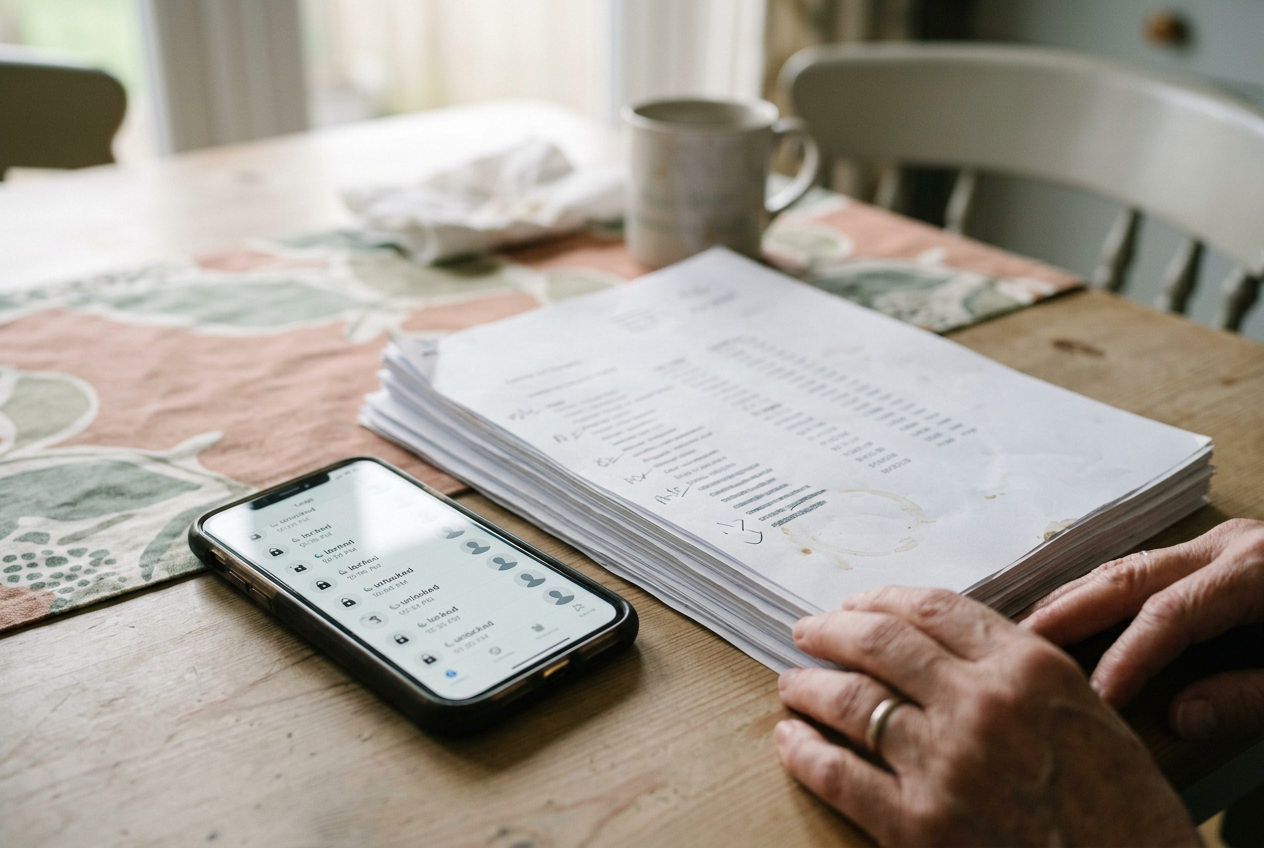
Her notebook listed 27 conversations over six weeks, the repair issue each tenant described and whether that person wanted follow-up. It could not reveal what the security system processed, but it preserved context the cameras may never have captured. Months later, the notebook remained on her table, with unresolved repairs marked beside the tenant-approved identifiers.
One story a day
The story of the day, in your inbox
One real story about AI each morning — no hype, no alarm, just company for the road.