A Camera Network Labeled Her a Frequent Protest Attendee
A spreadsheet showed that 14 months of an organizer’s routine driving had become a protest-attendance pattern. It did not show who created the label or who had used it.
August 9, 2026 · 7 min read

The spreadsheet arrived six months after Mara, the name used for this composite, asked a city agency what its camera network held about her vehicle. It contained 286 detection rows covering 14 months. Each row represented a camera capture of her license plate, accompanied by a location and a recorded time that is not reproduced here.
One line changed how she understood the rest. In a notes field, the vehicle was associated with the label “frequent protest attendee.”
Mara had attended demonstrations. She had also driven the same vehicle to tenant meetings, food distribution shifts and planning sessions at a community center. Several organizers lived nearby, and she often carried signs or gave someone a ride. The spreadsheet did not separate those activities.
It arranged movement around places, then presented an inference about what that movement meant.
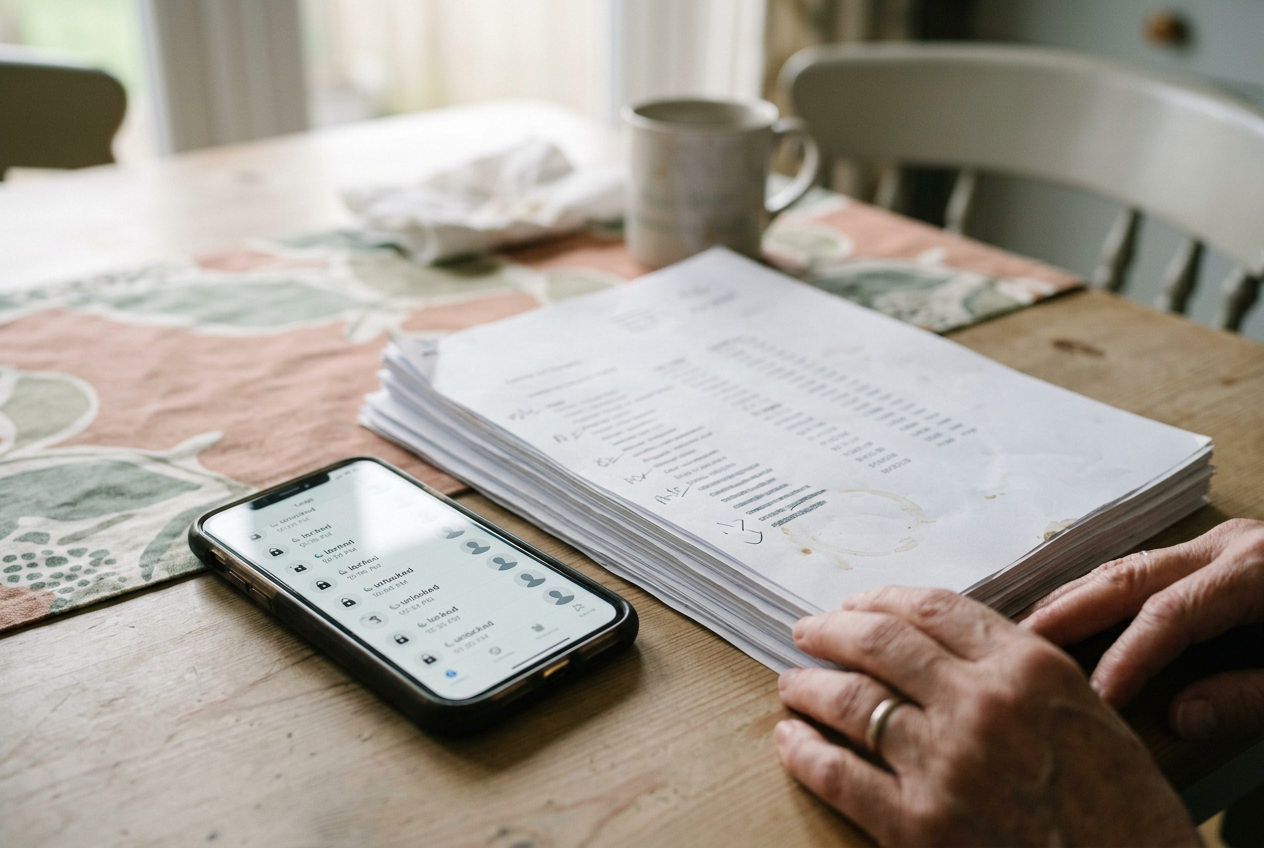
She printed the file because viewing hundreds of rows on a laptop made the pattern difficult to follow. On paper, she could circle the locations she recognized. Nineteen detections appeared near the community center. Eleven were close to a meeting place used by labor and housing groups.
Other rows traced ordinary drives between her home, a grocery store and the streets around public demonstrations.
The total looked larger than her memory of those trips. Then she noticed that one drive could produce several rows as the vehicle passed different cameras. Thirty-four detections in one month did not mean 34 outings. They meant the network had observed portions of fewer trips from multiple points.
That distinction mattered. It was not visible in the label.
How a drive becomes an association
A road camera can capture a vehicle’s plate and create a detection record. Depending on the system and agency settings, authorized users may search for a plate, review nearby captures or export results. Some networks also let agencies share access across jurisdictional lines, which can make the practical reach of the system broader than the cameras controlled by one office.
A detection establishes that a plate was within a camera’s view. It does not establish who was driving. It does not show whether the person entered a nearby building or joined an event. Those conclusions require other information, and the spreadsheet did not identify what other information, if any, had been used.
Mara’s export showed the location records and the protest-related label. It did not show whether a person had typed the label, whether software had suggested it or whether it had been copied from another agency record. There was no explanation of the threshold for calling attendance frequent. The agency’s general material described search and information-sharing functions, but it did not resolve how this particular classification had been made.
This is where a location log can become a pattern of association. Repeated detections near a meeting site may connect a vehicle to the people who gather there, especially when another record identifies the owner or when an analyst already knows the purpose of the location. The connection can be useful to an investigator without being complete or correct.
The spreadsheet did not contain a diagram of Mara’s relationships. It did not need one to affect them. A volunteer who regularly rode with her stopped accepting rides after seeing several printed rows, concerned that the plate might connect passengers to events they had not attended. Another organizer asked that future planning sessions move away from the community center, though no one knew whether changing the site would alter records already held by the agency.
Mara understood that public demonstrations could be photographed. The spreadsheet showed something broader: the same network also recorded travel before and after them, including trips that had nothing to do with protest. Once those detections were grouped under one label, routine movement became supporting material for a claim about political activity.
What the spreadsheet could not answer
Mara returned to the notes field. She wanted to know who had created the label, who could search it and whether the category had been shared. The export answered none of those points.
She sent a follow-up to the public records inbox. The reply pointed to general policy language about authorized use and retention, then said that some information might be withheld under rules governing investigative material. It did not say that Mara was under investigation. It also did not say she was not.
The uncertainty changed the meaning of each contact with the agency. A public records request generally becomes a government record itself, subject to the local rules that govern retention and disclosure. Mara knew that asking for an audit trail might create another email chain tied to her name, her plate and the protest label, even if no one ever added those messages to an intelligence file.
Her concern was not that a single question would automatically trigger surveillance. The documents did not support that conclusion. She feared a smaller and more demonstrable consequence: her attempt to understand the file would leave additional records, while the rules controlling how those records could be linked remained unclear.
Local policies differ. Some agencies keep routine camera detections for a limited period unless a user exports them or attaches them to another record. Some systems maintain audit logs showing searches, though the availability and detail of those logs vary. A general retention statement may say little about copied data, notes or material received from a partner agency.
Mara’s spreadsheet appeared to include records older than the ordinary retention period described in the policy she found. That could mean the detections had been preserved through an export or incorporated into another file. It could also reflect a rule she had not been given. The public account did not establish which explanation was correct.
She marked the oldest row with a pen. Fourteen months separated it from the newest entry, yet the response included no deletion date for the protest label and no indication that someone had reviewed whether it remained accurate.
The effects outside the file
For two months, Mara stopped using her vehicle for organizing work. She borrowed rides when she could and skipped one regional meeting when she could not. The change did not make her invisible. It made transportation harder and shifted part of the burden to people around her.
The spreadsheet also entered conversations that had once been about rents, repairs and neighborhood events. People discussed whether to arrive together. One member no longer wanted Mara to pick her up near home. A close friend questioned why Mara had submitted the records request under her own name, then apologized after learning that the available process had not made the consequences of identification clear.
Nothing in the file showed that those people had been individually tracked. The possibility was enough to change behavior because the 286 rows demonstrated that the network could preserve repeated proximity, while the label demonstrated that someone or something had interpreted it.
Mara began storing the printout with other organizing papers rather than leaving it beside her computer. She did not regard every camera as evidence that an official was watching her in real time. The system worked differently and, in some ways, more quietly: cameras produced detections, records could be searched later, and a user could convert selected movement into a category without the subject knowing when that happened.
The available documents support that mechanism. They do not establish how often agencies use protest-related labels, how many people had access to Mara’s category or whether anyone opened it after the export. Those gaps are central to her experience, but they are not proof of a larger hidden program.
This account is not legal advice. Laws governing public records, political surveillance and camera retention differ by state and city, while agency practice may also depend on agreements that are not visible in a general policy. Mara’s records showed what happened to her vehicle data. They did not provide a complete map of the system around it.
Questions people ask
Can a camera sighting prove I attended a protest?
No. A plate detection places a vehicle within a camera’s view, not a particular person at an event. Mara’s sheet also contained repeated captures from one drive, which made the total look larger than the number of trips. The label reflected an inference layered onto location records, and the export did not show the evidence standard behind it.
Can
I find out who searched the camera records?
Sometimes an audit log records searches or exports, but Mara did not receive one with the spreadsheet. The agency’s general policy said user activity could be logged, without explaining which supervisors could review it or whether partner-agency searches appeared. Her follow-up produced a description of the system, not a list of viewers.
Will asking for records create another record?
Usually, the request and the agency’s response become records of their own under local retention practices. That does not establish that the inquiry will be added to an intelligence file. Mara could confirm that her emails were retained; she could not determine whether anyone connected them to the label in the spreadsheet.
How long can an agency keep camera data?
Retention depends on local policy and whether a detection has been copied into another record. Mara saw a general retention window for ordinary captures, but no clear limit for exported intelligence notes. Her response gave no fixed deletion date; the spreadsheet on her table still covered 14 months and 286 detections.
One story a day
The story of the day, in your inbox
One real story about AI each morning — no hype, no alarm, just company for the road.