Her Wellness App Changed Before She Told Work She Was Pregnant
Pregnancy recommendations appeared on an employee wellness platform before she disclosed her news. She could not learn who at work saw the signal or whether privacy would cost $35 a month.
August 9, 2026 · 7 min read

In February 2024, the employee opened a wellness platform provided through work and found that its recommendations had changed. A card about prenatal nutrition sat near the top of the dashboard. Another suggested reviewing medications during pregnancy. The prompts that had appeared there a week earlier were gone.
She had not told her manager. She had not entered a pregnancy into the platform, searched its pregnancy content, or contacted the benefits team about leave. Her job sometimes involved lifting supply boxes, but she was not yet asking for a change in duties. She wanted more time after an early prenatal appointment before deciding what work needed to know.
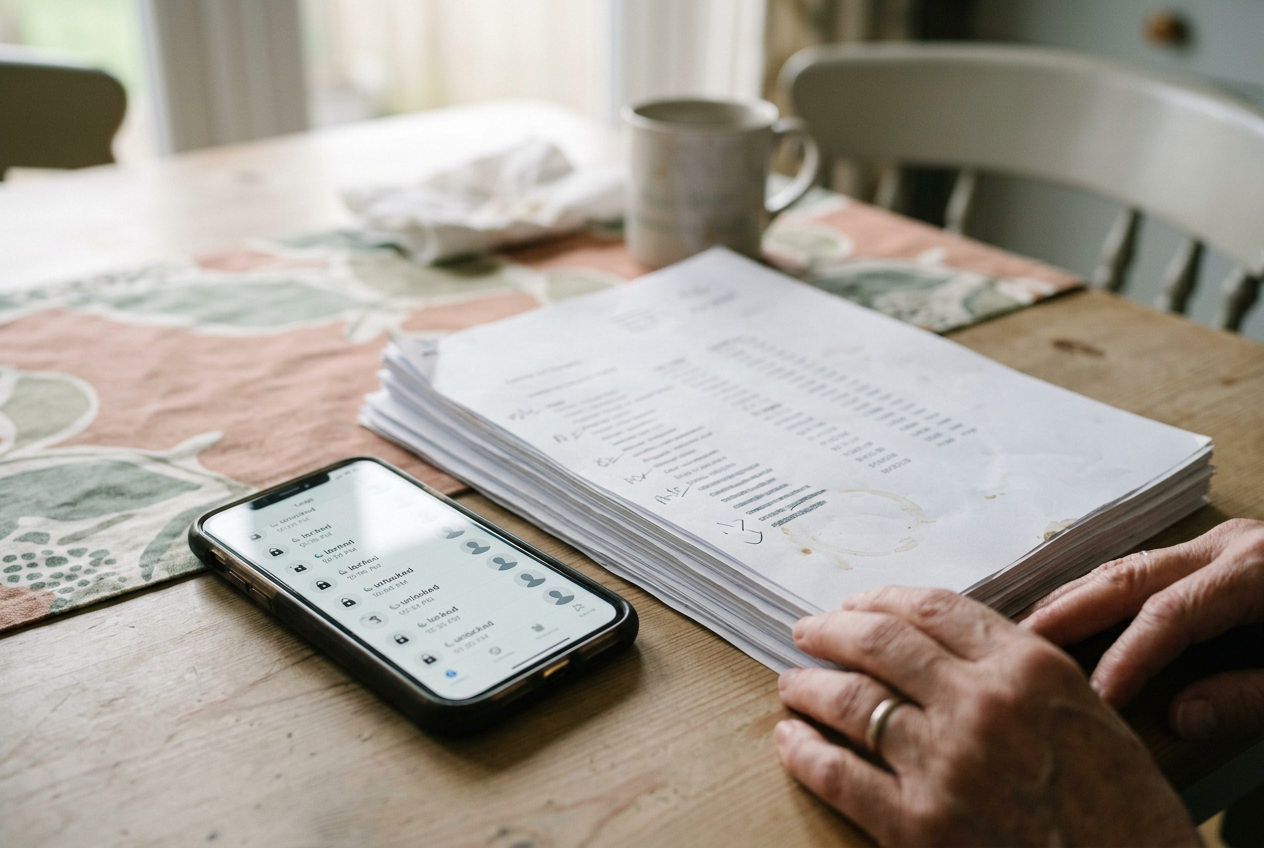
On her laptop, she started a spreadsheet. The first row recorded the month, the new recommendation, and the name of a screenshot saved in a folder. Over six weeks, she added eleven rows showing what appeared, what disappeared, and which explanation she received from support.
That spreadsheet became the firmest evidence she had. It showed that the platform changed. It did not show why.
The signal probably came from somewhere else
Workplace health platforms rarely operate from one stream of information. Depending on the program, a platform may receive enrollment details from an employer, activity entered by the worker, or health-plan data used to recommend benefits. Outside vendors may handle parts of the program under contracts the worker never sees.
Twelve days before the first pregnancy recommendation appeared, a prenatal laboratory claim had shown up in her health insurer’s portal. The timing suggested a possible route. It did not prove one.
Claims can contain diagnostic or procedure information that points toward pregnancy, even when the patient never writes the word into a wellness app. A platform receiving claims data might classify the person as likely to need prenatal resources, while a separate system could reach the same conclusion from benefit enrollment or activity inside a connected service.
The employee asked the platform’s support team what event had changed her recommendations. The replies described personalization in general terms and referred her to the account notice. Support did not confirm that a claim had triggered the pregnancy content, nor did it identify another source.
She added that response to the spreadsheet. In the next column, she marked the source as unknown.
The distinction mattered. If she had entered the information herself, she could understand the platform as responding to a choice she made. If a claim or partner feed supplied it, the pregnancy signal had moved between systems without an action she could remember taking, and the visible recommendation was only the final step in a chain she could not inspect.
Automated recommendations can also be wrong. A claim associated with fertility care, pregnancy loss, or another person covered by the same plan may be interpreted without enough context. In this case, the inference was accurate. Accuracy did not answer the privacy concern.
The dashboard notice did not identify the viewers
The employee’s main confusion came from a notice linked from the wellness dashboard. It said, in substance, that personal information could be used to run the program, while reports provided to the employer were generally aggregated. She could not tell who counted as part of the program or what generally excluded.
An aggregate report might show that a percentage of workers used pregnancy resources without identifying anyone. An administrative dashboard might still reveal individual enrollment, reward status, or completed activities. Those are different forms of visibility, and a broad statement about aggregate reporting does not establish which screens an employer’s benefits staff can open.
Her manager was not necessarily an administrator. Benefits staff, outside consultants, and the platform’s own workers could have different permissions. The employee wanted a role-by-role answer, but the material available to her described categories of use rather than the people who could see a pregnancy-related signal.
No evidence in her spreadsheet showed that her manager had seen the recommendations. That remained important. The app had exposed the subject of pregnancy inside a workplace-linked account, but the employee could not establish that the signal traveled to the person who controlled her assignments.
The uncertainty still changed her behavior. She stopped opening the platform on her work computer and avoided pregnancy articles inside it, concerned that engagement could create another record. At a prenatal visit, she delayed asking about a lifting restriction because she had not decided how to raise the issue at work.
Privacy and safety pulled in different directions. Early disclosure might help a worker obtain adjustments for lifting or exposure risks. It can also reveal medical information before the worker is ready, at a point when pregnancy loss remains possible and workplace reactions are unknown.
HIPAA did not settle the issue
The employee initially assumed that medical privacy law prevented her employer from learning anything about the pregnancy. The reality was narrower.
In the United States, the Health Insurance Portability and Accountability Act applies to covered health plans and health care providers, along with certain contractors handling protected health information for them. It generally does not cover an employer’s ordinary employment records merely because those records mention health.
The platform’s status depended on which service it was performing and whose data it was handling. Information processed for the health plan could fall under one set of restrictions, while reward records sent to the employer for payroll purposes could be treated differently. A privacy policy alone could not show how every data flow was classified.
Employment laws can limit discrimination and regulate some medical inquiries. Pregnancy discrimination is unlawful, and federal law provides a framework for reasonable accommodations related to pregnancy and childbirth. Those protections do not automatically produce a readable log showing which administrator viewed a wellness profile.
The employee was trying to answer a technical question through documents written at the level of legal categories. She wanted to know whether a specific pregnancy recommendation appeared anywhere except her screen. The notice explained permitted uses without giving her that visibility record.
Privacy had a $35 monthly price attached
The company offered a $35 monthly wellness credit. Employees earned it by participating in the program and completing enough qualifying activity. Over a year, the credit was worth $420.
The account page included controls for personalized recommendations and some data sharing. It did not make clear whether switching off personalization, deleting the account, or declining future activities would affect the credit. The employee did not want to trade medical privacy for money, but losing $35 each month would raise the cost of her health coverage.
She sent the support inbox a narrower request: whether she could stop pregnancy personalization and keep the credit. The response separated optional recommendations from program participation, yet it did not state how her employer would treat an account that stopped reporting activity.
The spreadsheet gained another row. The privacy control was available. The payroll consequence was unknown.
Calling a wellness program voluntary does not describe how the choice feels to every worker. A $35 credit may be minor for one household and necessary for another. The employee’s concern was not only that money encouraged participation; it was that the financial rule remained unclear while sensitive recommendations were already appearing.
Five weeks after the first pregnancy card, she told her manager. The manager appeared surprised and discussed temporary changes to lifting work. Nothing in that conversation indicated prior knowledge from the platform, although surprise could not establish what benefits staff or a vendor had seen.
She kept the account active long enough to preserve the credit. She turned off personalized recommendations, then checked her pay statement the next month. The $35 remained.
That outcome resolved the immediate cost, not the earlier disclosure path. Her spreadsheet still contained the prenatal claim date, the first recommendation twelve days later, and an empty cell where the source should have been.
Questions people ask
Can my manager see pregnancy recommendations in a workplace wellness app?
It depends on how the platform assigns access. A manager may have no access while benefits staff receive participation records or aggregate reports. In this story, the employee found no evidence that her manager saw the pregnancy content, but the platform’s notice did not identify every role that could view individual information.
Is information in an employer wellness app protected by HIPAA?
Some information may be protected when the platform is working for a covered health plan or provider. Employer-held employment records generally are not covered by HIPAA merely because they contain health information, so the answer can change with the service being performed and the destination of the data.
Can a wellness platform infer pregnancy without being told?
A platform may receive claims, benefit eligibility information, or activity from a connected service, depending on its contracts and design. In this case, a prenatal claim appeared twelve days before the recommendations changed, but the timing did not prove that the claim caused the update.
Does opting out of personalization mean losing a wellness credit?
Program rules differ, and privacy controls may be separate from the activities used to earn a credit. Here, support did not give the employee a firm answer before she disabled recommendations. Her next pay statement still included the $35, which she recorded in the final completed row of her spreadsheet.
One story a day
The story of the day, in your inbox
One real story about AI each morning — no hype, no alarm, just company for the road.