Her Wearable Misread Her Mobility. Premiums Rose $66.20
A voluntary workplace fitness program treated limited mobility as inactivity. The resulting loss of an insurance discount reached straight into a worker’s paycheck.
August 9, 2026 · 7 min read

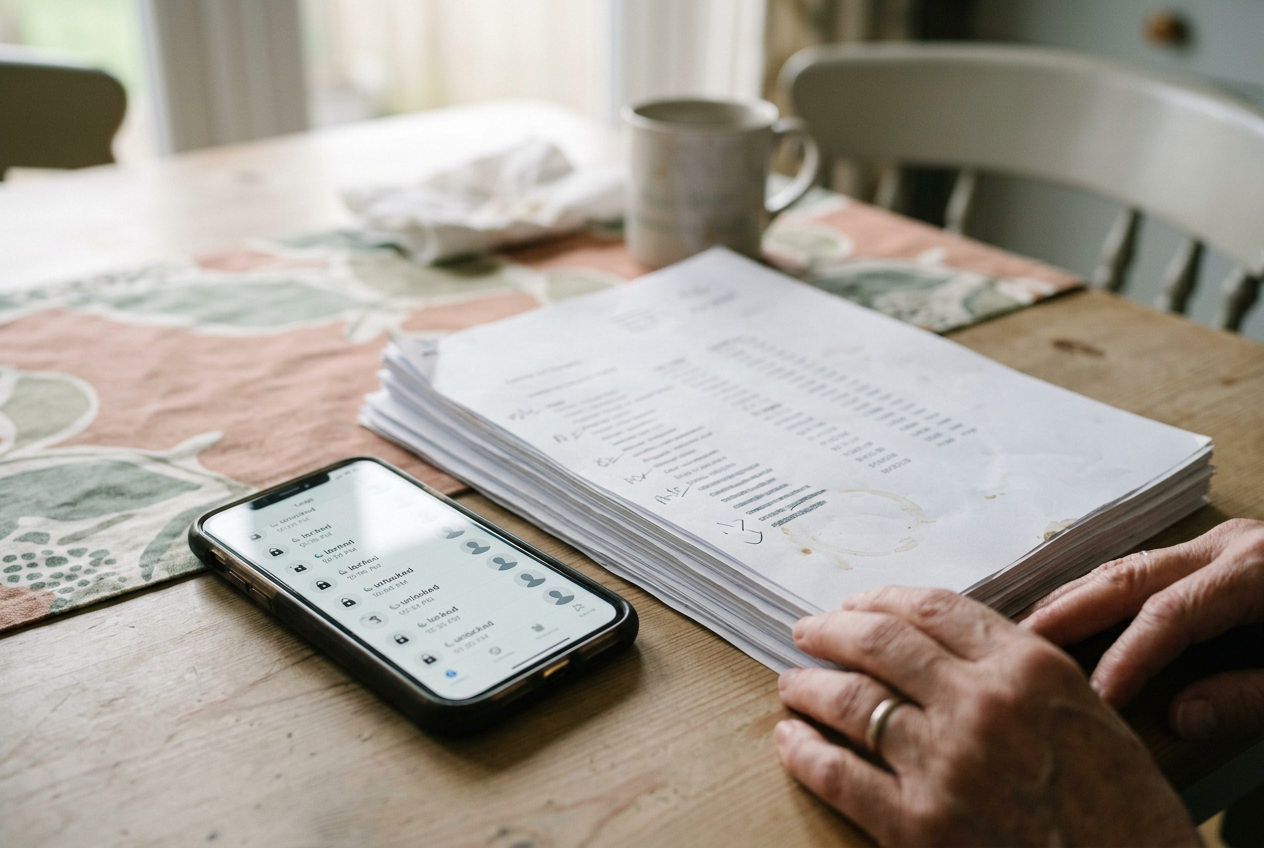
The change appeared on Mara’s pay stub eight months after she joined her employer’s fitness program. The line for health insurance, usually $118.42, showed $184.62.
She held the stub beside the previous one at her kitchen table. The difference was $66.20. With 26 pay periods in a year, losing the discount would cost $1,721.
20 if nothing changed.
Mara, a composite worker based on recurring accounts of workplace wellness systems, handled billing records for a regional employer. Most of her work happened at a computer. She also lived with chronic pain and limited mobility after an old injury, walked with a cane on difficult days, and attended physical therapy.
The fitness program had been presented as voluntary. Employees could connect a wearable, complete activity goals and receive a health insurance discount. Mara understood that the program would receive information from the device. She did not understand that readings the device classified as insufficient could change a payroll deduction without anyone first asking whether the readings made sense.
The higher amount on the pay stub made that distinction concrete.
A discount tied to movement
Mara had enrolled for the money. The discount was worth more than $1,700 a year, enough to affect her grocery budget and the amount she could set aside for medical copays. Declining the program was permitted, but it meant paying the higher insurance rate.
At enrollment, she moved through consent screens that described activity tracking, program administration and data sharing. The materials said the employer would receive limited information about eligibility rather than a detailed record of her health. A separate company operated the platform and processed data from the wearable.
That arrangement gave Mara some reassurance. Her manager would not see how many steps she took on a Tuesday or whether she exercised after work. Yet the status sent back to payroll still carried a consequence, because a single eligibility result could increase the amount removed from every paycheck even if the underlying readings remained elsewhere.
For the first few months, the dashboard showed progress toward a movement goal. Mara wore the device during work and around the house. She removed it for pool-based therapy, where much of her most sustained exercise occurred, because she did not want to damage it. On days when she relied more heavily on her cane, the wearable often recorded fewer steps than she expected.
The device was not measuring fitness directly. It contained motion sensors, and software converted their signals into categories such as steps, active minutes or sedentary periods. Those estimates depend on movement patterns that the system recognizes. A shortened stride, slower pace or use of an assistive device can produce signals that differ from the patterns used to build and test a conventional step-counting model.
Non-step exercise presents another gap. Stretching, resistance work and movement in water may require substantial effort while producing little wrist motion, especially when the device is absent. The dashboard can therefore show a low activity total without establishing that the person was inactive.
Mara knew the numbers were incomplete. She did not know they were becoming expensive.
The record that did not match her body
After the deduction rose, Mara opened the wellness dashboard and downloaded the activity history available to her. It showed repeated days below the program’s target and long blocks labeled sedentary. A notice on the dashboard indicated that she had not met the standard required for the discount.
She compared the download with a notebook where she tracked therapy sessions and pain. During one month the device treated as largely inactive, the notebook showed six pool sessions, four clinic appointments involving guided exercise and several days when she walked in short intervals to avoid a pain flare.
Neither record provided a complete account of her health. The notebook documented work the wearable missed. The wearable captured some movement she never wrote down. The problem was that only one record fed the insurance decision.
Mara returned to the pay stub. The $184.62 line did not say that a motion sensor had undercounted pool therapy or that a mobility limitation could change the shape of her steps. It showed the output of that chain as a routine insurance deduction.
She contacted the program through the support inbox and explained that she had limited mobility. The first response directed her toward general troubleshooting and described how activity targets were calculated, without resolving whether her readings had been reviewed for accessibility. She was asked to provide additional information about her limitation and seek an alternative standard.
This was the point at which consent changed for her. At enrollment, the bargain had seemed to involve sharing ordinary fitness data in exchange for a discount. To challenge the loss of that discount, she now had to disclose more sensitive information about pain, treatment and physical limits, even though the inaccurate activity record had created the dispute.
The program remained voluntary on paper. Financially, leaving it meant accepting the $66.20 increase.
What the employer could see
Mara’s manager said managers did not receive individual activity readings. The available program materials also described a separation between detailed wellness data held by the platform and the eligibility information returned to the employer.
That boundary mattered, but it did not answer every privacy question. Mara could not tell which readings had been retained, how long the platform would keep them or whether a person had reviewed her history before the discount disappeared. She also could not see the full rule that converted a sequence of low readings into an ineligible status.
What she could document was narrower. Her wearable history contained repeated low activity classifications. The dashboard connected those classifications to the wellness target. Payroll then removed the discount.
The records did not reveal the internal weighting of each day, and they did not establish whether the change was fully automated or approved by a worker at the program administrator.
Workplace wellness data can sit across several systems with different legal and contractual boundaries. Health privacy rules do not cover every piece of information merely because it concerns health, and protections may depend on who collected the data, why it was collected and how an employer structured the program. Disability and employment protections can also be relevant to wellness incentives, but Mara’s records alone could not settle how those rules applied.
The practical power was easier to see. One organization held the movement data. Another controlled the health plan. Mara received the result through payroll.
The cost of trying to look active
While the review was pending, Mara began checking the wearable more often. A low count late in the day sometimes led her to walk extra laps inside her apartment building, even when her physical therapy notebook said to reduce activity after pain increased.
She stopped after a week in which the extra walking aggravated her hip and disrupted her sleep. The device had not ordered her to exceed her limits. The insurance discount gave its number weight, and the dashboard did not know the difference between a safe rest day and disengagement.
This is one safety risk of using general fitness measures in systems with financial consequences. A target can encourage movement for many participants while pressuring someone with limited mobility to chase a metric that does not reflect the plan set with a clinician. The harm does not require the sensor to fail completely. A consistent undercount is enough if the program treats the estimate as a fair comparison across bodies.
Mara submitted documentation from a clinician and asked for an alternative way to qualify. The program later moved her to a different standard based on participation rather than step totals. Payroll restored the discount and credited $132.40, covering the two higher deductions.
The correction did not explain why the original classification had passed into payroll without a review. It also did not tell her whether the old activity history, including months of inferred sedentary time, would remain in the platform.
On the next pay stub, the insurance line was back to $118.42. Mara placed it beside the stub showing $184.62 and kept both with her therapy notebook.
Questions people ask
Can an employer see the health data from a workplace wearable?
It depends on how the program is structured. In Mara’s case, the employer was described as receiving an eligibility status rather than detailed daily readings, while the outside platform held the activity history. That still allowed health-related data to affect payroll, and her records did not show everyone who could access the underlying information.
Can a fitness wearable mistake limited mobility for inactivity?
Yes. Wearables infer steps and active time from sensor patterns rather than observing effort directly. An atypical gait, slower movement, an assistive device or exercise performed without the wearable can lead to undercounting. Mara’s therapy notebook recorded sustained activity on days the dashboard classified as below target.
Is a wellness program voluntary if declining it costs money?
A program may describe participation as voluntary while attaching an insurance discount to completion. Mara was allowed to leave, but doing so would have raised her annual payroll deductions by $1,721.20. Her experience shows how a formal choice can carry enough financial weight to shape consent.
What happened after the wearable’s record was challenged?
The administrator accepted clinical documentation, applied an alternative participation standard and restored Mara’s discount. Payroll also credited the two higher deductions, totaling $132.40. The review did not disclose the internal decision process or settle how long the platform would retain the activity history beside that $184.
62 pay stub.
One story a day
The story of the day, in your inbox
One real story about AI each morning — no hype, no alarm, just company for the road.