A Camera Flagged a Custodian’s Rescue as Aggression
He caught a student who was collapsing. The school’s behavior-detection system labeled the contact aggressive, and its report reached supervisors before witnesses did.
August 9, 2026 · 7 min read

The line on the report
The printed incident report arrived in the custodian’s hands two days after the student collapsed. Near the top, beside a still image from a hallway camera, was a category in capital letters: AGGRESSION.
He had worked at the school for seven years. During a passing period in October 2023, he saw a student slow down, reach toward the wall and begin to fall. The custodian stepped in front of the student, caught the student around the upper body and lowered them to the ground. A backpack shifted between them.
Another employee came over and called for medical help.
The camera saw a fast approach and forceful contact. It did not record the student saying they felt faint, and its view did not establish why the custodian had grabbed them. The behavior-detection tool assigned the clip to an aggression category and sent an alert for review.
By the time an administrator opened the alert, the student was already with medical staff. The administrator watched the short clip without audio, accepted the category and generated an incident report, which described a staff member making forceful contact with a student. The report moved into the school’s internal safety process before anyone had interviewed the adults who witnessed the collapse.
The custodian learned that he had been removed from student-facing duties while the incident was reviewed. He would keep his base pay, but he lost access to the extra building work he usually accepted. Over six weeks, his pay stubs showed $428 less overtime than he had expected.
The money mattered. The report mattered more.
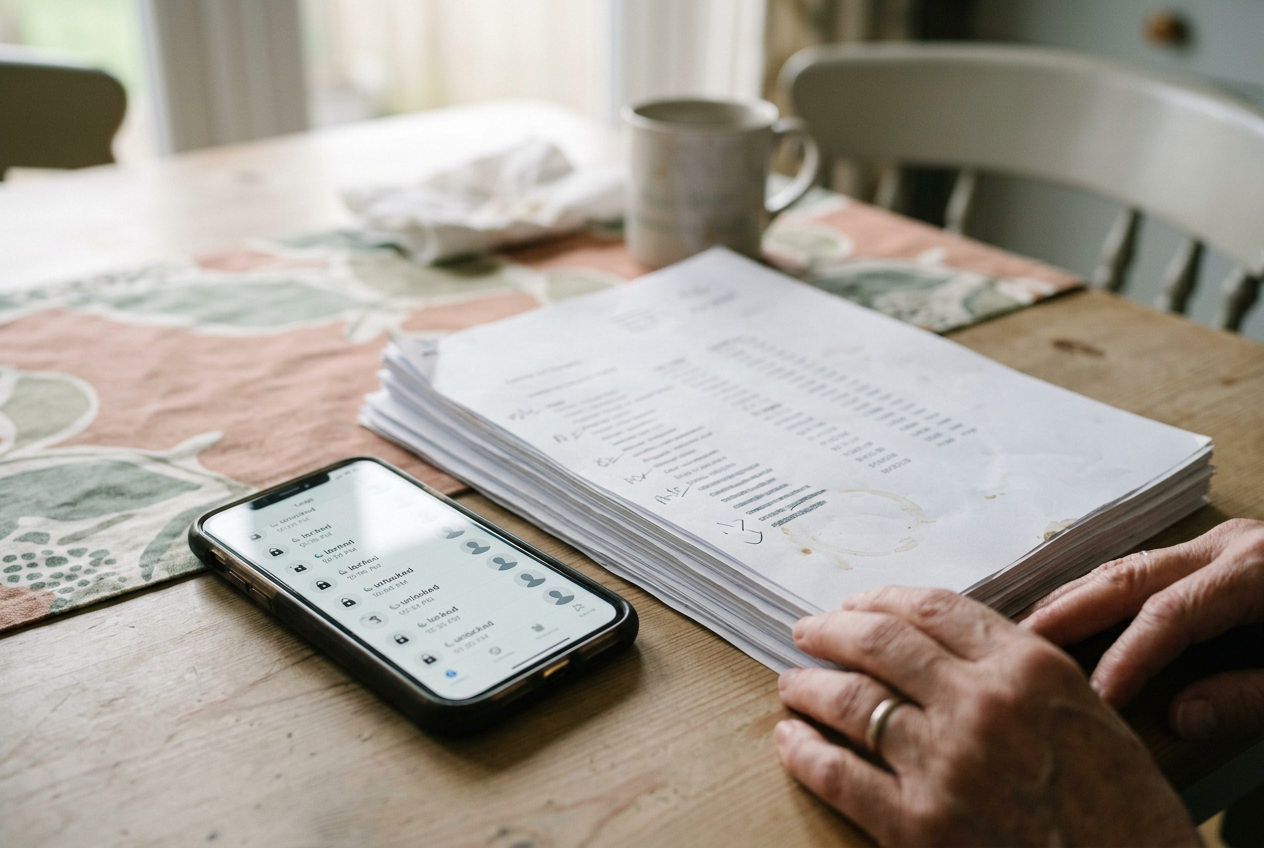
He read it at his kitchen table with a pen beside him. The still image showed his arms around the student, but not the moment the student’s knees gave way. Under the aggression label, he wrote two words: student fainted.
A label moves faster
The school treated the automated alert as a starting point, according to the account assembled for this composite, yet the report gave that starting point the shape of a conclusion. It had a category, an image and the appearance of a completed record, while the custodian’s explanation existed only in a conversation that had not yet been added to the file.
Copies reached his supervisor and district safety staff. Human resources received the report as part of the employment review. The camera vendor’s support team was asked whether the system had operated as designed, which answered a technical question about whether the software detected the movement it had been configured to detect, not the factual question of whether the custodian had acted aggressively.
That distinction was hard to see in the paperwork. A tool can function according to its settings and still produce a false account of an event.
Automated behavior detection generally breaks video into measurable changes. It can track movement, estimate proximity between people and compare those patterns with examples or rules associated with conduct such as fighting, falling or entering a restricted area. The output is a score or category. It is not a finding about intent.
Context arrives from somewhere else. A witness explains that a student was losing consciousness. A nurse records a medical event. Another camera angle may show the collapse beginning.
If those sources enter the review later, the initial label can still shape how each new fact is read, particularly when the label has already been copied into an official-looking report.
The first witness statement was added after the custodian had been reassigned. A second employee then confirmed that the student appeared unsteady before the contact. The student’s family provided enough information for the school to establish that the episode was medical, without sharing the underlying condition with the custodian.
None of those accounts changed the words at the top of his printed report. They became attachments.
At work, the reassignment was visible even though the reason was supposed to remain limited to those handling the review. He stopped covering activities where students were present. A coworker asked whether there had been a problem in the hallway. The custodian gave a brief answer and returned to his tasks, aware that a rumor did not need the full report to damage him; it needed only the fact that he had disappeared from familiar work after an incident involving a student.
The correction stays attached
Three weeks after the collapse, the school concluded that the custodian had tried to prevent an injury. He returned to his usual duties. The employment review did not find misconduct, and the missed overtime began appearing again when extra work became available.
The original incident report was not deleted.
An amended record explained that witness accounts and medical information had changed the finding. The aggression category remained visible in the original document because the school preserved the record of what triggered the review. On the printed copy, the custodian drew a circle around the label, then placed the amended page behind it.
This is one way a corrected automated claim can persist. A database may preserve the first entry for audit purposes. An email attachment remains in an inbox. A supervisor who saw the alert may never open the later amendment, while a future reviewer may encounter both documents and treat the existence of an investigation as meaningful even when the investigation cleared the worker.
Eight months later, the custodian’s annual evaluation referred to a safety incident that had been reviewed and resolved. The reference did not accuse him of wrongdoing. It also did not say that a camera system had mistaken emergency assistance for aggression.
He asked for the reference to be removed. The school revised the evaluation after another review, but it could not tell him with certainty whether every copy of the initial incident report had been replaced or marked as corrected. The flagged video was also retained beyond the routine period for unremarkable hallway footage because it had become part of an incident file.
That changed the privacy issue. The camera had captured students and staff as part of ordinary school surveillance, but the automated flag converted one brief encounter into a record with a longer life, broader internal circulation and possible relevance to employment decisions. The student’s medical emergency became visible through the same process, even though the system could not understand it.
The custodian kept his printed report at home. At first, he carried it to meetings because it showed the claim he needed to answer. Later, he kept it because the correction did not erase the original category, and because he had no other way to know which version another person might be reading.
What the camera could not know
The school had installed behavior detection to surface events that staff might miss. A hallway camera can cover a space when no adult is looking directly at it, and an alert may help someone respond to a fight or a fall. In this incident, adults were already helping the student before the alert reached an administrator.
The failure was not that the camera recorded contact. Contact occurred. The failure developed when an uncertain classification entered a report as the organizing fact, then traveled through a workplace process faster than the accounts of people who had seen the student begin to collapse.
Human review did not prevent the harm. The first reviewer had the same narrow clip as the system and a category that directed attention toward aggression, while the custodian’s work status could be changed immediately and restored only after other evidence arrived. Review existed, but sequence gave the automated label an advantage.
The school later changed how it handled similar alerts. Administrators were expected to distinguish the system’s category from a verified incident in written records, and reports based on camera analytics were held until available witnesses had been contacted. Those changes reduced the authority of the first label. They did not settle how long the old clip and report would remain stored.
The custodian still worked in the building fourteen months after the incident. The student had recovered and returned to school. His lost overtime was not repaid because the extra work had never been guaranteed, and the question of who retained the first report remained unresolved.
Questions people ask
Can a school discipline a worker based on an automated camera alert?
In this composite, the alert triggered reassignment and an employment review before witnesses were interviewed, but it did not become the final misconduct finding. School policies and employment arrangements vary. The consequential point was that a temporary measure still reduced the custodian’s earnings and exposed him to suspicion while the school gathered context.
Why did the camera label emergency help as aggression?
The tool detected rapid movement, close physical contact and a person going to the ground. It lacked the student’s words, medical context and a clear view of the collapse beginning. Its category described a visual pattern, but the incident report initially treated that category as if it explained the custodian’s intent.
Can a corrected automated report still affect someone’s job?
Yes. The correction may be attached to the first report rather than replacing it, and earlier copies may remain in inboxes or internal files. Here, the custodian returned to regular duties, but a later evaluation still mentioned the reviewed incident until he challenged the reference and the school revised it.
What happens to the video after a school corrects the mistake?
Retention depends on the school’s systems and policies. In this story, routine footage would normally disappear sooner, while the flagged clip remained because it had entered an incident file. Fourteen months later, the custodian’s paper copy still held both versions: the aggression report in front, the correction behind it.
One story a day
The story of the day, in your inbox
One real story about AI each morning — no hype, no alarm, just company for the road.