Her Wage Advance Fell to $42 Before a $186.42 Power Bill
An hourly worker expected to draw $120 from her next paycheck. Overnight, the app cut her available amount to $42 without identifying the signal that changed.
August 9, 2026 · 8 min read

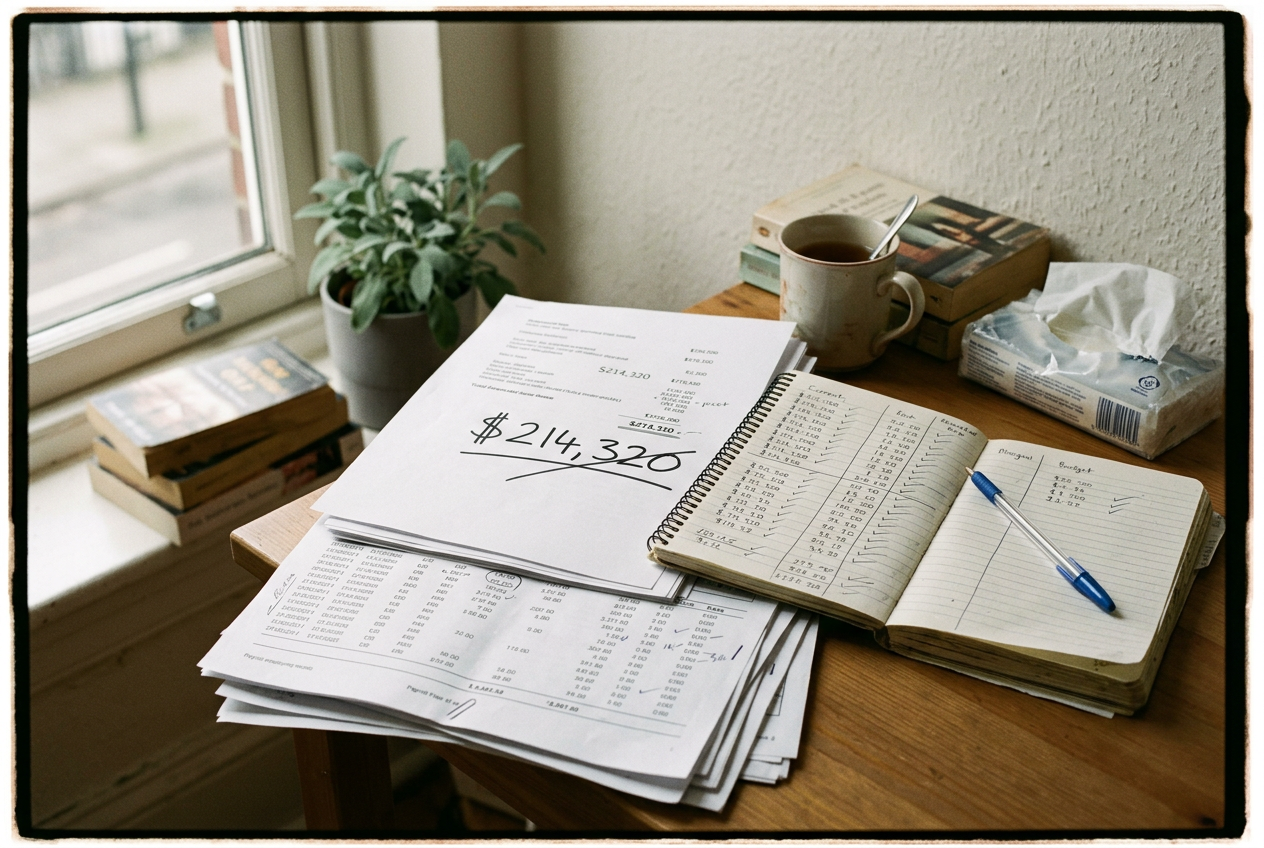
The electric bill was $186.42. That figure appeared beside current charges on the itemized statement that Renee, a composite of hourly workers, kept open on her kitchen table.
She had six days before it was due. Her checking account held $71. The wage-advance app had shown $140 available the previous evening, and she planned to move $120, leaving enough for the bill after her next shift’s tips reached the bank.
The next morning, the large figure on the app’s dashboard was $42.
Renee refreshed the screen. The number stayed. A notice said, in general terms, that available amounts could change with recent work and account activity, but it did not show which activity mattered or how much weight any signal carried. She could see the result.
She could not reconstruct the decision.
The electric bill remained beside her phone, with $186.42 printed near the bottom.
The hours the app could see
Renee worked at a counter-service restaurant. Her schedule changed each week, though she usually logged between 30 and 34 hours. She had used the advance app for eight months, most often for groceries near the end of a pay period or for a bill that landed before payday.
The platform did not lend against her full paycheck. It displayed an available amount that could rise as it received evidence of completed work, then reset after payroll. Renee understood the broad arrangement. She had believed that hours already worked would produce an amount she could count on for at least the rest of that pay period.
That week had been uneven. One shift ended early after customer traffic slowed. Another shift was missing from the timekeeping app while her manager corrected a clock-in problem. Renee’s paper schedule showed 32 planned hours, but the work records visible on her phone showed 24 completed hours and one shift still unresolved.
That gap may have mattered. Wage-advance platforms can use verified hours or estimated earnings to decide how much pay is eligible for early access, depending on how the service connects with an employer. A shift that exists on a schedule may carry less weight than a shift confirmed through payroll or timekeeping data.
The app did not tell Renee that the missing shift caused the drop. It only left her with two screens that no longer matched: the timekeeping record with an absent shift and the advance dashboard with $42.
Her manager corrected the hours later that week. The restaurant’s payroll record then reflected the shift, but the available amount did not immediately return to $140. That made the first explanation less complete, even if the missing hours had contributed.
What the bank connection may have added
Renee had also connected her checking account to the platform. The app used that account to receive repayments after payday and, according to its general disclosures, to assess account activity. She had given that permission during setup, then thought about it mainly when an advance arrived.
Her recent bank activity had changed. A paycheck posted one day later than Renee expected during the previous pay cycle. An automatic insurance payment cleared before the deposit, leaving the account below zero for part of a day and producing a $35 bank fee. By the time the wage-advance app collected what she owed, the paycheck was present and the repayment went through.
From Renee’s view, she had repaid the advance. From an automated system’s view, the sequence could contain several separate signals: a delayed deposit, a brief negative balance and a repayment that arrived only after the account recovered. The platform did not confirm that it interpreted the sequence that way, and its dashboard did not display a score tied to those events.
Some services review recurring deposits to estimate income stability. Some monitor whether prior advances were recovered as expected. Others adjust availability when a connected account shows low balances or changing deposit patterns, although the details differ and may remain internal. Renee could read categories in the disclosures, but categories did not explain why $140 became $42 overnight.
Her work data had a temporary hole. Her bank data had an unusual pay cycle. Either could have mattered, and both may have arrived at the platform within the same stretch of days.
Available pay was not a fixed balance
The phrase Renee kept returning to was “available amount.” She had treated it like a balance, partly because the app placed one dollar figure at the center of the screen and let her draw against it more than once as she worked.
A balance suggests money held for someone. The figure on Renee’s screen worked more like a changing ceiling. It could depend on earnings the system recognized, deductions expected from the coming paycheck, an advance still pending, or limits applied by the platform. A worker may have earned more than the app makes available.
That distinction became real at the kitchen table. Renee’s own notes showed that she had completed enough work to expect more than $42 after taxes and routine deductions. The platform was making a narrower decision about early access, under rules she could not see in full.
The company could also change risk controls across groups of users without a worker doing anything new. Renee had no evidence that this happened in her case. The possibility mattered because the notice described a variable amount, while the dashboard offered no dated history showing which input had moved.
She took screenshots. One showed $140. The next showed $42. Neither showed a calculation.
The support reply and the unresolved number
Renee sent a message through the support inbox and marked the power bill as urgent. The response described several broad factors that could affect availability, including verified earnings and account history. It did not name the factor that changed her amount.
She replied with the corrected work record. Support acknowledged the update and said the available amount could be recalculated as new information arrived. No one promised that it would return to its earlier level.
Two days later, the figure rose to $68. After another completed shift appeared in the timekeeping app, it moved to $96. Renee still could not tell whether the restored work hours drove those increases, whether her bank account had moved into a more typical pattern, or whether the system had completed a routine refresh.
The gradual return complicated the idea that the app had made one decision at one moment. It may have been updating repeatedly as records arrived, with each new figure replacing the last and no ledger showing what entered or left the calculation.
For Renee, the practical effect was simpler. The $120 she had planned to transfer was never available again before the electric bill came due.
She paid $96 from the app and $71 from checking. That left $19.42 unpaid. The utility account carried the remainder into the next billing period along with a late charge, raising the amount on the following statement.
The original bill stayed in a folder with her screenshots and the paper schedule. At the top, she wrote four figures in a row: $186.42, $140, $42 and $96. They described the week more clearly than the dashboard notice did.
This account explains a composite experience rather than one platform’s formula, and it is not financial advice. The central problem was not that Renee lacked all information about wage advances. She knew the amount could vary. She lacked a usable explanation at the moment a specific bill depended on it.
Questions people ask
Why did my wage-advance limit suddenly drop?
A drop may follow changes in verified work hours, expected deductions or connected bank activity. An outstanding advance can also reduce what appears available. In Renee’s case, a missing shift and an unusual deposit cycle were both visible, but the platform never identified one as the cause.
Can an app offer less than I have already earned?
Yes. The displayed amount can be lower than gross wages already earned because the platform may recognize only verified hours and may account for expected payroll deductions or its own access limits. Renee’s corrected work record showed more earnings than the $42 available on her dashboard.
Will correcting a timekeeping error restore the old amount?
It may change the figure if verified hours are part of the calculation, but Renee’s amount did not return to $140 after her manager corrected the missing shift. It rose in stages, which left open whether work data, bank activity or a later system update drove the change.
Can support explain which signal changed the limit?
Renee received a description of broad factors rather than an itemized calculation. Her screenshots recorded the fall from $140 to $42, while the corrected time record showed the missing shift. The support exchange never connected either record to the $19.42 left on the power bill.
One story a day
The story of the day, in your inbox
One real story about AI each morning — no hype, no alarm, just company for the road.