A Debt Bot Saved Her $1,640. She Still Couldn’t Pay Utilities
The automated negotiator reduced a hospital balance to $4,100, then accepted a $171 monthly plan. On a low-hours paycheck, that left a retail worker $49 short of her utility bill.
August 9, 2026 · 8 min read

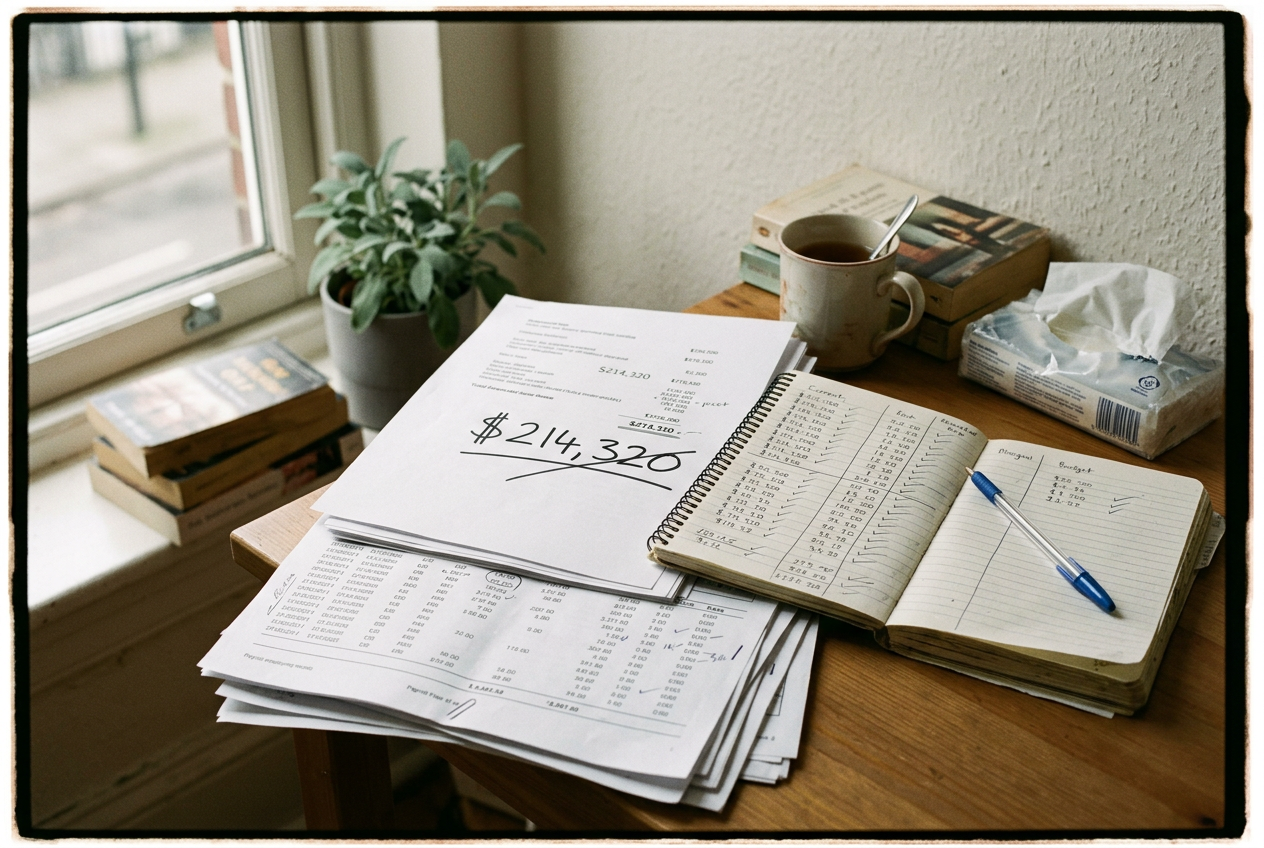
The itemized bill arrived eight weeks after an emergency room visit in October 2024. It ran several pages and ended with a patient balance of $5,740.
The retail worker at the center of this composite story had gone to the hospital with abdominal pain that would not ease. She had insurance through her job, but the plan carried a deductible. The bill showed charges for imaging, lab work, medication and the emergency visit. Insurance adjustments took care of part of the total.
The rest belonged to her.
She kept the bill on her kitchen table beside a notebook where she recorded rent, groceries and every paycheck. Her work hours changed from week to week. During a strong month, she brought home a little more than $2,100 after deductions. During a weak one, the figure could fall below $1,950.
The hospital balance was close to three months of take-home pay.
She first made two payments of $50 through the hospital account page. That amount did not follow an agreement. It was what she could send without missing rent, though the balance barely moved and notices continued to appear.
In January 2025, she found an automated debt negotiation service through an online search. The service asked for the itemized bill, household income and permission to contact the hospital. Its account page described possible savings and showed an estimated result before she authorized the negotiation.
She understood the authorization to mean the tool would seek a lower bill. The same authorization also permitted it to accept a payment arrangement on her behalf, a point she had passed on the screen without grasping what it would mean for her checking account.
Three weeks later, the dashboard reported a successful result. The hospital had reduced the balance by $1,640, leaving $4,100. The agreement divided that amount into 24 monthly payments of about $171, with the first payment due the following month.
The savings figure was easy to see. She wrote it near the bottom of the itemized bill: $5,740 became $4,100.
Then she wrote $171 in her notebook.
What the result left out
Her notebook had one page for February, a month when the store cut hours after the holidays. Take-home pay was $1,912. Rent was $980. Groceries came to $280, the bus cost $70, her phone was $52, a prescription was $34, and a credit card minimum was $96.
Laundry and basic household purchases took another $65.
Those costs totaled $1,577 before utilities. Adding the new hospital payment brought the figure to $1,748. That left $164.
Her electricity and water bills totaled $213.
The gap was $49, and the notebook did not yet include anything for a replacement pair of work shoes or the higher grocery bill that came when her younger sister stayed for part of the month. She could move one expense to a credit card, but that would increase a balance she was already paying at the minimum.
The automated result had improved one number while ignoring the relationship among the others. The dashboard emphasized the 29 percent reduction in the hospital balance, and nothing she could see showed whether $171 fit after rent, food and utilities were paid.
She had entered her annual income during intake. That number reflected months when the store gave her close to full-time hours, though it did not show how quickly a weekly schedule could shrink, nor did it capture the utility bill sitting beside the hospital statement on her table.
A person looking only at debt size could call the agreement better than the original demand. She owed $1,640 less. The monthly plan also gave the balance a defined end, assuming she paid on schedule for two years.
She still could not pay it from February’s wages.
This distinction became clearer after she returned to the itemized bill and crossed out the savings percentage she had copied from the dashboard. The figure was accurate. It was also the least useful number on the page that night.
The authorization had already changed the account
She contacted the platform through its support inbox and explained that the monthly amount exceeded what remained after basic bills. The response described the arrangement as an accepted result under the permission she had granted. Support could ask whether the hospital would revisit it, but the platform did not promise a different payment.
That was the second surprise. She had thought of the tool as a messenger that would bring back an offer for her approval, while the service treated her earlier authorization as approval to finish the negotiation within the range shown during intake.
The range had not felt concrete when she saw it on a screen. A monthly payment near $170 looked manageable beside a balance above $5,000, especially in a month when she had more shifts. In the notebook, placed between rent and a $213 utility total, the same amount was no longer an estimate.
She contacted the hospital through the number on the account page. The billing representative could see the reduced balance and the payment arrangement. Because another party had negotiated it with her authorization, the representative said the account would need review before the terms could be changed.
The hospital placed the first payment on hold for 60 days while it reviewed updated income information. She sent recent pay stubs that showed the drop in hours and filled out a general financial assistance application. None of that restored the original balance, but neither did it guarantee that the $171 payment would fall.
This story does not offer financial or legal advice. It describes one composite worker’s experience with an automated service, an authorization she misunderstood and a hospital account that became harder to change after the service recorded a successful negotiation.
A smaller debt can carry the wrong payment
The tool had completed the task it displayed most clearly. It lowered the balance.
Affordability was a separate judgment, and in her case the available information did not settle it. Annual income averaged out the variation in her shifts. The intake did not produce a monthly budget she recognized, and the result did not account for a winter utility bill that was $49 higher than the money left after other listed costs.
She began picking up open shifts when coworkers canceled. In March 2025, that added $138 to one paycheck, enough to cover the shortfall if the hospital payment resumed. The extra work was not dependable. Open shifts appeared through the scheduling app, and another employee could claim them first.
For the hospital, a 24-month agreement provided a path to collect $4,100. For the platform, the balance reduction appeared as a completed negotiation. For her, the practical measure was whether the checking account could absorb $171 every month without sending electricity, groceries or another debt onto a card.
The answer changed with her hours. That made the agreement unstable even though its terms stayed fixed.
Six weeks into the review, the hospital asked for another recent pay stub. Her hours had risen again, which made the new document look stronger than the February paycheck that caused the problem. She sent both and added a copy of the notebook page showing the $213 utility total, though she did not know whether anyone would consider a handwritten budget.
The itemized bill remained on the kitchen table. The original $5,740 balance was visible at the bottom, the reduced $4,100 sat beneath it in her handwriting, and $171 was boxed beside the amount left for electricity and water.
Questions people ask
Can an automated negotiator accept a medical payment plan for someone?
In this composite case, the authorization allowed the service to negotiate and accept an arrangement within terms presented during intake. The worker had focused on permission to seek a discount and did not understand that the same step could finish the agreement without another approval screen.
Does a lower medical bill mean the payment plan is affordable?
No such connection appeared in her budget. The balance fell by $1,640, but the resulting $171 payment left only $164 for utilities during a low-hours month. Her electricity and water bills totaled $213, producing a $49 shortfall before irregular costs.
Could the payment amount be changed after the bot accepted it?
The hospital agreed to review updated income information and placed the first payment on hold for 60 days, but it did not promise new terms. The existing arrangement stayed attached to the account while the review continued, even though she had shown that her weekly hours varied.
What records showed that the monthly payment did not fit?
She submitted recent pay stubs and a general financial assistance application. Her own record was the February notebook page listing $1,912 in take-home pay, $1,577 in costs before utilities and the proposed $171 payment. Her copy remained behind the itemized bill, with $171 boxed beside the $213 utility total.
One story a day
The story of the day, in your inbox
One real story about AI each morning — no hype, no alarm, just company for the road.