
Her Roof Damage Was Labeled Old. Earlier Photos Added $12,050
A storm claim estimate came to $4,870 after image analysis treated broken shingles as old deterioration. A maintenance invoice and dated roof photos led to a human reinspection.
August 9, 2026 · 7 min read
In April 2024, a windstorm pulled shingles from Dana’s roof and pushed rain above the laundry room. Dana is a composite homeowner whose experience draws on public accounts. The morning after the storm, she found shingle pieces in the yard and a wet patch spreading across the ceiling. A roofer covered part of the house with a tarp for $480.
Dana put a bucket under the leak and switched off the circuit serving a nearby ceiling light.
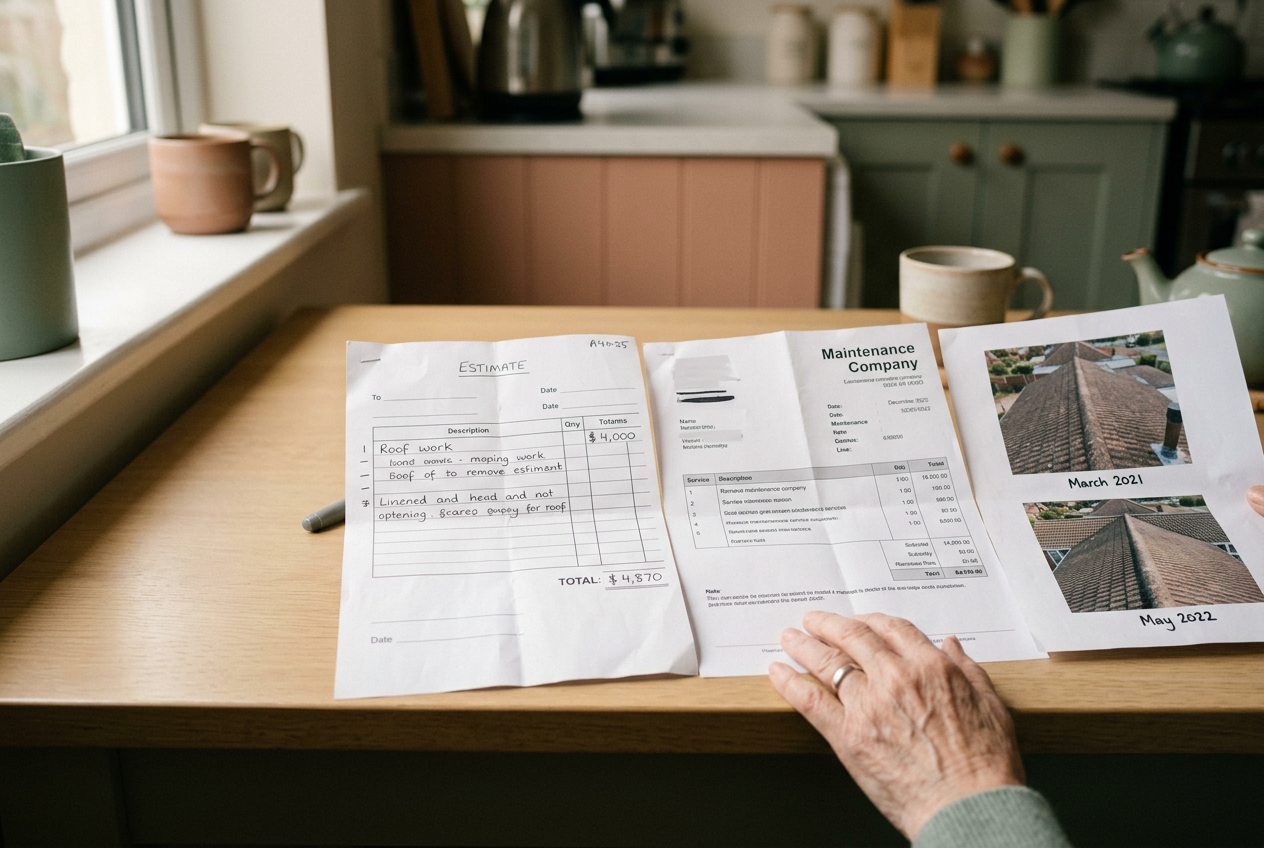
The claim estimate arrived less than two weeks later as a PDF. The total at the bottom was $4,870.
That document became the object Dana carried through the rest of the claim. She printed it, set it on the kitchen table and marked the roof lines that did not match what she had seen after the storm. Most of the estimate covered a limited repair. Smaller amounts covered the ceiling and debris removal.
The $4,870 estimate
The estimate placed much of the disputed roof damage under preexisting wear. The claim materials indicated that automated image analysis had helped review the photos, though they did not explain which images drove the label or how much weight a human reviewer gave it.
Dana understood one part. The system had treated cracked surfaces and uneven shingle edges as signs of long-term deterioration, which reduced the covered area from a broad roof repair to a few sections. Her contractor’s estimate was $18,640. The insurer’s figure was less than a third of that.
After her $2,500 deductible, the initial payment shown on the account page was $2,370. That would not cover the tarp and the interior work along with the roof work, and the contractor would not begin the full replacement while the covered scope remained unsettled.
The classification also changed how Dana thought about the photographs she had uploaded. The portal had requested wide exterior views and close images of damage, followed by interior pictures showing where water entered. Some images included a bedroom doorway and family photographs hanging near the laundry room. Her phone had stored location data with at least part of the set, and the claim page did not make clear to her whether that information was removed, retained or analyzed.
She had expected the pictures to document the loss. She had not expected them to be sorted into evidence of age.
Rain came again during the next month. The tarp held over the main opening, but moisture returned around the ceiling seam, and Dana moved laundry baskets out of the room each time the forecast changed. She borrowed a dehumidifier and slept at a relative’s home for two nights after the wet area spread toward the light fixture.
The $4,870 estimate stayed on the table.
The older image
Dana kept household records in a folder, mostly because she had replaced a vent boot in December 2022 and wanted the invoice if the leak returned. That repair had cost $620. The contractor’s notes described work around the vent and did not identify missing shingles across the nearby slope.
The invoice did not prove what the storm had done. It did establish that a worker had been on that section of roof sixteen months earlier, when Dana had paid for a specific repair rather than a wider replacement.
A second piece came from her phone. In June 2023, she had photographed workers cleaning the gutters. The roof was not the subject, but one image showed the same slope that appeared in the claim photos, including the valley where the post-storm pictures showed lifted and missing shingles. Another image from that month showed the edge above the laundry room.
Dana placed printed copies beside the estimate. On one side was the June 2023 roofline. On the other was the roof after the April 2024 storm. The earlier picture was not a professional inspection, and it could not show every defect, but the missing pieces visible after the storm were present in one image and absent in the other.
She sent the maintenance invoice and dated images through the support inbox, asking for another review. Her message focused on the classification rather than the entire claim: the estimate had treated the roof condition as old, while records from before the storm showed the disputed area without the same visible openings.
There was no immediate reversal. A response acknowledged the additional material and left the $4,870 figure unchanged while the company reviewed it. Dana called the number on the account page, then waited. She did not receive an explanation of the image model, its confidence level or whether weather data had been considered alongside the photographs.
Five weeks after the first estimate, the company arranged an in-person inspection. The inspector examined the roof surface and the area above the laundry room, then compared the current condition with Dana’s older photographs. Dana stayed on the ground. She kept the December 2022 invoice and the printed estimate in a folder by the door.
The inspector’s report treated more of the damage as tied to the storm. It noted lifted sections and creases that were not resolved by the earlier image review, and it expanded the covered work from local repairs to replacement across the affected slopes.
The revised number
The account page changed eight days after the inspection. The revised covered estimate was $16,920, an increase of $12,050.
That figure still did not match the contractor’s $18,640 estimate. It also was not a check for $16,920. The deductible remained, and part of the covered amount was released later after the work was documented. Across the claim payments, the insurer paid $14,420.
Dana’s final share was $4,220, made up of the deductible and the gap between the contractor’s bill and the covered estimate.
She kept both estimates. The first one showed $4,870 and categorized most of the disputed condition as old wear. The second used many of the same storm photographs, but it sat beside maintenance records, earlier images and observations from a person who had been on the roof.
The outcome did not tell Dana whether the image analysis had malfunctioned. It may have identified real age-related conditions while failing to separate them from fresh wind damage, or a reviewer may have accepted its labels without enough context. The claim documents she received did not settle that point.
Her privacy concerns remained unresolved as well. She could see the files she had submitted, but she did not know how long copies would remain in other systems or whether location data had traveled with them. The revised estimate addressed the money. It said nothing about the bedroom doorway visible behind the wet ceiling.
This account describes one composite experience, not legal or financial advice. Claim language, review practices and payment timing differ, and the company’s first figure changed only after the record included evidence that had not been part of the initial image review.
Questions people ask
Can image analysis decide whether roof damage is old?
In Dana’s claim, automated analysis helped classify visible roof conditions, and that classification shaped the initial estimate. The documents did not show that software made the entire decision alone. A later human inspection reached a different view after considering dated photographs and a maintenance record alongside the storm images.
What changed the insurer’s estimate?
The strongest change in the record was a direct comparison between a June 2023 photograph and the same roof area after the April 2024 storm. A December 2022 maintenance invoice added context, while the in-person inspector documented damage that the first photo review had treated as deterioration.
Does a higher estimate mean the homeowner receives that amount?
Not in this account. The revised estimate was $16,920, but Dana’s $2,500 deductible still applied, and some money was released after repairs were documented. The insurer paid $14,420 across multiple payments. Her contractor charged $18,640, leaving Dana with $4,220 in total costs.
What happens to photos uploaded with a claim?
Dana’s claim page did not give her a clear answer about image retention, location metadata or later analysis. She knew the uploads included parts of her home beyond the damaged ceiling. Months after the repair, the June 2023 roof photo remained in her claim folder.
One story a day
The story of the day, in your inbox
One real story about AI each morning — no hype, no alarm, just company for the road.