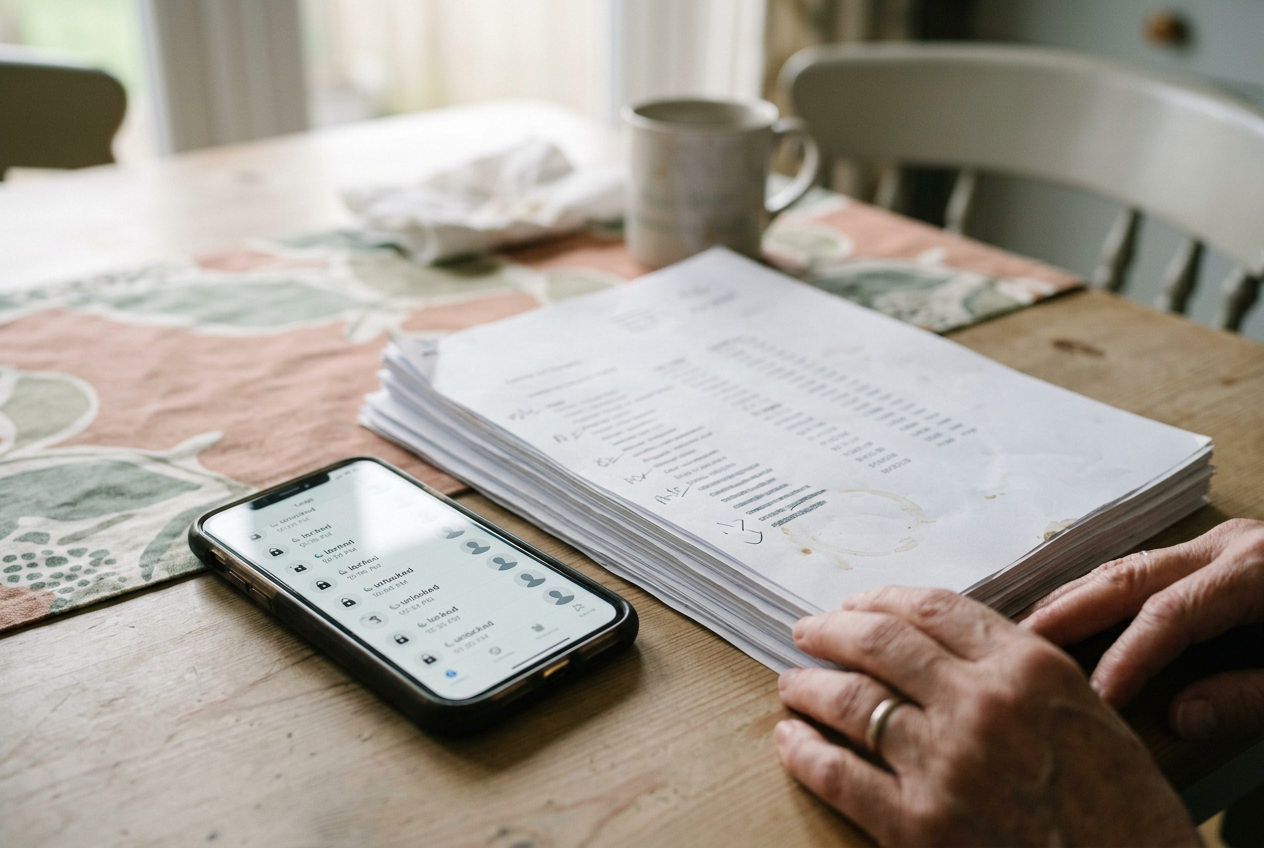
Her Library Books Appeared on Her Child’s School Tablet
A shared library login merged a parent’s sensitive reading with her child’s profile, exposing private research about health and separation.
August 9, 2026 · 7 min read
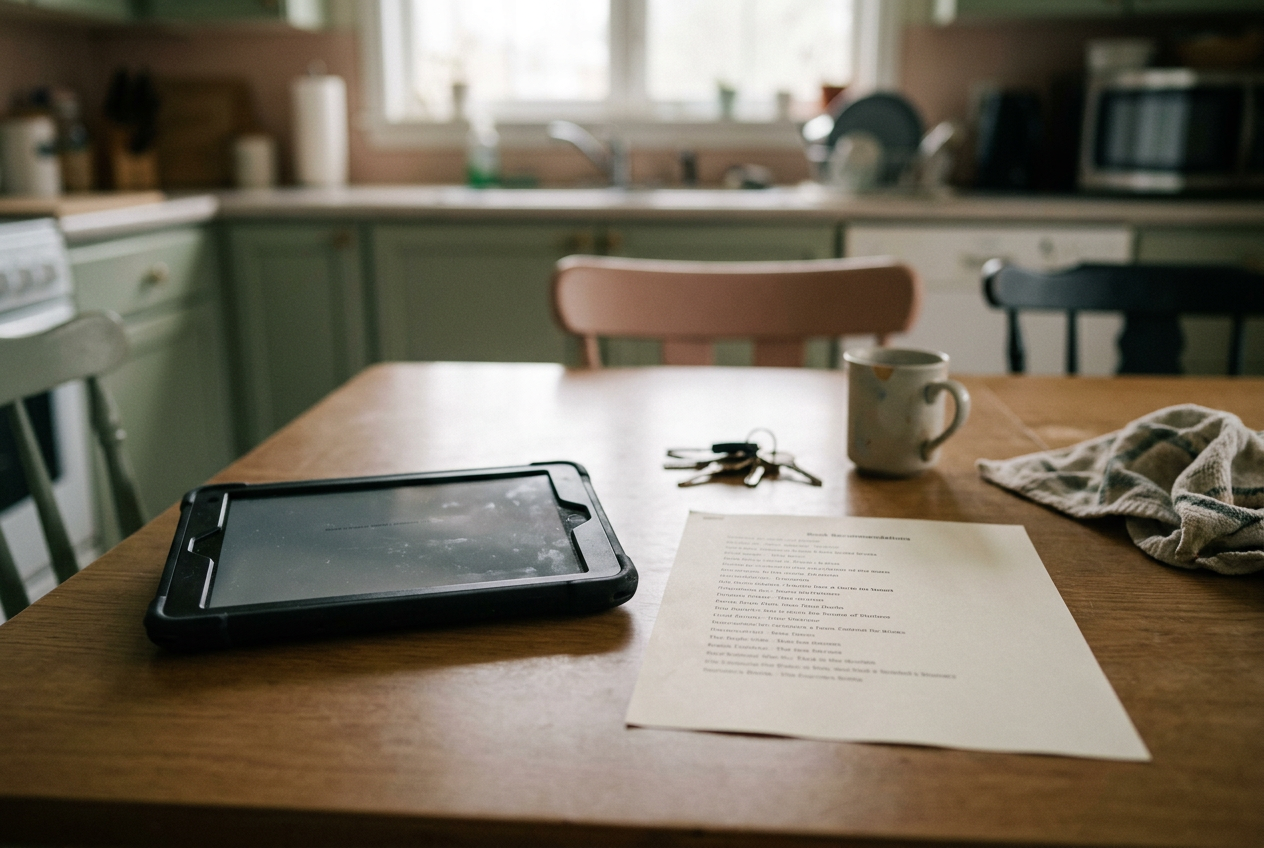
In November 2023, Mara’s child brought home a school-issued tablet that needed charging. The device opened to the library’s digital catalog, where a recommendation panel displayed a family-law workbook about separation. A health guide appeared below it.
Mara recognized both. She had borrowed them during the previous two months, along with other books about custody and symptoms she had not discussed at home. Her child had never searched for those subjects. The child was young enough that the recommendations made little sense, yet old enough to recognize that the books concerned the family.
Mara took a photo of the screen. Later, she printed it on a single sheet of paper. The family-law workbook sat at the top of the page, under the catalog’s recommendation label, while the health guide remained visible below.
That printout became the record she returned to whenever the explanations grew vague.
Mara had not decided whether to leave her spouse. The books were part of private research, done before any family conversation and while she was still trying to understand the practical consequences of separation. The health reading was private for a different reason. She had recurring symptoms and wanted information before discussing them with anyone.
The tablet placed both subjects in a space used for schoolwork, reading assignments and family routines. Her child asked why those books were there. Mara answered in general terms, but the child began watching her more closely and later asked whether the family was going to split up.
There was another concern. Mara’s spouse sometimes helped with homework on the tablet. A recommendation visible to the child could also be visible to any adult who picked up the device, and a person researching separation may face consequences if that research is revealed before they are ready or safe to disclose it.
There is no evidence that Mara’s spouse saw the panel. The possibility changed her behavior anyway. She stopped borrowing the books and moved the tablet out of the shared area of the home.
The page on the table
At first, Mara suspected the school. The device belonged to the district, and the recommendations had appeared inside a browser used for class. She wondered whether school software had connected her child’s identity to the household, or whether an employee could see the same panel.
The printout offered a narrower clue. It showed a library catalog page, and the account icon indicated that someone was signed in. Months earlier, Mara had used her library login on the tablet so her child could borrow an ebook for an assignment. The browser had retained that session.
Her family used one adult library account for digital borrowing. The arrangement had begun as a convenience when her child was younger, since Mara could manage due dates and place holds without switching between profiles. Printed books for both readers appeared in the same history, and digital loans passed through the same login.
Mara opened the library account on her home computer. The same recommendations appeared in the same order. The family-law workbook was still first. She set the tablet beside the one-page printout and compared the two displays.
That was the first strong sign that the recommendations followed the account rather than the school device.
She then reviewed the borrowing history. It showed her recent health and family-law books mixed with children’s fiction and school reading. The system recorded transactions under one account, without a visible field identifying which household member had chosen each title.
Over the next eleven days, Mara contacted the library and the school through their general support channels. The library confirmed that recommendations could be generated from activity associated with the signed-in account. The school said the catalog page came from an outside library service and that it did not control the recommendation panel.
Neither response established who might have viewed the screen. The school could not provide a complete record of what every person had seen on the tablet, and the library did not offer Mara a viewer log for recommendations. There was no evidence that an employee had opened the page, that the school had received the book titles or that the information had been sold.
What Mara could establish was smaller and more concrete: the same signed-in account produced the same sensitive recommendations on two devices, and its history contained reading by two members of the household.
She wrote that conclusion at the bottom of the printout.
One login, one inferred reader
Recommendation systems usually work from signals tied to an identifier. That identifier may be an account, a profile or a device session. The software does not need to know a reader’s name or understand why a book was borrowed. It can compare recorded activity with patterns in a larger catalog and select titles that seem related.
In Mara’s case, the useful identifier was the shared library login. Because the parent and child borrowed through the same account, the system treated their activity as evidence about one reader’s interests, even though the household understood the loans as belonging to separate people with separate lives.
This is how household profiles collapse. A service sees continuity where a family sees boundaries. The same login can connect an adult’s medical research to a child’s reading assignment, while the resulting recommendation looks personal because it appears on whichever device retains the session.
The school tablet did not need direct access to Mara’s private device. It only needed an active session for the shared account. Once the catalog loaded, the platform supplied recommendations derived from that account’s combined activity.
That distinction mattered to Mara because her first fear involved school surveillance. The evidence pointed elsewhere. A household convenience had created the link, and the school-owned device had become the place where the link was exposed.
It did not make the exposure harmless.
Library records have long carried unusual sensitivity because reading can reveal health concerns, religious interests, political views or plans for a family conflict. Recommendation features create another layer: a returned book may no longer be physically present, yet the system can continue using the transaction to shape what appears later.
The one-page printout showed that persistence. Mara had already returned the family-law workbook. Its cover remained at the top of the recommendation panel weeks later, detached from the private moment in which she had chosen it and displayed in a setting she had never intended.
The library told Mara that the account offered controls for borrowing history and recommendations. After she changed those settings, cleared the stored history available to her and signed the shared account out of the school tablet, the panel did not update at once. Nine days later, the sensitive titles no longer appeared when she checked again.
That sequence did not reveal everything happening inside the platform. Mara could not determine whether the old recommendations remained in backup systems, whether other technical records persisted or which change caused the visible panel to refresh. She could observe only the account page and the devices in front of her.
A separate login for her child prevented new children’s loans from entering Mara’s recommendation profile. It also changed the family routine. Her child now had a distinct library identity, though Mara still supervised borrowing, and the separation between accounts was clearer than the separation between people had been before.
The conversation at home remained harder. Mara explained that the tablet had shown books she was reading for personal reasons and that a recommendation did not mean a decision had been made. Her child had already seen the family-law cover. The explanation could not restore the earlier boundary.
For several months, Mara kept the printout in a folder with notes about the account changes. She did not keep it because it proved that the school had monitored her. It did not. She kept it because it captured the part she could prove: a private choice made under her name had surfaced on a device issued to her child.
Questions people ask
Why did a parent’s library books appear on a child’s tablet?
Both readers used one library login, and the tablet retained an active session after the parent signed in for a school assignment. The recommendation system used activity associated with that account, so it treated adult research and the child’s reading as the interests of one inferred reader.
Could the school see the recommendations too?
The story did not establish that a teacher or school employee viewed the panel. The school controlled the device, but the library service generated the page. Mara received no viewer log, leaving her able to confirm what appeared on the tablet without confirming who else saw it.
Does removing borrowing history erase every related record?
Mara could change visible settings, remove the history available through her account and wait for the recommendation panel to refresh. Those steps changed what she could see after nine days. They did not tell her whether technical logs, backups or older recommendation data remained elsewhere in the system.
How did
Mara know the shared account caused the link?
She opened the same account on a home computer and saw the recommendations in the same order, then found adult and children’s loans mixed in one borrowing history. After the household separated the logins, the sensitive titles disappeared from the visible panel. Her original printout still showed the family-law workbook at the top.
One story a day
The story of the day, in your inbox
One real story about AI each morning — no hype, no alarm, just company for the road.