Her AI Credit Offer Fell From $4,800 to $1,200 for Winter
A street vendor closed for the cold months as planned. Her lender’s model treated the sales gap as distress, leaving her to choose between a smaller loan and sharing more of her finances.
October 1, 2026 · 7 min read

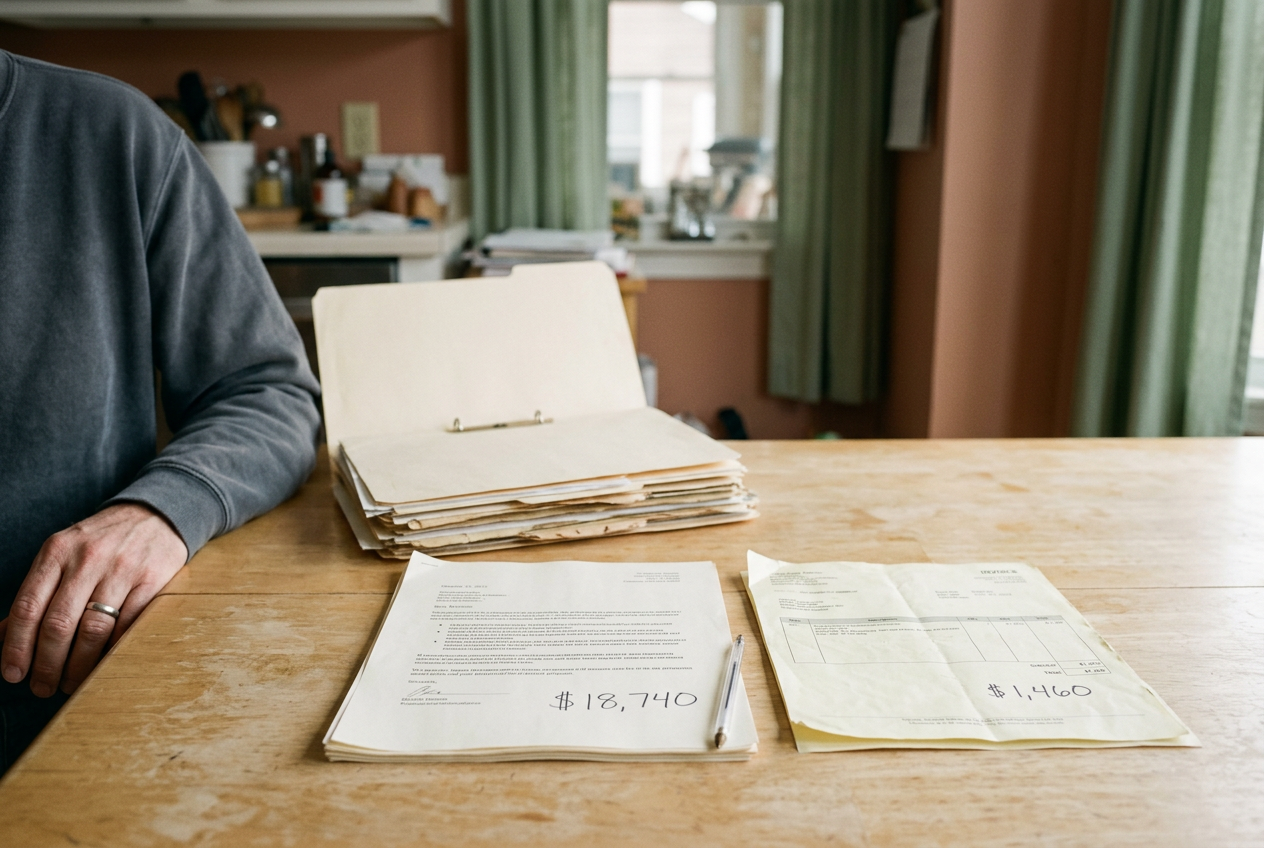
The number was written near the back of her notebook: $4,800.
That was what the vendor expected to borrow before reopening her food cart in a northern city. She had used the same digital lender twice, taking small advances during the warm months and repaying them from sales. The latest offer had appeared on her account page in October. She did not accept it then because the cart was about to close for winter.
She kept the notebook beside the register. Each week had a sales total and a few costs, including propane, ingredients and the fee for her regular vending site. After the final week of November, she drew a line across the page and wrote “closed for winter.” The next figures were estimates for spring: cart inspection, supplies and several weeks of food.
The closure was ordinary for her. Foot traffic thinned when the temperature dropped, pipes could freeze, and the cost of keeping the cart open exceeded what she usually brought in. She had followed that pattern for four years.
The lender’s system did not know that history in the same form. It knew what arrived through the accounts she had connected.
When she signed in again in March, the offer on the dashboard was $1,200.
What the score saw
The lender used an automated underwriting model to refresh offers from transaction data. Such models can compare a borrower’s recent cash flow with patterns found across many previous borrowers, then estimate the chance that a new advance will be repaid. The output may set a limit, change a price or remove an offer without waiting for a new application.
Her account page did not show a formula. It displayed broad factors behind the change: lower recent deposits, fewer sales transactions and a longer gap since commercial activity. Her bank balance had also fallen during winter as she paid household costs from savings.
Those facts were accurate. The inference was not.
The model had treated recency as evidence about the health of the business. A merchant whose deposits fall for three months and then stop can be approaching failure, especially if the balance keeps shrinking. Her data made the same shape, even though the missing sales were planned and the cart was stored until spring.
This is where the machine mattered. A fixed policy could have treated any three-month closure as disqualifying, and a clerk could have misunderstood her season. The model did something more specific: it combined weak signals that did not settle the matter alone, compared their interaction with repayment outcomes in its training data, and produced a new risk estimate. The vendor’s annual pattern had been compressed into a recent downward trend.
Machine-learning credit models are useful partly because they can find relationships that a short application misses. Frequent deposits can matter differently depending on balance changes, previous repayment and how much revenue passes through the connected account. Those relationships can also be hard to translate back into one reason a borrower can challenge. The dashboard’s factor labels described the inputs, not how much each one moved the $4,800 offer.
She opened the notebook and added $1,200 beneath the first figure. It covered the inspection and part of her initial food order. It did not cover the other opening costs she had listed.
The price of a fuller picture
The support team told her that the offer could change as new transactions arrived. She could also connect more business records so the system had a longer view of sales. The lender already received activity from one checking account. Her card processor held another record, including four warm seasons in which revenue rose after reopening and stopped near the same point each fall.
That additional history might help the model distinguish seasonality from collapse. It could show that the winter gap repeated, that customers returned in spring and that previous advances had been repaid during active months. It would not guarantee a larger offer. The company did not promise that any one connection would outweigh recent cash flow.
Connecting the processor was not a small correction to a line in a file. It meant allowing another continuing data feed into the underwriting system, with transaction amounts, refunds and the timing of each sale. Depending on the permissions and how the accounts were arranged, a broader bank connection could also expose personal spending that had little to do with the cart, including rent payments, medical purchases and transfers between relatives.
She understood why the lender wanted live data. The first advance had been easier to obtain than a conventional small-business loan, and repayment had moved with her sales rather than arriving as one large monthly bill. She had no payroll department, long business plan or thick credit file. The model had made a modest amount of capital available from records she was already producing.
Now the same arrangement asked her to solve a bad inference by becoming more legible.
In the notebook, the winter closure occupied one line. In the lender’s data, it appeared as an absence: no card sales, no regular deposits and a declining balance. A human reading the page could see intent because she had written it down. A model trained on transaction histories could only use fields it received, along with patterns learned from other businesses whose pauses might have meant something else.
Seasonal merchants can be difficult for these systems when the training data contains too few comparable businesses, when the model emphasizes the latest months, or when a merchant’s earlier seasons sit in an account the lender cannot see. Even a model trained on seasonal businesses may separate them poorly if it lacks a reliable marker for planned closure. Weather does not need to appear in the file for winter to shape the score. It appears indirectly through missing transactions.
The vendor considered linking the processor for a few days. She read the permissions on the account page and looked back through the notebook. Four seasons of totals were there, but the lender did not accept a handwritten summary as an input to its automated offer. The useful evidence existed in two forms, and only one could enter the model.
Opening with less
She left the extra connection off.
The decision was not a rejection of automated lending. She had used it before and might use it again. She did not want a continuing feed from every place she accepted money, particularly when the lender could not say that the added history would restore the earlier limit.
She accepted the $1,200 offer. From savings, she moved another $1,600 into the business account, then delayed replacing part of the cart’s cooking equipment. Her first food order was smaller than planned. The menu lost two items whose ingredients cost more upfront and spoiled quickly.
Sales returned after reopening. Deposits began appearing in the connected checking account, and the risk signals on the dashboard shifted over the next several weeks. The model could react to that new activity faster than a conventional annual review, which was one reason she had valued the lender in the first place. Its mistake was also temporary in a way a permanent denial would not have been.
By early summer, the available offer had risen to $3,100. She did not take it. The cart was bringing in enough cash to buy supplies, and she had already absorbed the cost of opening small.
The notebook stayed beside the register. On the page with the two offers, she wrote the third number and left the processor connection blank.
Questions people ask
Why did the automated lender treat a winter closure as business failure?
The model relied on observable signals such as recent deposits, transaction frequency and account balances. Her planned closure produced the same short-term pattern as a business losing customers. Without a seasonal marker or access to earlier sales cycles, the model inferred rising repayment risk from a real decline that had the wrong meaning.
Would sharing more transaction data have fixed the score?
More history could have shown repeated winter closures followed by spring recoveries, which might have changed the model’s estimate. The lender did not guarantee that result, and the vendor could not see how much weight the system gave older sales. Sharing the card processor feed offered evidence, but it also created continuing access to more detailed transactions.
Can a person correct an AI-generated credit offer?
In this vendor’s experience, support could explain broad factors and note the seasonal closure, but staff did not manually replace the model’s offer. The limit refreshed when connected data changed. Her notebook documented the reason for the gap, yet it was not a data source the automated underwriting system used.
Did the lower offer remain permanent?
No. Once the cart reopened and deposits resumed, the system recalculated the business as new transactions arrived. The available amount rose from $1,200 to $3,100 by early summer, after she had covered part of the opening cost from savings and reduced the first food order.
One story a day
The story of the day, in your inbox
One real story about AI each morning — no hype, no alarm, just company for the road.