A Plate Reader Put Her Grocery Run in a Protest Dossier
The plate number was correct. The automated link between an ordinary trip and protest activity was not, yet the resulting intelligence report could remain for years.
August 9, 2026 · 7 min read
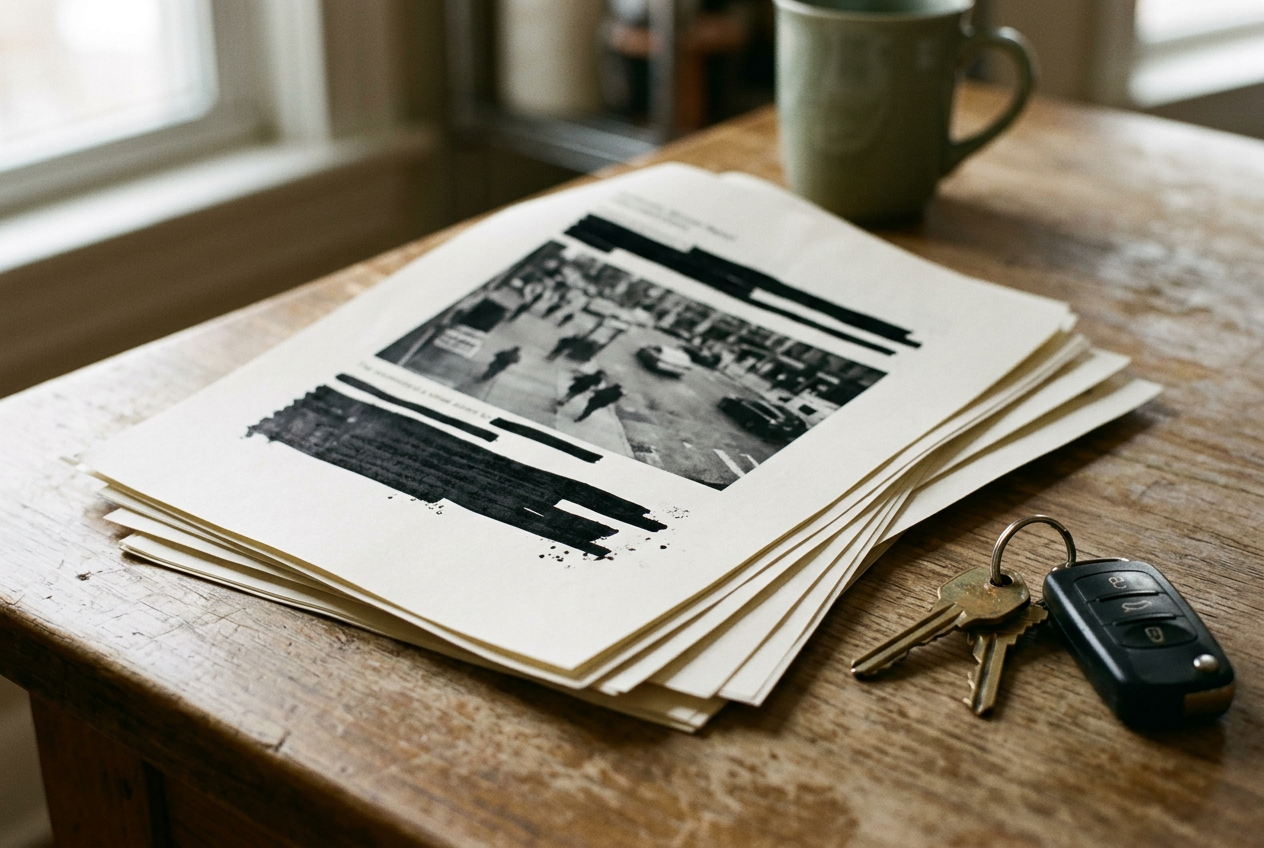
Lena learned about the record five months after a demonstration in May 2022. The name is used for a composite, but the document at the center of her story is representative of reports disclosed in public accounts: a six-page protest intelligence report assembled from automated license-plate data and other public information.
Her car appeared on page four.
The page showed a small image of its rear plate, a map with two detection points and a high-confidence reading of the plate characters. An analyst had grouped the car with vehicles associated with activity near the demonstration. A separate note connected the registered owner to community organizing, although the report identified no crime involving her or the car.
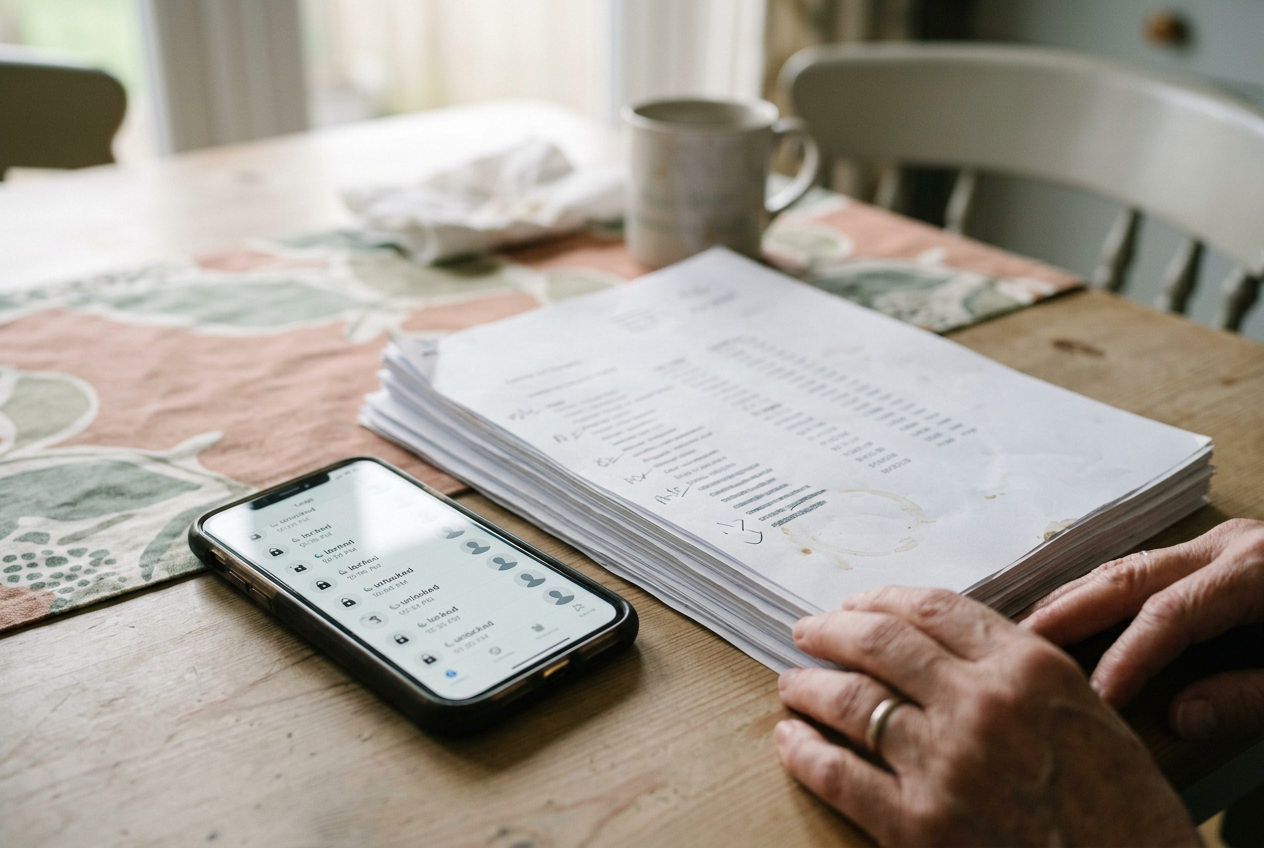
Lena printed the six pages and put them on her kitchen table beside her keys. She kept returning to the same line. The plate was hers. The implication was not.
That afternoon, she had bought groceries and taken a bag to a relative. Her route passed within several blocks of the gathering, which she knew was happening, but she did not attend. One camera recorded the car on the way into the area. A second detection appeared less than an hour later as she drove home.
Those ordinary movements became durable evidence of something else.
What the machine knew
An automated license-plate reader does more than take a photograph. A computer-vision model finds the rectangular plate within a wider image of traffic, then character-recognition software converts the pixels into letters and numbers that can be searched at scale. The system stores the image with where and when it was captured, along with a confidence score for the transcription.
That conversion is the load-bearing step. Without automated recognition, the city would have had a large stream of road images that people would need to inspect and transcribe. With it, an analyst could search months of vehicle movements in seconds, draw a boundary around the demonstration and retrieve plates detected inside it.
The search behind Lena’s report covered a half-mile area and an eight-hour span. Its association feature elevated vehicles recorded more than once or near selected points along the route. Her two detections placed the car high enough in the results to receive a line in the report, after which an analyst used registration information to identify her and added context about her organizing work.
The software’s confidence score was 96 percent. That number looked authoritative on page four, but it addressed a narrow question: how certain the system was that it had read the plate characters correctly. It said nothing about whether Lena had joined the demonstration, supported it or merely passed nearby.
The plate recognition was accurate. The behavioral inference failed because location served as a proxy for intent, and the system had no signal for groceries in the car or the purpose of the trip. Its ranking also made repeated detection appear more significant, even though two cameras along one route can record the same unremarkable drive.
The report did not identify the model version, its tested error rate or how many other vehicles the search returned. Lena could see the result but not the comparison set that made her car seem notable.
Finding the source
Lena had requested protest-related records after learning through a public account that local authorities had gathered intelligence around demonstrations. The six-page report arrived in a larger batch. Nothing in the accompanying material explained who had supplied the plate images or which organizations could retrieve the resulting record.
The footer referred only to a regional data network.
Over the next seven months, disclosures from separate public bodies filled in part of the path. One detection came from a camera mounted on a patrol vehicle. The other came from a fixed camera operated for a shopping center, whose plate data entered the same network under a sharing agreement. A city analyst ran the area search, exported the results and placed the finished report in a regional intelligence portal.
An access extract showed that users at four public agencies had opened or downloaded the report. It did not show whether any user saved another copy, attached it to a different file or passed information from it outside the portal. The shopping center’s camera operator had contributed the detection, but Lena could not establish whether anyone there saw the report built from it.
This distinction mattered to her. She had begun walking to some organizing meetings and accepting rides to others, not because she believed someone followed her car each day, but because page four proved that a routine drive could be reconstructed later and assigned a political meaning. Meeting locations were already sensitive when tenants feared retaliation. A searchable vehicle history added another route to them.
She did not oppose every use of plate readers. A camera network that quickly locates a reported stolen car made sense to her. What she could not reconcile was the reuse of the same infrastructure for a broad event search, where proximity produced a list of people first and questions about relevance came later.
After organizers raised the report publicly, the city narrowed when analysts could run searches around demonstrations and reduced automatic sharing beyond the immediate area. Those changes did not remove Lena’s entry. Officials added material reflecting her account of the trip, but the original report remained intact.
The copy that did not expire
The retention answer depended on which object Lena meant.
Under the terms disclosed to her, raw plate images in the shared service were scheduled for deletion after 90 days unless preserved for an investigation. By the time she identified the two cameras, those source images were no longer available through the ordinary search interface. The plate text and location had already been exported, however, and deletion of the source did not reach the six-page report.
The city treated that report as an intelligence record subject to a five-year review period. Its next review was listed for May 2027, with no promise of deletion then. Each agency that downloaded a copy could apply its own schedule. The portal’s access extract named organizations, not every destination where an exported file might have gone.
Lena marked the disclosed retention periods in the margin of her printed copy. Ninety days beside the raw images. Five years beside the city report. Unknown beside the other downloads.
For fourteen months after finding the report, she carried those pages to meetings about surveillance policy. The document gave her something more concrete than a general privacy concern, and she used its map and confidence score to explain the problem: a machine can recognize an object correctly, make ordinary movement searchable and still help produce a false account of a person.
The report also changed how she read other intelligence summaries. A line describing a vehicle near an event no longer sounded like proof of participation. It meant that a camera saw a plate inside boundaries chosen later, under criteria the person driving might never learn.
Her own record remained unresolved. The city could say that the original images had expired. Lena could still open the folder on her kitchen table and find the plate on page four.
Questions people ask
Can a plate reader identify why a car was near a protest?
No. It can recognize a plate and record where the vehicle appeared, while search software can group sightings inside a selected area. In Lena’s report, purpose was inferred from proximity and repeated detection. The system had no information about the groceries, her destination or why she chose that route.
Who can see automated license-plate data?
Access depends on how an agency or camera operator configures sharing. Lena’s records showed that a public camera and a privately operated camera fed the same regional network, while users at four agencies accessed the finished report. The available log did not reveal whether downloaded copies traveled farther.
How long can a protest intelligence record remain?
Raw captures and exported reports can follow different retention schedules. Lena’s source images were scheduled to expire after 90 days, but the report made from them faced review after five years and could remain longer. Copies downloaded by other agencies were governed separately, leaving their deletion dates unknown.
Can plate recognition be accurate while the report is still wrong?
Yes. The 96 percent confidence score measured the reading of Lena’s plate, not the likelihood that she participated in a demonstration. The system accurately converted the image into searchable text, then proximity stood in for intent. On page four, the correct plate still sits beside the wrong implication.
One story a day
The story of the day, in your inbox
One real story about AI each morning — no hype, no alarm, just company for the road.