A Student's Asthma Inhaler Triggered Eight Vape Alerts
Eight bathroom alerts turned a medical routine into suspected nicotine use. The dispute exposed how little the family knew about what the school’s sensor measured.
August 9, 2026 · 8 min read

The student carried a prescription inhaler in her backpack. During the fall semester, she sometimes used it in a school bathroom, where she could take a dose without classmates watching or asking whether she was sick.
The first alert brought an administrator to the bathroom. The student explained the inhaler, showed it, and returned to class. After another alert, the same explanation sounded less persuasive to staff. By the fourth, the student felt that administrators had settled on a different account: she was vaping and using asthma as cover.
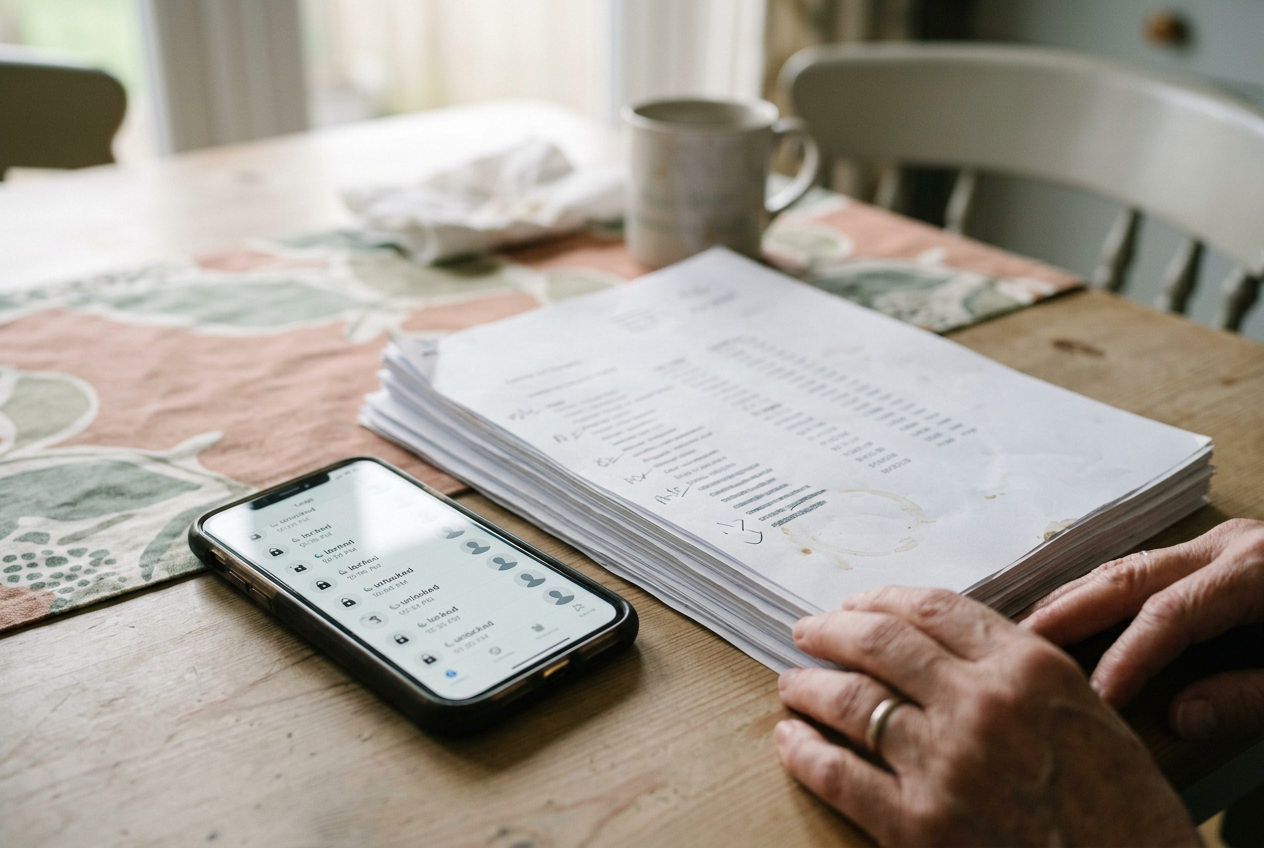
Her mother eventually received a printout from the school’s sensor dashboard. It became the hard artifact in the dispute. The alert log covered six weeks in October and November 2024 and contained eight rows, each recording a bathroom event that the system had classified as consistent with vaping.
The rows looked definitive. They were not.
The printout did not show a nicotine measurement, an air sample, or a laboratory result. It did not explain which sensor had reacted, how strong the signal was, or what threshold had turned a change in the air into an alert. The family could see eight conclusions without seeing the observations behind them.
That distinction mattered because the student’s inhaler also produced an aerosol. Her family wanted the school to compare the alerts with her account before treating repetition as proof of dishonesty, while administrators were looking at a pattern produced by a tool installed to find behavior students often deny.
What the bathroom sensor may have measured
Schools commonly describe these devices as vape detectors, but that name can imply more certainty than the hardware provides. Many units are environmental sensors. They monitor changes in the surrounding air and use software to classify patterns that resemble emissions from an electronic cigarette.
A particle sensor may shine light through sampled air and measure how airborne material scatters it. A gas sensor may respond to changes in volatile compounds. Some systems also account for humidity or other environmental conditions, although the components and classification methods differ among tools.
The system then compares the readings with a threshold or pattern selected by its maker and, in some cases, adjusted by the school. A rapid change may generate a notification on a dashboard or send a message to designated staff. That notification can say that the sensor detected a pattern associated with vaping. It usually cannot say that a particular student inhaled nicotine.
A pressurized metered-dose asthma inhaler releases medication with a propellant, producing a short plume of suspended droplets and particles. That plume is medically different from electronic-cigarette emissions, but a sensor does not necessarily identify an aerosol by its purpose; depending on its design, it may react to particle concentration or a broader chemical change.
Distance and ventilation also affect the reading. A dose released near the sensor in a small bathroom may create a sharper local change than the same dose taken in a larger space. Cleaning sprays, personal-care aerosols, steam, and dust can affect environmental readings too, though a well-tuned classifier may reject some of those patterns.
None of this established, from the family’s printout alone, that the inhaler caused every row in the log. Another student could have been vaping nearby, and the available record did not preserve a sample that could later be tested. What the family had was a close sequence: the alerts appeared when the student reported using her inhaler, and they stopped after she began taking it elsewhere.
Different inhalers create different emissions. A dry-powder device does not work like a pressurized inhaler, and a nebulizer produces another kind of aerosol. A general statement that inhalers either always trigger vape sensors or never do would go beyond what the technology and the student’s record showed.
How an alert became an accusation
The sensor had been installed in a place where cameras were not permitted. That gave the school a way to detect a possible safety or discipline problem without recording video inside the bathroom. It also meant the alert arrived without a picture of what had happened.
Staff could check who entered or left, speak with students, and review hallway footage where available. Those steps supplied context, but they did not convert the air reading into chemical proof. Several students might use the bathroom during the same period, and a person seen leaving was not necessarily responsible for the aerosol.
Repetition changed how administrators read uncertainty. One alert could be an error. Eight rows in six weeks looked like a pattern, even though repeated exposure to the same prescribed inhaler could produce the same pattern for an innocent reason. The dashboard counted events; it did not independently evaluate the student’s explanation each time.
The student began going to the health office when she needed the inhaler at school. That reduced the risk of another bathroom alert, but it pulled her away from class and made a private medical routine more visible. On days when she felt tightness in her chest, she sometimes waited rather than start another encounter with an administrator.
That was the safety tradeoff. The sensor was meant to deter vaping, which can expose students to nicotine and other substances, yet its use in this case made a student hesitate before taking prescribed medicine. The learning effect was quieter: interrupted lessons, attention spent anticipating an alert, and the expectation that she would have to explain her medical condition again.
Privacy did not disappear because the device lacked a bathroom camera. The dashboard created a record tied, through staff investigation, to a student’s movements and health explanation. The family did not know how long the alerts would remain available, who could view them, or whether the suspicion of vaping had entered another school record.
The eight-row printout contained no answers to those concerns. It showed what the interface had elevated, not how people had interpreted it afterward.
What a meaningful review could see
The family’s dispute centered on the gap between detection and discipline. They did not ask the school to ignore every alert near their daughter. They asked what the device measured, whether the school could distinguish an inhaler plume from vaping, and which evidence administrators considered before deciding that her explanation was implausible.
A review of an alert can separate the machine’s role from the school’s judgment. The device detects an environmental change and assigns a category. Administrators decide whose conduct to investigate, how much weight to give the notification, and whether other evidence supports discipline. A vendor’s confidence in its classifier does not answer those later questions.
The school eventually compared the dashboard dates with visits to the health office and information documenting the student’s asthma. Staff also considered that the bathroom alerts ended after her inhaler use moved to the office, although that timing could not identify the contents of any earlier aerosol. The nicotine suspicion was not supported by a recovered device or a direct observation.
Her mother marked the corresponding weeks on the printed log. That changed the discussion because the eight alerts were no longer presented as eight separate contradictions of the student’s story. They were one recurring conflict between a medical action and a system that could classify the resulting air change without understanding why it happened.
The family still did not receive the underlying sensor readings or a full explanation of the classification threshold. The school treated those details as part of the tool’s operation, while the family saw them as necessary to understand the accusation. That thread remained unresolved.
The immediate accommodation was narrower. The student could use her inhaler in a designated private area without being treated as the subject of a vape alert, and staff were told that an environmental notification by itself did not establish nicotine use. She still had to leave class to reach that area.
Months later, her mother kept the alert log with the student’s medical paperwork. The same eight rows remained on the page, but each now carried a handwritten mark beside the week when the student said she had used her inhaler.
Questions people ask
Can an asthma inhaler set off a school vape detector?
Some inhalers release an aerosol that can affect particle or gas sensors, especially when used close to a detector in a small space. Whether an alert appears depends on the inhaler, ventilation, sensor design, and software threshold. The student’s pattern supported that explanation, though the log could not chemically confirm it.
Does a vape sensor prove that a student used nicotine?
Usually, the alert shows that the device detected an environmental pattern classified as possible vaping. It does not identify nicotine in the way a laboratory test would, and it may not identify who produced the aerosol. In this story, administrators needed additional evidence to connect the notification to student conduct.
What information does the school receive from a bathroom sensor?
That depends on the tool and its settings. Staff may receive a location, a classification, and data about the strength or duration of an event. The family’s printout showed eight classified alerts but omitted the underlying readings, leaving them unable to assess why the software had labeled each event.
How was the student’s medical explanation reviewed?
The school compared the six-week alert log with her documented asthma, her account of inhaler use, and the absence of direct evidence of vaping. Alerts stopped after she used the inhaler elsewhere. The school changed how staff handled future notifications, while her mother kept the marked printout with the medical paperwork.
One story a day
The story of the day, in your inbox
One real story about AI each morning — no hype, no alarm, just company for the road.