AI Marked Her Used Car Low Risk. Repairs Cost $4,860
A buyer paid $39 for an AI photo inspection before buying a $7,900 car. The score missed water damage under the carpet and behind the dashboard.
October 16, 2026 · 7 min read
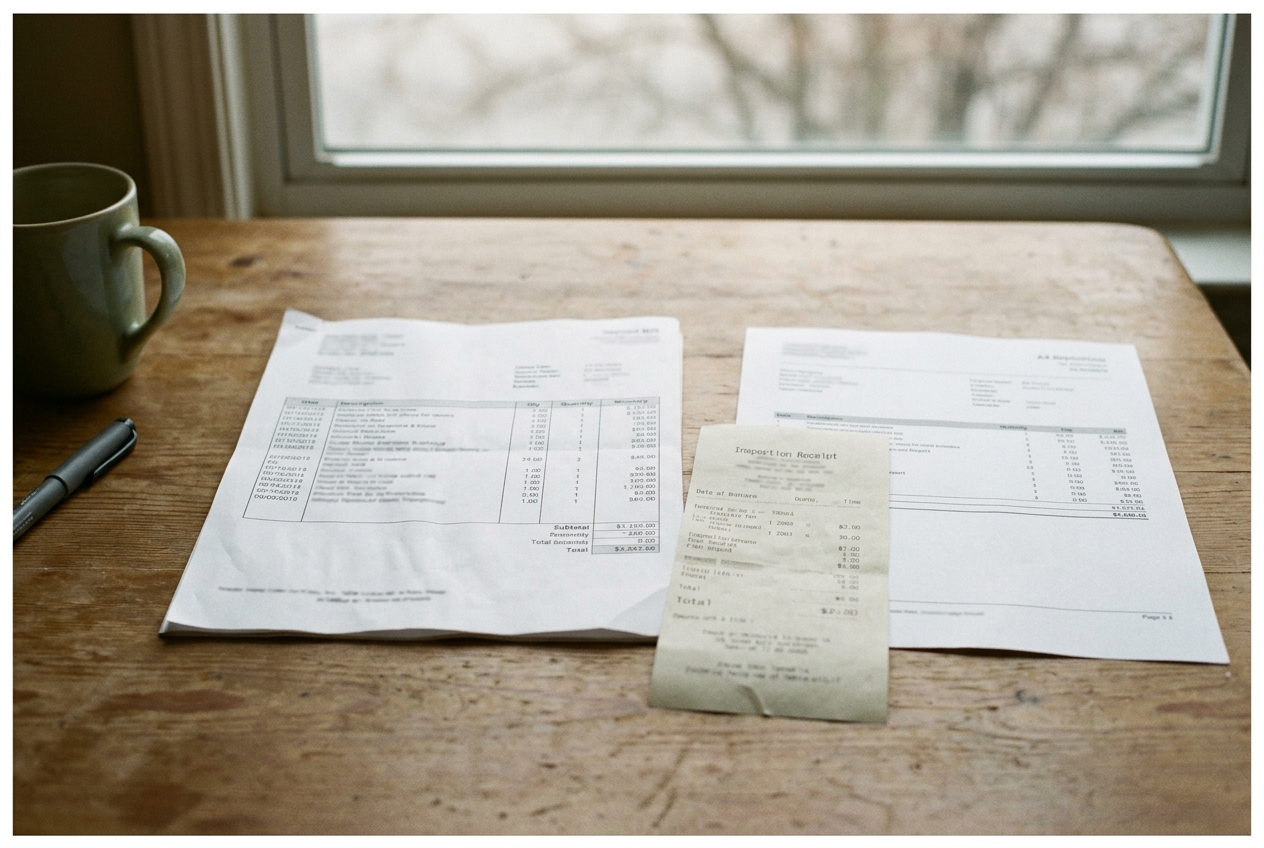
The itemized bill came six weeks after the purchase. At the bottom was $4,860, more than half what the buyer had paid for the car.
She kept returning to the largest lines: $2,140 for electrical work and $1,260 for a control module and corroded connectors. Removing the interior and treating moisture damage cost another $890. Towing and diagnostic work added $570.
The mechanic had found silt beneath the rear carpet and corrosion in connectors behind the dashboard, places that did not appear in the photos used by the inspection tool. The buyer had not known those areas were missing. The report had turned what the camera saw into a judgment about the whole car.
The buyer is a composite drawn from accounts of people who used image-based vehicle inspection tools. She is called Elena here. At the time of the purchase, she brought home about $2,180 a month from food service and weekend cleaning work. Her previous car had stopped running, and rides to work were costing between $28 and $44 a day.
The used car was listed for $7,900. Elena had $1,200 for a down payment and expected a monthly payment of $239. A local mechanic had quoted about $180 for an inspection, but arranging it meant getting the seller to bring the car across town during business hours. The listing offered a $39 photo inspection instead.
The tool asked the seller to photograph the body panels, tires, dashboard, seats and engine compartment. Software examined the images, then placed the car in a low-risk category. A confidence bar beside the result was near the high end.
That bar was the detail Elena could not parse later. She had read high confidence as confidence that the car had no serious hidden damage. In this kind of system, confidence usually means the model found the visible image patterns consistent with the category it selected. It does not mean the photographs covered every part of the car, or that unseen areas were clear.
She paid for the report because she wanted another set of eyes. What she received was a score.
What the image system judged
Vehicle photo inspection tools are trained on collections of labeled images. During training, the model learns statistical patterns associated with conditions such as dents, cracked lights, worn tires or staining inside the cabin. A submitted image is divided into regions, and the system estimates the likelihood that each visible region contains one of the conditions it was built to recognize.
A second part of the system may combine those findings into a broader category. A car with no detected panel damage, no warning lights visible on the dashboard and no apparent staining in the photographed upholstery can receive a low-risk result, even though none of those observations establish what sits under the carpet or inside an electrical connector.
The distinction matters because computer vision works from pixels. It can infer that a photographed seat looks clean. It cannot inspect the padding beneath that seat unless an image shows it, and it cannot smell damp insulation, feel grit under carpet or test whether a connector fails after the car warms up.
The system did identify what it had been shown. The exterior photographs revealed no major dents. The tire tread appeared usable. No dashboard warning was illuminated in the submitted image.
Those findings were useful and, as far as Elena later knew, correct.
The problem came when the tool compressed several narrow findings into one broad score. The dashboard did not place equal weight on two different kinds of uncertainty: uncertainty about what was visible and uncertainty created by what was never photographed. Elena saw a green result and a high confidence bar. She did not see a map of unobserved spaces.
That is the part of the story that depends on AI. A folder of seller photos would have left Elena with photographs and their obvious limits. The model converted those same views into a general risk category, giving incomplete evidence the shape of a completed inspection, and that category changed how she spent the $180 she had considered paying a mechanic.
The first signs
For the first three weeks, the car started and ran. A damp smell appeared after rain, then faded when the weather cleared. Elena bought an odor absorber for $11 and kept driving.
The first warning light came on during her commute and disappeared after she restarted the car. Several days later, the engine stalled in a grocery store lot. A repair shop cleared a fault and told her the cause might be electrical. The car stalled again the following week, and an airbag warning stayed on.
A mechanic then lifted the rear carpet and found a line of dried sediment below the level shown in the interior photos. Behind the dashboard, several connectors had green corrosion. The mechanic’s written notes said the pattern was consistent with prior water exposure, though the shop could not establish when it happened or how deep the water had been.
That distinction stayed unresolved. The evidence supported prior exposure, not a complete history of the car.
The $4,860 bill covered work the shop linked to the current electrical faults and moisture damage. It did not guarantee that every affected component had been found. Elena had $730 left in savings, so she approved the work in stages and missed shifts while the car remained at the shop. She also continued making the $239 payment.
When she opened the AI report again, the low-risk result had not changed. The same confidence bar remained near the high end. There was no new field for the silt under the carpet because the system had no new image to judge.
Why hidden water damage is difficult for photos
Some signs of water exposure can appear in ordinary listing images. A model may detect staining, unusual rust or a warning light. Those signals depend on image quality, camera angle and the examples represented in the training data. Cleaning can remove visible residue without changing corrosion inside a connector.
Flood exposure also develops over time. A photographed electrical part may look normal while moisture remains trapped nearby, and a fault may appear weeks later after corrosion progresses. The model sees the condition at the moment of the photograph. It does not observe the car during rain, after a long drive or when a circuit heats up.
Image coverage creates another limit. Guided inspection apps may reject a blurry photograph or ask for a missing exterior angle, but that does not mean they require access to spaces that a seller would need tools to expose. In Elena’s report, every requested photo was present. The requested set was still insufficient for the damage eventually found.
A high-confidence classification can survive that gap because model confidence is calculated from the supplied data. If the visible cabin strongly resembles clean cabins in the training set, the system can be confident about that resemblance. It has no pixel value for the underside of the carpet. Unless the product separately measures coverage and explains it, absence from the images can look like absence from the car.
What the $39 report changed
Elena did not believe the tool was a mechanic. She knew nobody had lifted the car or tested its wiring. Still, she treated the low-risk category as evidence that a major problem was unlikely, which was the practical purpose of buying the report.
The $39 charge appears near the top of the folder where she kept the purchase papers. The $4,860 bill sits behind it. She began calling those two amounts “the cheap check” and “the real check,” a distinction based on cost rather than technical language.
The platform’s support team reviewed the report after she submitted the mechanic’s notes. It said the assessment was limited to visible conditions in uploaded photographs. Elena received a refund for the $39 inspection fee. The repair cost and car loan remained hers while the seller disputed knowing about prior water exposure.
The report also raised a smaller question she had not considered when she bought it. The uploaded images included the license plate, part of the seller’s driveway and location data attached to some files. The platform’s privacy notice allowed submitted material to be stored for service operation and possible improvement of its systems, though the dashboard did not tell Elena whether these particular images entered a training set.
She had paid for a judgment about a car. The underlying material also recorded where that car had been photographed and what was around it.
Questions people ask
Can an AI photo inspection detect flood damage?
It can detect visible patterns it was trained to recognize, including some staining, corrosion or dashboard warnings. Elena’s report missed damage beneath the carpet and behind the dashboard because those areas were absent from the submitted images. The system could not evaluate pixels it never received.
Why did the report show high confidence?
The confidence bar described how strongly the visible images matched the model’s low-risk category. It did not measure whether the photo set covered every place where water damage could remain. Elena read it as confidence in the whole car because the dashboard did not make that difference clear.
Did the inspection company pay the repair bill?
In Elena’s composite account, the platform refunded the $39 report after reviewing the mechanic’s notes. It did not cover the $4,860 repair bill. The seller disputed prior knowledge, and the question of responsibility remained separate from what the image model had scored.
What information can vehicle photos reveal besides damage?
Submitted images can include a license plate, nearby homes, reflections and embedded location data. Storage and reuse depend on the platform’s terms and technical settings. Elena could see that her report remained on the dashboard, and her original upload still showed the plate and the apartment building behind it.
One story a day
The story of the day, in your inbox
One real story about AI each morning — no hype, no alarm, just company for the road.