A Farm Drone Kept Filming Workers’ Homes and Children
The drone was meant to monitor crops. Its repeated passes over employer-provided housing changed where children played and made workers weigh privacy against jobs and shelter.
August 9, 2026 · 8 min read
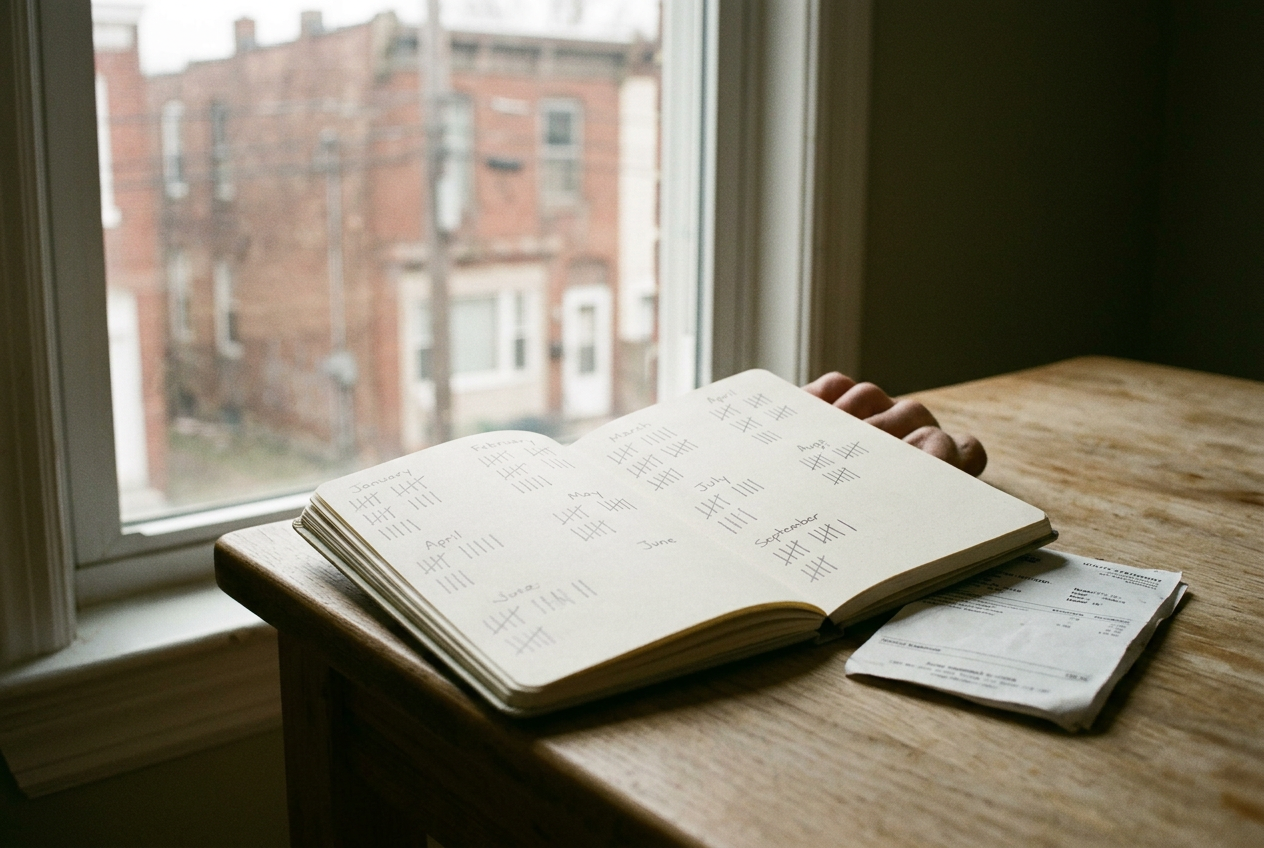
The first entry in Marisol’s notebook was from April 2023. She drew one line each time the drone crossed above the row of homes where her family and other farmworkers lived. By the end of that month, there were 14 lines.
In this composite account, Marisol is the name given to a mother whose experience combines details shared by workers in employer-provided agricultural housing. The farm and its location are not identified. The central facts are consistent across those accounts: an employer introduced a camera drone for crop monitoring, its route repeatedly included workers’ homes, and no one living there received a clear explanation of what the camera recorded or how long footage was kept.
The homes stood beside cultivated fields. That made some overlap possible. A drone surveying irrigation or crop damage might need to turn near the housing, and workers understood that the farm had reasons to inspect land from above.
What unsettled them was how often it returned.
Marisol first noticed the drone while folding clothes outside. It approached from the fields, crossed above the homes and slowed near the shared yard where several children were playing. She could see the camera assembly under its body. She could not tell which way the lens pointed, whether someone was watching live, or whether the pass was being saved.
The children waved. During later flights, they stopped.
The notebook becomes a record
Marisol began keeping the notebook near a window. She did not record clock times. She wrote the month, marked each pass and added a few words when the drone appeared during something she believed was private: children in a small pool, relatives eating outside, a worker resting after a shift.
The entries were incomplete. She worked long days and sometimes heard the drone only after it had moved on. Her husband noticed flights she missed. A neighbor occasionally knocked and pointed upward.
The notebook did not establish where the drone’s camera was aimed, but it documented a pattern that had been easy for a supervisor to describe as occasional.
April had 14 marks. May had 19. In June, when families spent more evenings outside, Marisol counted 23 passes over or beside the housing.
One entry from June read, “Children ran inside.”
That consequence was easier to establish than the contents of any recording. The family could observe the drone and describe what they did afterward. They could not inspect the operator’s screen or the stored files. No notice posted near the homes explained the camera’s field of view, whether audio was captured, or whether people could be identified later.
Uncertainty did much of the work. A camera does not need to record every moment to change behavior when people cannot tell which moments it records.
Marisol began calling the children indoors when she heard the propellers. Her husband asked relatives to stop gathering beside the house after work, partly because he did not want a supervisor drawing conclusions about who visited and partly because he believed any complaint could mark the family as difficult. They had no evidence that managers were reviewing social gatherings. They also had no evidence that managers were not.
The family’s response created tension. One child became angry about being pulled away from friends. Her husband sometimes thought she was paying too much attention to the sound. Then he would notice the drone himself, lower his voice and move under the roof overhang.
The employer controlled the other address
The housing was part of the employment arrangement. Rent came out of the household’s earnings, and losing the job could mean losing the place after a limited transition period. The exact terms varied among workers, but the practical link was plain: the person with power over a schedule also had power over the family’s address.
That changed what an ordinary privacy complaint meant.
A homeowner might object to repeated filming and remain at home while the dispute continued. Marisol believed an objection could affect her husband’s assignments, the next season’s work, or whether the family would be allowed to stay. None of those outcomes was threatened directly. The fear came from the structure around them, where a disagreement about a camera could not be separated from wages and shelter.
Her husband raised the issue informally with a supervisor. He described the passes over the homes and asked whether the drone could turn sooner. The response, as the family understood it, was that the equipment monitored crops and was not intended to watch workers. No written explanation followed, and the route did not appear to change for long.
Intent answered only part of the concern. A camera aimed at plants can capture a person standing between the camera and the plants, while repeated footage may reveal who visits a home or when children are outside even if nobody set out to collect that information.
The farm’s operational reason for using the drone remained credible. The boundary remained unclear.
Privacy moves indoors
By August, the notebook contained 68 marks across four months. Marisol stopped leaving it by the window because she worried a maintenance worker might see it during a repair. She placed it in a kitchen drawer under utility statements.
Family routines narrowed. The children played indoors more often, where noise led to arguments after long workdays. A neighbor who had once brought food to the shared yard began visiting less. Some adults suspected that another worker had complained and caused the drone to return, although nobody had proof that any complaint influenced its route.
The camera’s presence strained relationships between people who needed one another. Workers shared rides and watched one another’s children, yet conversations about the drone became guarded because nobody knew who might repeat a concern to a supervisor. Even agreement could feel risky when the group depended on the same employer.
There was also a physical safety question. Children sometimes ran toward the homes as the drone approached, crossing the path used by farm vehicles. Marisol’s notebook contains one entry about a child stumbling during that rush. The child was not seriously hurt.
Afterward, she told them to walk inside, which worked only when they heard her over the equipment in nearby fields.
The drone itself never struck a person in the accounts used for this composite. No worker reported seeing it crash. The documented harm was more ordinary: people changed where they stood, ended gatherings early and treated an outdoor area beside their home as if it remained part of the workplace.
What the record could not prove
In September, Marisol and two neighbors reviewed the notebook at her kitchen table. They wanted to decide whether the count justified another complaint. Some entries described a drone at the edge of the field rather than directly above a roof. A few might have involved the same flight passing twice.
They left those entries in place and marked the uncertainty.
The notebook could show observed passes and their effects. It could not show what footage existed, who accessed it, whether identification software was used, or whether a supervisor had ever relied on a recording to make a work decision. Those questions required information controlled by the employer.
Privacy rules for drones vary by state, and worker housing can sit at the intersection of employment, property and housing protections. The families in this account did not receive a clear finding from an authority about whether the flights crossed a legal line. Their experience stayed in the space between a tool’s stated purpose and its broader reach.
After the growing season, flights became less frequent. The family did not know whether that reflected fewer crops to inspect, a route change, or a response to the concern. Marisol kept counting.
In January 2024, the page had three marks. One was beside a note about children building something in the yard. She had called them inside before the drone crossed the homes.
Questions people ask
Can a crop-monitoring drone record people near worker housing?
It can capture people who fall within the camera’s view, even when the stated purpose is inspecting crops. In this account, workers could see the camera but could not determine its angle, whether anyone watched live, or what was stored. That gap left them unable to distinguish incidental capture from repeated observation.
Why did the workers hesitate to complain about the flights?
Their jobs and housing came from the same employer. Although nobody directly threatened retaliation, the family believed a complaint might affect work assignments, future employment or the ability to remain housed. An informal concern produced an explanation about crop monitoring, but no written disclosure and no lasting route change they could confirm.
Did the notebook prove that the employer was watching the family?
No. It documented 68 observed passes across four months, along with changes in the family’s behavior, but it did not reveal the camera’s view or the contents of stored footage. Marisol and her neighbors also marked entries that might have been a turn near the field rather than a direct pass over a home.
What changed even without proof that footage was reviewed?
Children spent less time outside, gatherings ended earlier and neighbors became guarded with one another. The family also began moving indoors when the drone approached. Months after the first pass, Marisol still kept the notebook under the utility statements in a kitchen drawer.
One story a day
The story of the day, in your inbox
One real story about AI each morning — no hype, no alarm, just company for the road.