
A Clinic Camera Labeled Patients Agitated Without Telling Them
Patients saw a security camera. A receptionist discovered it was also estimating their emotions, adding labels that could change how staff treated them.
October 9, 2026 · 7 min read
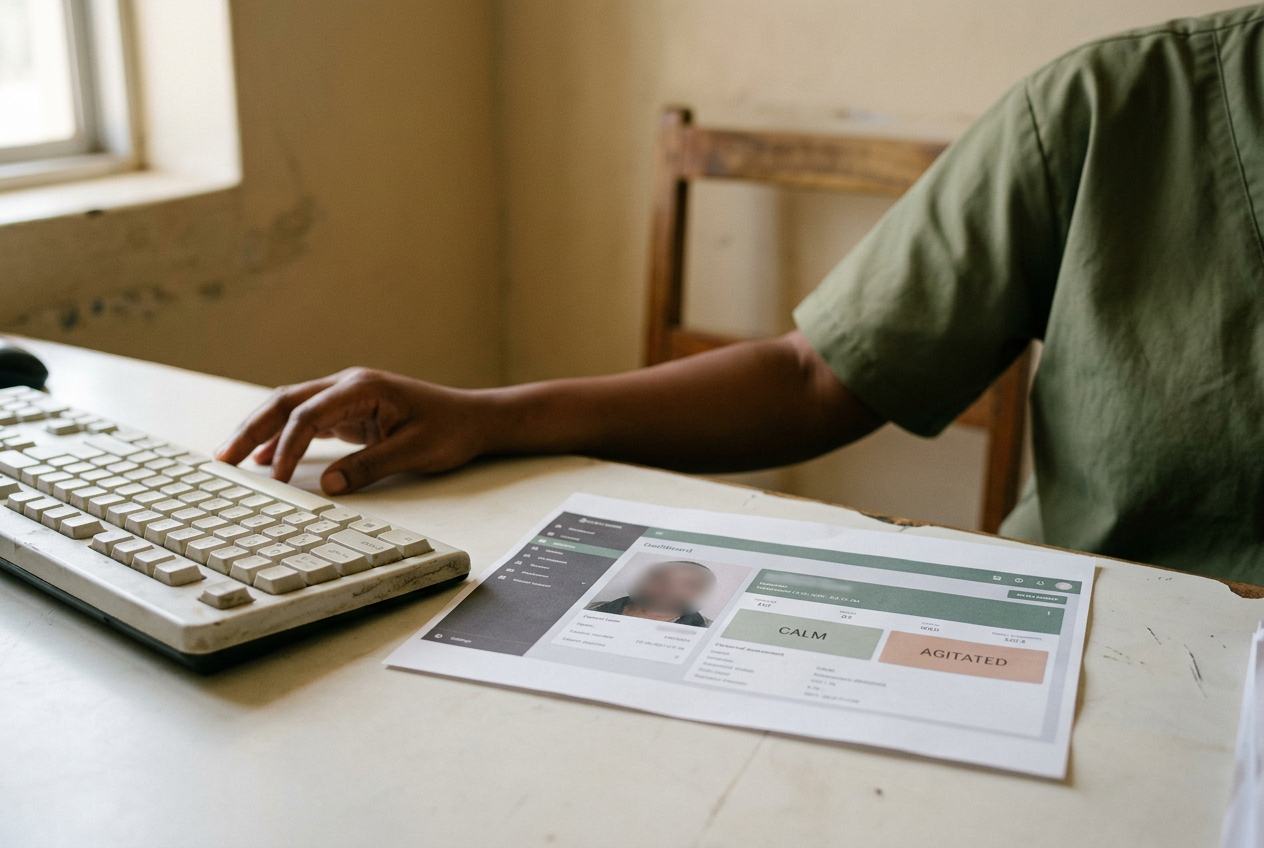
The receptionist first noticed the word beside a patient’s thumbnail on the staff dashboard: AGITATED. An orange confidence bar sat underneath it. Other people in the waiting room had been marked CALM, while a few had no label because the camera could not get a clear view.
She printed a screenshot.
The clinic had installed the camera five months earlier after several incidents in the waiting room. Staff understood that it recorded video for security. A notice near the entrance told patients that the area was monitored, and the receptionist had seen managers review footage after a visitor threatened an employee.
Nothing in that explanation had mentioned emotion estimation.
The extra labels appeared after a dashboard update. At first, she assumed they were notes entered by another worker. Then she watched one change while a patient shifted in his chair, stood to stretch and walked toward the desk to ask how much longer he would be waiting. The label moved from calm to agitated before he spoke to anyone.
He was not shouting. He did not strike the counter or threaten staff. He had been waiting for more than an hour and said his back hurt.
The receptionist looked again at the printed screenshot. A small image showed the man leaning forward, with AGITATED beside him. The line did not say that the software had observed repeated movement. It presented an interpretation.
What the camera was estimating
The clinic’s internal description said the system analyzed visible signals from the video feed, including facial movement and changes in posture. It could also track motion over time, such as pacing, repeated standing or abrupt gestures. Those signals were combined into broad categories that appeared on the dashboard.
That does not mean the camera could detect a person’s inner emotional state.
Systems like this are generally trained on collections of images or video clips that people have already labeled with emotions. A model learns statistical patterns associated with those labels, then applies the patterns to new footage. If training examples often show people with certain facial movements or body motions labeled as angry or agitated, the system may treat similar movements as evidence for that category.
The label is an inference from appearance and behavior. It is not a measurement of anger in the way a thermometer measures temperature, and the confidence bar usually reflects how strongly the new footage matches the model’s learned patterns, not the chance that the person is truly feeling what the label says.
That distinction was missing from the dashboard.
The receptionist began noticing cases in which the label conflicted with what she could hear. A patient bouncing one leg while completing paperwork was marked agitated. A woman who sat still with her arms folded was labeled calm, even though she quietly told the receptionist that she was frightened about her appointment. Another patient moved his mouth asymmetrically because of a medical condition, and the label changed as he spoke.
Masks, turned heads and hands covering part of the face sometimes caused the labels to disappear. When the image cleared, the assessment returned without any indication that the underlying evidence had been interrupted.
These were not rare edge conditions in a clinic. Pain changes posture. Medication can affect facial movement. Some disabled people move repetitively, and anxious patients may avoid looking toward a camera.
A model trained on staged expressions or footage collected in other settings can assign meaning to those ordinary differences, especially when the available categories leave no room for pain, concentration or discomfort.
The receptionist could not inspect the training data, and the clinic had not tested the system against patients’ own accounts of how they felt. She knew what appeared on the monitor. She knew less about how the categories had been defined, who had supplied the labels used during training or how often the tool was wrong in a medical waiting room.
A label changes the room
The system did identify behavior that staff wanted to notice. During one crowded afternoon, the dashboard highlighted a visitor who was pacing and striking his hand against a wall. An employee checked in before the situation escalated, and the receptionist thought the early attention helped.
That case made the tool harder to dismiss. Movement can matter in a waiting room, particularly when employees are answering calls, handling paperwork and speaking with patients who need privacy. A camera that directs attention toward sudden physical activity may support safety without needing to claim that it knows anyone’s emotions.
The problem was what happened after the movement became a psychological label.
Staff started using the dashboard as a reason to watch certain people. An agitated label might lead the receptionist to alert a medical assistant that someone seemed upset, even when she had not spoken with the patient. A security worker sometimes moved closer to the waiting area after a flag appeared. No written clinic policy said that an emotion score should affect care, and the receptionist found no evidence that it changed the formal order of appointments, but it could change the atmosphere around a patient before anyone asked what was wrong.
The influence was subtle enough to deny. Employees still made the final decisions. Yet the dashboard decided whose thumbnail received the orange bar, which meant it arranged attention before a person exercised judgment, and staff rarely had enough time to reconstruct the visible signals that produced the label.
The receptionist noticed the effect on her own work. Once the word appeared, neutral behavior became easier to read through it. A patient approaching the desk looked like confirmation. A clipped answer sounded more concerning.
If the dashboard said calm, the same employee might allow several minutes to pass before checking in.
She kept the printed screenshot under other papers near the monitor. It reminded her that the label had changed while the man stretched his back, not after he made a threat.
What patients had agreed to
Patients could see the camera. They could also see the general video-monitoring notice. Neither fact told them that software was converting their movements and facial cues into an estimate of emotional state for clinic employees.
That gap mattered to the receptionist because security recording and emotion inference create different information. A recording preserves an event that staff may review. The emotion system produces a new claim about a person, places that claim beside an image and can prompt action while the patient is still waiting.
The clinic’s managers said the labels were only an additional signal and should not replace employee judgment. They also adjusted access so fewer staff members could see the dashboard. The labels remained active while the clinic reviewed how they were being used.
For the receptionist, the unresolved issue was not whether a camera could notice pacing. It plainly could. The harder part was that the system translated pacing into agitation, displayed that translation with a confidence graphic and left workers to decide how much suspicion belonged to the person underneath it.
She began treating the labels as prompts to gather context rather than descriptions. If someone was moving repeatedly, she might ask about the wait or offer a quieter place when one was available. Sometimes the movement did signal mounting frustration. Sometimes it signaled pain.
The dashboard did not distinguish between them, but her next interaction could.
The printed screenshot stayed near her keyboard. AGITATED remained legible above the confidence bar, while nothing on the page recorded that the patient had said his back hurt.
Questions people ask
Can a camera really detect whether someone is angry or calm?
A camera can detect visible patterns such as facial movement, posture changes and pacing, then compare them with patterns assigned emotion labels during training. It cannot directly verify a person’s inner state. In this story, pain, fear and repetitive movement could produce signals that the dashboard treated as agitation.
Is emotion recognition the same as ordinary security recording?
No. Security footage records visible events for later viewing. Emotion recognition adds an automated inference, such as calm or agitated, and may display it while staff are deciding where to direct attention. Patients in this clinic were told about monitoring, but the general notice did not explain that behavioral labels were being generated.
Does a high confidence score mean the emotion label is accurate?
Not necessarily. A confidence display often shows how strongly the footage matches patterns the model learned, rather than the probability that the person truly feels the named emotion. A model can confidently match a pain-related movement to examples previously labeled agitated and still misunderstand the person.
Did the clinic use the labels to decide who received care first?
The receptionist found no evidence that the software formally changed appointment order. She did see labels influence who received extra observation and when security moved closer. The distinction remained visible on the printed screenshot: the system did not record a threat, but AGITATED remained beside the patient’s thumbnail.
One story a day
The story of the day, in your inbox
One real story about AI each morning — no hype, no alarm, just company for the road.