A Benefits Applicant Filmed Her Home to Get $516 in Aid
A remote identity check asked her to show more than her face and ID. With no clear retention period for the room video, she delayed assistance while rent and grocery costs mounted.
August 9, 2026 · 7 min read
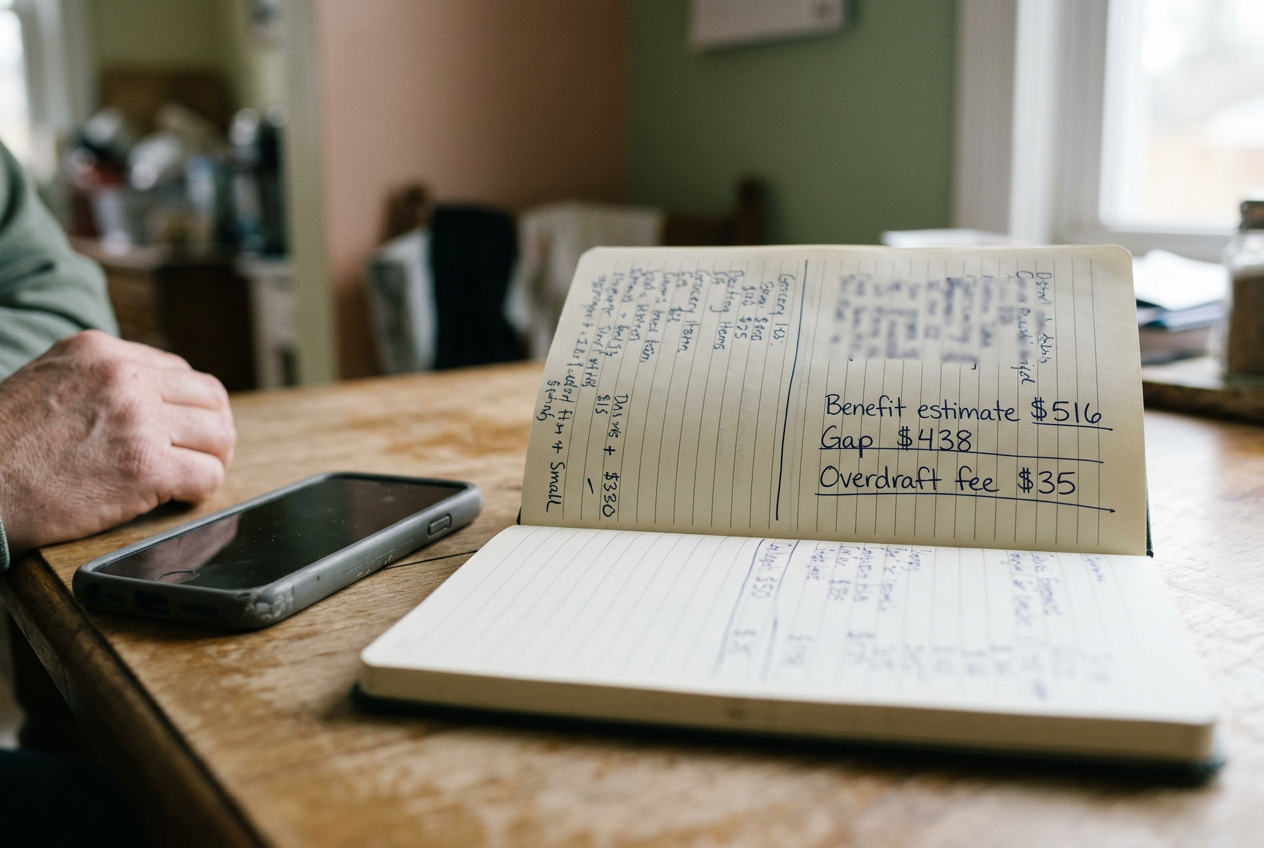
In October 2024, Mara had $238 in her checking account and a page in her notebook that said she was $438 short for the month. Mara is not her real name. Her experience is a composite drawn from recurring accounts of remote identity checks in public-benefits systems.
The notebook was where she kept the numbers that mattered. Rent took most of her reduced income from home-care shifts. She expected another paycheck, but it would not cover groceries and the utility bill. The benefits portal estimated that she could receive $516 if her application was approved, so she wrote that amount near the bottom of the page and drew a box around it.
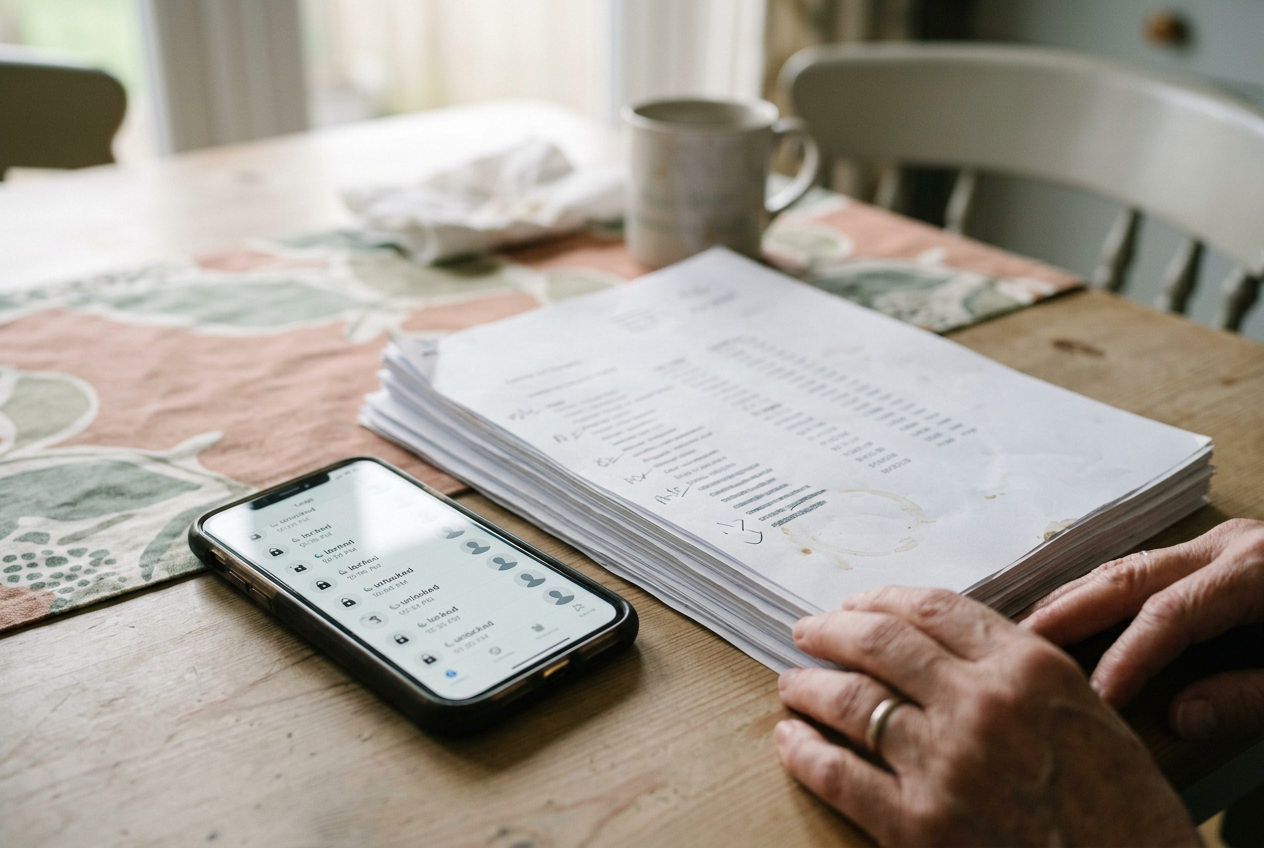
She completed the application on her phone. The identity check began with familiar requests: a photograph of her identity document and a live image of her face. Then the platform asked her to turn the camera outward and record her surroundings.
The application could not move forward until the check was complete.
Mara stopped. The privacy link described identity verification and fraud prevention in broad terms, and it said information could be handled by service providers working for the program. She could not find a retention period tied to the room recording. The notice did not tell her whether the raw video would be deleted after a match or whether a person might review it.
The $516 in her notebook remained an estimate.
What the camera could see
Mara had moved after leaving a former partner who did not know her current address. She did not believe the platform was sending videos to him. That was not the fear. The concern was that a recording of her home could leave her phone, pass through systems she could not see, and remain available under rules she could not identify.
The camera view included the front door if she stood where the prompt directed her. A photograph of her child was on a nearby surface. Mail could reveal where she lived. Even after moving those objects, the recording would still show the shape of the room and the location of an exit, information that had nothing obvious to do with whether the face on the screen matched the identity document.
Remote identity systems often test whether a person is physically present rather than displaying a photograph or prerecorded image. A platform may analyze movement from the camera, compare a face with an identity document, or look for signs that someone else is directing the session. A view of the surrounding space may contribute to those checks. In Mara’s case, the prompt did not explain which signal the room scan was supposed to provide.
That distinction mattered. A camera can collect more than the system needs to reach a result, particularly when a person is asked to pan across a private space rather than keep the lens on her face, and a general statement about fraud does not show what happens to the extra detail captured in the frame.
Mara closed the check and wrote to the support inbox. She asked whether the room video would be stored, how long it would remain, and whether she could complete the verification another way. The response confirmed that identity verification was required. It did not give a retention period for the recording.
She tried the number on the account page. The person who answered could explain that the application was paused, but could not see the technical settings used by the verification tool. An in-person appointment appeared to be available about three weeks later. No one confirmed that the appointment would avoid the same kind of digital capture.
What was known was narrow. The platform had activated her phone camera, the application was waiting for a completed identity result, and she could not reach the next stage without either finishing the remote check or waiting for an appointment. What remained unknown was broader: whether the recording would persist after verification, whether a face template would be retained, and who could later access either one.
Eleven days without the payment
Mara spent eleven days looking for a clearer answer. During that period, the expected benefit did not arrive because processing had not resumed.
The delay showed up in the notebook before it appeared anywhere else. She reduced the grocery amount to $74 and used a credit card for the purchase. A payment cleared earlier than she expected, bringing a $35 overdraft fee. Her sister transferred her $120, which covered part of the rent gap but created another amount Mara expected to repay.
None of those costs proved that the platform had misused her video. She had not submitted one yet. They showed the price of refusing, even temporarily, a data request attached to essential assistance, where the formal choice to stop can become a financial penalty without anyone describing it that way.
Mara considered completing the check in a public place so her home would not appear. That option replaced one privacy problem with another. Other people could enter the frame, her identity document would be visible on the screen, and she had no assurance that an unfamiliar background would satisfy the platform. She also considered pointing the camera at a blank wall, but the instructions indicated that a wider view was part of the check.
On the eleventh day, she moved the photograph and the mail. Her child stayed with a relative. Mara stood where the front door would be near the edge of the frame, completed the face comparison, and turned the phone as directed.
The check accepted the recording. A status on the dashboard changed, allowing the application to continue. It did not show a copy of what had been captured, and there was no visible control for deleting it.
The result did not answer the privacy question
Eight days after Mara submitted the room scan, $516 appeared on the benefits account. She entered the payment in her notebook and used part of it for groceries. The $35 fee remained, as did the $120 she owed her sister.
Approval settled the money question for that month. It did not establish what happened to the recording. A successful identity result can be separated from the underlying material that produced it, which means an agency may receive a completed status while a contractor processes or stores images under a different system and schedule.
The notice Mara saw did not let her trace that path. It did not say whether the benefits program received the room video or only the verification result. It also did not distinguish between temporary camera data and information retained for fraud review. Support answered the application question because staff could see that the check was complete.
They did not answer the storage question.
This gap changes the meaning of consent. Mara tapped the control that allowed the camera to record, but she did so after eleven days without progress and with a $438 budget gap written in front of her, while the slower alternative threatened to push assistance further beyond the bills it was meant to cover.
Her choice was real in the limited sense that she could close the screen. It was constrained by money.
Mara kept the notebook after the month ended. The boxed $516 became a payment entry, while the unanswered retention question left no number she could record. She knew what the delay had cost. She did not know how long the room remained in the system.
Questions people ask
Why would a benefits identity check ask for a room scan?
A remote system may use the surrounding view to test whether the applicant is present and following the session live, rather than using a photograph or replay. In this story, the platform did not identify the signal it needed from the room, leaving Mara unable to separate the purpose of the check from the extra detail captured.
Does a room scan prove someone’s identity?
The room itself does not establish who a person is. It may support a broader verification process that compares a live face with an identity document or looks for interference during the session. Mara received only a completed result, so she could not tell how much the surroundings affected the decision.
How long is a benefits verification video kept?
Retention depends on the system and the rules applied by the program or its contractor. Mara found general privacy language but no period linked to her room recording, and support did not clarify whether the raw video was deleted after verification or stored for later review.
What happened when she declined the room scan?
She closed the check and spent eleven days seeking an explanation, which held up the application while rent and groceries still came due. After submitting the scan, she received $516 eight days later. In her notebook, the final line for that month recorded the payment beside a $35 overdraft fee.
One story a day
The story of the day, in your inbox
One real story about AI each morning — no hype, no alarm, just company for the road.