Her Smart Lock Flagged 47 Normal Arrivals as Suspicious
An overnight worker discovered that her building’s access system treated her schedule as a security anomaly. Correcting the label meant disclosing where she worked and when she traveled.
August 9, 2026 · 7 min read

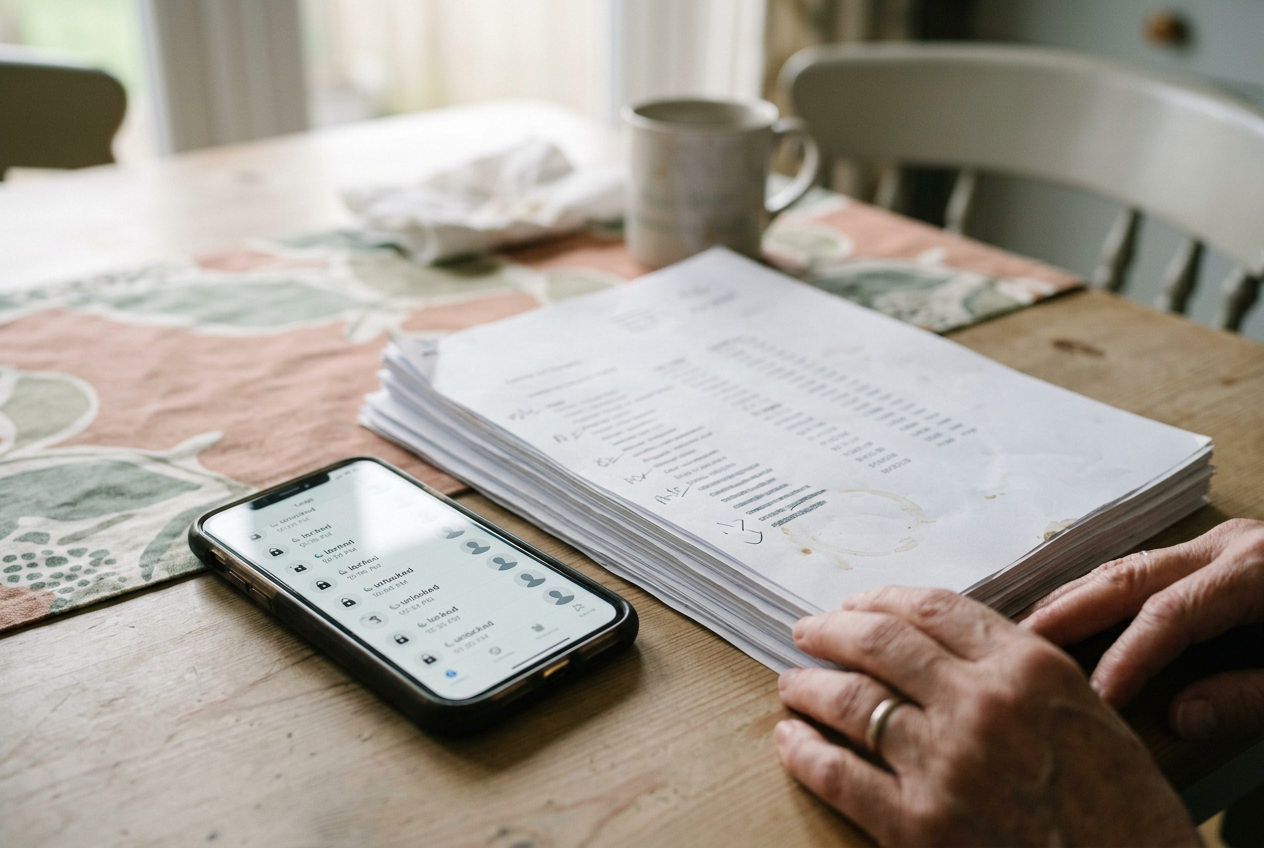
The first thing Lena saw was a printed anomaly report with 47 rows.
Lena is a composite resident drawn from accounts of tenants who live with app-connected building access. She had worked overnight shifts for 14 months, usually four nights a week, and entered her apartment building after midnight on the mornings she worked. The schedule paid more than daytime work and left part of the afternoon open for errands. It was tiring, but it was not erratic.
Her building’s software disagreed.
A property manager showed her the anomaly report after the access platform placed her apartment among the units with repeated suspicious activity. Each row represented an arrival the system considered unusual. The report included a date and timestamp, the door involved, the credential used and a severity label. Her late arrivals filled most of the pages.
They were all hers.
Lena had not received an alert when each event occurred. Her phone still opened the entrance, and the lock on her apartment still responded. She learned about the classification only because the manager wanted to establish whether someone else had access to her mobile credential.
That was a reasonable safety question. Repeated unlocks at unusual hours can indicate a copied code, a stolen phone or someone testing access after a resident has gone to sleep. The same system had helped staff notice repeated failed entries at another shared door, according to the explanation Lena received. She liked that the entrance locked automatically.
She also used temporary access when her sister visited.
But the 47-row report did not describe failed attempts. Every listed event was a successful unlock by the same credential Lena used during the day. The software had not detected an intruder. It had detected a pattern that differed from the pattern it expected.
What the model had learned
Smart-building anomaly tools can compare each new access event with earlier events from the same unit, broader activity across a property or both. The inputs may include when a door opens, whether the unlock succeeded, which credential initiated it and whether the door remained open longer than usual. From those signals, the software assigns a score or category to activity that falls outside an established pattern.
The model in Lena’s building had no record labeled “overnight worker.” It saw that most residents entered less often after midnight and that Lena’s own early history contained fewer late arrivals, partly because she moved in during a period when she was training on daytime shifts. That starting period helped form the baseline against which later events were compared.
Once her overnight schedule began, each arrival was ordinary in context but unusual against that baseline. The system could identify recurrence without understanding its cause, and the repeated pattern did not automatically make the events safe because recurrence can also describe persistent misuse of a credential.
This is where the AI is load-bearing. A conventional access log would have recorded the same door openings, but it would not have inferred that they were suspicious or repeatedly elevated Lena’s unit for review. The anomaly model created the judgment by turning a difference in timing into a signal about possible risk.
The report made that transformation look settled. Each row placed the event beside a severity label, while the explanation for the score remained outside the document. It did not show how much weight came from the hour, how the building-wide pattern affected the result or whether a successful unlock reduced the score. Lena could see what she had done.
She could not see the boundary she had crossed.
A building manager could mark an event as expected, but the platform did not offer Lena a resident-facing setting for an overnight schedule. Nor could the manager tell her whether correcting enough rows would retrain the system, suppress future notices or merely add a note for staff.
She took the anomaly report home.
The cost of making normal visible
To challenge the classification, Lena first explained that she worked overnight. The explanation resolved the immediate concern for the manager, but the software continued producing entries because her schedule had not become less unusual to the model.
The next request was for information that could support a standing exception. Lena shared a screenshot from the scheduling app showing four overnight shifts. When that did not establish how long the schedule would continue, she provided a pay statement identifying her employer and the overnight pay differential. She declined to authorize direct contact with her supervisor.
Those records disclosed more than the lock had known. The access platform could infer when she arrived at the building, but the work documents connected those movements to an employer and a recurring schedule. Together, they narrowed the periods when she was likely away from home.
Lena understood why a manager responsible for building safety would want evidence before downgrading repeated alerts. She also noticed that residents with common schedules did not have to document their jobs to make their entrances appear ordinary. Their routines matched the baseline, so the system treated them as unremarkable without asking for an explanation.
The 47 rows changed how she thought about the lock. Until then, she had understood each unlock as a transaction: her credential worked or it did not. The report showed that the building retained those transactions long enough to compare them, group them and make a judgment about her routine.
She began using the physical key to her apartment more often, although that did not prevent the shared entrance from recording her arrival. She considered asking a coworker to drop her farther from the building so the same vehicle would not appear near the entrance, then learned that the anomaly report did not use vehicle data. The uncertainty had already changed her behavior, even where the system was not watching.
For eight weeks, new flagged events appeared in the property manager’s summary. Lena did not receive each summary, but she asked to see the entries associated with her apartment. The total rose beyond the 47 rows on the printed report. She stopped printing later versions because the first copy already contained enough detail to show the pattern.
An exception without an erasure
The property manager eventually added an exception recognizing that overnight arrivals were expected for Lena’s unit. Later reports no longer elevated each arrival in the same way. It remained unclear whether the model had learned a new baseline or whether staff had placed a rule over its output.
That distinction mattered. A learned baseline might adapt if Lena’s schedule changed again, while a fixed exception could suppress an event that deserved attention. The manager could not explain which had happened, and Lena could not inspect the model’s settings from her resident account.
She kept using the mobile credential at the shared entrance. It was easier when she carried groceries, and temporary access still helped when her sister visited. She did not conclude that the system had no safety value. She concluded that its idea of normal had consequences the resident dashboard did not reveal.
The printed anomaly report stayed in a folder beside her pay statements. Months later, Lena checked it when the building announced a software update. The notice described changes to access and security features but did not say whether old anomaly records would remain attached to her unit.
Questions people ask
Can a smart lock decide that a normal arrival is suspicious?
A smart lock platform can flag an arrival when its timing or credential pattern differs from a learned baseline. In Lena’s case, the unlocks were authorized and successful. The anomaly model supplied the suspicious label because overnight arrivals were uncommon in its earlier data, not because it had identified an intruder.
What information can an apartment access system infer?
Door events can reveal recurring arrivals, absences and changes in routine even when the system collects no audio or video. The report in this story linked timestamps to one mobile credential and one apartment. It did not know Lena’s occupation until she supplied work records to explain the pattern.
Does correcting an anomaly remove the original access history?
A correction may change future alerts without deleting earlier events or labels. Lena received an exception, but she was not shown whether the model had retrained, whether staff had suppressed the warnings or how long prior reports would remain. Her original 47-row report stayed in the folder with her pay statements.
One story a day
The story of the day, in your inbox
One real story about AI each morning — no hype, no alarm, just company for the road.