An AI Negotiator Promised Her $225 Plan. The Hospital Didn't.
The chatbot drafted terms that looked settled, but the hospital had never accepted them. Five months of $25 late fees exposed the gap.
August 9, 2026 · 8 min read

In September 2024, Maya uploaded an itemized hospital bill for $4,860 to an AI bill negotiation service. Maya is a composite patient, and the details of her case combine recurring features of medical billing disputes.
The bill followed an outpatient procedure. Insurance had paid its portion, and the remaining amount belonged to her. She did not dispute the treatment or the arithmetic. She needed time.
After rent and child care, Maya believed she could set aside $225 a month. The negotiation service asked about her income and expenses, then produced a two-page draft that spread the $4,860 across 20 payments of $225 and a final payment of $360. It also assumed that interest and late fees would stop.
The draft looked finished. It contained the hospital’s general billing address, the balance from the itemized bill, payment dates and blank signature lines. The platform marked its task as finished, which Maya took to mean that the negotiation had worked.
It had not.
The first $25 fee
Maya sent the draft to the hospital’s support inbox. An automated message confirmed that her submission had arrived, but it did not say the terms were accepted. No hospital employee signed the document. No payment schedule appeared on her account page.
She made the first $225 payment anyway. The hospital posted it against the balance.
The following month, the account showed a $25 late fee. Maya returned to the chatbot and described the charge. The tool treated it as a billing delay and prepared follow-up language asking the hospital to correct the account. Its response was confident, and the proposed plan still sat on her dashboard as completed.
That confidence carried more weight than the hospital’s silence. Maya paid another $225.
A second $25 fee appeared. She sent another message through the support inbox, attached the draft again and continued paying the amount the chatbot had calculated. She thought she was building a record that showed compliance with an agreement. The hospital’s system showed something else: partial payments on an account with no active plan.
Five months after she uploaded the itemized bill, Maya had paid $1,125. The account had added five late fees totaling $125, leaving a displayed balance of $3,860.
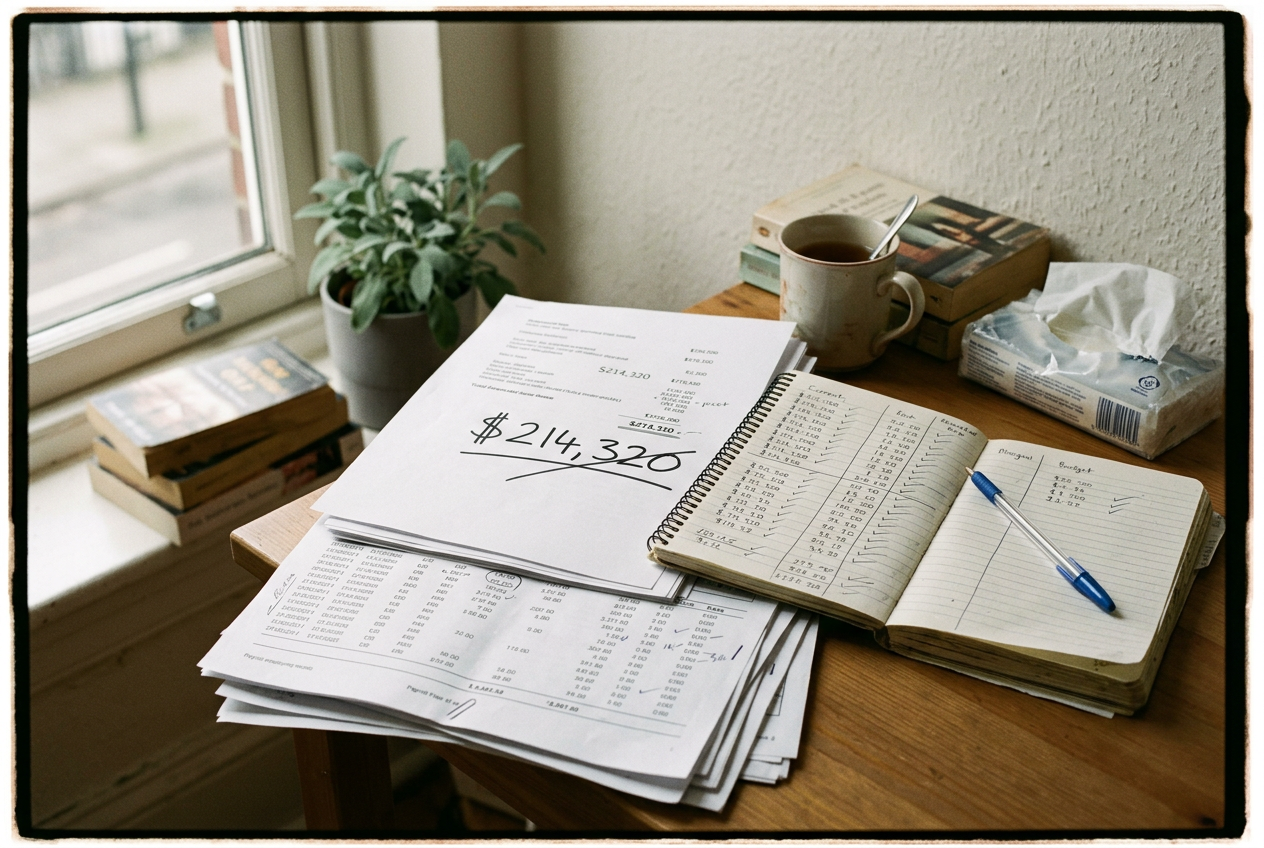
She wrote the figures beside the total on her printed bill. Her calculation showed $3,735 remaining. The hospital’s figure was $125 higher, and the difference matched the five fees.
That was the moment the draft stopped looking like proof.
What the chatbot had produced
The negotiation service had created useful language for a proposal. It had taken Maya’s monthly limit, performed the division and placed the result into a document that resembled an agreement. None of those actions gave the tool authority to accept terms for the hospital.
A proposal can contain a balance, a monthly payment and a fee waiver. Those terms describe what one side wants. An accepted arrangement requires some indication that the party receiving the proposal agreed to it, although what counts as acceptance can depend on the facts and applicable law.
In Maya’s case, the hospital’s records showed no approved plan. The draft had blank signature lines, and the account page never changed from past due to an active payment arrangement. The automated acknowledgment showed that a message had reached an inbox. It did not show that a person with authority had approved the terms.
The distinction was easy to miss because the chatbot did not behave like a rough drafting tool. It calculated a complete schedule and presented the document without leaving much uncertainty on the screen, while the hospital’s automated receipt supplied the appearance of a reply even though it contained no decision.
The hospital also accepted each $225 payment. Maya understood that conduct as confirmation. The billing office later explained that its system could receive partial payments without opening a payment plan, so posting the money changed the balance but did not pause the late fees.
This account describes one billing dispute and does not provide legal or financial advice. Contract rules and hospital billing practices vary. The useful point in Maya’s records was narrower: the document on her platform and the status on the hospital’s account page did not match.
The cost of the mismatch
Maya contacted the hospital using the number on the account page. Once a billing employee reviewed the history, the employee found the five $225 payments but no approved arrangement. The hospital had its own limits for payment plans, and the 21-payment schedule in the chatbot’s draft was not one it had offered for her balance.
The billing office removed $75 of the accumulated fees after reviewing her messages. It left $50 on the account, bringing the balance to $3,785 rather than the $3,735 Maya had expected.
The plan the hospital did accept required 15 monthly payments of $250 and a final payment of $35. That was $25 more during most months than Maya had placed in her budget, and it included $50 that came from fees she thought had been suspended.
The direct loss was modest beside the original bill. It still mattered. The extra $25 came from the amount she usually kept available for school expenses, and the $50 in remaining fees represented money that did not pay for care.
There was also a practical difference between the two documents. The AI draft existed on the negotiation platform, where it showed what the tool had prepared. The accepted plan appeared inside the hospital account, alongside the revised balance and the next amount due. Maya received a separate confirmation from the hospital after the billing employee finished the review.
She kept the original itemized bill. Next to the $4,860 total were her five handwritten payments, the $125 in fees and the later $75 adjustment. The paper recorded both versions of the arrangement: the one she believed had started and the one the hospital recognized.
Why polished language caused confusion
AI drafting tools can make a proposed arrangement look settled before the other party has considered it. A full schedule carries a sense of completion, particularly when it includes formal spacing and signature lines, but presentation does not show that a negotiation occurred.
The chatbot knew the numbers Maya supplied. It did not have access to the hospital’s approval records, and it could not see whether the billing office permitted a plan of that length. After the first fee appeared, it interpreted the problem through Maya’s description rather than through the hospital’s account system.
That limitation changed the financial result. A less confident draft might have looked provisional, prompting Maya to keep the proposed terms separate from whatever status appeared on the hospital account. Instead, the platform’s finished task and the hospital’s automated receipt sat beside each other, and she read them as parts of one completed exchange.
The itemized bill made the error visible months later. The treatment charges had not changed. Her payments were present. Only the five $25 fees explained why the remaining balance was higher than her handwritten calculation.
Questions people ask
Is an
AI-drafted hospital payment plan an accepted agreement?
In Maya’s case, the draft showed terms she wanted, but the hospital had not approved them. The signature lines were blank, no plan appeared on the hospital account, and the only hospital response was an automated acknowledgment that her message had arrived. Whether an agreement exists in another case depends on its facts and applicable law.
Why did the hospital accept her payments without honoring the plan?
The hospital’s system treated each $225 transfer as a partial payment against the balance. According to the billing review, receiving that money did not open a payment plan or suspend fees. Maya saw repeated payments as performance under the draft, while the account recorded an unpaid balance that remained past due.
Can late fees continue while a patient thinks a bill is under negotiation?
They continued in this composite case because the hospital had not marked the account as covered by a payment arrangement. Five monthly charges added $125 before the billing office removed $75. Policies differ, and the story does not establish what another hospital may charge or how a disputed account should be handled.
What showed that the hospital had accepted the later plan?
The later arrangement appeared on the hospital account rather than only on the negotiation platform, and the hospital sent a separate confirmation after its review. The revised schedule matched the displayed balance: 15 monthly payments of $250 and a final $35 payment.
One story a day
The story of the day, in your inbox
One real story about AI each morning — no hype, no alarm, just company for the road.