A Sixth Grader’s Reading App Heard Her Speech and Moved Her Back
She understood books assigned years above her grade, but an oral-fluency model treated her pronunciation as a reading problem. Each low score made the next lesson easier.
September 30, 2026 · 7 min read

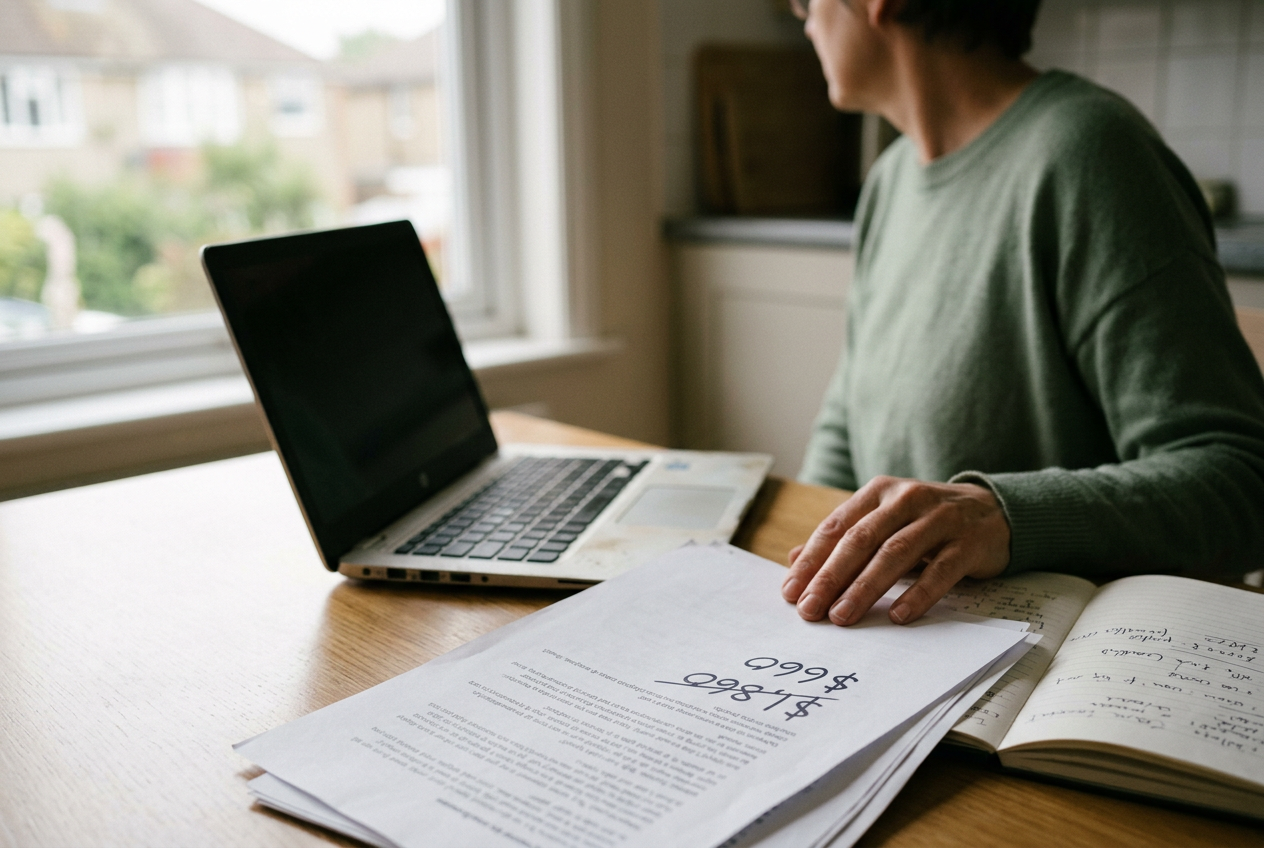
The notebook began on a kitchen table in September, beside a school laptop and a paperback the sixth grader had already finished.
Her mother drew a line down the middle of the first page. On the left, she wrote the title and level of each passage the reading app assigned. On the right, she recorded what her daughter could explain after reading it silently: why a character had lied, which detail changed an argument, how the final paragraph complicated the one before it.
The columns did not match.
The girl, whom I’ll call Nia, had entered sixth grade as a strong reader with a speech sound difference. Certain consonant clusters took more work, and her pronunciation of some R sounds could vary. People who knew her followed her easily. A microphone meeting her for the first time had a rougher go.
Her school used an adaptive reading platform for regular practice. Students put on headsets, read passages aloud, and answered questions. Nia liked parts of it. The app responded without making her wait for a teacher, and early lessons introduced unfamiliar words she later noticed in novels.
Then the passages began getting easier.
By the fourth week, the app was assigning short selections with vocabulary she had mastered years earlier. Her classroom teacher could see an oral-fluency score below the expected range, along with a recommendation that Nia continue on the personalized path. Written comprehension looked stronger, but the next passage was still selected largely from the lower fluency result.
At home, Nia was reading a novel intended for older students. On the laptop, she was being asked to identify a main idea stated in the first paragraph.
Her mother added both to the notebook.
What the microphone counted
The app was doing more than recording Nia. Its speech-recognition system aligned her audio with the passage printed on the screen, estimating whether each spoken word matched the expected word and marking places where it detected a substitution or omission.
That estimate fed an oral-fluency score. Reading rate and pauses could matter, along with word accuracy. The adaptive system then used the score to choose later work, on the assumption that repeated mismatches might show weak decoding: a student may not know how printed letters map onto spoken words, so the system lowers the text difficulty and supplies more practice.
For some readers, that inference can be useful. A child who guesses at unfamiliar words may need a slower sequence with more direct support. Nia’s problem was that the system had access to the sound of her reading but not a reliable explanation for why her speech differed from its expected pronunciation.
A human listener could hear Nia pronounce the same sound similarly in ordinary conversation and during a difficult passage, which suggested a stable speech pattern rather than a failure to recognize the word. The model saw lower-confidence audio matches. Once those became reading errors, the adaptive path treated the errors as evidence that the text itself was too hard.
This was the part that felt personal to Nia, though it was produced mechanically. She would read a sentence she understood, watch the screen mark a familiar word as missed, and then receive another passage whose easier language implied that the machine had learned something about her.
It had learned something. It had learned the distance between her pronunciation and the pronunciation patterns represented in its training data and scoring system. The trouble was the label attached to that distance.
In the notebook, her mother stopped writing only passage levels. She began noting individual words the app appeared to reject. Across 11 weeks, the same kinds of sounds recurred, including words Nia used correctly in conversation and defined accurately afterward. When a passage contained fewer of those sounds, her oral score rose.
When they appeared more often, it fell.
The subject matter barely mattered.
The easier path became its own evidence
Adaptive learning systems are often described as meeting a student where the student is. That phrase leaves out a difficult fact: the system must first decide where the student is, and later performance is gathered from the path created by that decision.
Once Nia’s level dropped, she had fewer chances inside the app to demonstrate that she could handle complex syntax or infer an unstated motive. The easier passages generated cleaner scores, which could look like improvement and reinforce the placement. She was succeeding, but at work that demanded less of her.
Her teacher did not regard the dashboard as infallible. She also had a crowded classroom and a platform designed to turn many small performances into a manageable signal, so the score carried weight even when everyone understood that a score was only part of the picture.
Nia’s family first raised the mismatch through the school. The initial response focused on continued use: the path would adjust as more data came in. That was plausible. Adaptive systems are built to update.
Yet more recordings of the same speech difference gave this system more opportunities to make the same inference.
The family’s notebook changed the conversation because it put two kinds of evidence beside each other. There were the words flagged during oral reading. Then there were Nia’s written responses and the explanations she gave after silent reading, including details from books well above the level appearing on her dashboard.
Her mother was not trying to prove that every score was wrong. Nia sometimes rushed. She occasionally skipped a small word, particularly when she knew the sentence’s direction. The notebook contained those moments too, which made the recurring pronunciation pattern harder to dismiss as a parent’s broad claim that her child deserved harder work.
During a school meeting that winter, Nia read one passage aloud and completed a more difficult one silently. Her oral delivery triggered familiar concerns. Her written account of the harder text distinguished what the narrator knew from what the reader could infer, a skill the easier path had not been asking her to use.
The adults were finally looking at two different constructs. Oral fluency measures how accurately and smoothly a student reads aloud. Reading comprehension concerns what the student understands. The skills overlap, but they are not interchangeable, and a speech difference can widen the gap between them without reducing either the student’s vocabulary or her grasp of a text.
The school changed how it used the platform for Nia. Her teacher selected harder material rather than letting the oral score control every next passage, and she treated recorded reading as one source of information instead of the gate to the rest of the curriculum. Nia still used the app. She did not have to defeat it or abandon it.
There was no tidy repair to the underlying model. The support team received a description of the pattern, and the school documented that Nia’s pronunciation could affect automated scoring. The dashboard continued to display oral-fluency results. Now an adult read them with context.
By spring, the right side of the notebook had filled with brief accounts of what Nia understood. The left side showed her assigned texts climbing again, though not in a smooth line. A passage rich in troublesome sounds could still produce a dip.
Nia became less interested in watching the marks appear while she read. She finished the recording, moved to the written questions, and later opened her paperback at the kitchen table. Her mother kept the notebook nearby.
Questions people ask
Can an oral-reading app confuse a speech difference with a reading problem?
Yes. In Nia’s case, speech recognition compared her audio with an expected rendering of the printed passage. Pronunciations that received weak matches were counted as possible reading errors, even when she recognized the words and understood the sentences. The resulting fluency score then shaped the difficulty of later work.
Why didn’t stronger comprehension scores correct the reading level?
The platform’s adaptive path gave substantial weight to oral fluency because weak word reading can limit comprehension. Nia’s written answers showed a different pattern, but they did not fully cancel the audio-based signal. Once the system lowered her level, easier passages also gave it less evidence of her advanced comprehension.
What persuaded the school that the personalized path was holding her back?
The family’s notebook connected repeated audio flags with the sounds Nia pronounced differently, then placed those results beside her explanations of harder texts. A live comparison between oral and silent reading helped the school see that the app was measuring a real speech pattern and drawing the wrong conclusion from it.
Did the school stop using the reading app?
No. Nia continued using it for practice, while her teacher chose more demanding material and interpreted the oral score alongside classroom work. The automated result remained visible, including occasional dips tied to particular sounds. Her mother recorded the latest one on the left side of the notebook.
One story a day
The story of the day, in your inbox
One real story about AI each morning — no hype, no alarm, just company for the road.