A Clinic’s Voice System Mangled Names. She Trained It for $0
A tribal clinic’s automated phone system sent callers to the wrong records when it misheard local surnames. The receptionist spent 11 months documenting corrections without added pay or authority.
September 21, 2026 · 7 min read

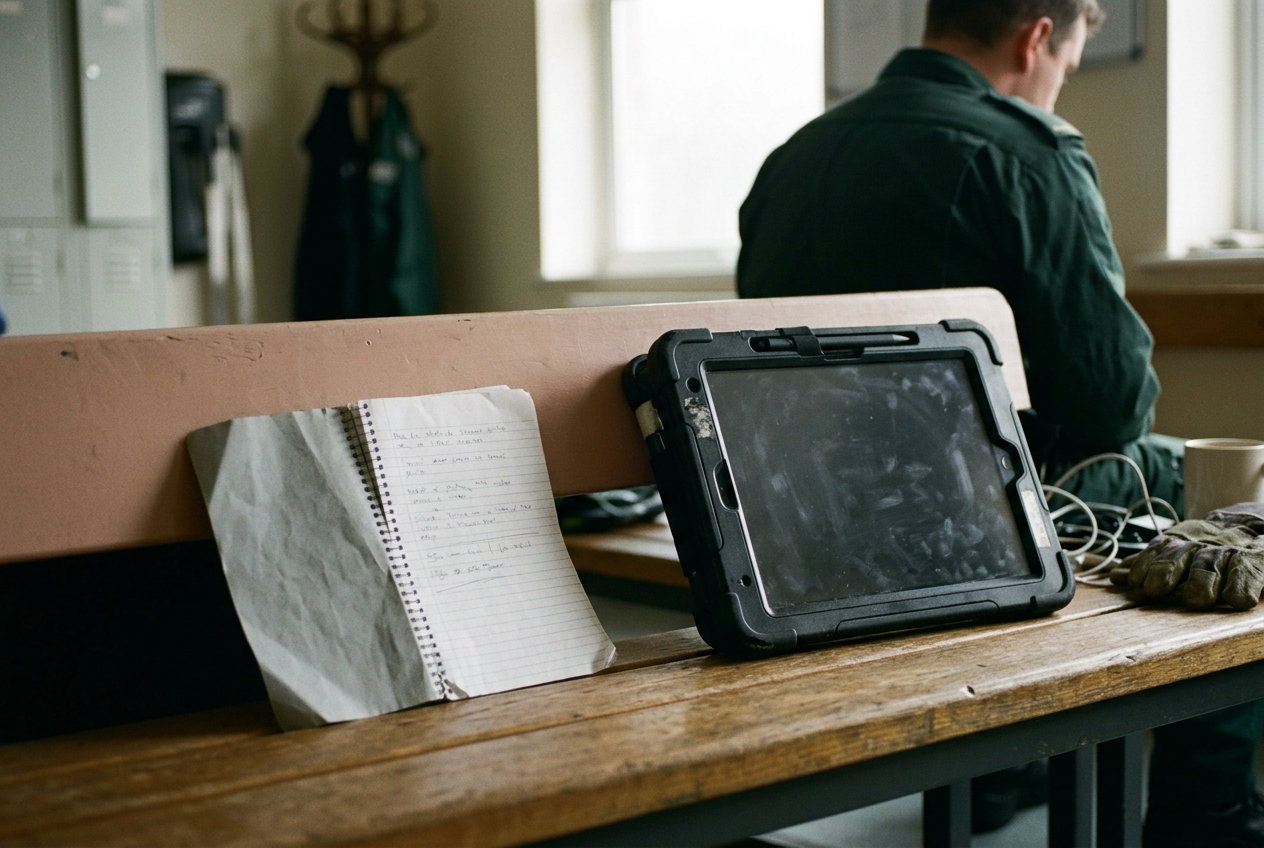
The first entry in Lena’s notebook took two lines.
She wrote the surname the clinic’s new phone system had produced, then the pronunciation the caller had given her after reaching the front desk. The system had turned a two-syllable family name into a common English first name. Its record search found a patient with that first name and placed the call in the wrong chart queue.
Lena recognized the caller’s voice and stopped the transfer. She had worked reception at the tribal clinic for six years, long enough to know many families and to hear when the machine’s version of a name did not fit the person speaking.
The notebook stayed beside her keyboard. By the end of the first month, it held 17 corrections.
The clinic had added the voice system to reduce calls handled by staff. A caller could say a name and reason for calling, and the software would turn the speech into text, search the patient database, then route the call toward scheduling, refills, billing, or a clinical message. For common requests, it worked. People could confirm an appointment without waiting for Lena.
Names were different.
The system struggled with surnames used throughout the community, especially when a caller spoke quickly, used the pronunciation heard at home, or called through a weak cellular connection. Some names included sound patterns that were rare in the recordings used to build broad English speech-recognition systems. Others looked familiar in writing but were pronounced differently from the version the software expected.
When the system was uncertain, it sent the call to reception. That created more work but little danger. The harder problem came when it was confidently wrong.
What the machine heard
Voice recognition does not listen to a name and understand whose name it is. The system breaks recorded speech into small sound features, then calculates which sequence of written tokens is most likely to match them. Its training patterns influence that calculation, as does the list of words and names it has been given for the task.
A surname that appeared rarely, or never, in the underlying speech data could lose to a common English word with a similar sound. Background noise narrowed the distinction further. The software then assigned a confidence score to its own transcription, but that score measured how strongly the model favored one candidate over others. It did not verify that the candidate belonged to the caller.
The clinic’s record-matching layer took the resulting text and searched for possible patients. A wrong transcription could still produce a strong database match if another patient had the more common name the system selected. That combination was what worried Lena: the speech model could be wrong with high confidence, while the record system could be right about the wrong text.
The caller might then hear a prompt referring to an appointment or be asked to confirm information that belonged to somebody else. Lena did not know how often callers backed out before reaching her. She could count only the mistakes that landed at the front desk or returned from another clinic worker.
She added a mark in the notebook each time that happened. After eight months, there were 112.
Lena earned $18.40 an hour. Her job description covered answering phones, checking patients in, and moving messages to the appropriate staff. It said nothing about testing speech recognition or maintaining a pronunciation set.
Still, coworkers began bringing her examples. She would replay a permitted call recording or ask how the caller said the name, then write a phonetic break beneath the system’s version. She used underlining to mark the stressed syllable. If two families spelled a surname the same way but pronounced it differently, she made separate entries.
The notebook became useful enough to create its own privacy problem. At first, Lena had written complete names because that was the only way to show what the system had confused. The pages now connected patient surnames with call problems and, in a few cases, the service the person had tried to reach. She began keeping the notebook in a locked drawer and stopped writing the purpose of the call.
No one had instructed her to create it. No one had approved a place to store it.
A correction is not training
Lena initially thought that correcting a transcript would teach the system the next time it heard the name. It did not.
The clinic’s setup had no direct feedback button for reception staff. Her corrections changed the call in front of her, but they did not alter the speech model. For a correction to persist, someone with administrative access had to send examples through the support process, and the system provider could then add pronunciation variants or adjust the vocabulary used for the clinic.
That distinction changed how she saw the task. She was not casually helping a tool improve through normal use. She was assembling training material by hand, without access to the model’s settings and without knowing whether an update had accepted her version.
Her manager eventually asked for the most frequent errors. Lena counted the marks in the notebook and chose 14 surnames that had been misheard at least three times. She removed patient-specific notes, typed the spellings and pronunciation breaks into a spreadsheet, and added short descriptions of what the system had produced instead.
The support team did not explain which recordings had shaped the original model. It said the clinic’s examples could be used to improve recognition, but Lena was not told whether that meant a local vocabulary list, a pronunciation dictionary, or a broader model update. Those changes matter. A vocabulary hint can make a name more likely in one clinic’s calls without teaching the underlying system to recognize the same sound elsewhere.
About two months after the spreadsheet was submitted, Lena noticed that 11 of the 14 names were coming through correctly more often. She tested them by saying each name into the system in her ordinary phone voice, then asked two coworkers to do the same. The results varied by speaker, but the names no longer defaulted to the same common English words.
Three remained unreliable.
The improvement made her work easier. It also confirmed that the old failures had not been random. The system could recognize those surnames once somebody supplied enough local examples and gave them greater weight.
Lena received no added pay. The clinic did not assign her authority over future updates, and she could not see the system’s confidence scores unless an administrator opened the call record. Yet people continued to bring her mistakes because she had the notebook and knew how to describe the pattern.
By the 11th month, it contained 94 surname entries. Some appeared once. Others filled half a page with alternate pronunciations from different households.
Her normal work changed around it. A call that once ended after she corrected the patient record now produced a second task: decide whether the error belonged in the notebook, remove details that did not need to be there, and later check whether the same name failed again. She sometimes left that work until the phone traffic slowed, which meant the machine’s errors set part of her pace even when the machine was no longer speaking.
The clinic kept the system. It handled routine appointment confirmations and reduced some repeat calls, especially for people whose names it recognized on the first attempt. Lena did not want it removed. She wanted a defined way to report errors, access to the results, and time assigned for the work she was already doing.
Those changes had not happened when she replaced the notebook with a clinic-approved spreadsheet. She kept the paper copy because it showed the history that the cleaned file did not: crossed-out guesses, repeated marks, and the three surnames the system still could not hold onto.
Questions people ask
Why do voice systems mishear some surnames more than others?
Speech-recognition systems rank likely text from sound patterns and prior training. A surname with few examples can lose to a common word that sounds similar, especially over a noisy phone connection. At Lena’s clinic, adding local pronunciation examples improved 11 frequent names, which showed that representation in the system’s vocabulary mattered.
Can a confident speech-recognition result still be wrong?
Yes. Confidence usually describes how strongly the model prefers one transcription over competing options. It does not confirm the speaker’s identity. The clinic’s system sometimes produced a high-confidence common name, then found a matching patient record, allowing two separate automated steps to reinforce the same initial mistake.
Did correcting the transcript automatically retrain the system?
No. Lena’s corrections fixed individual calls but did not update the recognition model. Lasting changes required an administrator and the provider’s support process. The clinic was not told whether the improvement came from pronunciation variants, vocabulary weighting, or a wider model change.
What new work did the system create for the receptionist?
Lena documented misheard names, prepared pronunciation examples, checked later results, and removed medical details from her notes. None of that appeared in her original duties or changed her $18.40 hourly pay. After 11 months, the work was visible in a notebook containing 94 surname entries.
One story a day
The story of the day, in your inbox
One real story about AI each morning — no hype, no alarm, just company for the road.