A Home Health Nurse Found the Allergy the AI Note Dropped
The generated handoff cut chart reading in half. Then a nurse found a penicillin allergy missing from the page she was expected to trust.
August 9, 2026 · 7 min read
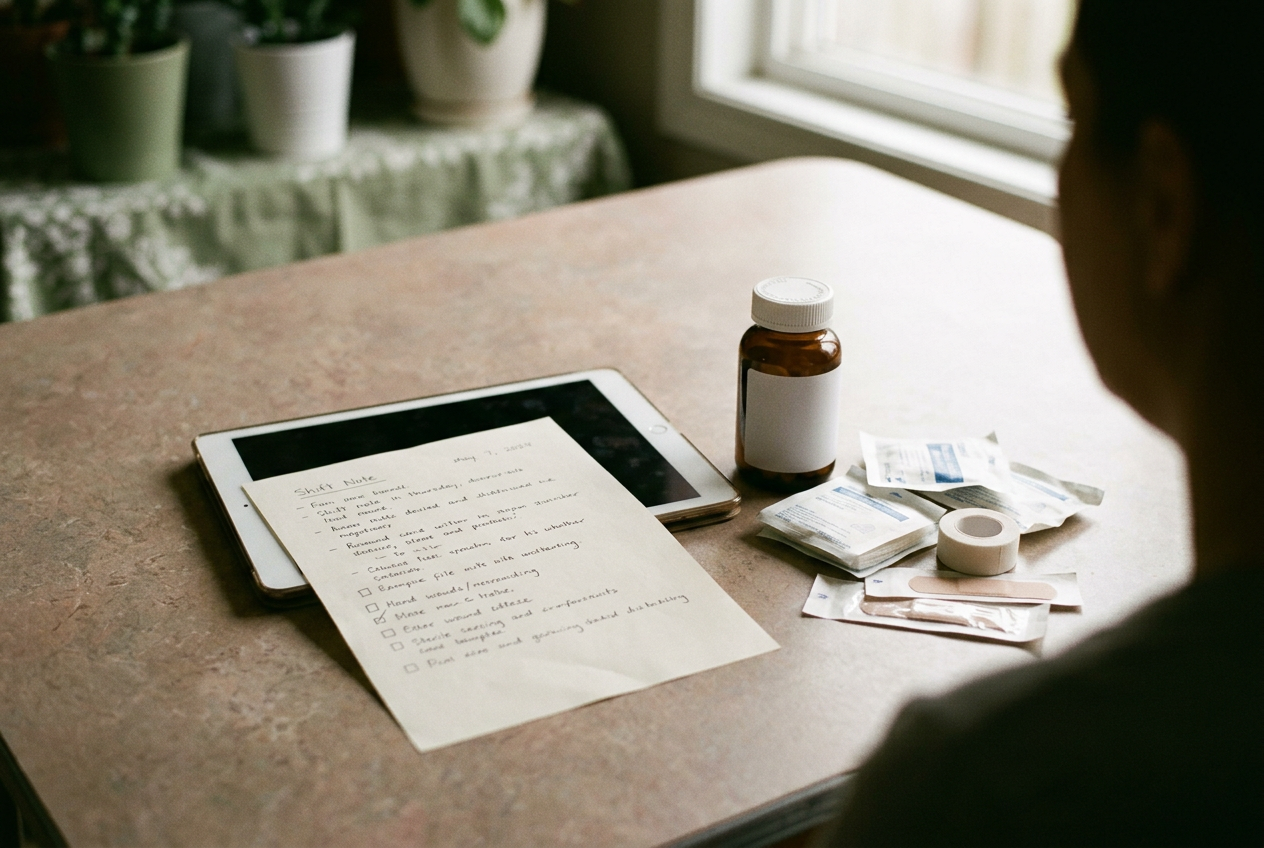
Nora kept the one-page shift note open on her tablet while she unpacked a blood pressure cuff and a packet of wound supplies. She had not met the patient before. The note was supposed to make that manageable.
It listed the reason for the visit, recent blood sugar readings, the location of a leg wound and the medication changes made during the previous week. A language model had produced the page from the patient’s chart. The system placed a label at the top saying the text was generated, but the sentences below it read like an ordinary nursing handoff.
For Nora, a home health registered nurse with six years in the job, that page had become part of how she got through a week of 28 visits. Reading a full chart for a newly assigned patient could take 25 minutes, particularly when hospital records, home visit notes and medication updates had accumulated in different sections. The generated note brought that review closer to 10 minutes.
She called it “the clean page.”
The tool did more than search. It composed a new account, choosing what belonged in the handoff and putting those details into paragraphs. That was its value. It was also what went wrong.
The patient had been prescribed an oral antibiotic after a clinician reviewed a photo of the wound. A bottle had arrived from the pharmacy. Nora was expected to reconcile the new medication with the bottles in the home, check the wound and watch the patient take the first dose.
When Nora read the drug name aloud, the patient paused. Penicillin had made her face swell when she was younger, she said, though she could not remember whether the new drug was related. Her daughter thought the allergy was already in the chart.
Nothing about an allergy appeared on the one-page shift note.
Nora had two records in front of her. One was a short, readable account produced for this visit. The other was the original chart, spread across tabs and entries, which would take longer to check while the patient waited with an unopened bottle on the table.
She opened the chart.
The line that stayed behind
The allergy appeared in a structured field near the older medical history: penicillin, with facial swelling recorded as the reaction. It had been entered during an earlier period of care and had not been copied into the latest visit notes. The newly prescribed antibiotic was in the same drug family.
Nora did not give the dose. She contacted the prescribing clinician through the usual care channel and waited for a replacement prescription. The wound care still happened, but the medication start moved to later that day.
No one was injured. That mattered, though it did not settle what had happened.
The one-page note had not said the patient had no allergies. It had left the subject out, which made the failure less visible than a false statement would have been. A reader could notice an incorrect allergy and challenge it. There was nothing on the page to challenge.
A quality review later found that the allergy field had been included in the material sent to the model. The system had access to it. The model still did not place it in the summary.
That distinction changed how Nora understood the tool. She had assumed the generated note worked like a compact report, with certain chart fields carried over and the remaining space used for narrative. Instead, the model generated the whole page by predicting useful text from the source material. It could emphasize facts repeated across recent notes while dropping a fact that appeared once, even when that fact had more clinical importance.
A fixed report can reserve a required space for allergies and copy that field without rewriting it. A language model does not guarantee that behavior unless the system around it imposes the requirement. In Nora’s case, the allergy competed for space with repeated details about the wound, glucose readings and family help in the home. The model produced a fluent account of the current episode.
It did not preserve the one older line that could stop a medication.
The generated note also lacked sentence-level citations. Nora could open the original chart, but she could not select a sentence on the page and see which records supported it. Nor was there a visible list of clinically important fields the model had considered and then omitted. The clean page showed what was present.
It gave no shape to what was missing.
Time saved, then spent again
Before the incident, Nora used the summary as the first record and opened the chart when something seemed unclear. Afterward, she opened the chart for allergies and medication changes before relying on the generated prose, even if the page contained a medication section.
That added work back into the visit. It did not erase the tool’s benefit. The note still gathered the wound history and the latest measurements faster than Nora could find them herself, and it often surfaced a change buried in a long narrative entry. She continued using it.
Her definition of using it well had changed. The work was no longer reading a summary and acting on it. The work was deciding which parts of a generated summary could save attention, then rebuilding the checks that a polished page had made easy to skip.
This was not the review job she had been trained for. Nurses already reconcile records that disagree, but the AI note introduced a different kind of record: a fresh piece of clinical prose that looked settled, had no author who remembered writing it and could omit a source fact without leaving a blank box behind.
Her manager added the case to staff training. Nurses were told that generated handoffs were drafts, and the organization changed the page so that allergy information came from the chart’s structured field rather than from the model’s prose. The allergy line now occupied its own area. The model could summarize the rest of the visit, but it no longer decided whether that field deserved space.
Nora thought that change helped. She also noticed that the burden of catching other omissions remained with the person in the home, often while a patient was waiting and the next visit was already on the schedule.
What the summary brought forward
The missing allergy was the safety issue. Privacy appeared in the same one-page artifact for the opposite reason: the model sometimes included more than Nora expected.
Home health notes contain details that do not fit neatly into a diagnosis. A nurse may record that a relative manages the pill bottles, that food is running low or that a patient has been sleeping on the couch. Those observations can matter to care. They can also sit deep in a visit note where only someone looking for context will find them.
The generator could lift one of those details into the main handoff because it inferred that the fact explained adherence or recovery. This did not necessarily give the information to someone who lacked chart access, but it made the information prominent to every worker opening the summary. A private detail moved from one source note to the page designed to be read first.
Nora wanted to know how long the generated text was stored, which workers could see prior versions and whether the model provider retained any part of the source material. Her manager could explain who had access to the health record. The questions about the generation system took longer and never produced an answer Nora considered complete.
She did not stop writing household context when it affected care. She wrote less of it when the connection was uncertain, knowing that the model might carry a sentence forward into later handoffs after the moment that made it relevant had passed.
Months later, the one-page shift note remained on her tablet during first visits. It still cut reading time. The allergy field now sat above the generated paragraphs, copied directly from the chart, while Nora kept the original record open in another tab.
Questions people ask
Why can an
AI summary omit an allergy that is in the chart?
A generated summary is composed rather than copied field by field. In this case, the allergy appeared once in older structured data, while current wound details appeared repeatedly. The model produced a concise account that favored the repeated material and left out the allergy, even though the source had been available.
Did the AI note save the nurse any time?
Yes. It reduced Nora’s initial chart review from about 25 minutes to around 10 and gathered recent wound details in one place. After the omission, she kept using it but checked the original allergy and medication fields, so part of the saved time became verification work.
What changed after the missing allergy was found?
The organization stopped asking the model to decide whether allergy information belonged in the prose. That field was copied directly from the chart and displayed separately, while the generated section remained a draft. During later visits, Nora could see the allergy above the summary, with the original chart still open beside the one-page note.
One story a day
The story of the day, in your inbox
One real story about AI each morning — no hype, no alarm, just company for the road.