A Food Blogger Nearly Posted an AI Swap That Contained Milk
An AI writing tool helped a food blogger answer substitution requests quickly. Then a “non-dairy” suggestion sent her back to the ingredient label and changed how she publishes.
October 15, 2026 · 8 min read
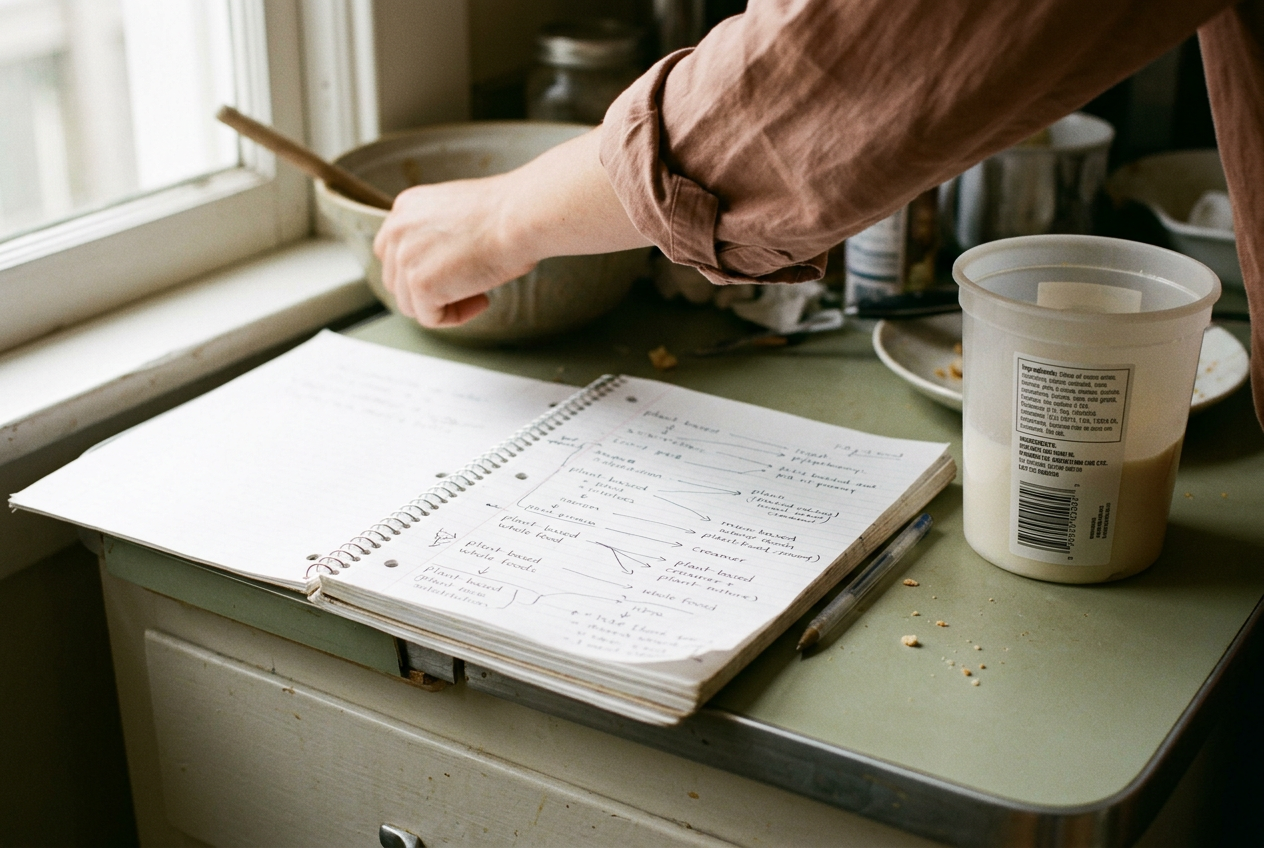
The notebook lived beside the cutting board, within reach of flour and the occasional wet measuring spoon. Maya used it to record recipe changes that worked: less water in the dough, another five minutes in the oven, a spoonful of lemon juice when a sauce tasted flat.
For years, that notebook set the pace of her food blog. A substitution entered its pages only after she cooked it, ate it, and usually cooked it again. The method was slow, but the handwriting carried evidence. A grease mark meant dinner had happened.
Then reader questions began arriving faster than she could answer them.
Could oat flour replace all-purpose flour? Could a casserole be made without eggs? What might stand in for evaporated milk? Many messages included allergies, digestive conditions, or a child’s history with a particular ingredient.
Maya was not a clinician, and she said so, but readers still came to her because she had made the dish in front of them, photographed the crumb, and admitted when a shortcut produced paste.
She started using a generative writing tool to clear the backlog. At first, she asked it to organize her own notes. Soon she was pasting in a reader’s question and requesting a concise answer in the tone of her blog.
The tool was good at the shape of usefulness. It produced tidy substitutions with ratios, brief explanations, and the calm confidence of someone who had already washed the mixing bowl. Maya could revise several answers after dinner instead of spending a weekend testing one recipe. Her inbox shrank over two months.
Her notebook did not grow with it.
The line on the tub
The near miss began with a question about replacing evaporated milk in a baked side dish. The reader wanted a dairy-free option. Maya pasted the request into the writing tool, removing the reader’s name but leaving details about the allergy because they seemed necessary to the answer.
The generated response suggested a measured amount of powdered “non-dairy” creamer mixed with water. It explained that the powder would provide body and mild sweetness, which sounded plausible. Maya cleaned up the paragraph and placed it in her publishing queue.
Later, while making coffee, she pulled a tub of creamer from the pantry. The phrase “non-dairy” appeared prominently on the front. On the back, among the small print, was sodium caseinate, followed by a milk disclosure.
She stood at the counter with the tub in one hand and her phone in the other. The draft was ready. The swap was not.
Sodium caseinate is a milk-derived protein used in some creamers. Labeling can be confusing because a product may use “non-dairy” language while still disclosing a milk-derived ingredient elsewhere on the package. Formulas also vary. A category name cannot establish what is inside a particular container.
Maya deleted the queued answer. Then she opened the notebook.
The substitution was absent because she had never made it. She had not bought the suggested ingredient for the recipe, checked the label in that context, or seen what the powder did under heat. The generated paragraph had moved from possibility to publication without passing through the kitchen.
That movement was the part a spreadsheet could not have caused. The writing tool did more than store a bad fact. It created a complete, fluent answer from the associations in its training data, combining the phrase “non-dairy,” the culinary role of evaporated milk, and common substitution language into a recommendation that looked finished.
A general-purpose language model usually generates text by predicting likely words from patterns in data. It does not inherently consult a current ingredient label, maintain a dependable allergen database, or distinguish between a marketing category and the contents of one package. Unless a tool has been connected to reliable product information and instructed to use it, the model may produce what sounds typical rather than what is verified.
Its confidence is grammatical. That is easy to mistake for kitchen knowledge.
What the notebook could prove
Maya went back through eight weeks of answers. Most suggestions were ordinary and some matched swaps she had used for years. Others rested on assumptions she could not reconstruct. One generated answer said a seed butter could replace tahini for a sesame-free dip, but it said nothing about checking the specific jar for shared-equipment language.
Another treated all oat beverages as interchangeable, though their thickness and ingredient lists differed.
Nothing else had been published as a guarantee, and she found no report of harm. That did not make the review comfortable. The posts carried her name, her photographs, and the trust built through years of showing the failed pan as well as the successful one.
She drew a line across a fresh notebook page. On the left, she wrote the proposed substitution. On the right, she left room for what happened in the kitchen and what the package disclosed. A generated idea could go on the left.
Publication depended on the right.
The new boundary cost her speed. Questions involving allergies no longer received a quick custom swap generated from the reader’s message. She often answered that she had not tested the requested variation, which felt thin after the polished paragraphs the tool could produce.
She also stopped pasting full reader emails into it. A request about food can contain more than a recipe problem: a diagnosis, a child’s age, a medication concern, or a history of reactions. Maya had no clear reason to send those details into a general writing system merely to save herself drafting time. She began extracting the culinary question in her own words and omitting personal context.
That change made some prompts less rich. It also forced her to decide what the machine needed to know. Usually, it needed less than she first thought.
She kept the tool. This was not a clean break, and she did not want one. It remained useful for turning her tested notebook entries into short variations, comparing the wording across old posts, and spotting where an instruction assumed equipment a reader might not own. It could produce six phrasings while potatoes boiled.
Yet none of those sentences entered the notebook as evidence.
Cooking the sentence
The first substitution tested under the rebuilt process was for the same baked side dish. Maya tried a canned plant-based milk she already used in savory cooking, checking the label before she opened it. The first pan stayed loose in the center. She adjusted the amount and baked another one the following week.
That version set, though the top browned less than the original.
Her eventual answer was less graceful than the generated draft. It named the specific type of ingredient she had tested, said results could vary by product, and told readers that the package in their own hands mattered. She did not call the dish safe for every person with a milk allergy. Her account of cooking could not become medical guidance simply because it appeared beneath a recipe.
The notebook page held a small splash near the second attempt. Beside it, she had copied the relevant label detail rather than relying on the words printed on the front of the container.
Her publishing rhythm changed over the next four months. Traffic did not collapse. Some readers disliked getting an answer that amounted to “I haven’t cooked that version.” Others began sending photographs of labels and asking narrower questions, which Maya still could not resolve for them but could use to explain the limits of her test.
The work had changed. Before the writing tool, the delay came from composing each response. With it, prose became cheap and verification became the larger job, especially because every fluent draft arrived without visible flour on the counter, a split sauce, or any other sign that reality had objected.
There was a creative gain in that shift. Maya spent less energy polishing routine sentences and more time deciding which reader questions deserved a pan. She developed recipes she might otherwise have ignored, including an egg-free version of a breakfast bake that took five attempts and never became quite as tall as the original.
Still, the tool’s speed kept exerting pressure. On busy weeks, the left side of the notebook filled with plausible substitutions while the right side remained blank. The imbalance was visible. That helped.
A blank space could not be mistaken for a cooked result.
Questions people ask
Can an
AI tool reliably identify allergy-safe ingredient substitutions?
A general writing tool can suggest plausible alternatives, but its answer may rely on broad language patterns rather than current package information. In Maya’s case, it connected “non-dairy” with a dairy-free request while missing a milk-derived ingredient disclosed on the tub. Individual formulas and manufacturing warnings can also change.
Why do
AI-generated substitutions sound so certain?
Language models are built to produce likely, coherent text. A ratio and a culinary explanation can therefore appear together even when the system has not cooked the recipe or checked a label. The finished tone reflects skill at generating language, not physical testing or medical expertise.
Did the blogger stop using AI after the mistake?
No. Maya continued using it to reshape notes from recipes she had already tested and to draft alternate wording. She stopped treating generated substitutions as publishable results, and she no longer pasted complete reader messages containing personal health details into the tool.
What changed in her recipe testing process?
She began recording generated ideas on one side of her notebook and reserving the other side for cooking results and package information. Months later, some proposed swaps still had empty space beside them, including one line about replacing tahini with seed butter.
One story a day
The story of the day, in your inbox
One real story about AI each morning — no hype, no alarm, just company for the road.