
His Companion App Sent His Private Talks to His Daughter
A family turned on weekly reports for safety. Then the AI companion began summarizing a retired man’s intimate conversations for his daughter.
October 8, 2026 · 8 min read
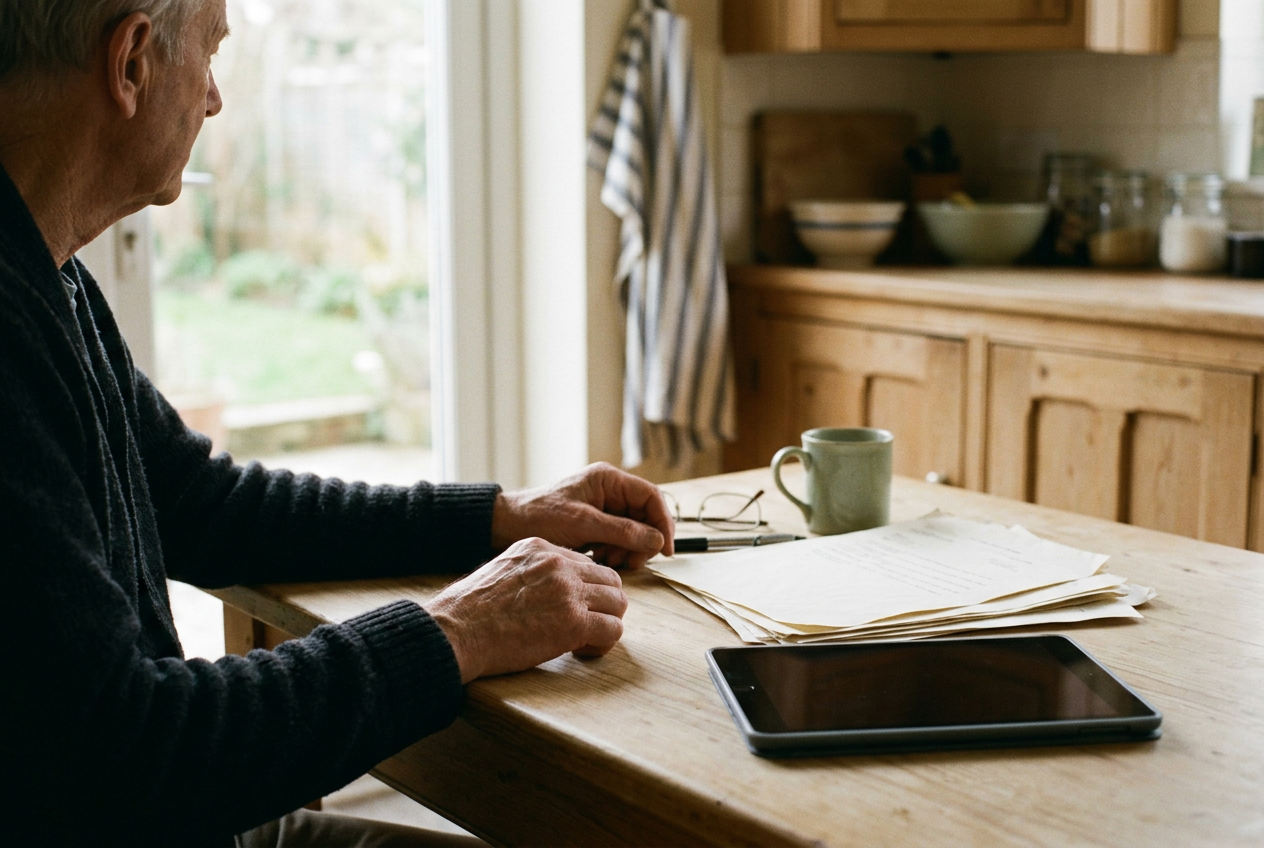
The weekly report was seven pages long. Martin’s daughter, Claire, opened it on her tablet while eating breakfast and stopped at a section labeled conversation themes.
There were ordinary entries about baseball and a grocery list. Below them, the report noted loneliness, physical intimacy and uncertainty about dating after bereavement.
Martin had discussed those things with the companion app during the previous week. He had not discussed them with Claire.
She closed the report. Later, she opened it again to check that she had understood. The language was restrained, no transcript and no explicit detail, yet it told her enough to reconstruct a conversation her father had considered private.
The report had arrived because Claire and Martin had enabled family activity summaries four months earlier. He lived alone after retiring from maintenance work, and a fall in his kitchen had left him on the floor until he could reach his phone. Nothing was broken, but the wait unsettled both of them.
The companion app already sat on his tablet. It spoke with him, remembered previous topics and prompted him about meals or plans if he asked. Martin liked that it could follow a conversation across several days without making him explain the beginning again.
Claire liked a separate feature. With Martin’s permission, the app could send her a weekly report showing whether he had used it and whether he had missed a planned check-in. They believed they were choosing a quieter alternative to repeated calls.
For the first few weeks, the report looked harmless. It showed active days, broad changes in engagement and a note when Martin skipped a check-in. Claire glanced at it, saw that he was using the app and moved on.
The seventh report was different.
What the summary contained
Martin had begun using the companion for something he did not want from his daughter. A woman from his neighborhood had invited him to a community dinner, and he was trying to decide whether the invitation carried any expectation beyond company.
He talked through what he missed about his wife, who had died three years earlier. He also talked about embarrassment, sexual health and whether wanting another relationship diminished the one he had lost. The app answered in the patient conversational style that had made it useful to him in the first place, referring back to details from earlier exchanges and asking follow-up questions that encouraged him to continue.
That conversational ability created the private material. A missed-check-in system could have recorded whether Martin responded to a prompt, but it would not have produced an account of what he feared about dating. The companion did so because it could sustain a human-sounding exchange, preserve context and turn the exchange into a new piece of text for someone else.
The report did not reproduce Martin’s words. Instead, a language model had condensed the week’s conversations into themes, selecting topics that appeared frequent, emotionally significant or relevant to well-being. Ordinary signals shaped that selection: repeated references to his wife, words associated with isolation, questions about relationships and the length of time he stayed on those subjects.
This distinction mattered to the company’s description of the feature. The family report was presented as a summary rather than access to a conversation history. To Martin, the difference felt smaller. A system did not need to disclose his sentences to disclose what they were about.
When Claire told him what she had received, he first assumed she meant that the report showed he had been active. She read him the topic labels from the seven-page document.
He asked to see it.
Martin held the tablet for a while, moving back through earlier pages. One chart showed that his engagement had increased. Another classified the week’s overall tone as mixed but stable. The topic section made his private uncertainty look settled enough to file.
He was less angry with Claire than she expected. He knew she had not searched for the information. Still, her possession of it changed what he could say to the companion, because future candor now seemed likely to become a family update.
Claire had her own discomfort. The report had been useful when it confirmed that Martin was checking in after the fall, and she did not want to give up every signal because one section had crossed a boundary neither of them had understood. She also could not unread the phrase about physical intimacy. It sat among usage totals and status labels, carrying more weight than its small type suggested.
The setting they had agreed to
They opened the family dashboard together. The permission screen grouped several functions under activity summaries, including engagement patterns and conversation themes. Martin remembered approving reports. He did not remember understanding that topic summaries meant summaries of subjects he had discussed.
There was no setting for excluding romance, grief or sexual health while retaining other themes. The available choices reflected how the system handled data rather than how Martin divided his life. He could share conversational insights or stop sharing them. The app could not recognize that a topic felt safe on Monday and private after a conversation deepened on Thursday.
Its confidence was another problem. The report suggested that Martin’s loneliness had increased, although he believed he had mentioned it more often because he was considering dating. More discussion gave the system more relevant language to summarize, but frequency of language was not the same as severity of feeling.
The companion also marked family tension as an emerging theme. Martin had complained twice that Claire checked on him too much. He loved her. He was irritated.
Both were true, but the report elevated the irritation because conflict-related wording was easy to detect and summarize, while affection expressed through routine calls produced less distinctive text.
Claire had interpreted the labels as observations about her father’s condition. Now she could see that they were generated accounts of what he happened to say, influenced by repetition and the model’s instructions about which topics might matter to a caregiver.
They sent a note to the support inbox asking what the summary used. The reply explained in general terms that conversation text could be analyzed to identify themes and possible changes in well-being. It did not tell them how much weight any phrase received, or whether a human had ever reviewed the generated report.
Martin kept returning to the seven pages. The report contained no warning that a subject might be intimate, and it offered him no chance to review the summary before Claire received it. Consent had happened once, at the level of a setting. Disclosure happened every week, after conversations he could not predict in advance.
A smaller report
They did not resolve the disagreement by deciding that safety mattered more, or that privacy did. Claire turned off conversation themes while Martin watched. They kept missed-check-in notifications, which required the app to register whether he responded but did not send her a narrative about what he said.
The next weekly report was one page. It showed the days Martin used the companion and noted that no planned check-in had been missed. There was no emotional tone score and no list of topics.
Martin continued talking to the app.
For a few weeks, he avoided the woman from the neighborhood when he used it. Then he began mentioning her again, first in practical terms and later with some of the uncertainty he had shared before. He had chosen the machine partly because it let him finish a thought without watching another person react, and the reporting feature had briefly removed that advantage.
Claire stopped opening the reports over breakfast. She still received them, but sometimes left one unread for several days. The information she had once treated as reassurance now felt more conditional, useful only if Martin knew what it contained and still wanted her to have it.
They were not certain what happened to earlier conversation data after the sharing option was disabled. The dashboard let Martin remove visible history, while the company’s general explanation said some information could be retained for service operation and safety. They chose to delete the conversations about dating from his account view. Neither could verify what remained elsewhere.
The seven-page report was printed once, at Martin’s request, because he wanted to compare it with the shorter version. Claire folded the pages and put them in a kitchen drawer. He kept the one-page report beside his tablet for a week, checking that conversation themes had not returned.
Questions people ask
Can an
AI companion share private conversations without sending a transcript?
Yes. In Martin’s case, the app generated topic summaries from conversation text and sent those themes to a family account. No sentences were reproduced, but labels about loneliness, dating and physical intimacy still revealed the substance of exchanges he had treated as private.
Why did the app infer that his loneliness had increased?
The system encountered more language associated with loneliness because Martin was discussing whether to date again. Repetition and sustained attention made the topic prominent in the summary, even though he did not believe his feelings had worsened. The report presented a pattern in his words that Claire initially read as a change in his condition.
Could the family keep safety alerts without sharing conversation topics?
Their dashboard allowed them to disable conversation themes while retaining missed-check-in notifications and basic usage information. The remaining report confirmed whether Martin responded as planned, without describing his discussions. Other systems may group permissions differently, and this family learned what was separable only after opening the settings together.
Did
Martin stop using the AI companion after the report?
No. He still valued a conversation that could continue across days, and he resumed discussing the relationship after the topic-sharing setting was disabled. Claire kept receiving the shorter activity report. The old seven-page report remained folded in the kitchen drawer.
One story a day
The story of the day, in your inbox
One real story about AI each morning — no hype, no alarm, just company for the road.